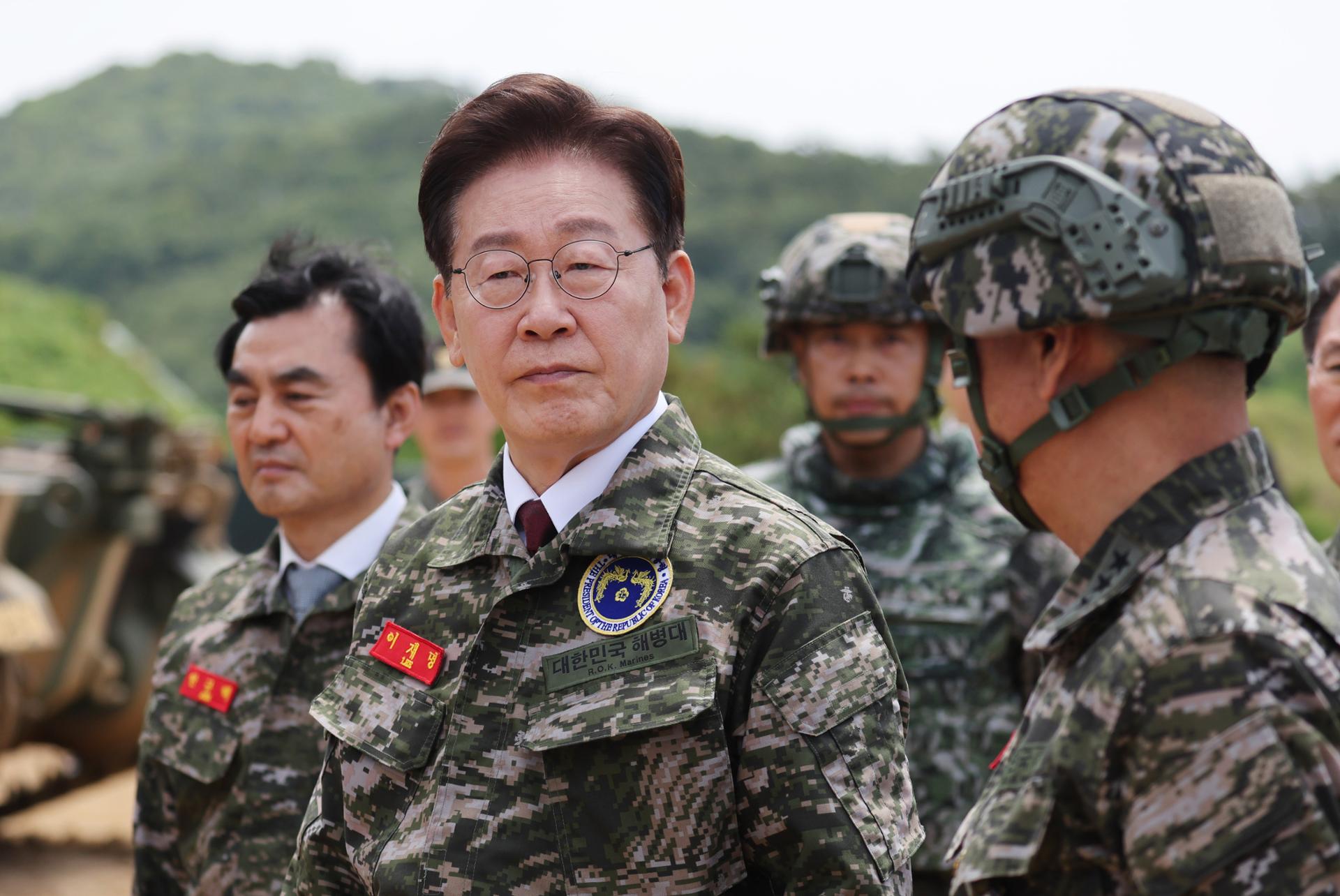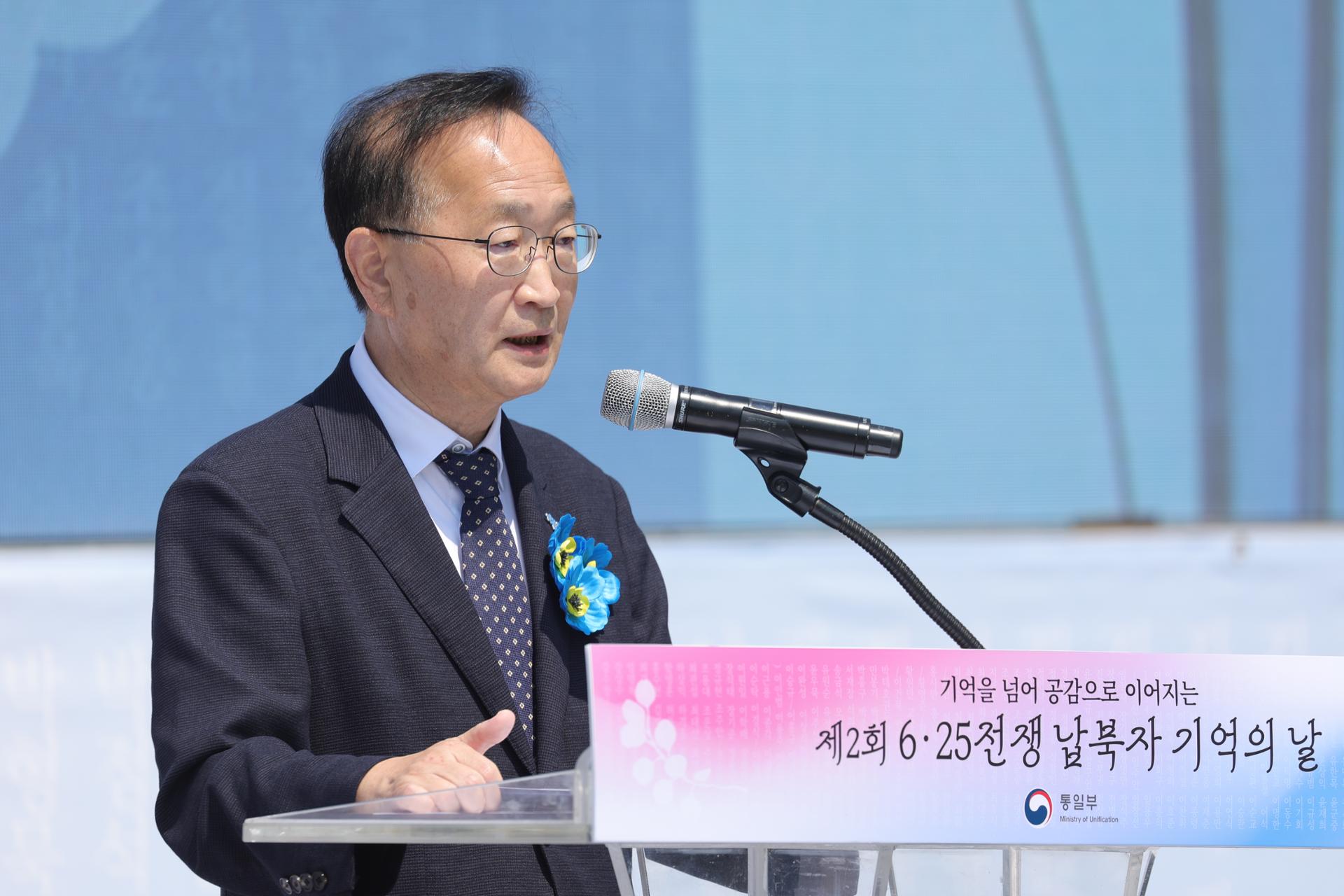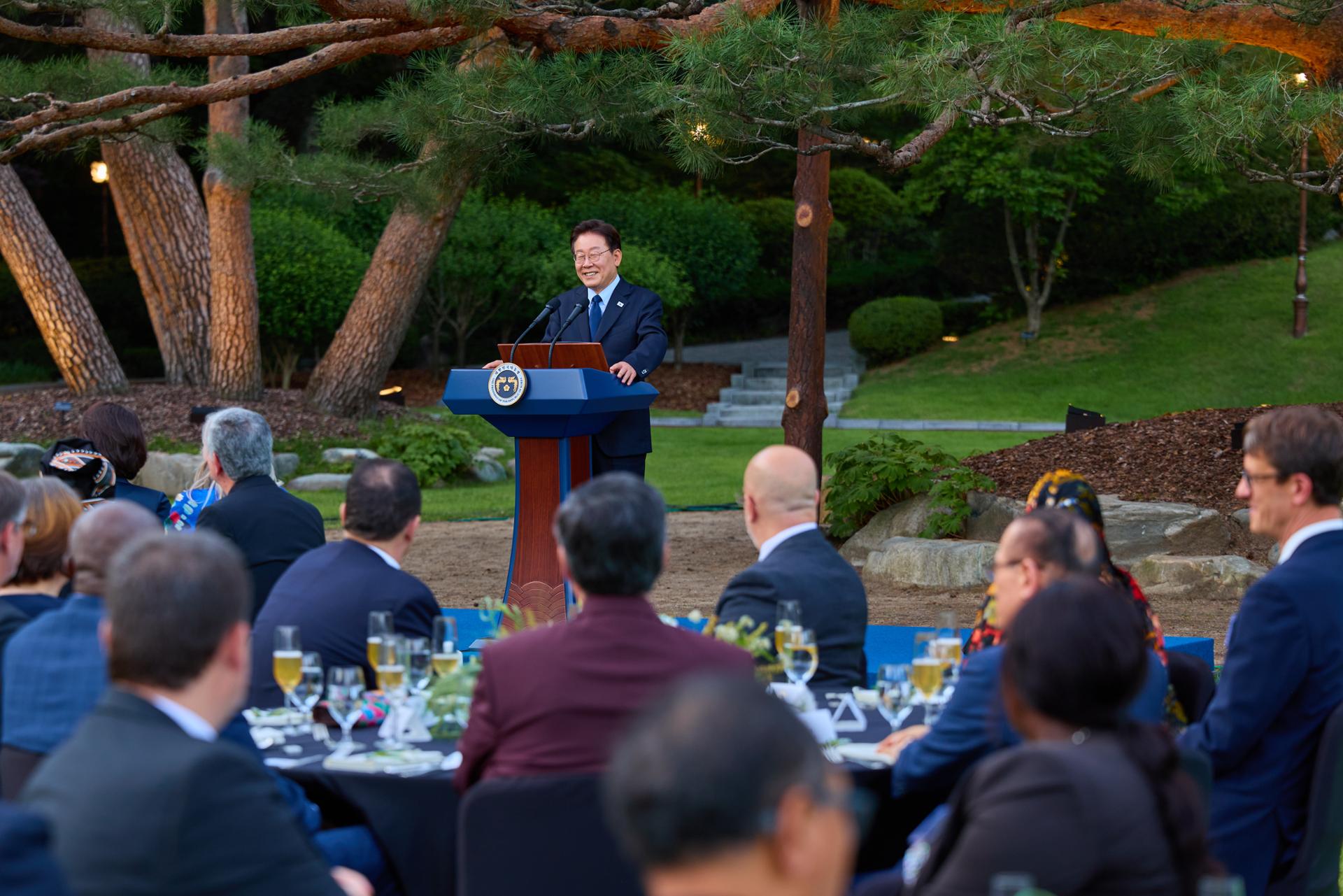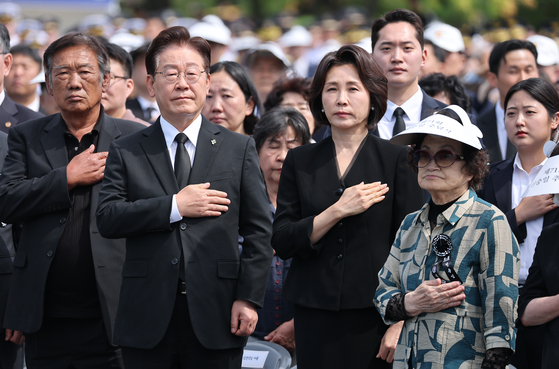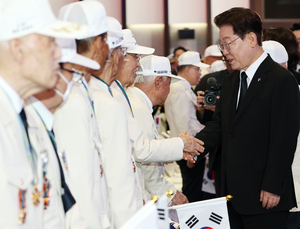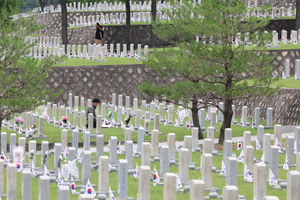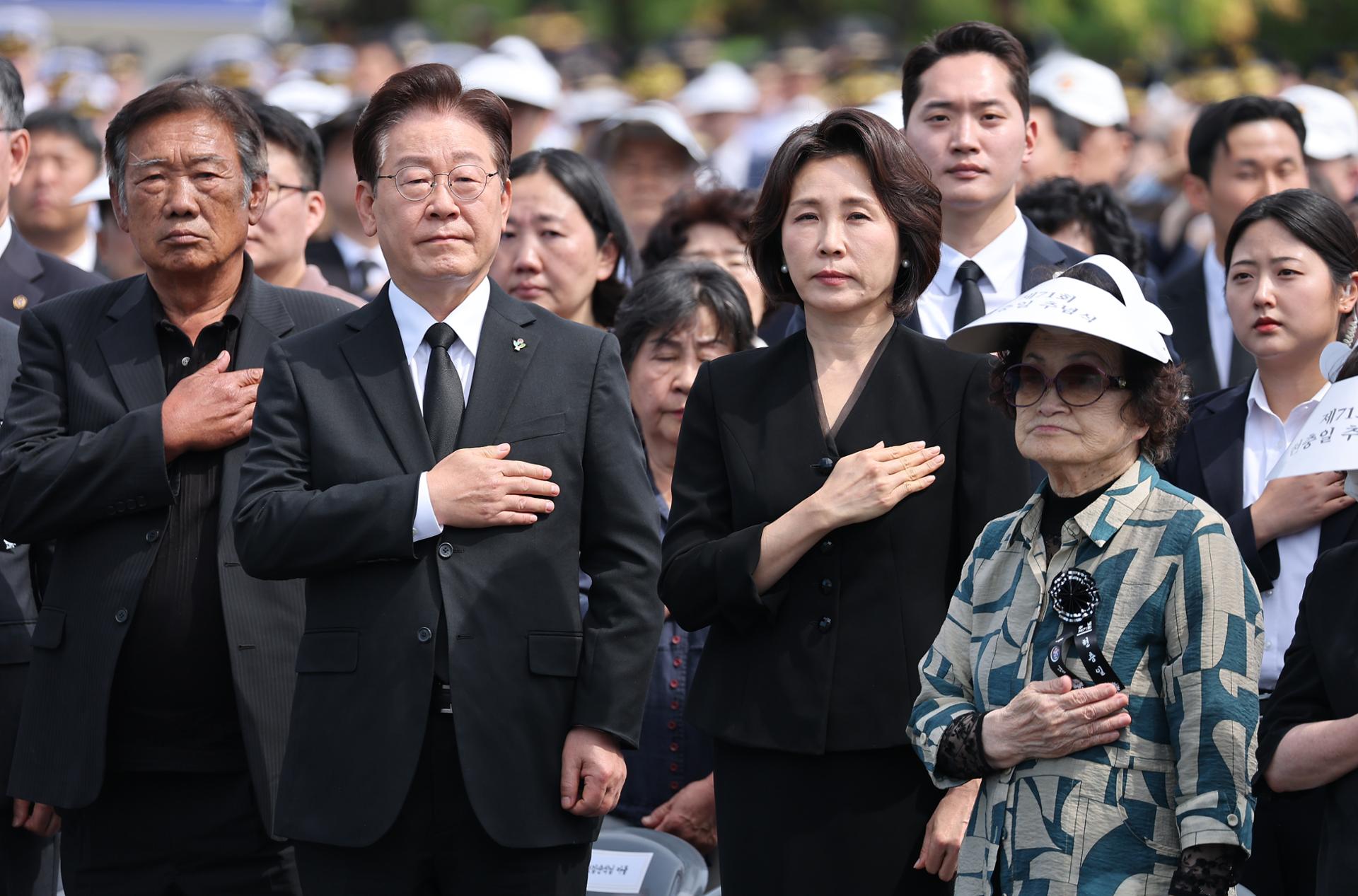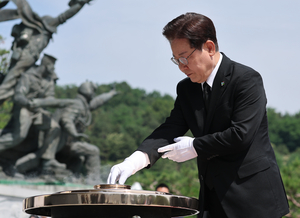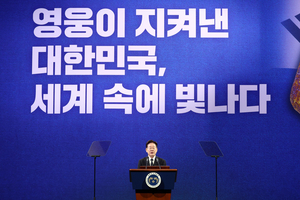
President Lee Jae Myung addresses a ceremony in Suwon, Gyeonggi Province, on Thursday to commemorate the 76th anniversary of the outbreak of the 1950-53 Korean War. (Yonhap) President Lee Jae Myung on Thursday pledged to expand South Korea's veterans diplomacy, saying the country owes a debt of gratitude to nations that fought to defend it during the Korean War.In his speech marking the 76th anniversary of the outbreak of the 1950-53 Korean War, Lee paid tribute to the 22 UN sending states that provided military and medical support to South Korea under the unified flag of the UN Command.Opening his remarks, Lee extended a special acknowledgment to "the diplomatic corps of the United Nations Sending States whose nations shed blood alongside us in defense of the Republic of Korea," referring to South Korea by its official name."We must also never forget the UN Korean War veterans," Lee said in his speech during the ceremony held at the Suwon Convention Center in Gyeonggi Province."The freedom and peace that the Republic of Korea enjoys today are built on the sacred devotion and sacrifice of the UN Korean War veterans who willingly dedicated their youth and even their lives for a small country in the Far East that they had never even heard of before."Lee underscored that South Korea's partnership with countries that fought alongside it during the Korean War has endured for decades and continues to contribute to global peace."Our solidarity forged in blood in the trenches 76 years ago has evolved into the steadfast partnership we see today, through which we join forces to advance peace and prosperity worldwide."Lee said South Korea "bears a responsibility to repay its debt of gratitude to the international community" after having transformed from an aid recipient into a donor nation.“The government will further expand its diplomatic outreach to honor veterans abroad, for instance, by inviting UN Korean War veterans to Korea,” Lee said. “We will strive even more to ensure that the spirit of solidarity that blossomed in the trenches lives on among younger generations.”The UN sending states included 16 countries that contributed combat troops and six that provided medical assistance.The troop contributors were the United States, the United Kingdom, Canada, Turkey, Australia, Greece, the Philippines, Thailand, Ethiopia, the Netherlands, Colombia, New Zealand, Belgium, France, South Africa and Luxembourg.Sweden, Norway, India, Denmark, Italy and Germany provided medical assistance. President Lee Jae Myung (center, in black suit) and first lady Kim Hea Kyung sing the commemorative "6.25 Song" while waving national flags alongside Korean War veterans and other attendees at a ceremony marking the 76th anniversary of the outbreak of the Korean War at the Suwon Convention Center in Gyeonggi Province, Thursday. (Yonhap) The commemorative ceremony also featured a special performance of "Arirang" — a traditional Korean folk song — by the Kagnew Choir, composed of descendants of veterans who served in Ethiopia's Kagnew Battalion during the Korean War.Lee further underscored "the government's unwavering principle" that "those who dedicate themselves to their country and make extraordinary sacrifices for it must receive extraordinary compensation, as well as the honor and respect they deserve.""We will do our utmost to ensure that our war veterans' sacrifices remain not only a source of personal pride, but also bring them lives of greater dignity and stability," Lee said.During the ceremony, the government conferred awards on three members of South Korea's nonregular forces whose distinguished service during the Korean War had not been fully recognized.Among the recipients was Lee Yeong-bok, who received the Hwarang Order of Military Merit for his service with Wolfpack 4, a clandestine guerrilla unit attached to the American 8240th Army Unit. After joining the unit in June 1952, Lee took part in operations behind enemy lines in Hwanghae Province, including raids on North Korean positions, attacks on military supply vehicles and missions to encourage enemy defections.The government also posthumously awarded the Chungmu Order of Military Merit to Kim Jang-seong. Kim established the Donkey 13 guerrilla unit in April 1952 and commanded combat operations from the island Sunwido in North Hwanghae Province until the Korean War armistice.Lee also reaffirmed the government's commitment to "safeguard its people and territory through strong national defense capabilities.""We will build a peaceful Korean Peninsula where there is neither fear of war nor any need for conflict," he said.Following the ceremony, Lee hosted a luncheon honoring Korean War veterans, where he credited them with laying the foundation for South Korea's rise into a globally respected nation.
Lee pledges greater honors for nations that fought in Korean War
President Lee Jae Myung on Thursday pledged to expand South Korea's veterans diplomacy, saying the country owes a debt of gratitude to nations that fought to de
742 words~3 min read