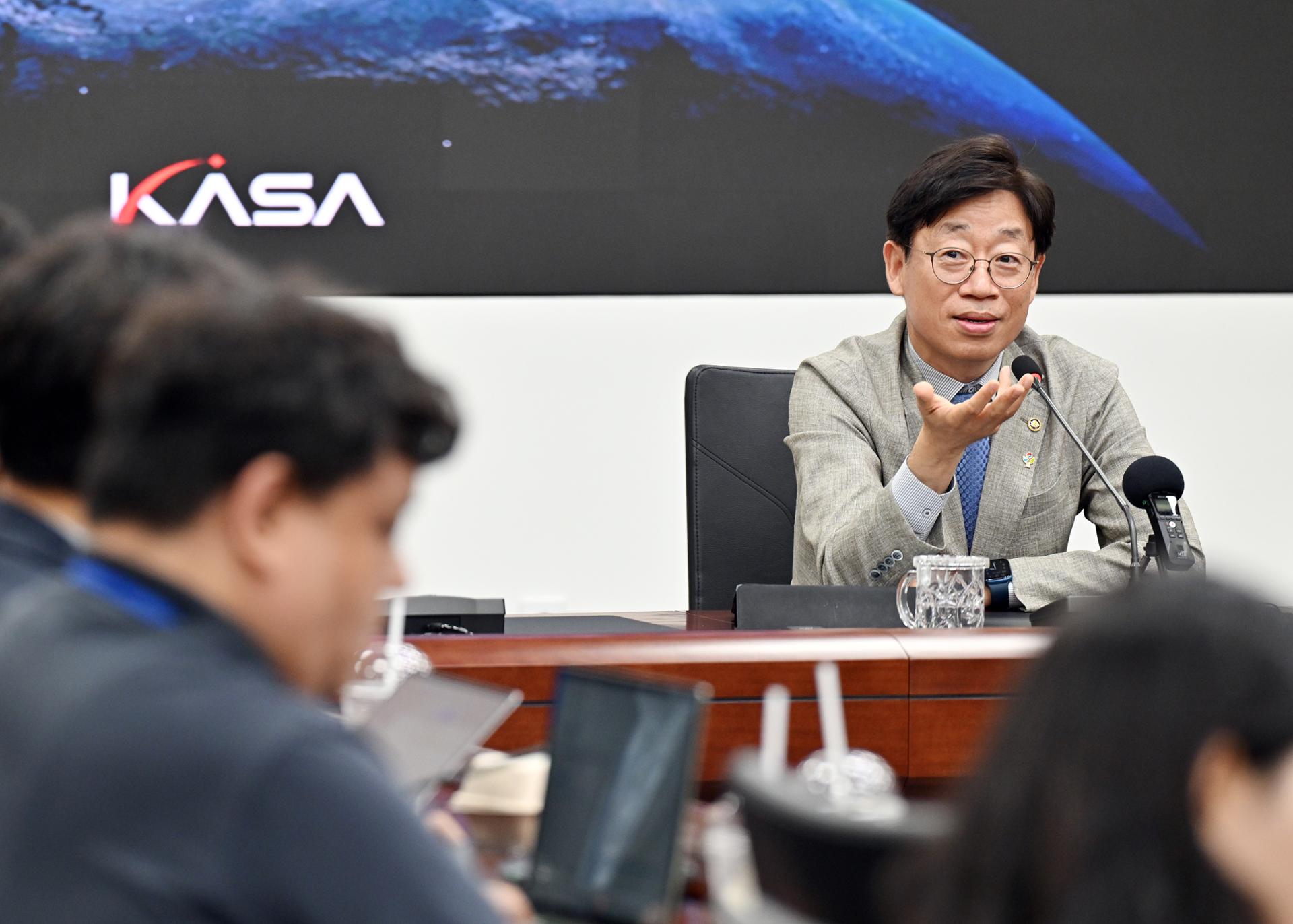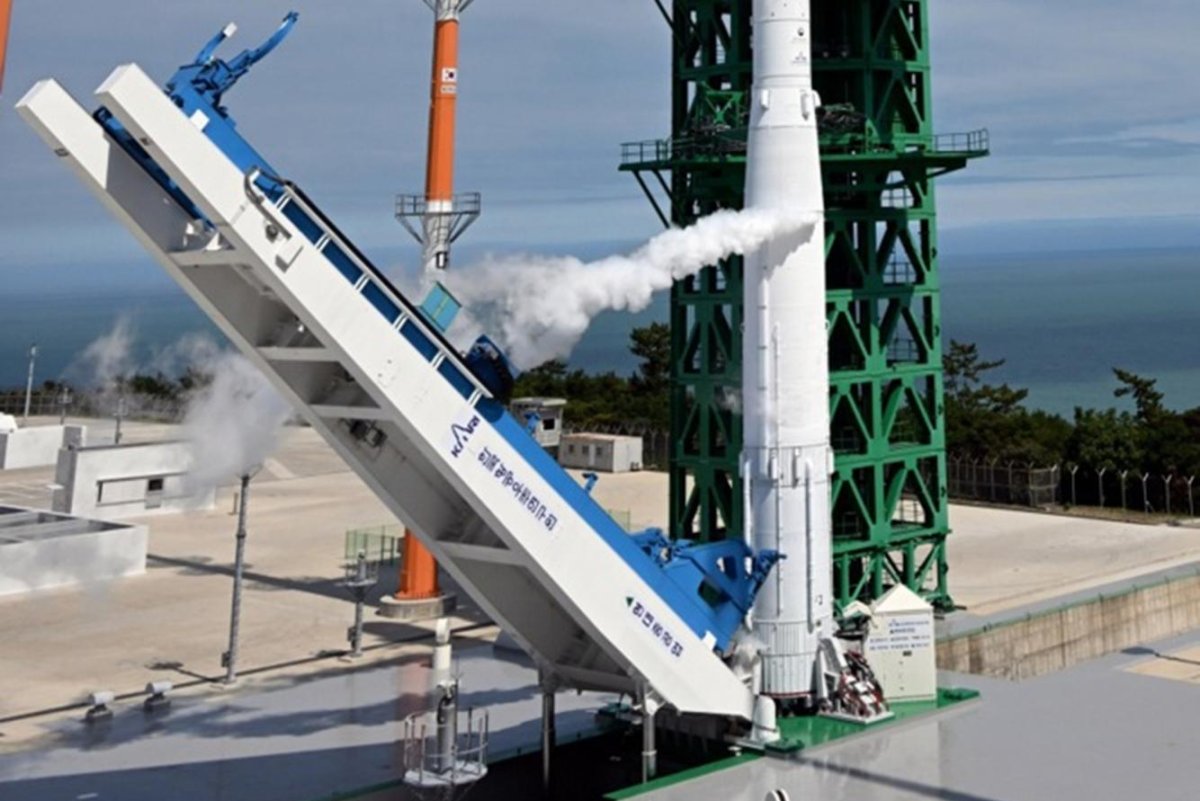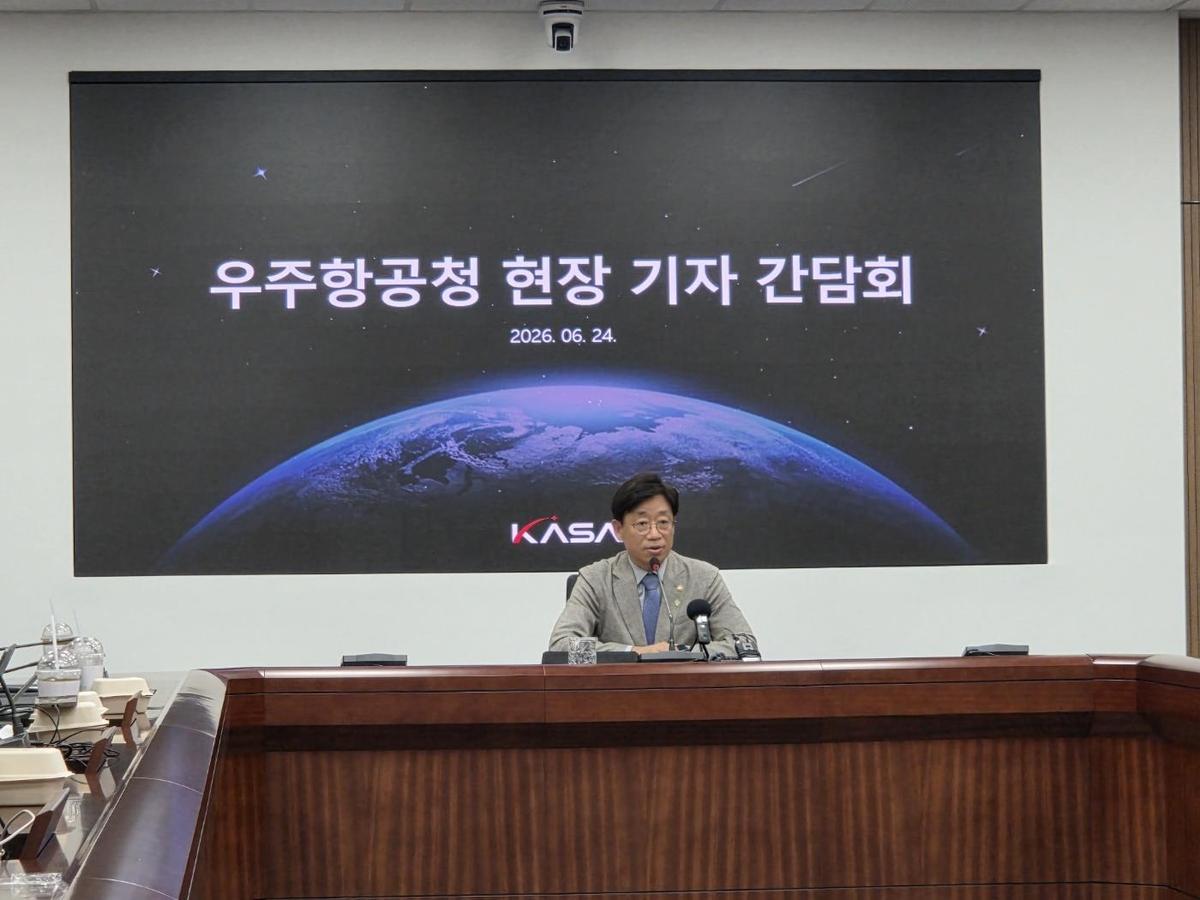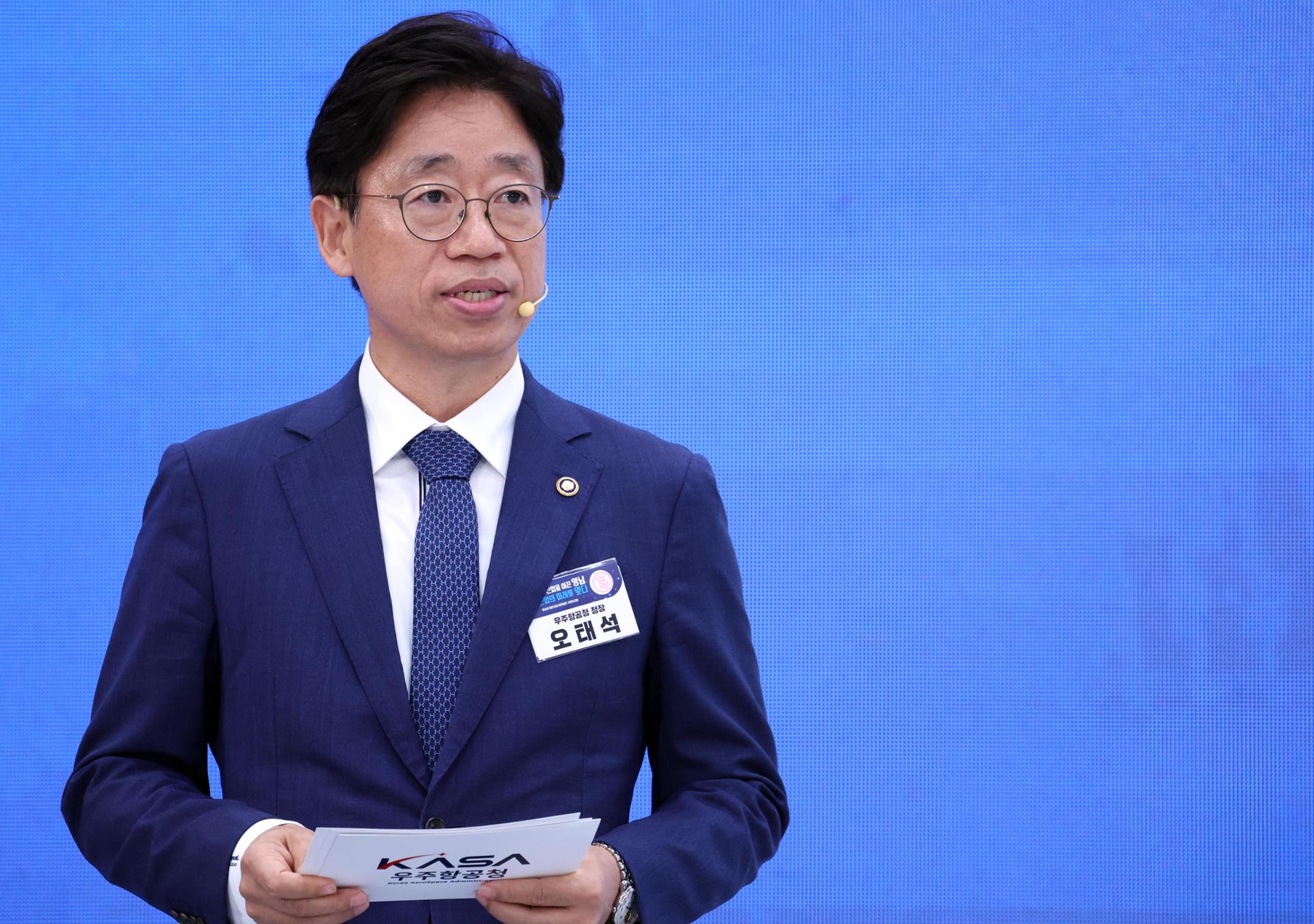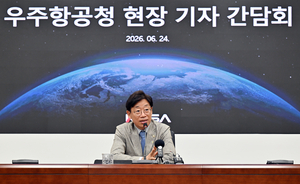
KASA chief says Artemis talks are becoming more concrete as Korea looks to reduce reliance on foreign launch providers Oh Tae-seog, administrator of the Korea AeroSpace Administration, speaks during a press briefing at the agency’s headquarters in Sacheon, South Gyeongsang Province, on Wednesday. (Korea AeroSpace Administration) SACHEON, South Gyeongsang Province — The Korea AeroSpace Administration is seeking a role for South Korea in future lunar infrastructure projects with NASA, while trying to reduce its reliance on foreign launch providers as rocket slots become harder to secure worldwide.Oh Tae-seog, administrator of the KASA, said Wednesday that talks with NASA are moving into more concrete areas as the US space agency advances plans for a sustained presence on the Moon.“Our cooperation with NASA is continuing from previous discussions,” Oh told reporters at KASA’s headquarters in Sacheon, South Gyeongsang Province, on Wednesday. “Communications, mobility and related areas are important for NASA’s lunar base.”NASA’s Artemis program aims to establish a long-term human presence on the Moon, with a lunar base planned for the 2030s. Oh said Korea could contribute by connecting its strengths in manufacturing and advanced industries — including automobiles, batteries, semiconductors, telecommunications and robotics — with future space infrastructure.“If we connect Korea’s industrial competitiveness with space, we can contribute in areas that others may not be able to offer,” he said.Oh said a lunar base would require many of the basic systems needed on Earth, but under far harsher conditions.“If people are going to live there, housing will be needed. Electricity will be needed. Life-support systems and communications will be needed,” Oh said, adding that robotics and unmanned systems would be essential because people would not be able to “go there and build things like workers on Earth.”KASA plans to host a KASA-NASA Artemis workshop in Korea from July 29 to 31. About 10 NASA officials are expected to attend, including those working on lunar base construction. The two sides are set to discuss possible Korean participation in lunar communications, power and mobility systems, which have been under consultation for the past year.Oh said the talks have moved beyond broad cooperation into specific areas that could be considered for NASA programs, but declined to disclose details because government-to-government discussions are still underway.Korea is also preparing to send its lunar space environment monitor, LUSEM, on an Artemis-related mission later this year. The payload is expected to fly aboard Intuitive Machines’ IM-3 lunar lander on SpaceX’s Falcon 9 rocket.The NASA talks come as KASA seeks to secure reliable access to launch vehicles, a challenge underscored by repeated delays to Arirang 6, Korea’s multipurpose satellite also known as KOMPSAT-6.The 370 billion-won ($255 million) satellite, whose assembly was completed in 2022, was initially expected to launch from Russia that year. Seoul later turned to Arianespace in 2023 after Moscow’s invasion of Ukraine disrupted the original plan. Its latest launch schedule, originally planned for the second half of this year on Arianespace’s Vega C rocket, has now been pushed back to the second quarter of 2027 due to delays involving a foreign co-passenger satellite.“If we cancel the contract, we have to be able to find another launch provider right away, but that is not possible under current market conditions,” Oh said. “After reviewing various options, moving the launch to the second quarter of 2027 was the best available choice.”He said the delay reflects a broader squeeze in launch availability. “I heard that even securing a SpaceX slot is extremely difficult and that it is hard to get one within three years,” Oh said.To secure more reliable access to space, KASA opened a public call on Monday for candidate sites for a second space center and plans to select the final site in October. The new facility is expected to support next-generation launch infrastructure, including reusable launch vehicles, in the mid-2030s.The agency is also working to establish a more regular launch cadence for Nuri, Korea’s homegrown rocket. “You cannot move toward commercial launch services with just one launch a year,” Oh said. “We have to move toward a launch service model.”
Korea eyes role in NASA's lunar base project
SACHEON, South Gyeongsang Province — The Korea AeroSpace Administration is seeking a role for South Korea in future lunar infrastructure projects with NASA, whi
674 words~3 min read