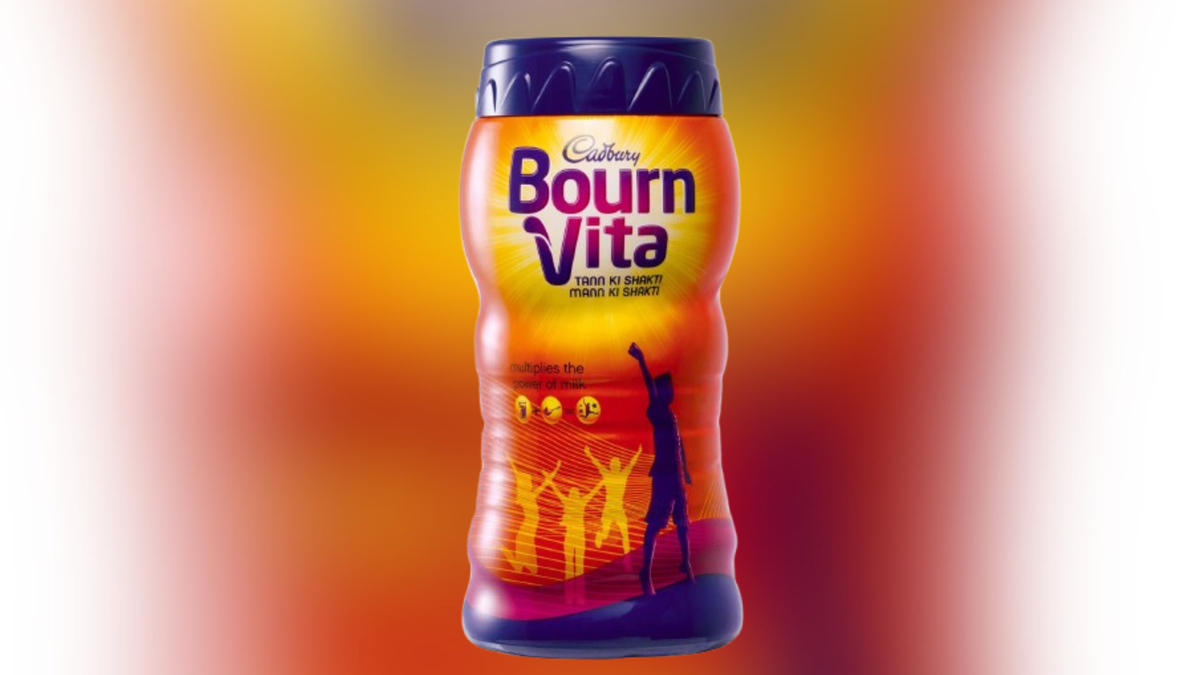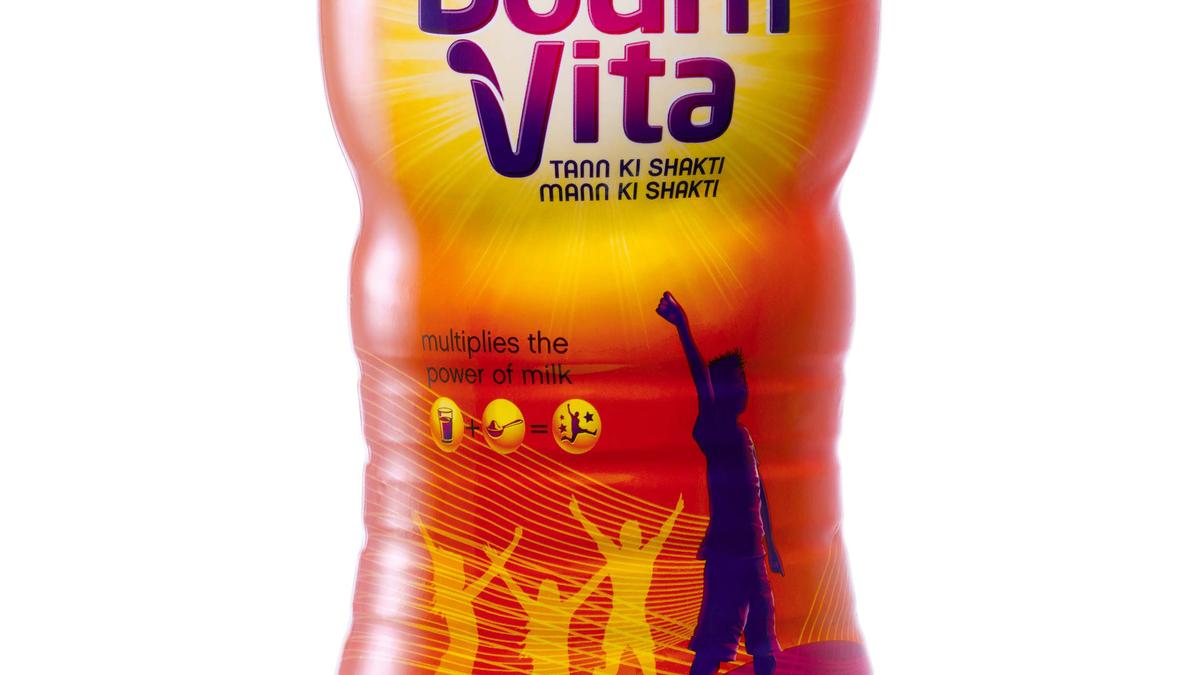
In April 2023, a public relations storm broke over Bournvita.That month, the influencer Revant Himatsingka, better known by his Instagram moniker, Food Pharmer, published a series of videos about the malt drink mix. He focused on one specific ingredient in the product: sugar.Himatsingka noted that 100 grams of the product contained 37.4 grams of added sugar and questioned its categorisation as a “health drink”.Mondelez India, which manufactures and distributes Bournvita, slapped Himatsingka with legal notices. The influencer, an online crusader against unhealthy ultra processed foods, took down his videos.These developments drew wide attention and sparked outrage among the public. The Union government took notice. The National Commission for Protection of Child Rights called on the Food Safety and Standards Authority of India, or FSSAI, to investigate Mondelez’s claims about Bournvita.Within a month, the regulator issued a press release declaring that it had flagged 32 fresh cases for misleading claims. The release did not specifically mention Bournvita but mainstream media outlets, quoting “official sources”, said the Bournvita controversy had sparked the government’s crackdown on misleading claims. The FSSAI indexed these articles and then uploaded them on its website.In December that year, Mondelez announced that it was cutting sugar levels in the product from 37.4 grams per 100 grams, to 32.2 grams – a 14.4% reduction. The public outcry appeared to have yielded some results.But documents accessed by Scroll, which were obtained through a right-to-information application, reveal that the same month that the controversy broke out, the FSSAI in meetings had flagged other concerns pertaining to the composition and marketing of Bournvita.In an “action-taken report” that summarises developments related to several cases, including Bournvita’s, the regulator questioned one of the basic pillars of the malt drink’s marketing: the use of images of children both on its label and in its advertisement to suggest that “the product is for children”.The regulator noted that while the product was marketed to children, the recommended dietary allowance of ingredients contained per serving as listed on its packaging were “made considering the daily intake for an average adult”.The documents Scroll accessed show that after the regulator raised concerns, it received a response from the company. Without citing any details of justifications provided by the company, or changes it proposed to make, the FSSAI declared that the response was “satisfactory” and declared the case “closed”.Scroll emailed the FSSAI to ask what information, arguments or commitments the company provided in response to the regulator’s notice. We also emailed Mondelez, seeking a response to concerns that had been raised about Bournvita. Neither the regulator nor the company have responded at the time of publication. This report will be updated if there is a response.Meanwhile, Bournvita continues to widely use images of children in its packaging and marketing. It also continues to rely on adult intakes as the basis for its calculations of how much percentage of the recommended dietary allowance of different ingredients the product contains per serving.Nutritionists Scroll spoke to criticised the company for this approach. “If a product is marketed to children, then relying on adult nutritional standards for comparison is fundamentally misleading,” said Dr Vandana Prasad, a community pediatrician and public health professional. “How can we expect ordinary parents to translate adult values into meaningful information for a three-year-old, four-year-old or five-year-old child – the very audience these advertisements target?”Unhealthy packaged food is fuelling an epidemic of lifestyle diseases in India. The government knows this. But its measures to regulate the industry are falling short. This series, based on previously unpublished internal documents, takes a hard look at this failure.The functioning of the FSSAIThe FSSAI, which functions under the Union Ministry of Health, is India’s “apex food regulator”.The organisation has an in-house committee tasked with monitoring claims in advertisements and labels by food and beverage companies.This committee flags claims as misleading if they run contrary to India’s food advertisement regulations. These claims are identified either by the committee itself or based on complaints made to it, such as by the public or other arms of the government.Once flagged as misleading, the regulator asks the business to explain and substantiate the claim. If even after the company responds, the claims are found to violate regulations, the regulator can direct it to modify them. It also has the power to penalise the company and even revoke its licence.Under FSSAI regulations, packaged foods must carry several details about their ingredients. These include the proportions of ingredients and the kind of nutrition they provide. For each ingredient, they must also state how much of the recommended dietary allowance for adults one serving contains. These calculations are based on estimates of food consumption by the Indian Council for Medical Research.For instance, according to these calculations, if a bag of chips contains 200 calories, it would account for 10% of the daily requirement of calories for an average adult Indian.The concerns about BournvitaThe FSSAI’s claim monitoring committee examined Bournvita’s case in a meeting held at the end of April 2023. An action-taken report shows that by May 2024, the case was declared closed.Scroll compared all the concerns that the FSSAI flagged about Bournvita, and the claims that can currently be found on its packaging and marketing material, and on its pages on e-commerce platforms.In the section dealing with Bournvita, the regulator first noted its concerns about the depiction of a child in the packaging, and a QR code to calculate “the nutrition score of a child”, as well as the fact that calculations about recommended dietary allowance were based on adult intakes.The product’s packaging and its website still carries images of children, and a page that invites parents to check their “child’s nutrition score”. Further, an advertisement released in February depicted a mother explaining that she gives her daughter Bournvita daily because it gives her “double strength”.Meanwhile, calculations of what percentage of recommended daily allowance each serving contains, of particular ingredients, are still based on adult intake, as the packaging itself states.The regulator had also flagged the product’s recommendation of two daily servings “as part of a balanced diet and healthy lifestyle”. It noted that this “may be misinterpreted as the consumption of Bournvita is essential for ensuring a balanced diet”. On packaging and listings on e-commerce platforms, the company continues to make this recommendation.“Anything these products claim to contribute can generally be provided through ordinary foods and simple dietary alternatives,” Prasad said.Further, the regulator took note of the claims that Bournvita was “scientifically designed”, as well as boosted strength and immunity. The regulator stated that while these claims had been “explained with a justification”, they still could “mislead the consumer that the product improves physical strength, mental strength, and immunity, especially if it is targeted towards children”.Scroll found that the company continues to make claims pertaining to Bournvita’s scientific design, and its links to physical and mental strength, and benefits to the immune system, at least on some platforms. On Blinkit, for instance, text on the product page reads, “With nutrients that support”, followed by a list: physical strength, mental strength and immune strength.On Amazon, text accompanying the product’s page describes it as “a scientifically designed formula”, containing nutrients like calcium, vitamin D, iron, zinc, magnesium, among others, which strengthen bone and muscle health and help in cognitive and immune functions.Bournvita’s video ads on e-commerce platforms state, “Two cups contain 50% of your daily Vitamin D, Iron and Zinc.”Prasad expressed concerns about this aspect of the product’s marketing, particularly given its sugar content. She noted that Indian children struggle with nutritional deficiencies of protein, iron, vitamin A and other micronutrients.“Sugar is not what Indian children lack,” she said. “So why is it there?”She added, “If a company genuinely wanted to create a useful nutritional supplement, it could simply leave sugar out and allow parents to decide whether they want to add sugar and how much.”Besides, she noted that she had “not seen convincing randomised controlled trials supporting those claims”.Arun Gupta of the Nutrition Advocacy for Public Interest, a collective of independent nutrition experts, explained that according to guidelines issued by the National Institute of Nutrition, added sugars should not account for more than 5% of an individual’s daily caloric intake. For adults, the institute recommends a daily limit of 25 grams per day. Bournvita’s recommended two daily servings would measure around 40 grams, which would contain almost 13 grams of added sugar, and “more than half the daily limit for adults”, he noted.A health drink?In 2023, while the FSSAI deliberated over Bournvita’s claims behind closed doors, public controversy raged over its claim of being a “health drink”. Among those who took objection to this claim was the National Commission for the Protection of Child Rights.In its 2023-’24 annual report, the commission pointed out that in its licence, Mondelez had formally categorised Bournvita as a “cereal based beverage mix”.Raising concern over the use of the term “health drink”, the commission noted that the FSSAI had informed it that the term “is not defined” under regulations.However, the commission claimed that a representative of the company had told it that it was not a health drink.Gupta noted that while “there is no legal definition of health drink”, Bournvita “cannot be considered healthy as it contains a high amount of added sugar”.Two years after this directive, Scroll found that in some listings, Bournvita continues to be called a health drink. Elsewhere, the company now deploys a different phrase, calling it a “nutrition drink”.For public health advocates like Prasad, such product positioning is questionable. “The problem is not simply that these products contain sugar, “ she said. “The problem is that they occupy a space where they present themselves as health-promoting while relying on claims that are often unsupported, exaggerated or misleading.”Read the full series here.
Food regulator took credit for a ‘crackdown’ on Bournvita. But it gave the drink a clean chit
The FSSAI closed its case against Bournvita, despite its main concern about the drink being marketed to children remaining unaddressed.
1,631 words~7 min read