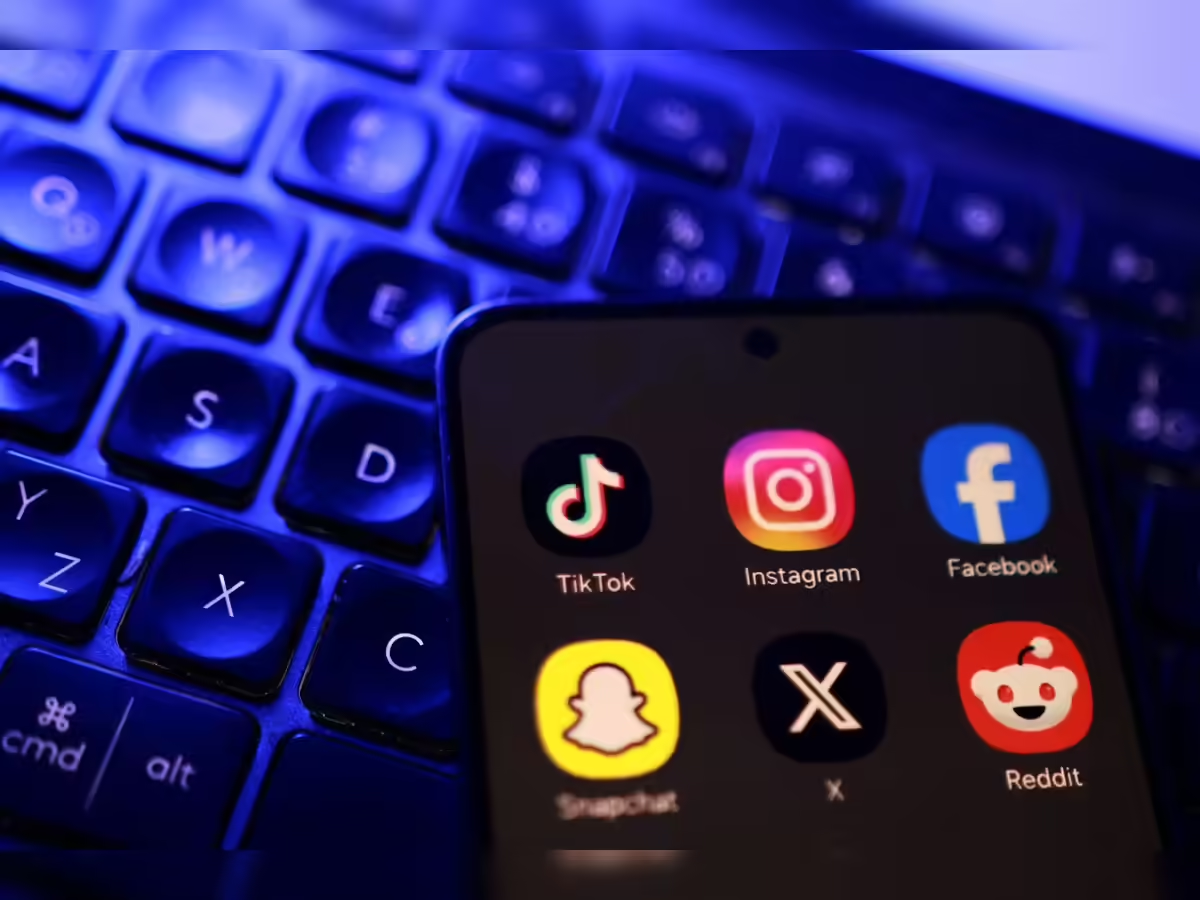
Eight in 10 Australian young people reported still accessing social media in the months after a ban for under-16s took effect, according to research.The findings from a small study of the initial impacts of the world-first ban suggested “insufficient evidence of any substantive early effects”, the University of Newcastle, Australia, study said.The UK is set to have a ban in place on certain social media for under-16s by spring, after an announcement by Sir Keir Starmer earlier this month.Technology Secretary Liz Kendall has acknowledged the ban will not be a “complete silver bullet”, saying it is about providing clarity for parents and children and resetting expectations and social norms when it comes to young people’s use of social media.She has also insisted that the UK’s use of “highly effective age-verification measures” would make the ban stronger than the Australian system.The study, published by The BMJ, acknowledged the ban is still relatively new and suggested it could be a decade before the full impact of it is known.It said 408 children aged 12 to 17 were asked about their social media habits just before restrictions were introduced in December and then surveyed again three months later.Researchers found some 85% of participants aged under 16 reported still using social media platforms covered by the ban, mainly under their own accounts.Of these, two thirds reported encountering some form of age verification, most commonly self-declared age, or uploading of a picture.Almost a fifth reported using a fake account to get around restrictions, while around 10% said they used a private browser.The paper stated: “The findings suggest that the period immediately after introduction of the Act was characterised by limited implementation, incomplete compliance, and substantial circumvention of social media restrictions.“In this context, overall, we found insufficient evidence to conclude that exposure to the Act had any early substantial effects on social media use among adolescents aged under 16 years.”Researchers said while there was “insufficient evidence of any substantive early effects” of the ban, the “potential benefits of the legislative change take time to manifest and often require investment in accountability and education mechanisms to encourage compliance and uptake”.They described their findings as giving “key early insights that can guide government refinement and future actions to promote health and wellbeing”.Professor Dennis Ougrin, a consultant child and adolescent psychiatrist at Queen Mary University of London, said the findings “should be interpreted cautiously” given the sample was “relatively small, drawn from a single Australian state, and relied on self-reported social media use, which may affect both accuracy and generalisability” – and added that it was “too early to conclude that the policy has failed”.But he said: “Nevertheless, it provides useful early evidence that implementation challenges, particularly around age verification and circumvention, may limit the immediate impact of age-based restrictions and underscores the need for longer-term, larger-scale evaluations.“These findings provide an important early reality check for policymakers. Three months after implementation, there is little evidence that Australia’s under-16 social media restrictions have substantially reduced social media use, largely because many young people continue to access platforms despite the ban and age-verification systems appear easy to circumvent.”Previously, polling commissioned by the Molly Rose Foundation suggested around six in 10 12 to 15-year-olds who previously had accounts on restricted platforms continued to have access to one or more active accounts in March this year.(Alamy/PA)Seven in 10 children still using restricted sites said it was “easy” to get around the ban, the polling by YouthInsight of 1,050 Australians aged 12–15 found.The foundation, set up in memory of 14-year-old Molly Russell, who took her own life in 2017 after viewing harmful content online, has argued a ban might fail to address what it describes as “fundamental product safety issues” such as harmful and distressing content being pushed to people through personalised algorithms.But many campaigners including bereaved parents have welcomed the ban, hailing it a “watershed moment for child protection”.Meanwhile some big tech firms have voiced their opposition, saying a blanket ban on social media for under-16s could drive them into unregulated online spaces.The proposed UK ban is expected to cover platforms such as Snapchat, TikTok, YouTube, Instagram, Facebook and X but not messaging services such as WhatsApp and Signal.The NSPCC said the latest study shows “a ban alone will not keep all children safe from harm online” and called for a “safety by design approach on social media and wider online spaces like online gaming and private messaging”.The charity’s chief executive Chris Sherwood said: “Any child who slips past restrictions or accesses unrestricted sites must land in online environments that are safe, healthy and don’t leave them at risk of harm.”
Most Australian young people still on social media despite ban, study suggests
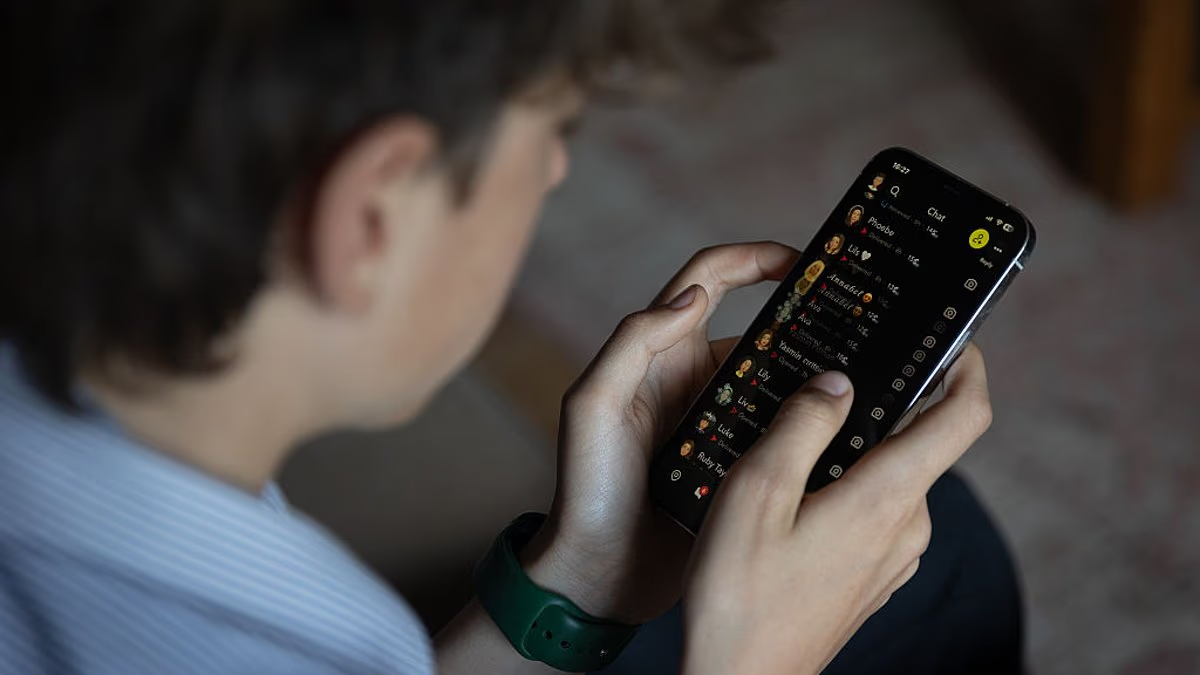
The UK is set to have a ban in place on certain social media for under-16s by spring.
768 words~3 min read