Genetic ALS testing may sharply increase specialized clinic visits as more relatives learn their carrier status.Projected gene-related ALS cases and asymptomatic carriers may nearly triple in the U.S. by 2035.Researchers warned that ALS centers should prepare for rising demand and surveillance needs.
Genetic testing of people with a family member diagnosed with amyotrophic lateral sclerosis (ALS) will greatly increase the number of clinic visits to specialized ALS centers over the next decade, a population model showed.
Based on estimates of four common gene variants -- SOD1, C9orf72, FUS, and TARDBP -- 2,704 people in the U.S. had a symptomatic gene-related form of ALS in 2026 and 10,944 people were asymptomatic gene carriers, reported Jennifer Morganroth, MD, of Massachusetts General Hospital in Boston, and co-authors.
By 2035, those numbers are expected to rise to 7,474 symptomatic ALS patients and 26,111 asymptomatic gene carriers, the researchers wrote in Neurology Genetics.
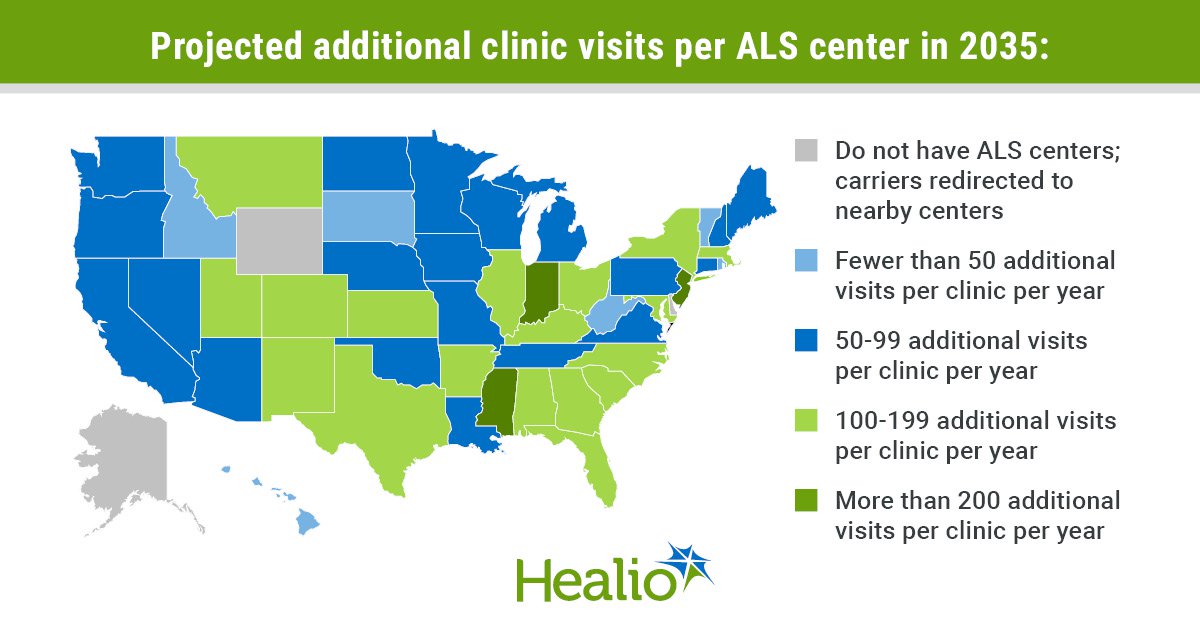
Fewer than 50 extra clinic visits were needed annually per ALS center in most states in 2026, with 12 states needing 50 to 99 additional clinic visits and no states surpassing 100. By 2035, only six states would remain below 50 visits per ALS center annually; 22 states would have 50 to 99 visits, 18 states would have 100 to 199, and three would exceed 200.