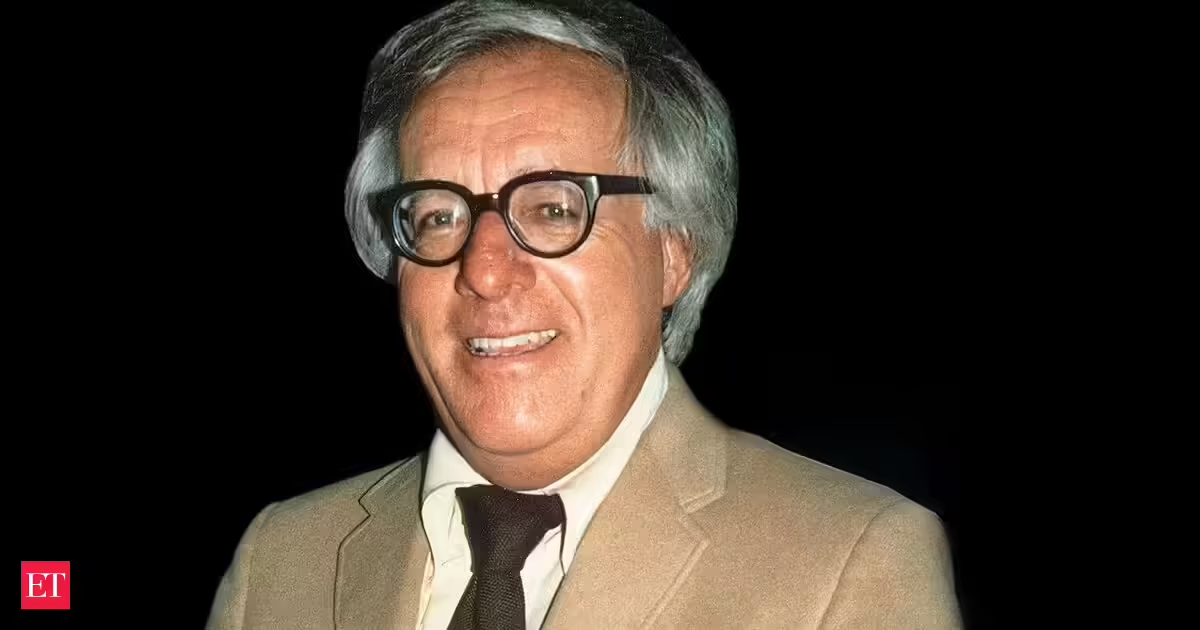
Quote of the Day: Human life is not built from perfect moments, but from everything that touches us deeply, even briefly. The Ray Bradbury experience insight captures this idea with striking simplicity. In a world obsessed with labels like success or failure, this perspective reframes experience as something far more fluid and human. It suggests that emotional impact itself is what matters, not whether the moment felt pleasant or painful.Modern psychology increasingly supports this idea. Research on emotional memory and resilience shows that the brain does not separate experiences into “good” or “bad” in a rigid way. Instead, it stores them as patterns that guide future decisions. The Ray Bradbury experience insight aligns closely with this understanding, offering a literary expression of what neuroscience now confirms. Every encounter, every setback, every moment of joy or discomfort contributes to shaping identity in subtle ways."Any experience that touches you, in any particular way, is good. It can be a horrible experience."Meaning of the Quote of the dayThe quote reflects a deep truth about how human life is shaped through lived moments rather than labels like success or failure. It suggests that anything which emotionally affects a person leaves behind value, even if the experience feels disturbing or uncomfortable at first. In this sense, difficult situations are not meaningless events but powerful lessons that quietly reshape thinking, behavior, and inner strength over time.It also highlights how perception determines growth. When individuals stop dividing experiences strictly into “good” and “bad,” they begin to notice patterns hidden inside challenges. A setback, loss, or disappointment often reveals personal limits, hidden fears, or new directions. The message encourages acceptance of life in its full range, reminding us that transformation often begins in moments of discomfort, not comfort.Ultimately, the idea points toward emotional evolution. Every encounter that leaves an impact contributes to building character, awareness, and resilience. Instead of rejecting unpleasant memories, the quote invites reflection on them as part of a larger journey of becoming wiser and more self-aware.At the core of the Ray Bradbury experience insight is a simple truth: experience teaches in ways theory never can. People often learn this only after facing real-life disruption. A failed job interview, a broken relationship, or an unexpected loss often teaches more than years of planning or advice ever could. Emotional impact forces reflection, and reflection creates awareness.Psychologists describe this as experiential learning. The brain strengthens connections based on emotional intensity, which is why painful or joyful events remain so vivid. The Ray Bradbury experience insight naturally mirrors this process. It suggests that what touches us deeply becomes permanently useful, even if it was uncomfortable at the time.History also reinforces this idea. Many innovators, writers, and leaders have spoken about how their setbacks shaped their clarity. What looked like failure at one stage later became direction at another. In that sense, the Ray Bradbury experience insight reflects a universal pattern: life does not separate education from experience—they are the same process seen from different angles.Even cultural wisdom traditions echo this thinking. Proverbs across societies suggest that difficulty refines character. The Ray Bradbury experience insight modernizes that belief, making it accessible to readers who live in fast-changing, emotionally complex environments.Who was Ray Bradbury?Ray Bradbury was an influential American author and screenwriter best known for his imaginative storytelling that blended science fiction, fantasy, and deep human emotion. Born in 1920, he grew up during the Great Depression, which shaped his curiosity about life, technology, and human behavior. His writing style was unique because it focused less on technical science and more on emotional and psychological depth, making his stories timeless and widely accessible.Bradbury gained global recognition through iconic works such as Fahrenheit 451, The Martian Chronicles, and Something Wicked This Way Comes. These stories explored themes like censorship, freedom of thought, nostalgia, fear, and the consequences of technological advancement. Rather than predicting the future in a purely scientific way, he used fiction to explore how human values might survive in changing worlds.Over his long career, Bradbury became one of the most celebrated voices in 20th-century literature. His work influenced generations of writers, filmmakers, and thinkers. Even today, his stories continue to feel relevant because they focus on universal human emotions—curiosity, loss, hope, and transformation—making him a lasting figure in American literary history.How to apply emotional learning in real life decisionsIn relationships, this mindset becomes especially powerful. Conflicts are no longer seen as purely destructive. Instead, they become indicators of unmet needs, communication gaps, or emotional boundaries. The Ray Bradbury experience insight encourages people to pause long enough to extract meaning rather than react impulsively.In careers, this approach reduces fear of failure. A rejected opportunity is not an ending but a data point. Each experience adds clarity about direction, skills, and timing. Over time, decisions become less emotional and more informed, not because feelings disappear, but because they are understood better.Ultimately, the Ray Bradbury experience insight builds emotional maturity. It does not promise comfort, but it offers clarity. And in a complex world, clarity often matters more than comfort.The lasting impact of Ray Bradbury’s perspective on experience and human growthThe lasting impact of Ray Bradbury’s perspective lies in how it quietly reshapes the way we interpret life itself. Instead of separating moments into strict categories of success and failure, it encourages a more fluid understanding where every experience contributes to emotional depth and personal awareness. This shift is powerful because it reduces fear of mistakes and replaces it with curiosity about learning. Over time, this mindset builds resilience, helping individuals respond to challenges with reflection rather than regret.The lasting impact of this idea also extends into everyday decisions, relationships, and long-term thinking. When people begin to see experiences as teachers rather than judgments, they become more grounded and adaptable in uncertain situations. Painful moments no longer feel like dead ends but like turning points that refine understanding. In this way, Ray Bradbury’s perspective continues to act as a quiet guide—helping people move through life with greater clarity, acceptance, and emotional strength.
Quote of the day by Ray Bradbury: "Any experience that touches you, in any particular way, is..." ― How do painful experiences quietly reshape human growth, and life decisions in ways we often fail to notice? Learn the inspiring life lessons on growth, resilience, and wisdom from every experience that shape who we become
Quote of the Day by Ray Bradbury: Some of life's most valuable lessons do not come from success, comfort, or happiness. They come from disappointment, failure, heartbreak, and unexpected setbacks. Ray Bradbury's wisdom reminds us that every experience that deeply affects us has the potential to teach, shape, and strengthen us.
1,000 words~5 min read