The Department of Justice announced Wednesday that it has distributed approximately $17 million in settlement payments to 629 people harmed by the Red Hill jet fuel contamination crisis in Hawaii.The payments stem from a November 2021 fuel leak at the Red Hill Bulk Fuel Storage Facility near Joint Base Pearl Harbor-Hickam on Oahu, where jet fuel contaminated a drinking water system serving thousands of military personnel, civilian employees, and their families. The facility stored multiple types of fuel, including JP-5, F-24, and F-76, as well as aqueous film-forming foam, a firefighting suppressant.The affected residents filed claims against the federal government under the Federal Tort Claims Act, which allows individuals to seek damages for injuries caused by the negligent acts of federal employees. The claims of 17 plaintiffs proceeded to trial in 2024, with the Justice Department’s Civil Division reaching settlement agreements with roughly 3,600 civilian plaintiffs, including the 629 claimants who recently received payments.
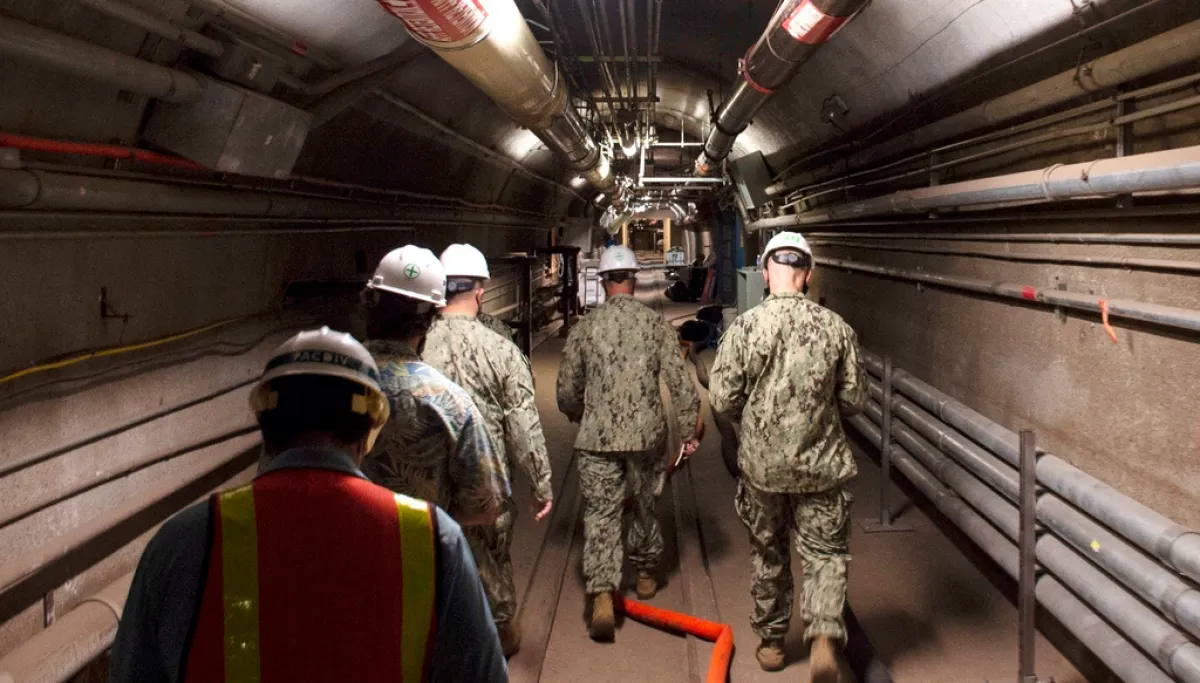
“This Justice Department is proud to announce the efficient resolution of claims relating to the Red Hill jet fuel spills that harmed American servicemembers and their families,” Associate Attorney General Stanley Woodward said in a statement. “These latest settlements prove our commitment to ensuring justice for our Nation’s heroes who repeatedly risk greatly to safeguard our freedoms.”Assistant Attorney General Brett Shumate said the settlements represent the federal government’s continued effort to resolve more than 6,500 claims tied to the contamination.“The settlements represent a fair and just resolution of claims and we look forward to paying additional claims once they are approved,” he added.The contamination crisis forced the evacuation of military housing and displaced roughly 4,000 service members and family members. Water samples taken from a Navy well closest to the facility showed petroleum hydrocarbon levels far exceeding accepted safety thresholds, with testing detecting 350 times the acceptable level for diesel, and more than 66 times the acceptable level for gasoline, according to the Hawaii Department of Health.In this photo provided by the U.S. Navy, Rear Adm. John Korka, Commander, Naval Facilities Engineering Systems Command (NAVFAC), and Chief of Civil Engineers, leads Navy and civilian water quality recovery experts through the tunnels of the Red Hill Bulk Fuel Storage Facility, near Pearl Harbor, Hawaii, on Dec. 23, 2021. (Mass Communication Spc. 1st Class Luke McCall/U.S. Navy via AP, File)