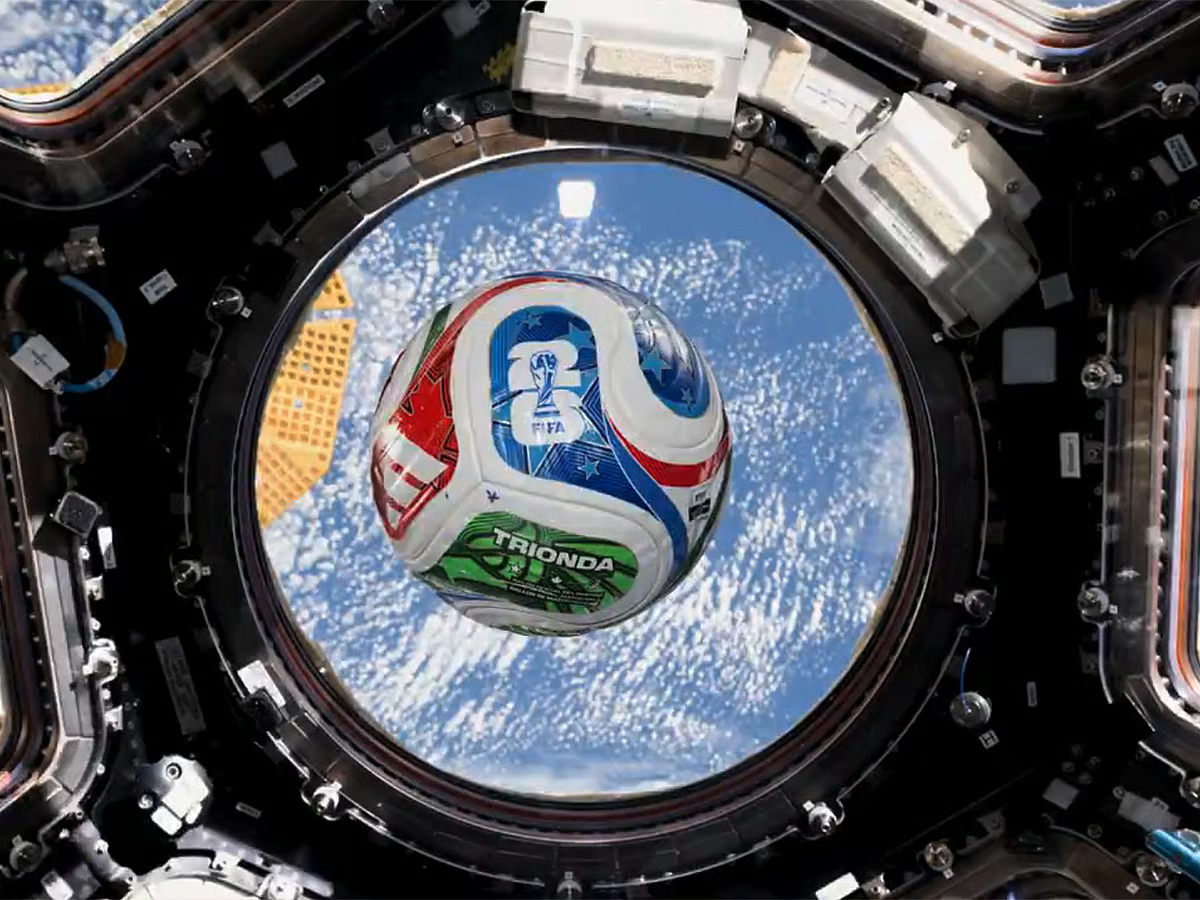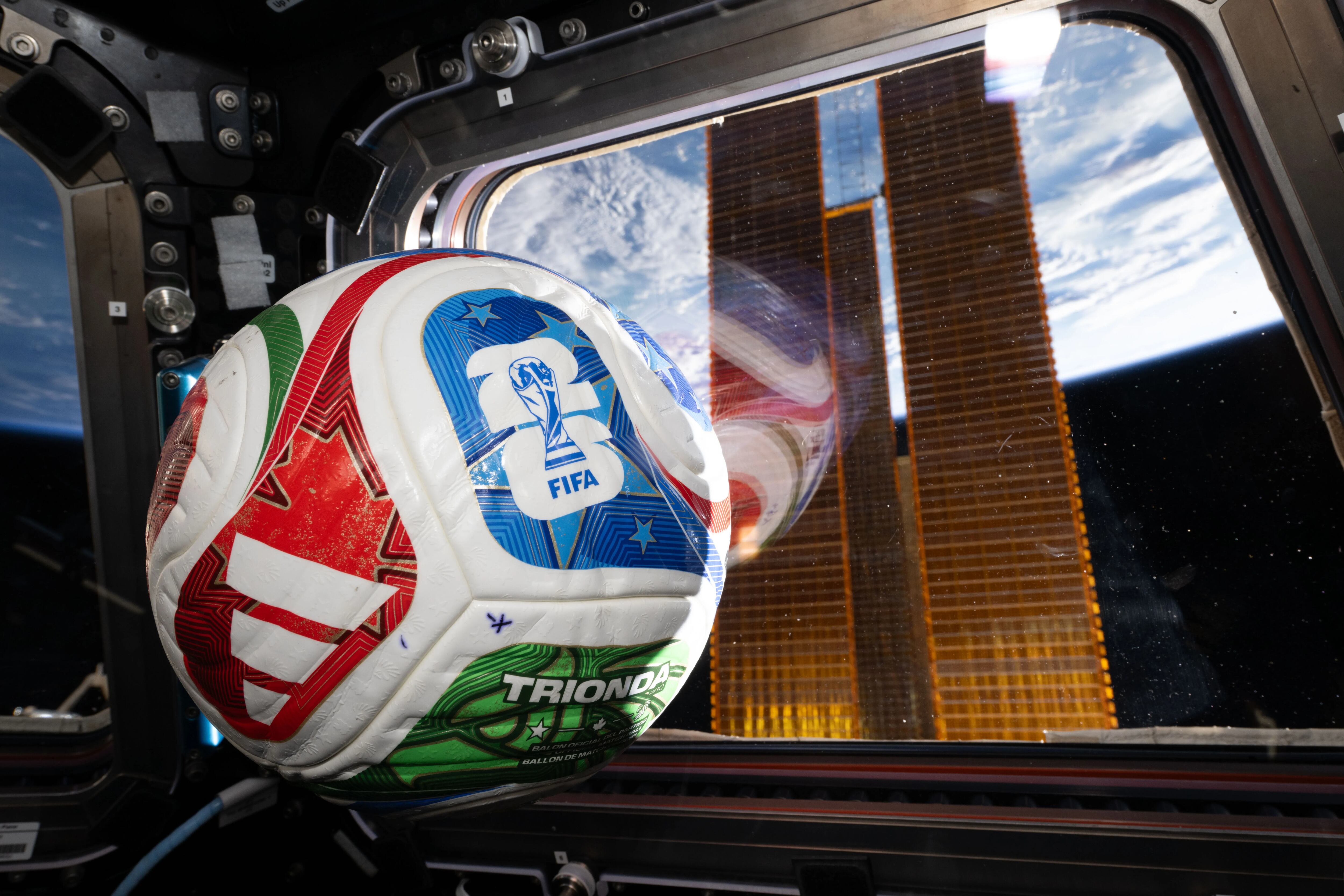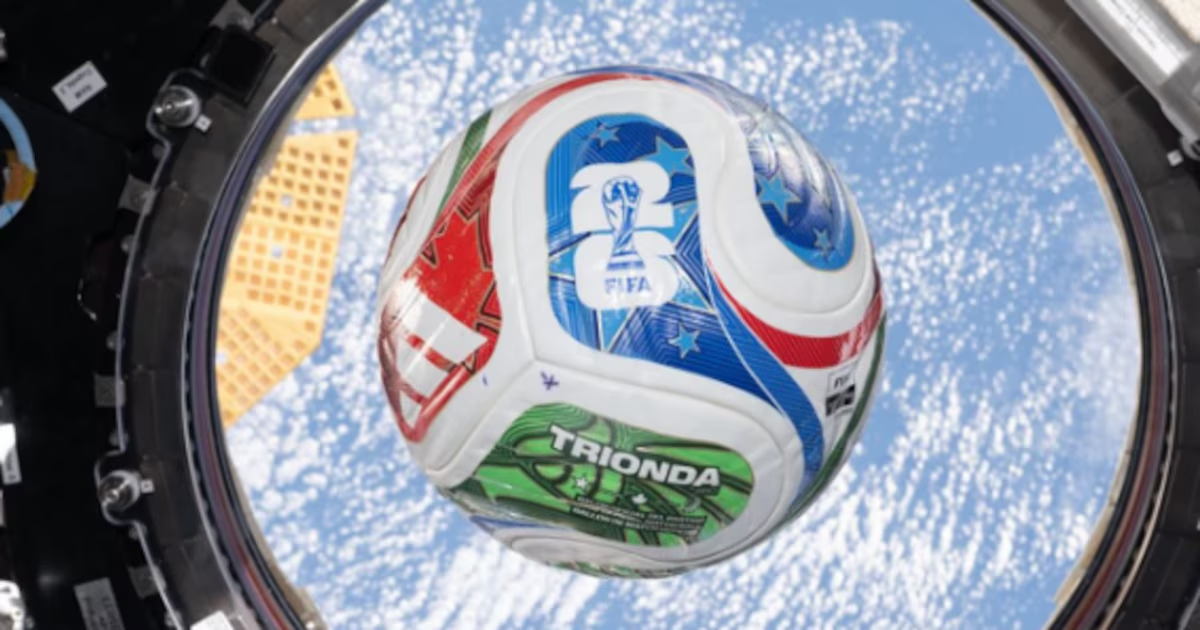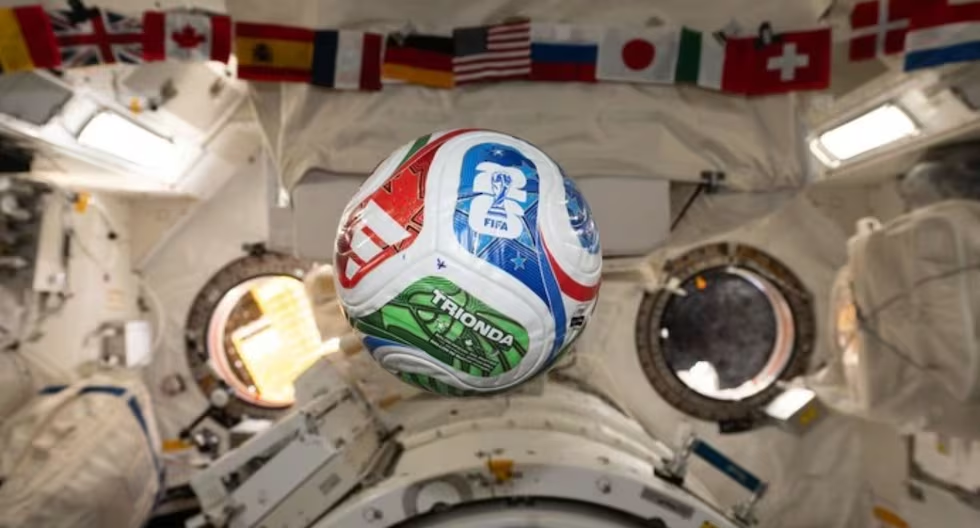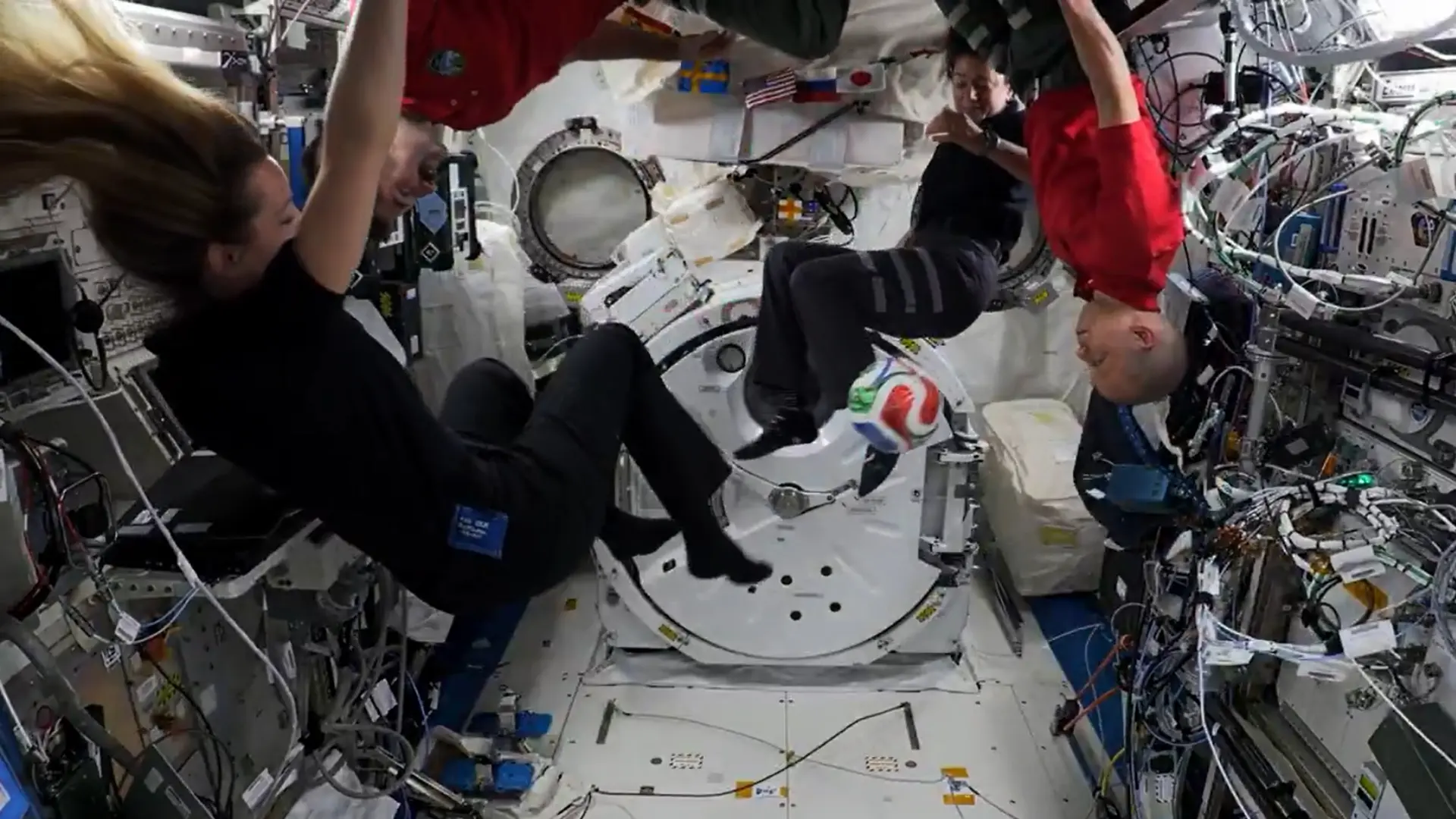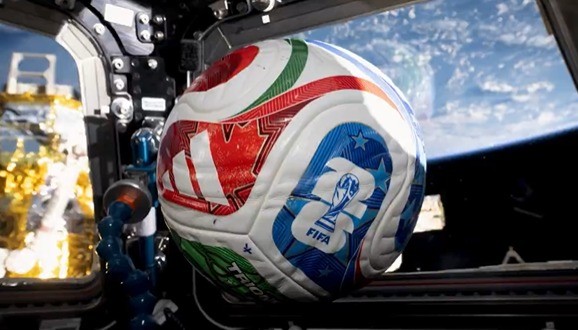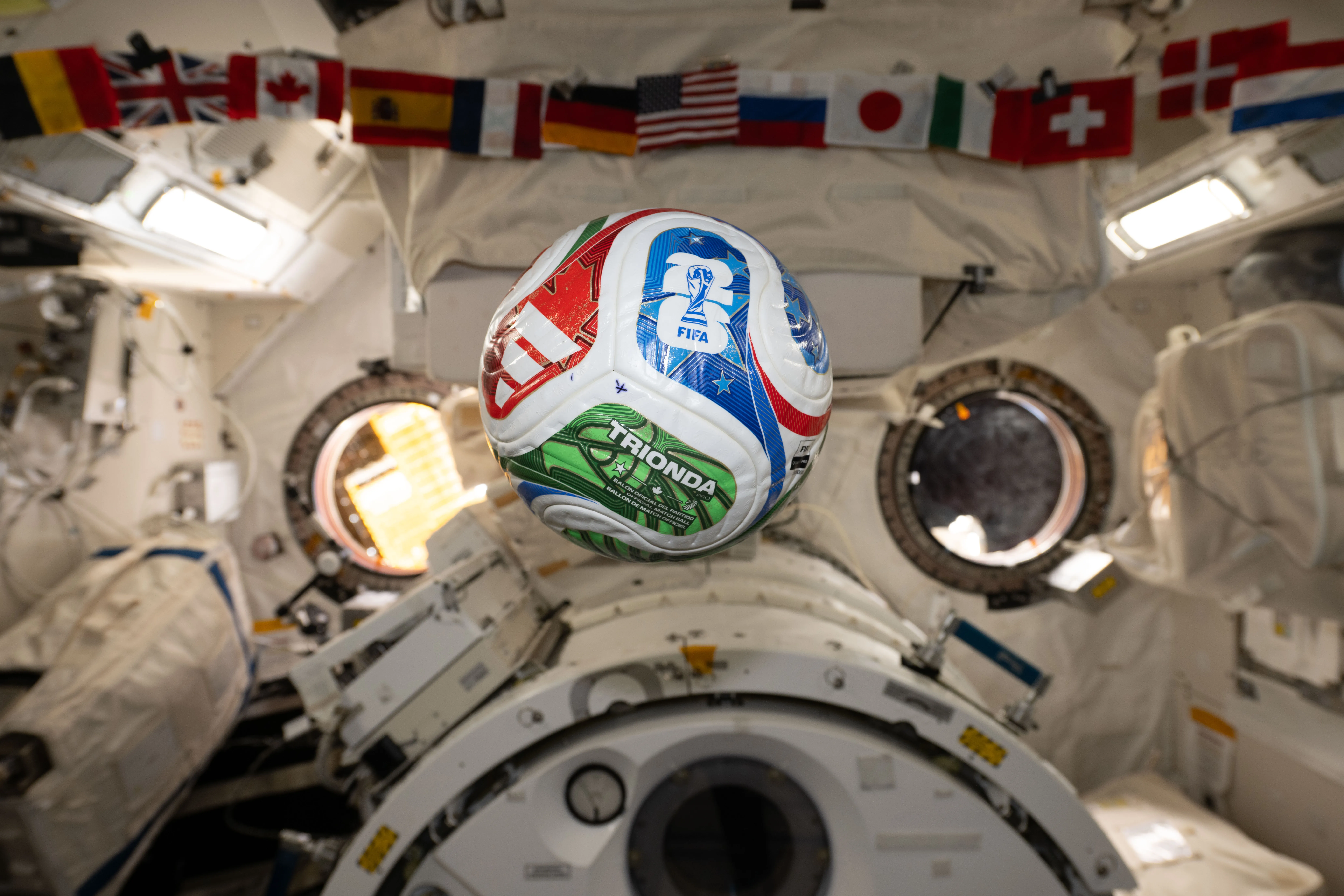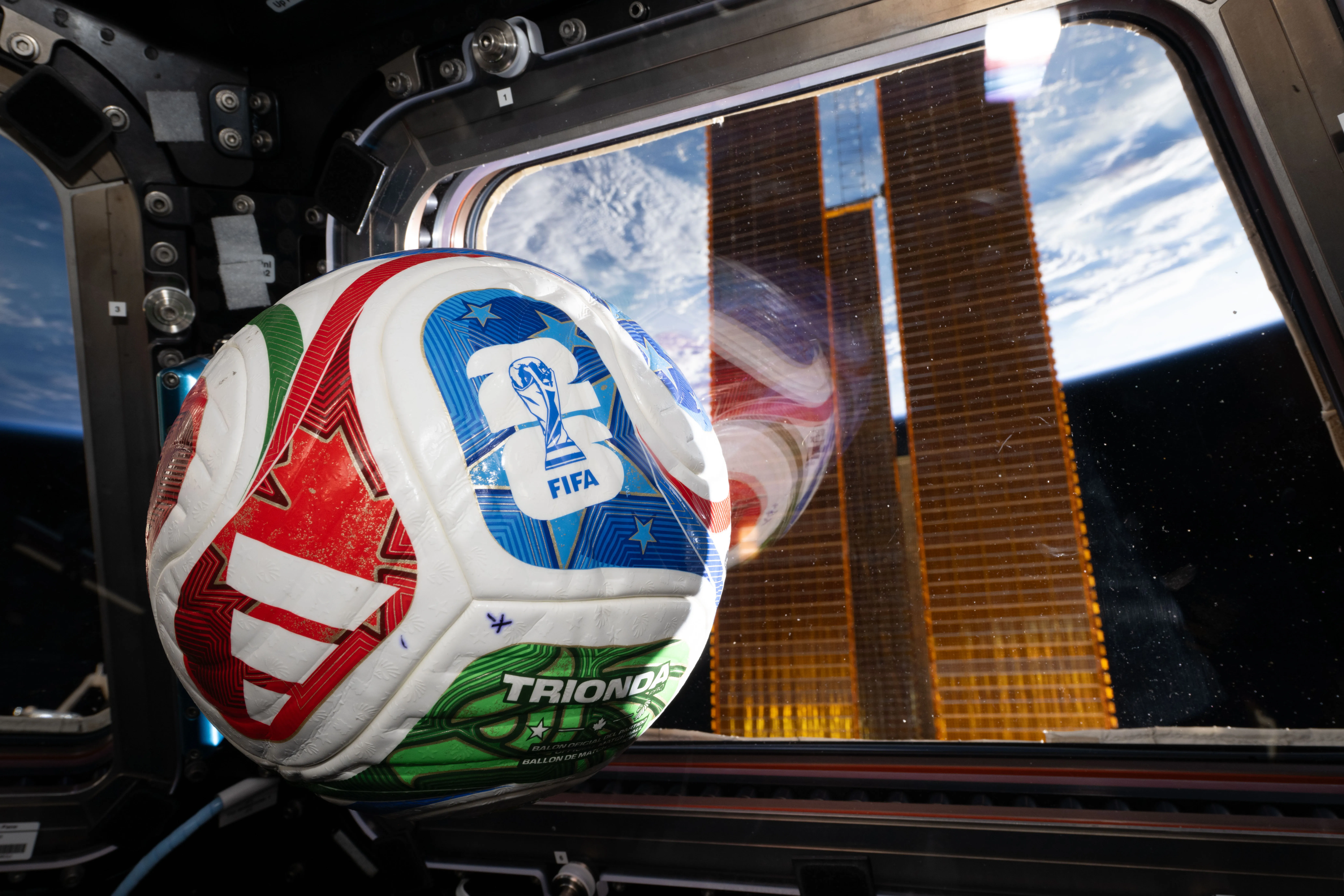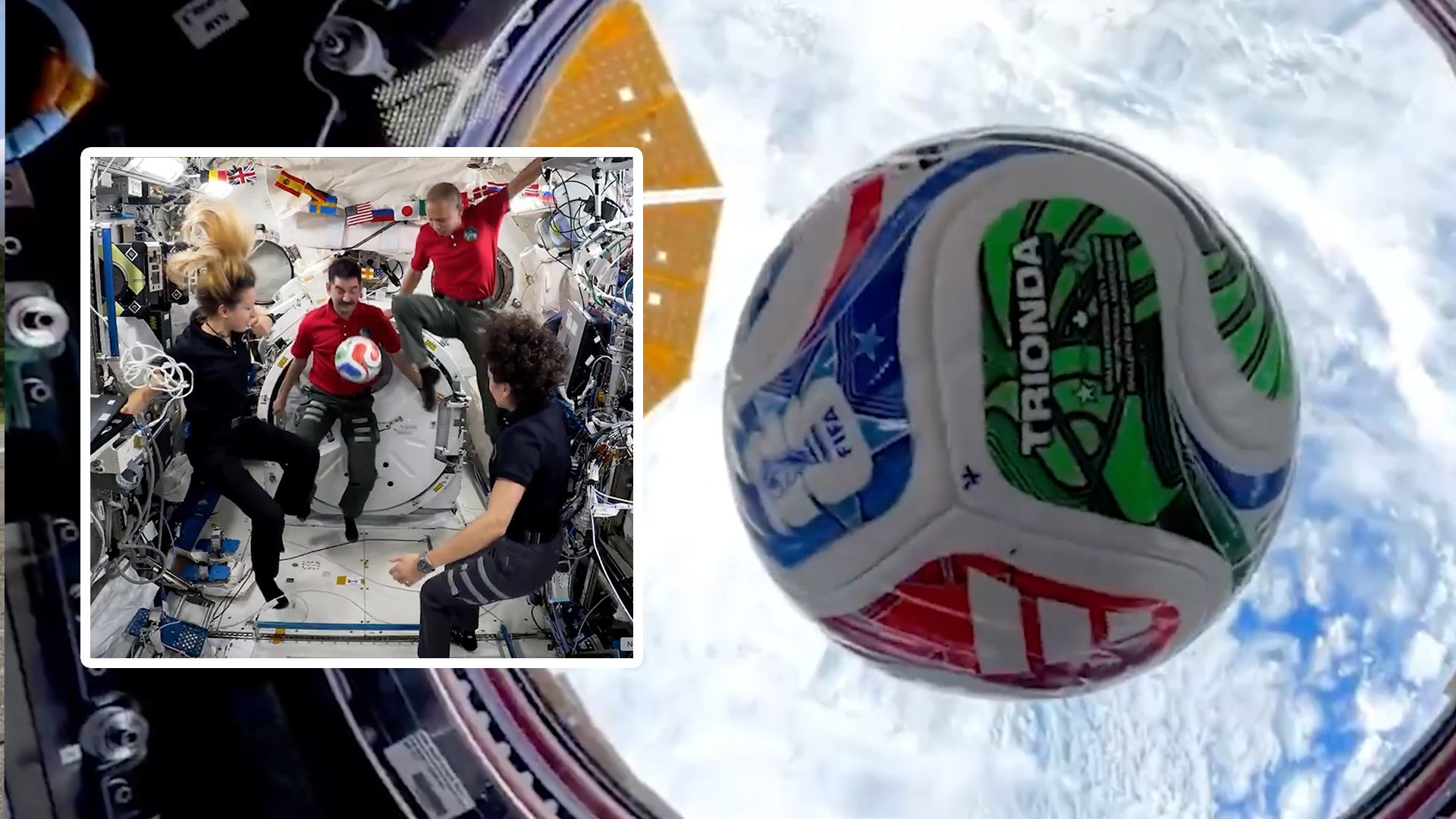
Astronauts on the ISS had an epic microgravity kickoff with a FIFA soccer ball, as the agency highlighted how soccer balls are influenced by space research.NASA and European Space Agency (ESA) astronauts got the official FIFA World Cup ball rolling, zero-G style, in the Kibo module of the International Space Station. The impromptu match, published on X June 20, formed part of NASA's push to explain how space relates to soccer.As NASA explains, soccer has been studied scientifically on the ISS. The orbital laboratory has hosted "studies that improve understanding of the aerodynamics and physics involved in soccer ball flight," the agency stated in a June 8 release about soccer tech. An example study in 2019 examined how the mass of a soccer ball influences the rotation, stability and motion of the sphere. NASA did not name the study, but the date lines up with the Adidas OS SPIN experiment that ran between 2019 and 2021, as described in an agency database of ISS experiments.
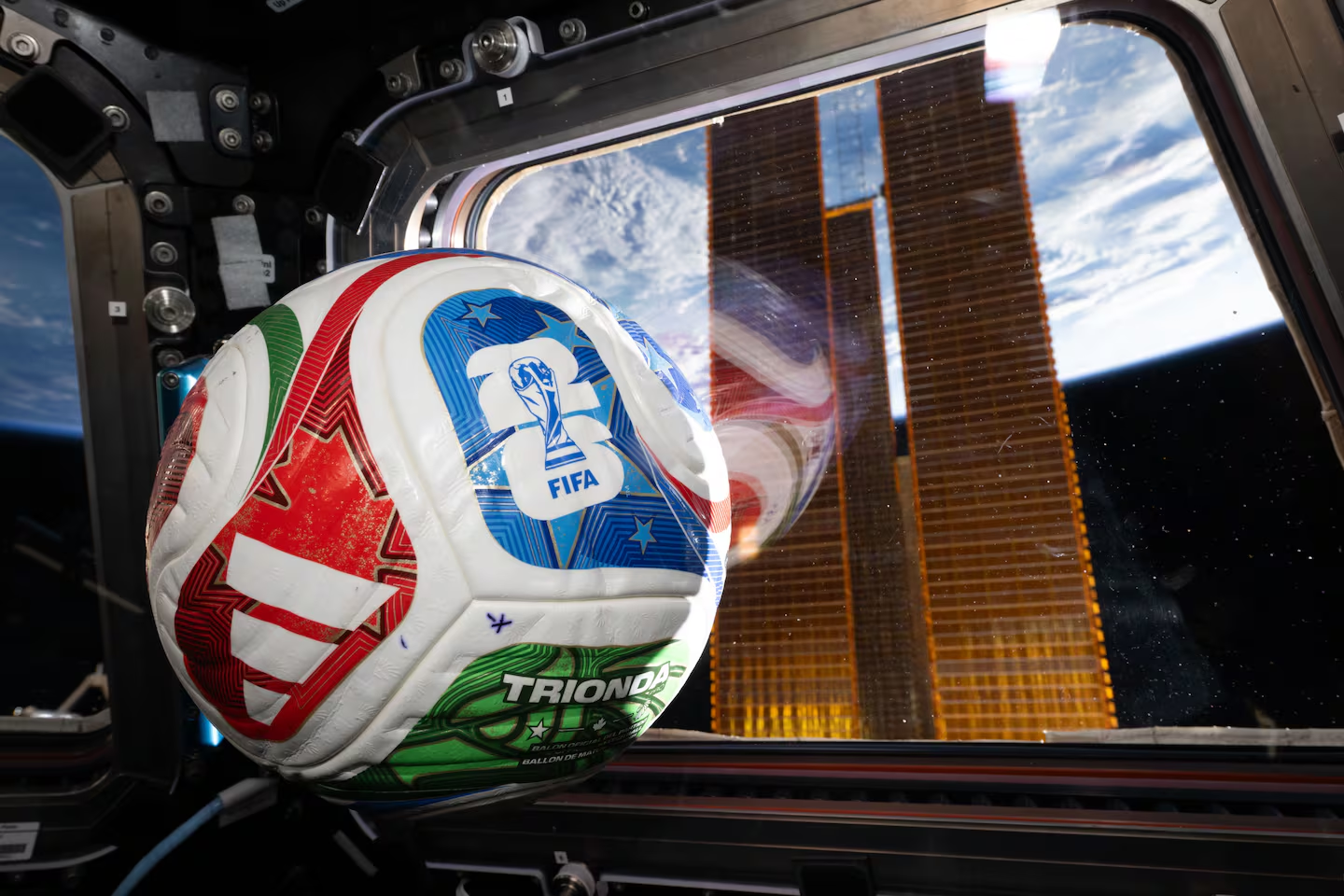
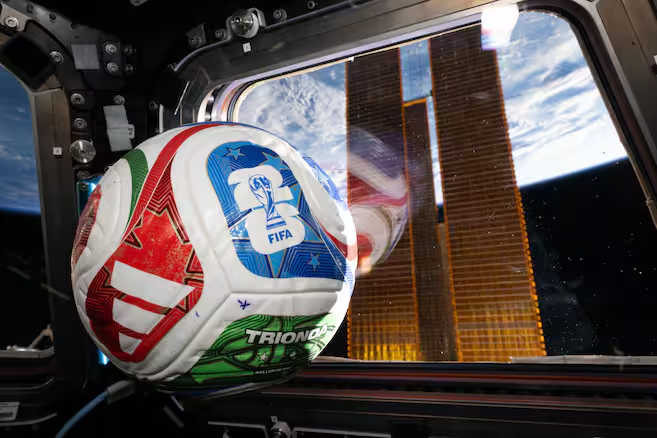
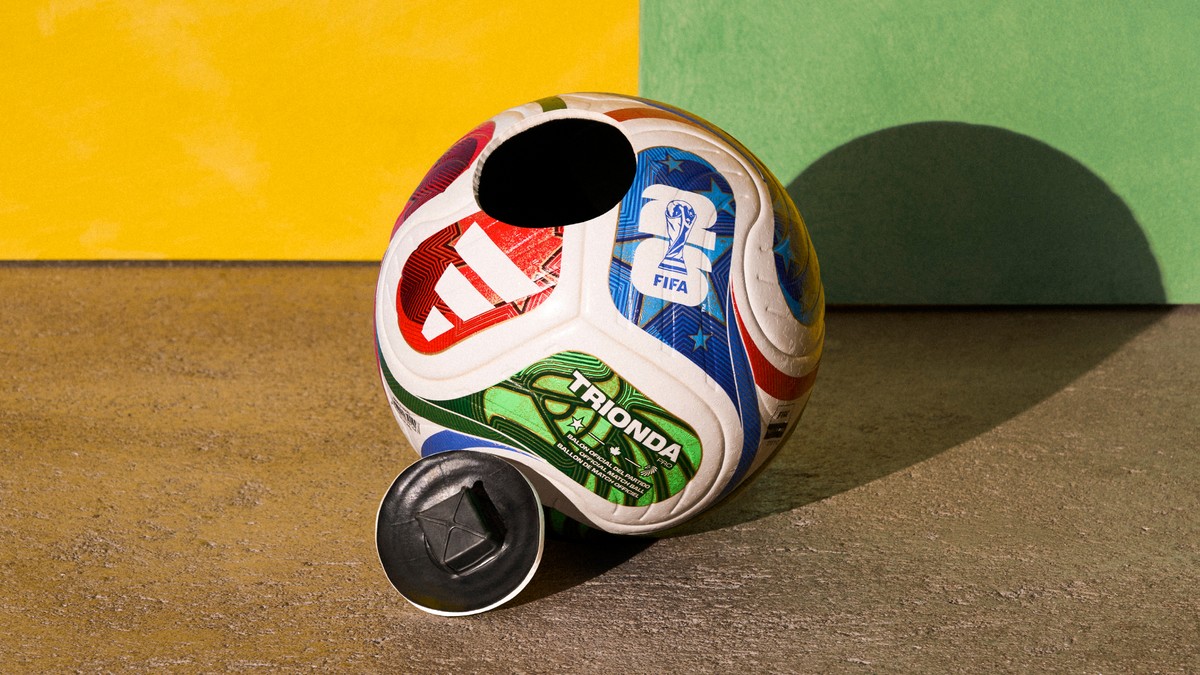
A 2026 FIFA World Cup ball on the International Space Station. (Image credit: NASA)Adidas has put electronics in official match balls since 2022, NASA noted, which allows broadcasters and officiators to monitor speed, position and contactor. "But those sensors also add mass in specific locations inside the ball, and uneven mass distribution can affect how a ball moves through the air," the agency pointed out.Watching soccer ball movements in microgravity can therefore lead to better design to account for the sensors, the agency noted. "The findings have improved understanding of how embedded technologies, including match-ball sensors, can influence performance during play," NASA stated. "The research contributed to studies used in the development and evaluation of soccer balls for major international tournaments, including FIFA World Cup competition."More recently, ISS astronaut Jessica Meir showed students how soccer ball mass and spin works in microgravity. "What you see here is a soccer ball that passes one of the most important tests in sports engineering: balanced mass distribution," the Expedition 74 NASA astronaut said, floating alongside a spinning ball, in a YouTube video posted last month.