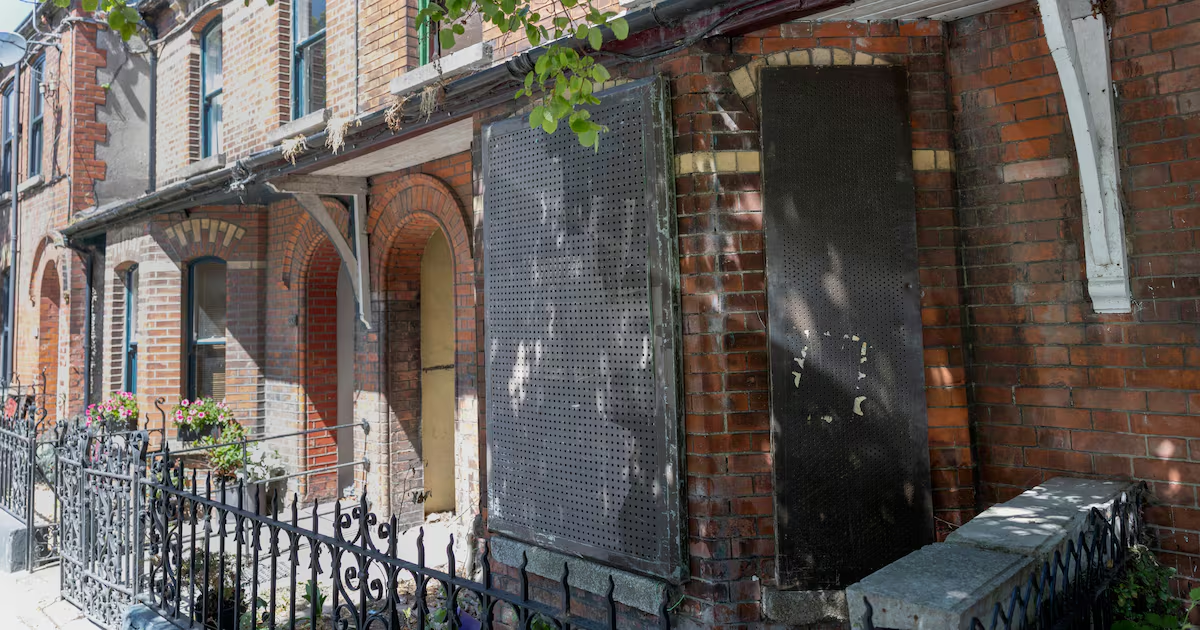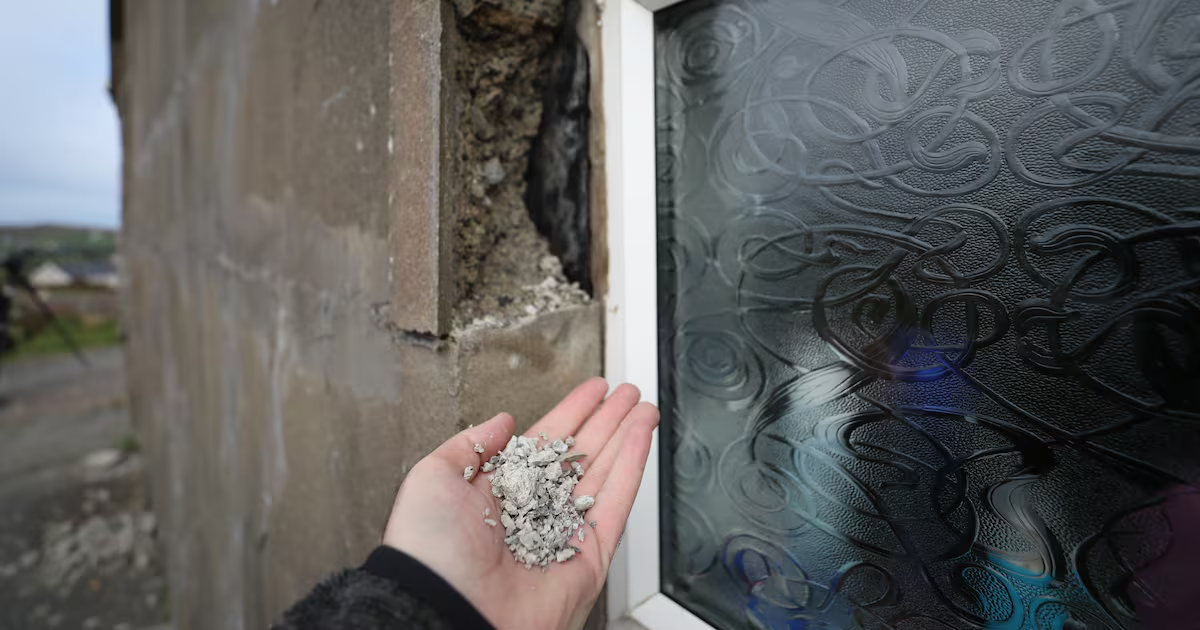
The cost to taxpayers of the defective concrete controversy will be “on a scale with the bailing out of the banks and the bondholders”, the Dáil has been told.Sinn Féin TD Pádraig Mac Lochlainn made the claim as he said at least 20,000 homes would be affected. The Government put the cost to the exchequer at €3.6 billion but it would be more than €9 billion, said the Donegal TD. “I believe that’s going to be a conservative estimate,” he said. Mac Lochlainn was speaking during a Private Members’ debate brought by his constituency colleague Charles Ward of the 100% Redress Party, who was elected to the Dáil to campaign for proper redress for thousands of families affected by defective concrete used in construction during the Celtic Tiger era.Ward, an Arranmore-based TD whose own home was affected, said the scale of the crisis is “profoundly underestimated”. Analysis showed a minimum of 12,000 homes in Donegal alone “may ultimately fall within the high-risk category”. The figure does not include 2,400 social homes, hundreds of community buildings, and does not include commercial premises or mixed-use buildings, he said.How will Ireland navigate the EU presidency? Listen | 48:56Donegal, Mayo, Clare and Limerick were originally deemed affected by defective concrete, but the scheme now includes Sligo, parts of Fingal and Wexford County Councils. Minister of State for Local Government Christopher O’Sullivan confirmed Meath and Carlow County Councils will now also be designated under the redress scheme.Ward said the State noted figures of 10,000 affected homes nationally, but analysis showed “Donegal alone will definitely exceed that figure”, which did not include the 2,400 social homes and hundreds of community buildings.The Government’s redress scheme allows for the retention of existing foundations based on new National Standards Authority of Ireland specifications introduced earlier this month.Following a scientific briefing for TDs, Ward called on the Government to publish the evidence on which its new national scientific standard is based, because of concerns about chemical and sulfite content in concrete.He said homeowners should not have to rebuild on existing foundations, which could crumble in the future. They should be given the option of a full replacement of the foundations on which their homes are built, “where reasonable doubt exists as to future performance”, because of uncertainty in the science. Minister of State for Housing John Cummins said the Government “is mindful of the very real concerns and worries of affected homeowners who deserve the chance to be helped to fix their homes and to move on with their lives as much as possible”. The department, local authorities and the Housing Agency “will update homeowners in the near future in as clear and comprehensive a way as possible regarding what this new standard might mean for them”.Moville, on Donegal’s Inishowen peninsula, is among the worst affected areas in the country for mica and for the students in Moville Community College the subject is rarely far from their minds. Video: Enda O'Dowd The Minister stressed the scheme “is working for many” because more than 3,500 homeowners are at various stages of redress with grants for 100 per cent of eligible expenditure up to €462,000. More than 500 homes have been remediated, “with another 750 currently at various stages of construction”.Minister for Housing James Browne is undertaking a review of the operation of the legislation underpinning the redress and the issue of “concrete damage interpretation” will be considered in the review, said Cummins. People Before Profit-Solidarity TD Paul Murphy said affected homeowners had campaigned since 2011 before “finally getting a remediation scheme that may turn out to be based on faulty scientific evidence”.He said none of this is the fault of households, so they should not have to suffer the consequences. “Unfortunately, the reality is that they have been the only ones to suffer any real consequences up to this point, pending the outcome of legal cases.”Social Democrats TD Sinéad Gibney said “cowboy developers” who used defective materials walked away “facing no consequences”.“The vast majority are still building. A number of them are getting very high-profile public sector contracts. There are no consequences, it seems. There is remediation in this game, but it is not close to justice.”
Scale of defective concrete crisis ‘profoundly underestimated’, Dáil hears
‘Cowboy developers’ who used defective materials walked away ‘facing no consequences’, says Social Democrats TD
696 words~3 min read