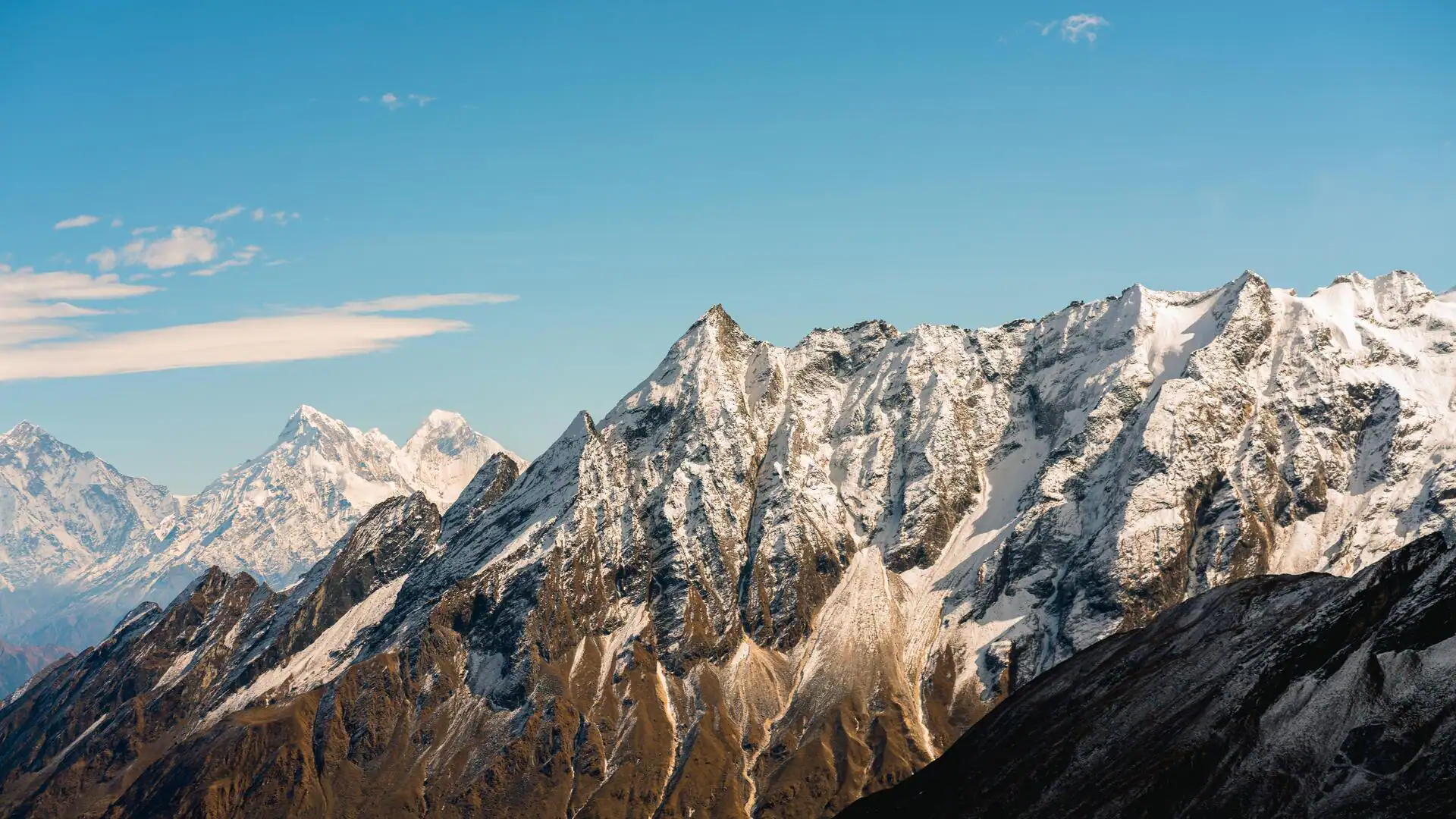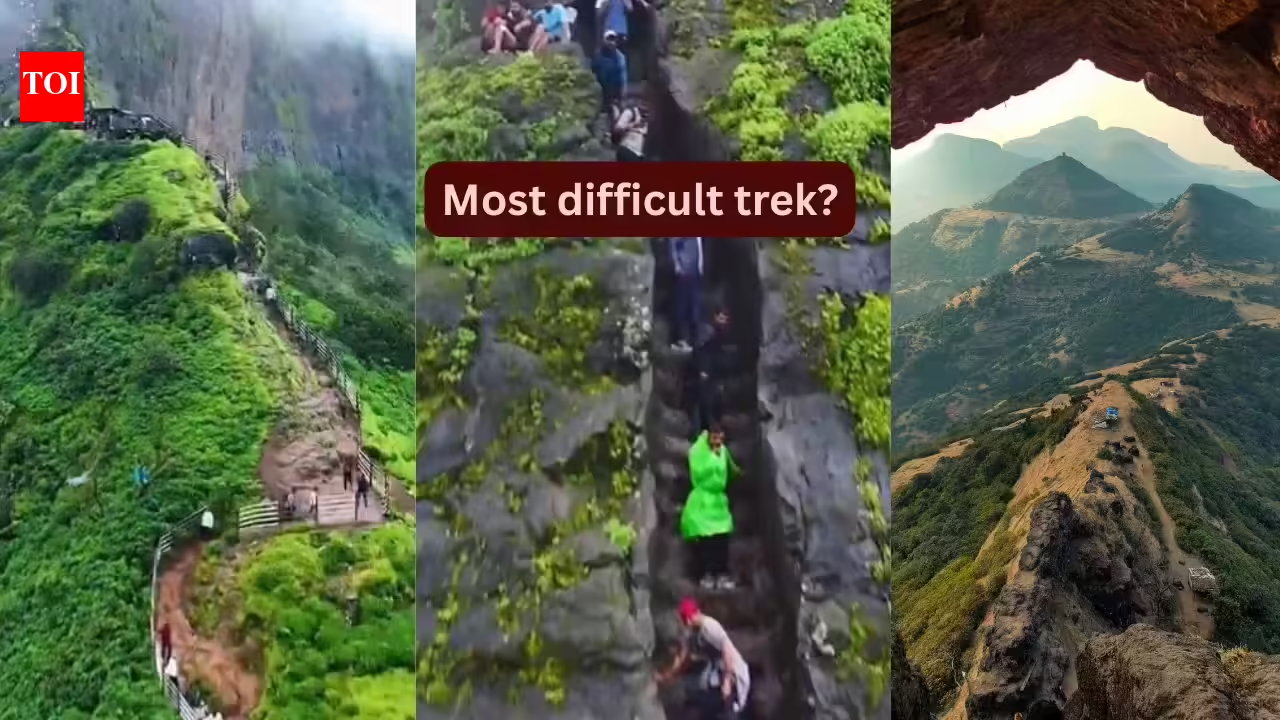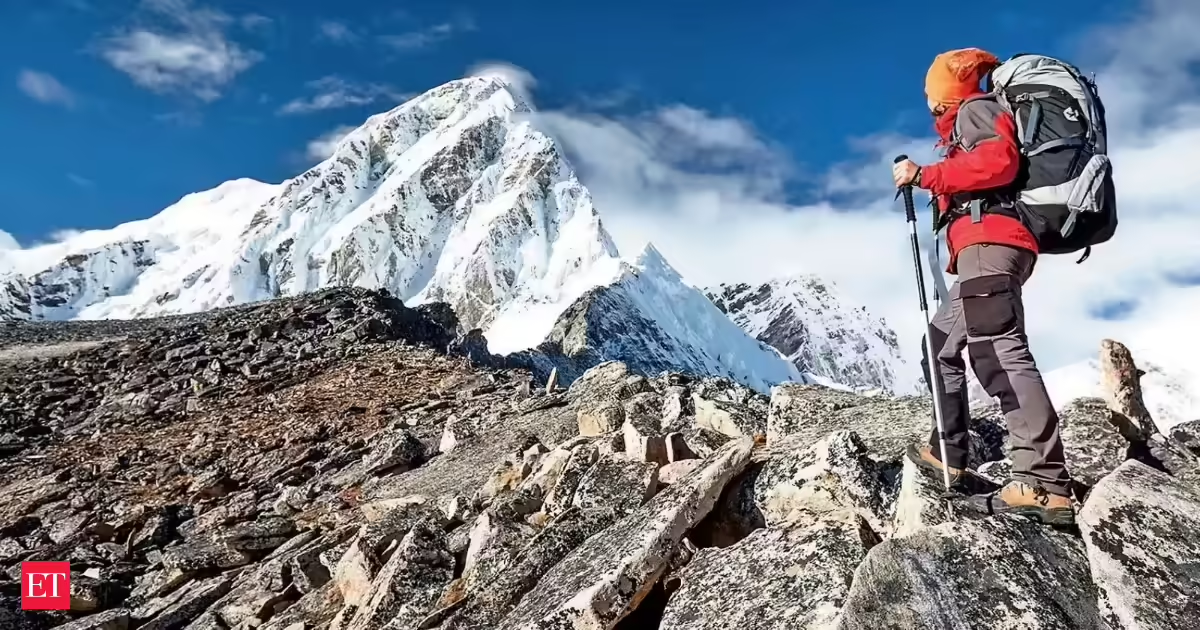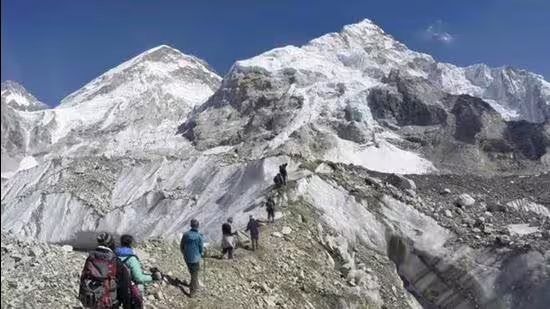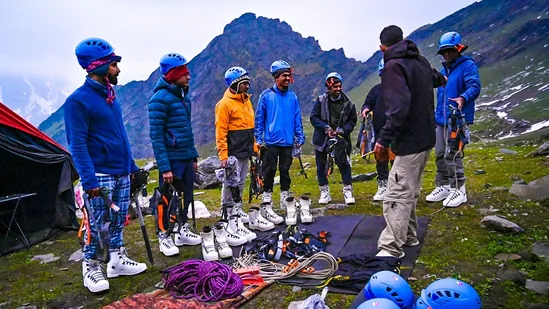
Uttarakhand-based trekking company Trek The Himalayas has observed a growing interest in trekking in India over the last two decades. The trend also suggests that trekking is no longer seen solely as a professional or thrill-seeking adventure, with greater accessibility attracting a wider range of participants.Trek The Himalayas reports a rise in trekking popularity in India, transforming it from a niche activity into a structured industry with curated experiences, driven by co-founders Rakesh Pant and Sandeep Rawat. (Trek The Himalayas)However, this unregulated activity, dominated by local operators and informal groups with limited resources, has now grown into a professionally managed ecosystem. As a result, organisers in this industry are now offering curated experiences, well-defined itineraries, expert guidance, and safety-oriented expeditions.Co-founders Rakesh Pant and Sandeep Rawat shared an interest in mountaineering, which evolved into a trekking business that now reports revenues of more than Rs. 50 crore.Trekking in India: Initial perceptionsIn its initial phase, trekking in India was primarily perceived as an activity for mountaineers, adventurers, defense forces, explorers, and nature enthusiasts, among others.Common people mostly saw it as:Risky and unpredictable: There was little awareness about routes, weather patterns, sickness, and other altitude-related risks. Due to this, trekking was seen as dangerous.Unstructured and inaccessible: There were no well-defined itineraries, limited or no information about trails, and almost zero support systems.Physically strenuous: The prevalent assumption was that only trained professionals could do trekking.During this time period, even the passionate outdoorsmen significantly relied on local guides, common maps, and average information. Equipment was often inadequate, and safety protocols were minimal or nonexistent.How trekking changed from an informal sector to an organized industryThe transition of trekking in India from an informal activity to a structured industry was a gradual shift, pushed by growing interest in outdoor travel, the rising middle class, and the influence of global adventure tourism trends.Witnessing these developments, governments, tourism boards, and private organizations began weighing in on its economic and cultural potential. Online forums, blogs, and early travel communities began sharing experiences and information about Himalayan trails.As a result of this progress, marked trails, professional guide services, permits, lodges, campsites, and improved infrastructure started to emerge. Companies began offering structured treks with defined itineraries, logistics support, and trained leaders. This was the start of Trek The Himalayas.In the present day, as trekking has become mainstream, organisations are now providing end-to-end services, including transportation, accommodation, meals, equipment, and certified guides.Safety standards, training, and commercialization in TrekkingSafety standards: Safety measures have considerably reduced risks and increased confidence among trekkers. Key improvements include the following:Pre-trek briefings and health checksAltitude awareness and acclimatization protocolsEmergency response systems, including evacuation plansUse of medical kits and trained first respondersWeather monitoring and risk assessmentTraining of trek leaders: Their responsibility has evolved from a guide to a multiskilled professional. Their enhanced skillset includes:Navigation and route planningCertifications in mountaineering and wilderness first aidGroup managementFirst aid and emergency responseEnvironmental awarenessClient experience and engagementCommercialisation of trekking: Due to this, trekking has now become accessible to a larger and wider audience. Here is how it has impacted the market:Expansion of trekking as a revenue-generating segmentCompanies offering premium and customized trekking experiencesGrowth of online platforms for marketing, booking, and customer reviewsEmployment and entrepreneurship opportunities for local communitiesRising competition leading to improved servicesA partnership that built trekking as a businessRakesh Pant: Mountaineer and entrepreneurRakesh Pant was born on 15th February 1986 in Almora, Uttarakhand. He completed his graduation from Kumaon University, Almora. Later, he pursued various mountaineering courses from the Nehru Institute of Mountaineering (NIM), Uttarkashi, Uttarakhand. He got his first job as a mountaineering instructor at NIM. Later, he began working as a liaison officer at the IMF(Indian Mountaineering Foundation), where he assisted many international mountaineering teams.From the beginning of his entrepreneurial journey, Pant had envisioned making trekking mainstream. His long-term goal was to create a platform that would:Introduce people to the Himalayas in a safe and structured wayPromote environmental awarenessSet high benchmarks for quality and safetyPromote sustainable trekking practicesSandeep Rawat: Operations in-chargeSandeep Rawat was born on 15th June 1985 in Ramnagar, Nainital, Uttarakhand. He acquired a bachelor's degree in tourism studies (BTS) at IGNOU. After that, he took the Basic and Advanced Mountaineering Course at Nehru Institute of Mountaineering (NIM), Uttarkashi, Uttarakhand. He has participated in several climbing expeditions across the Himalayas, including Mt. Plateau and Mt. Changbang.Driven by his passion for mountaineering, Rawat co-founded Trek The Himalayas in 2010. He played a pivotal role in establishing and managing the company's operational framework. Today, he oversees the organisation's operations, ensuring high standards of efficiency and service.In 2021, Trek The Himalayas was entrusted by Uttarakhand Tourism with the restoration of the Char Dham Trail.His responsibilities include:Planning and designing trekking itineraries, routes, and schedulesConducting surveys and risk assessmentsImplementing safety protocols and emergency response systemsManaging logistics: transportation, accommodation, food supplies, permitsBusiness planning, strategy development, and goal settingBuilding partnerships with local communities, vendors, and tourism bodies.ConclusionThe evolution of trekking in India gained momentum in the last two decades. Rakesh Pant and Sandeep Rawat partnership helped build this organisation and enhanced the trekking landscape in India.Today, people have access to getting all the services even in remote areas so that their safety, fun, and adventure are not compromised.Trek The Himalayas Official YouTube Channel.Note to the Reader: This article is part of Hindustan Times' promotional consumer connect initiative and is independently created by the brand. Hindustan Times assumes no editorial responsibility for the content.
The rise of organised trekking in India and the role of ‘Trek the Himalayas’ Untitled Story
The organisation enhances safety and accessibility, transforming the trekking landscape and catering to diverse adventurers seeking curated outdoor experiences.
895 words~4 min read