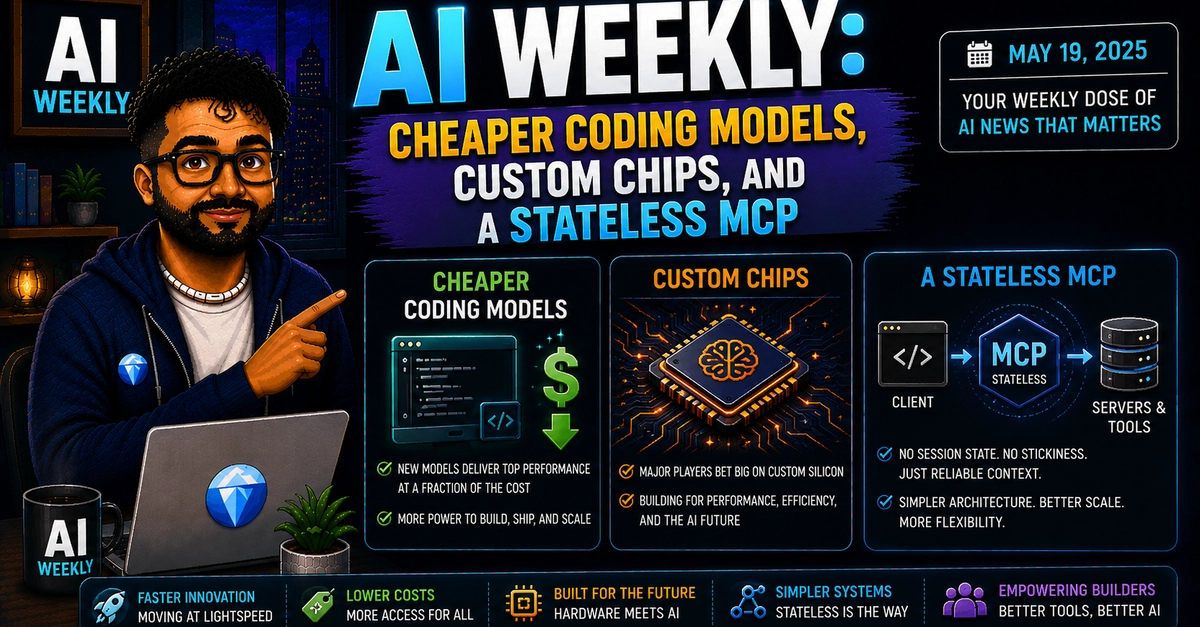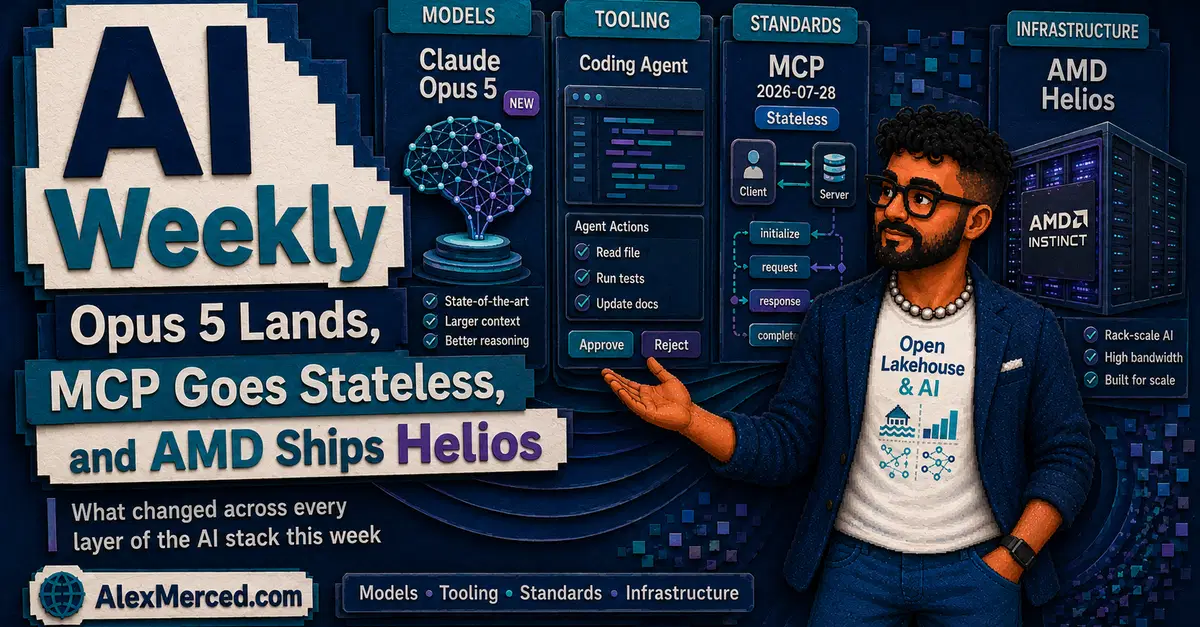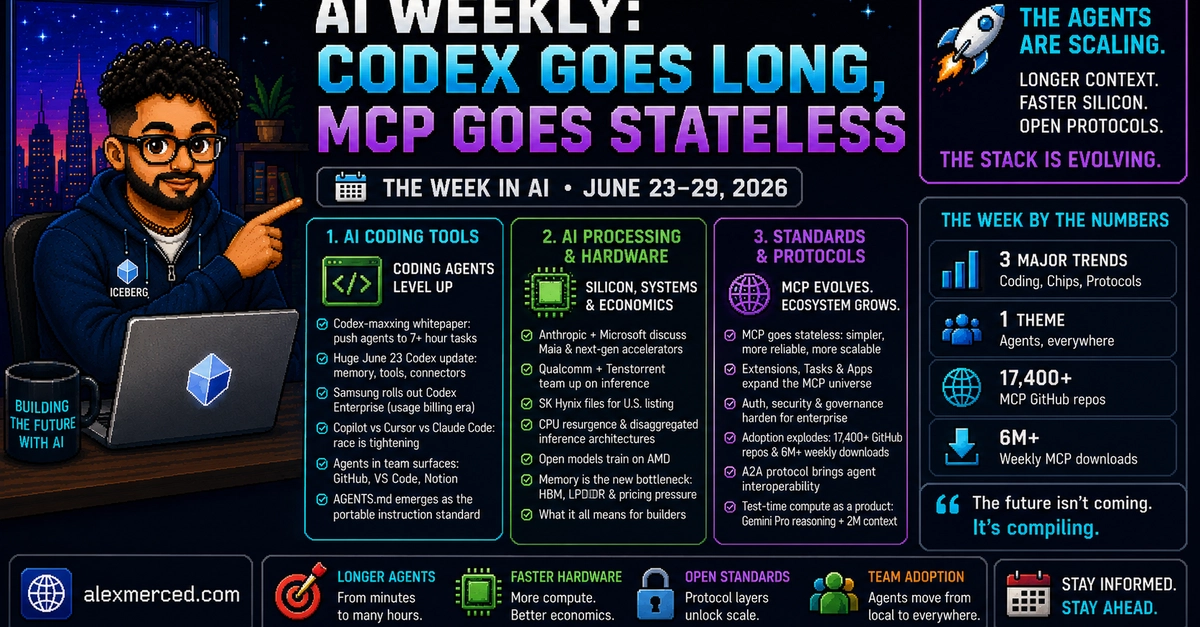
The past seven days pushed three quiet shifts forward. AI coding moved from single prompts toward long-running work that keeps its own context. The plumbing under AI agents got a major upgrade as the Model Context Protocol locked in a stateless core. And the hardware story spread out, with new deals and new silicon chipping away at any single vendor owning the whole stack.
None of these arrived as a flashy product launch, and that is the point. The agentic stack is past its demo phase and into its operational one. The work now is about budgets, recovery, statelessness, security, and hardware choice, the unglamorous machinery that decides whether AI holds up under real production load. Here is what mattered between June 17 and June 24, 2026, across coding tools, processing hardware, and the standards that tie agents to the rest of the software world.
AI Coding Tools: Codex Reaches for Long-Running Work
The biggest coding-tool story of the week came from OpenAI, and it was less about a new model than a new way of working. On June 22, OpenAI published a whitepaper by Jason Liu titled Codex-maxxing for long-running work. The argument is direct. Teams are using AI for work that runs past a single prompt, and Codex now functions as a persistent workspace rather than a one-shot assistant.