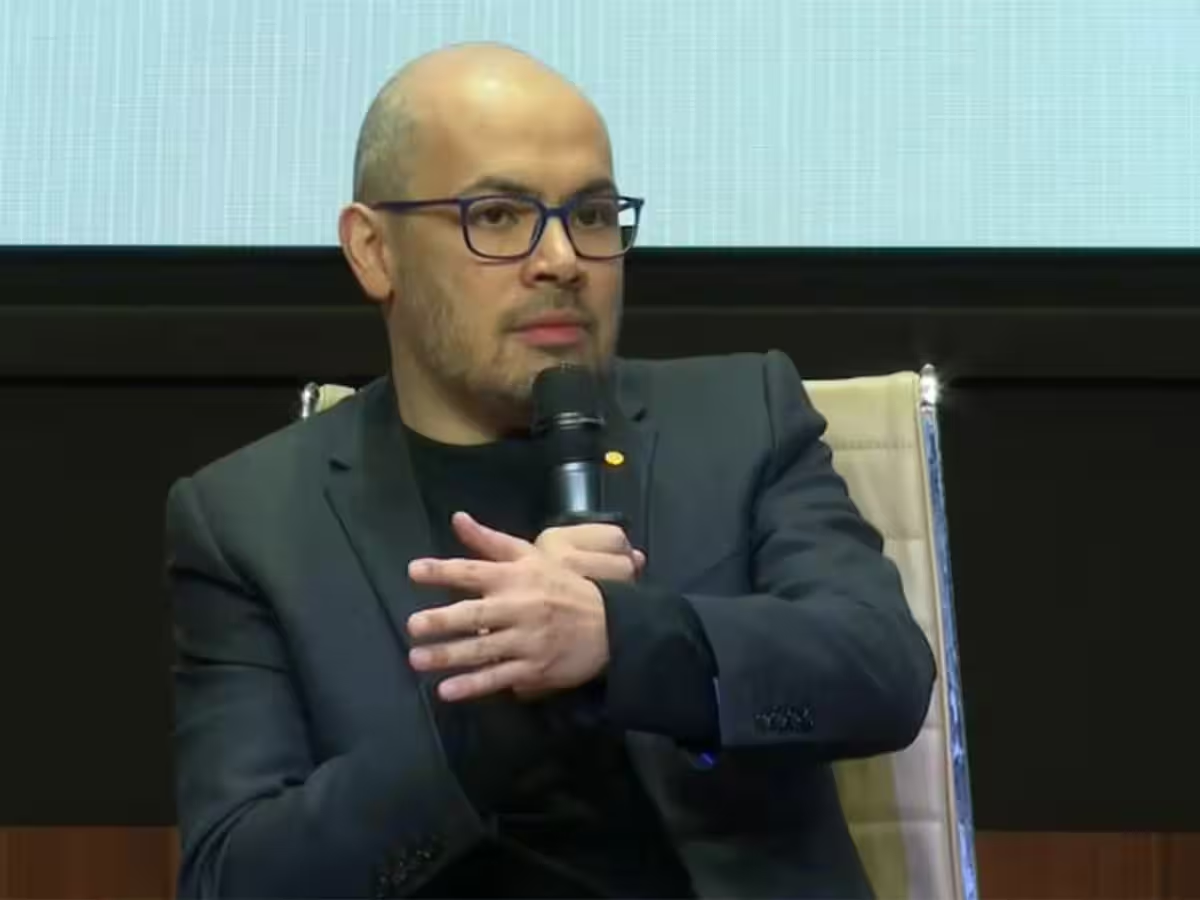
Kush Amlani, Director-Global Competition, Mozilla
It’s been two years since the Indian government proposed a draft Digital Competition Bill that pushes for a digital services regulation with an ex-ante (proactive) approach rather than an ex-post (reactive) approach. With few discussions on the topic since, the Bill is now undergoing scrutiny in the AI age, where regulation is hard-pressed to keep up with the speed of technological developments. In this backdrop, Mozilla’s global leaders, Kush Amlani, Director-Global Competition and Linda Griffin, Vice President-Public Policy, talk to businessline about the growing global push for an ex-ante approach and the potential benefits of this approach for India, particularly its start-up ecosystem.
Linda Griffin, Vice President-Public Policy, Mozilla
Why does the ex-ante vs ex-post discussion matter in the AI age?Amlani:In the AI age, it actually matters even more. An ex-post approach is very slow and may take many, many years to get a resolution to a case where the remedies are often ineffective. The harmed competitor has already been pushed out of the market and there is a dominant player. There are growing movements globally looking at ex-ante regulations to limit the number of harms, intervene quickly and effectively in those markets.The foundations of digital markets are quite wonky, they are concentrated. AI being built on top of these markets is like building a house on top of wonky foundations. If we fail to act, we will recreate the same mistakes and have power concentrated in a small number of powerful tech companies. Local players will not be able to compete and consumers will be deprived of choice. Innovations of Indian start-ups won’t reach Indian consumers in the way that they should.Griffin:A lot of big players haven’t found the right business models to generate profit. So, we know their business models are going to change. That is a risky scenario for most start-ups building or looking for interoperability. There’s no control over the terms. We’d rather people have more ability to own, rather than to build AI and have more rights around minimum requirements for interoperability.