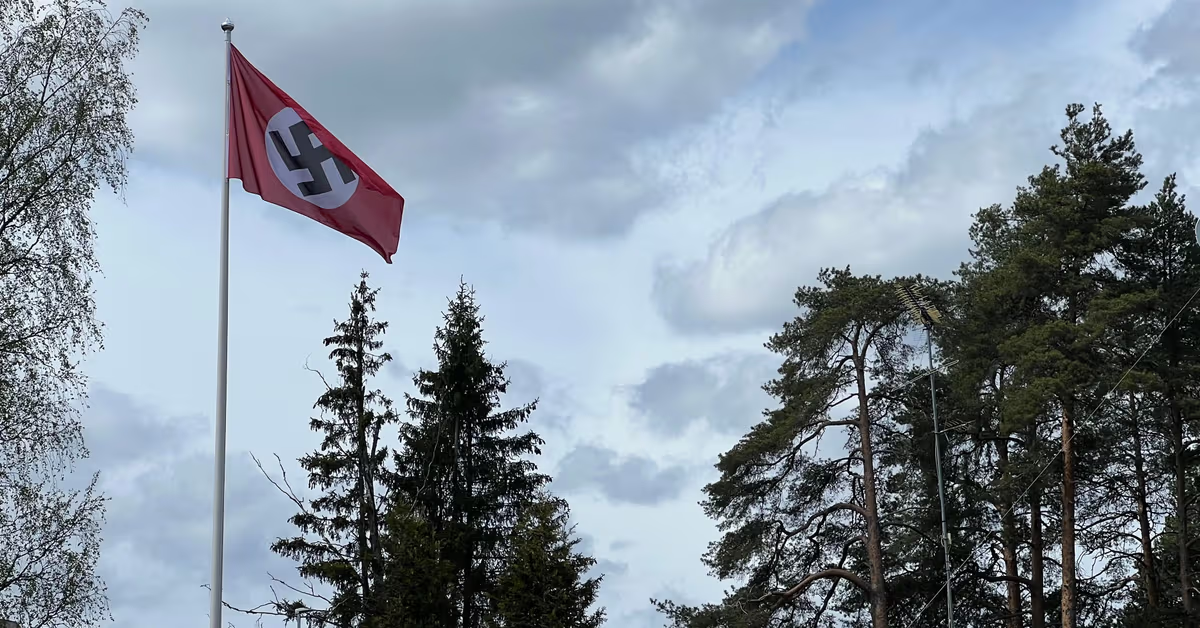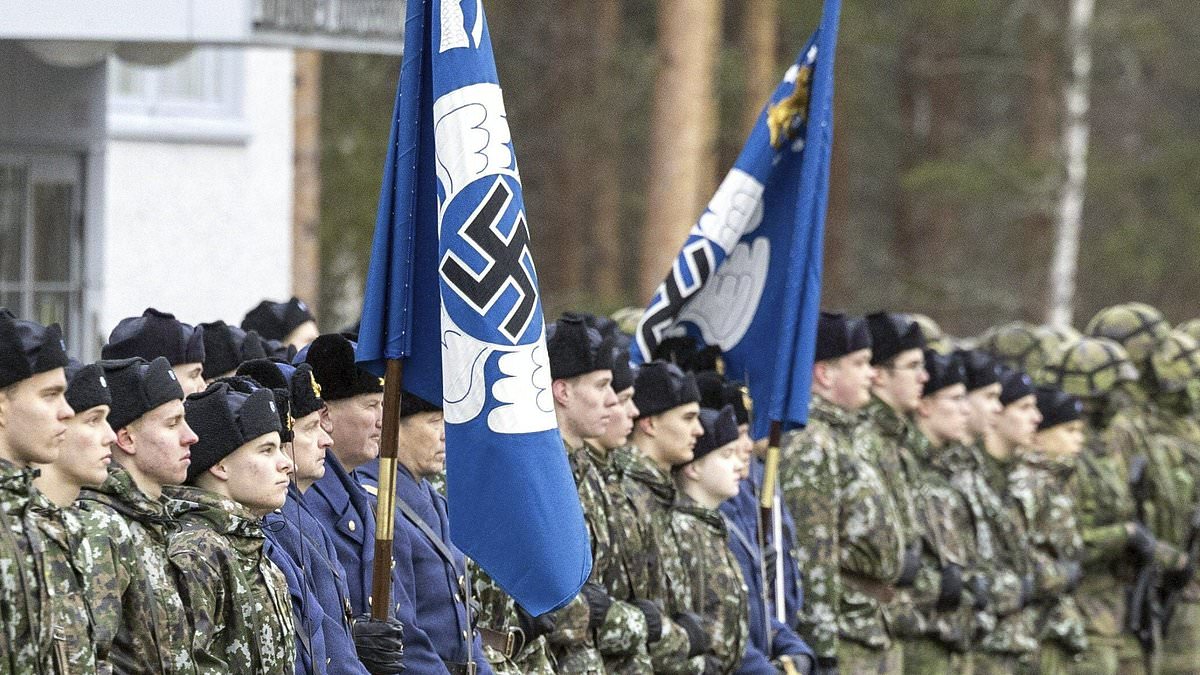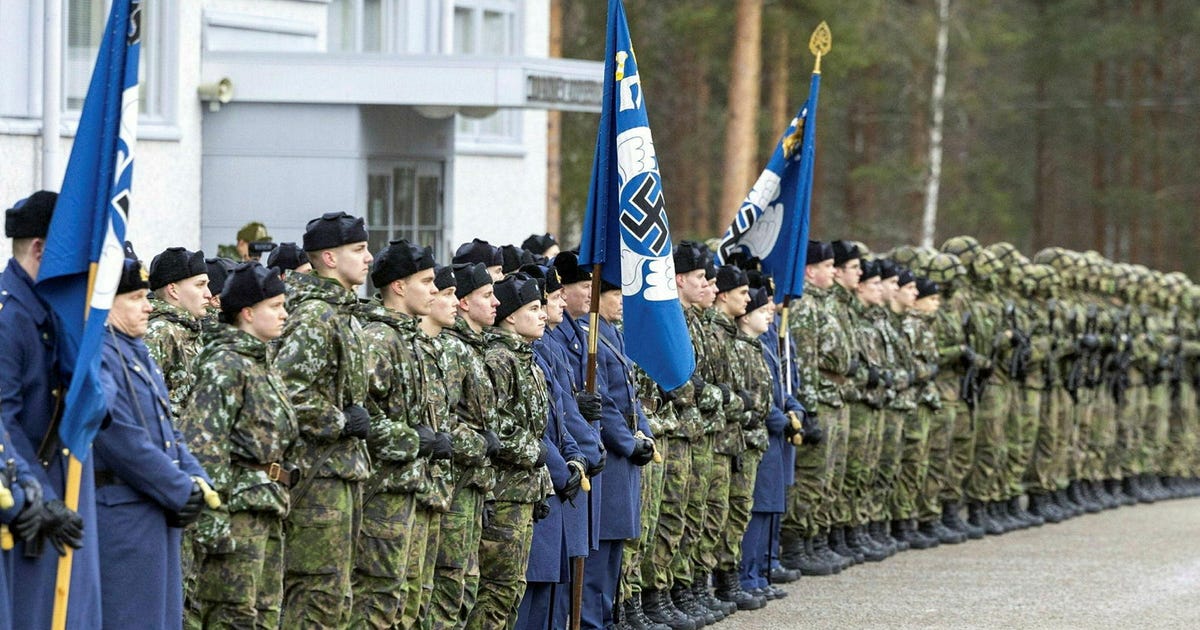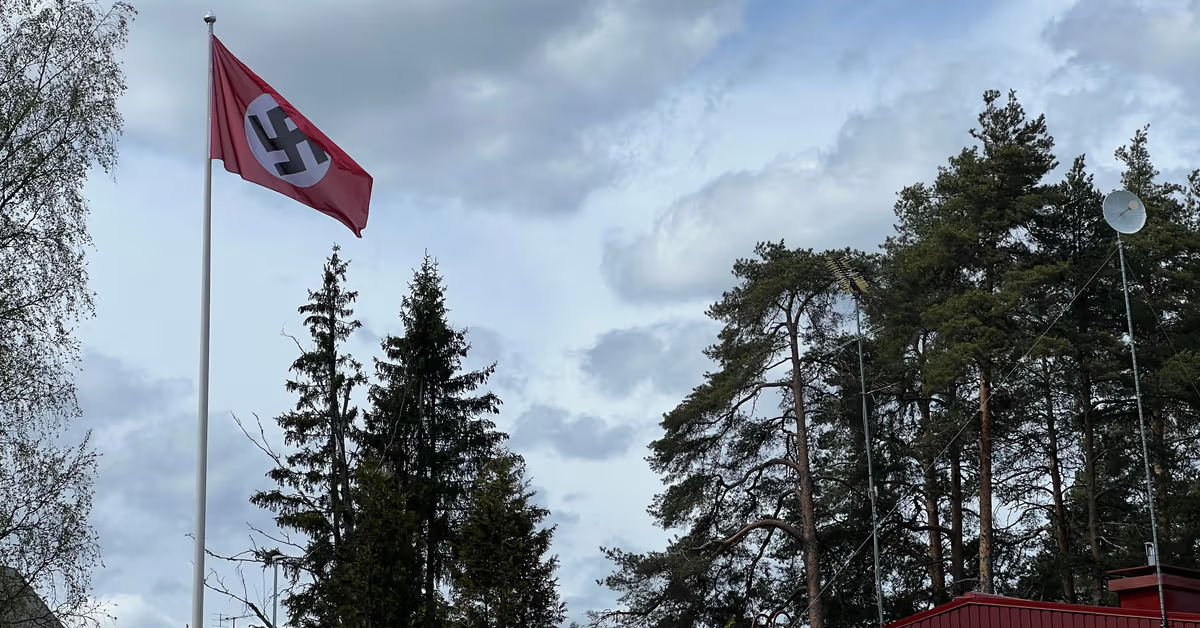
The swastika flag incident seems to echo Russian propanganda efforts to link Finland and Ukraine to Nazism.A flag resembling that of Nazi Germany flew outside a house in Lappeenranta on 12 May. Image: Kalle Schönberg / YleYle News15:53A man who flew a swastika flag outside his house in Eastern Finland last month moved there from Russia, Yle has learned.According to information obtained from the Digital and Population Data Services Agency (DVV), the man was born in the Soviet city of Leningrad, now St. Petersburg, in 1969.In 1991, he changed his Russian surname to a Finnish-sounding one. The following year, he legally changed his first name, too. He has lived in the eastern city of Lappeenranta since 1996 and held Finnish citizenship since 2000.According to experts interviewed by Yle, the flag-raising incident has features that are typical of Russian attempts at information influencing.Denies Russia connectionsThe man denies to Yle that the flag-raising stunt had any Russian connections.He claims that he never had a Russian passport, and that he defected to Finland from the Soviet Union in the early 1990s. According to the man, he has Ingrian and Jewish roots and relatives in Ukraine.The man also had a large picture of Stepan Bandera, a Ukrainian World War II nationalist and resistance fighter, on the outside wall of his house, with anti-Russian text written in Russian next to it.The man who flew the flag also had a large picture of Ukrainian nationalist Stepan Bandera outside of his house. Image: Kalle Schönberg / YleMoscow's information influence efforts often cite Bandera as a symbol of purported Ukrainian Nazism. Linking Ukraine and Nazism is typical of Russian information influence, experts say.Information influence refers to intentional and often covert activity that aims to change the opinions, behaviour or decision-making ability of the target audience in a desired direction.At the beginning of Russia’s full-scale attack on Ukraine in 2022, President Vladimir Putin said that one of its goals was to liberate Ukraine from Nazism, or "denazify" it.Professor Katri Pynnöniemi, a specialist in Russian information influence at the University of Helsinki and the National Defence University, declines to take a direct stance on the Lappeenranta incident.Professor Katri Pynnöniemi of the University of Helsinki, who holds the Mannerheim Chair of Russian Security Studies, says that Russia tries to tap into World War II memories to justify its war of aggression in Ukraine. Image: Esa Syväkuru / YleHowever, she tells Yle that linking the Ukrainian resistance to Nazism is part of a broader phenomenon in which Russia seeks to activate memories of World War II as tools for its information influence efforts."This has been a major part of justifying Russia's war of aggression since 2022, and indeed since the annexation of Crimea in 2014," Pynnöniemi says.Russia seeks to link Finland to NazismA recurring theme in Russian information influence is the portrayal of Finland and other countries supporting Ukraine as pro-Nazi states planning an attack on Russia. Finland was a co-belligerent of Nazi Germany In 1941-44, as it sought to defend itself against Soviet invasion.Flying a Nazi flag in a Finnish town near the Russian border fits into this pattern of Russian information influence.Several Russian media outlets have seized on the news about the incident, noting that a swastika flag was flown in Finland close to the Russian border.For instance, the news site Gazeta, which is indirectly state-owned, carried the headline "The Third Reich flag flies on the border of the Leningrad region", while Komsomolskaya Pravda went with "A giant swastika flag was spotted in a Finnish town on the border with the Leningrad region".Five convicted for displaying Nazi flags in 2018Salli Raiski, a social media influencer of Finnish origin who supports Russia's war of aggression from her base in Vyborg, also spotlighted the flag incident.She told the Russian news agency Tass that Nazi symbols are now shamelessly being displayed in Finland without any police intervention.In reality, Lappeenranta police removed the flag from the flagpole and launched a criminal investigation into the matter. The man could face a charge of incitement against an ethnic group.There is Finnish legal precedent for such a charge. The Helsinki Court of Appeal convicted five men of that offence after they carried swastika flags during a neo-Nazi march in Helsinki on Independence Day in 2018.Last year, the Finnish Air Force said it would remove remaining swastikas from unit flags. The emblem was adopted by the Air Force in 1918, long before the German Nazi Party began using it in the 1930s.
Police probe Russian-born man's display of swastika flag in Eastern Finland
The swastika flag incident seems to echo Russian propanganda efforts to link Finland and Ukraine to Nazism.
744 words~3 min read