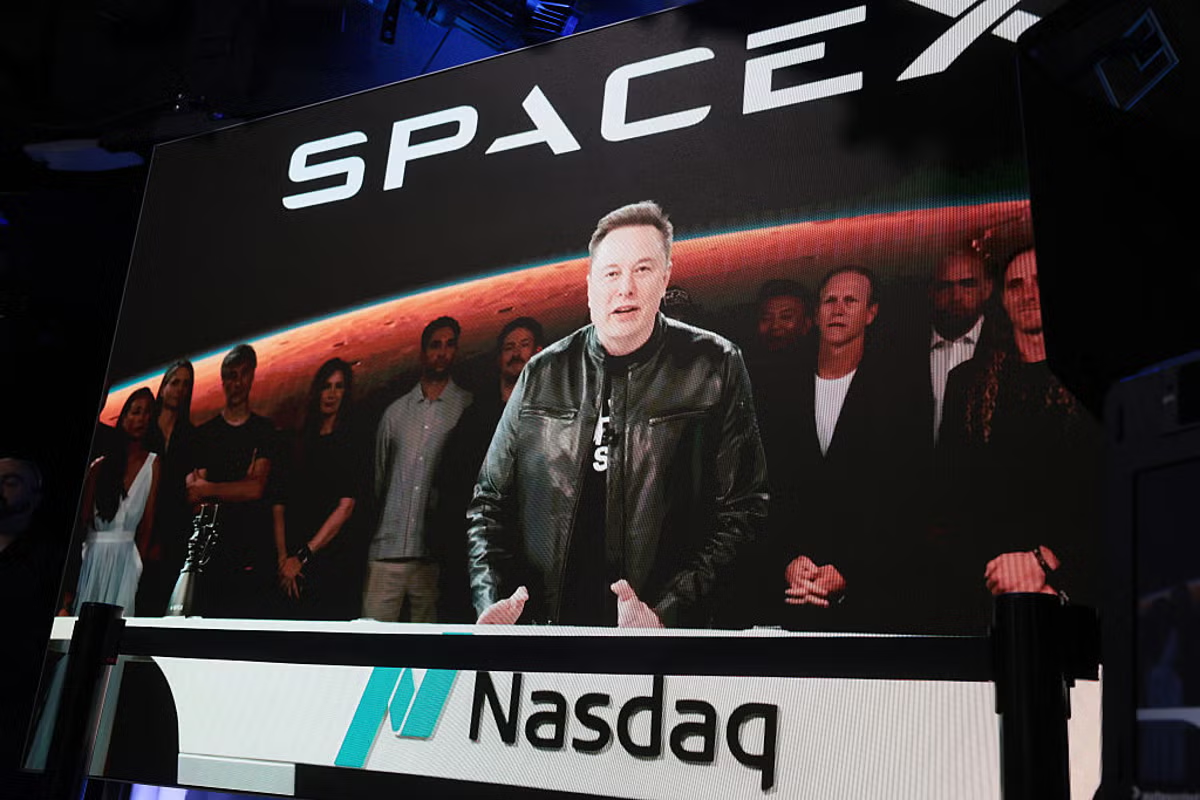
SynopsisElon Musk's net worth has dipped below the trillion-dollar mark following a significant slump in SpaceX and Tesla shares. Just weeks after becoming the world's first trillionaire post-SpaceX's IPO, investor enthusiasm has waned. Despite recent volatility and concerns about AI valuations, credit agencies maintain a stable outlook on SpaceX's financial standing.AgenciesSpaceX founder Elon Musk’s worth has fallen back below the trillionaire mark after a sharp decline in SpaceX and Tesla shares erased a significant portion of his wealth. According to the Bloomberg's Billionaires Index, Musk's net worth stood at $957 billion as of June 24.The drop comes just weeks after he became the world's first trillionaire following SpaceX's blockbuster initial public offer (IPO), which valued the company at more than $2 trillion. Investor enthusiasm around the stock has cooled since.SpaceX shares closed at about $156 on Tuesday, still above their June 12 listing price of $150. However, trading remained volatile. During the session, the stock fell as much as 4.8%, surged 7.1%, and then gave up much of those gains before the close.The stock had previously staged a remarkable rally, touching an intraday high of about $225 on June 16. At that point, SpaceX briefly overtook Amazon and Microsoft to become the world's fourth-most valuable listed company.Since last week, however, roughly $600 billion in market value has been wiped off the company, with the selloff coinciding with weakness across technology and other high-growth stocks.Concerns emerged after a decline in Korean chipmaker stocks reignited fears that valuations linked to the artificial intelligence (AI) boom may have run ahead of fundamentals.Questions are also being raised about whether rising interest rates and growing worries around a potential AI-driven market bubble could put further pressure on tech stocks.Speaking on ‘The Intangible Economy with Kai Wu’ podcast earlier this week, veteran valuation expert Aswath Damodaran said the trillion-dollar narrative is driven almost entirely by AI. “The market is huge… that’s what’s driving the trillion, 2 trillion, 2.5 trillion pricing. But the business is really not a business yet,” he cautioned.He also flagged a contradiction in SpaceX’s approach. “We’re going to compete… win a significant share of the AI market. But in the same breath, you’re also saying we’re renting out space in our data centres to our biggest competitors,” he said, calling it a tension that “will have to gel”.Despite the recent volatility, credit rating agencies remain positive about the company. On June 19, Moody's, Fitch, and S&P Global Ratings assigned SpaceX investment-grade ratings with a "stable" outlook following its high-profile IPO. This indicates confidence in the company's financial position as it pursues an ambitious AI strategy in an increasingly competitive market.History also suggests that sharp swings are not unusual after major listings. A Reuters analysis of the 50 largest IPOs by value over the past five years found that investors would have earned better returns from an S&P 500 index fund about 75% of the time. ...moreElevate your knowledge and leadership skills at a cost cheaper than your daily tea.Subscribe Now
Elon Musk loses trillionaire status as SpaceX rally fades - The Economic Times
Elon Musk's net worth has dipped below the trillion-dollar mark following a significant slump in SpaceX and Tesla shares. Just weeks after becoming the world's first trillionaire post-SpaceX's IPO, investor enthusiasm has waned. Despite recent volatility and concerns about AI valuations, credit agencies maintain a stable outlook on SpaceX's financial standing.
497 words~2 min read