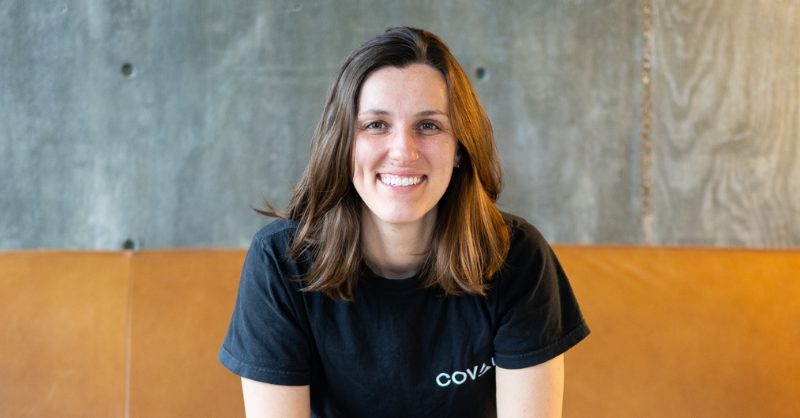
Before starting her company, Brooke Hopkins worked on systems that helped self-driving cars operate safely on public roads. At Waymo, her team ran millions of simulated miles for every code change, since failures after launch were not an option for autonomous vehicles. She saw that similar standards would soon be needed for AI voice agents, even though few people noticed this trend back then.
Today, Hopkins’ startup Coval raised $28 million in a Series A round led by Norwest, with Base10 Partners, Twilio Ventures, and Y Combinator also investing. This brings Coval’s total funding to $31 million since it launched in 2024.
“Every company is going to have a voice agent just like they have a mobile app or a web app. But today, most enterprises don’t have the infrastructure to deploy these systems with confidence,” Hopkins says.
More than $7 billion was invested in voice AI in the first quarter of 2026, and the market could grow to over $20 billion by 2031. Companies are quickly adding voice agents to customer service, healthcare, and financial services.
Still, most rely on manual testing, in which engineers review call transcripts, look for problems, and hope their fixes work. This method does not scale well.