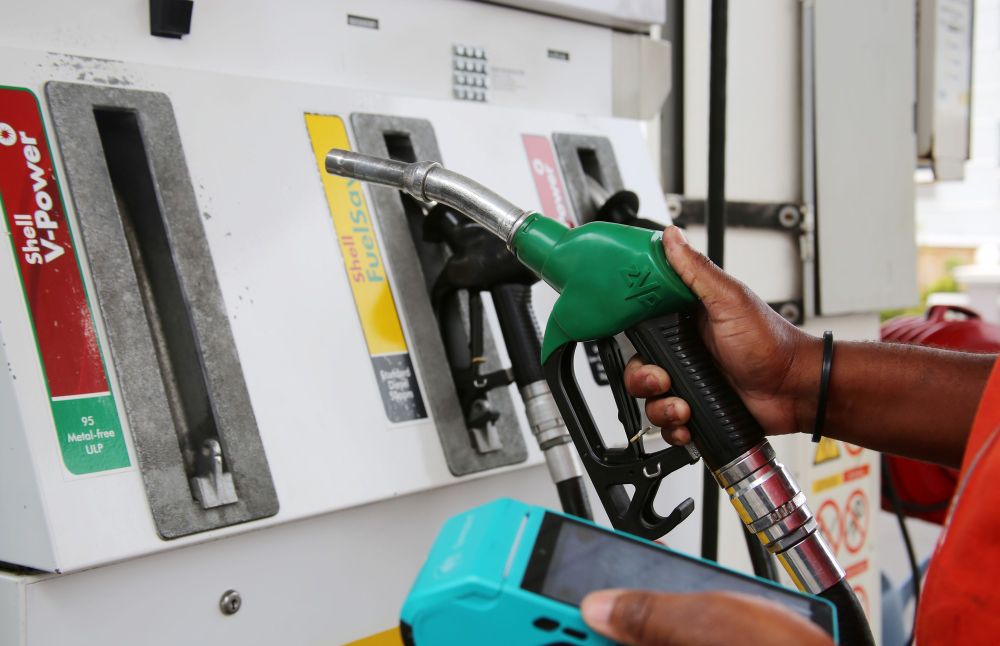
South African salary earners are under significant financial pressure as higher fuel costs push up inflation, eroding purchasing power in an environment of economic uncertainty.The PayInc net salary index, which tracks the monthly average nominal net salaries of about 2.1-million people, edged up 0.2% month on month to R21,510 in May, an annual rise of 0.9%. But salary growth has failed to keep pace with rising inflation, resulting in a continued decline in real earnings. The index, which focuses on those earning a net R5,000/month to R100,000/month, declined by 0.3% month on month to R20,262 in real terms in May and was down 2.8% versus a year ago.In the first five months of 2026, nominal net salaries increased by just 1.7%, but declined by the same margin in real terms, signalling a challenging year for consumers after two years of relatively strong earnings growth.“While nominal salaries have edged higher, the reality is that salary earners are losing purchasing power,” independent economist Elize Kruger said.“This is placing increasing strain on household budgets and is likely to weigh on consumer spending and broader economic growth during the remainder of the year.” After easing to the South African Reserve Bank’s (Sarb) new 3% target in February, and only inching up slightly to 3.1% in March, annual inflation spiked to 4% in April and further to 4.5% in May, as domestic fuel prices galloped higher due to the Middle East war strangling global oil supply.The Bank, which at the start of the year had been expected to embark on a policy-loosening cycle, raised its benchmark rate by 25 basis points to 7% last month, citing a deteriorated inflation outlook.All of this has added strain on household spending, which was already showing signs of strain, with final consumption expenditure ticking up just 0.1% quarter on quarter in the first three months of 2026 after expanding 1.2% in the fourth quarter of last year.Spending growth was mainly for essential categories such as transport, housing, electricity and utilities, while money spent on restaurants and hotels, food and non-alcoholic beverages weakened.The PayInc salaries report comes a day after First National Bank and the Bureau for Economic Research reported that consumer confidence plunged to its lowest in more than a year in the second quarter of the year as higher fuel prices raised the cost of living.Sentiment worsened the most among high-income consumers earning more than R20,000/month, with 53% now expecting a deterioration in the country’s economic performance over the next 12 months compared to 13% in the previous survey.The combination of higher living costs, weaker confidence and ongoing uncertainty is creating a difficult environment for both consumers and businesses, Kruger said on Wednesday.“Companies are likely to remain cautious in their investment and hiring decisions until there is greater clarity on the economic outlook,” she said.A recent survey by Debt Rescue found that nearly half of consumers would experience severe financial pressure and struggle to manage if the Bank were to raise interest rates further.Nearly three-quarters of those interviewed feel stressed, worried, anxious or overwhelmed about the prospect of higher borrowing costs, while 56.8% are unprepared and 53.5% feel financially insecure about the next six months.While oil prices have eased recently amid the hope of a lasting resolution to the US war against Iran, uncertainty surrounding the broader economic impact of the conflict remains, Kruger said.“Although there are signs that inflation pressures may moderate somewhat during the second half of the year, uncertainty and volatility are likely to persist,” she said.“In this environment, businesses will continue to adopt a cautious approach, which could negatively affect employment prospects and earnings growth for the remainder of 2026.” Business Day
How rising inflation is eating into South African salaries
Higher fuel prices and interest rates deepen strain on household budgets
608 words~3 min read