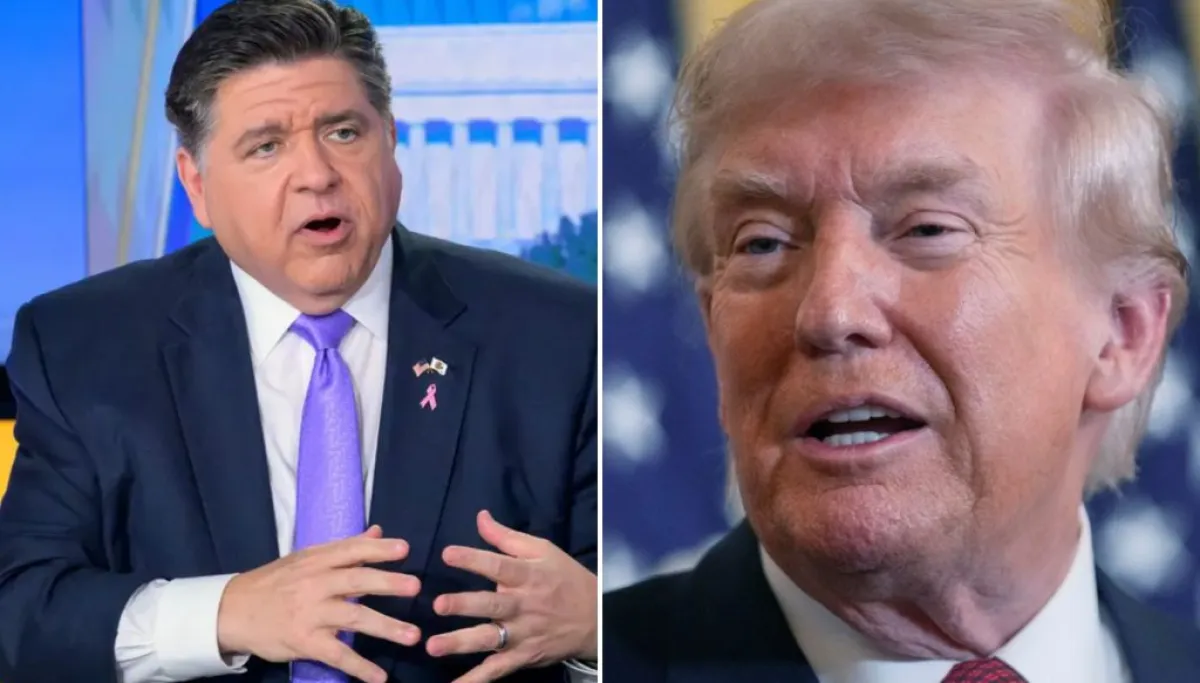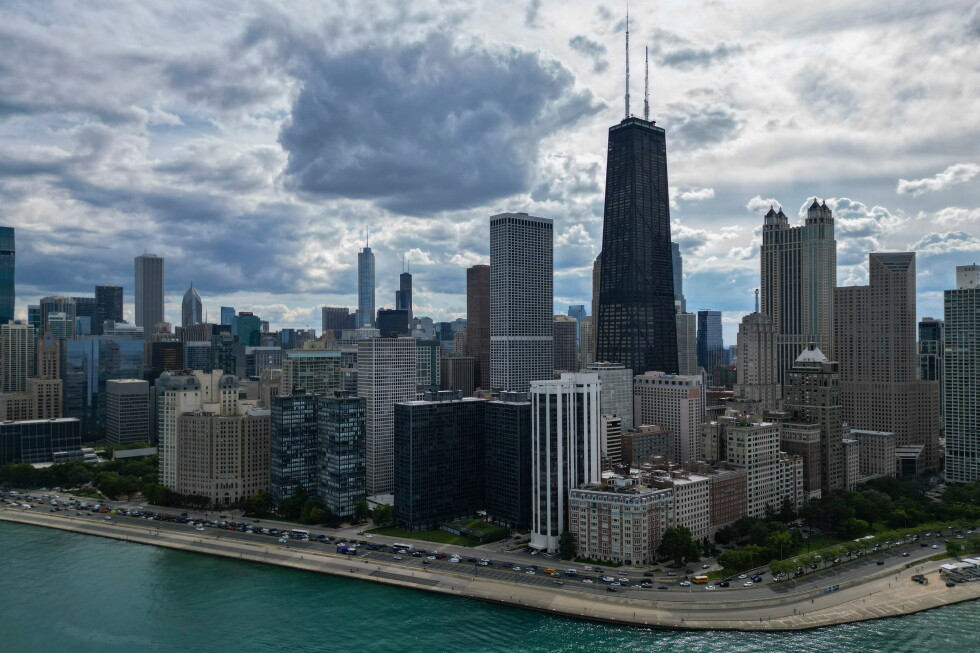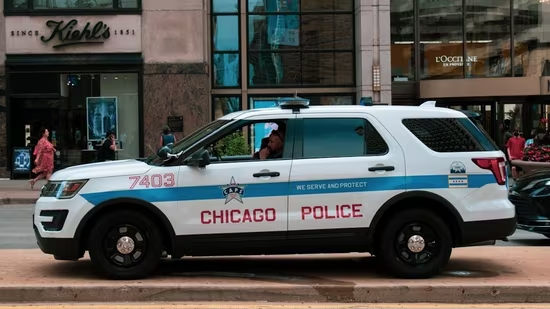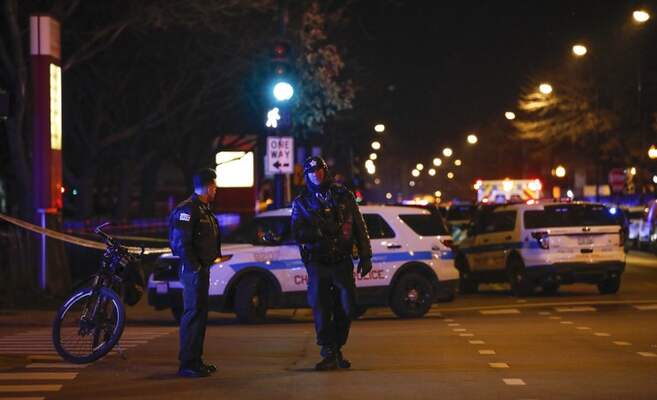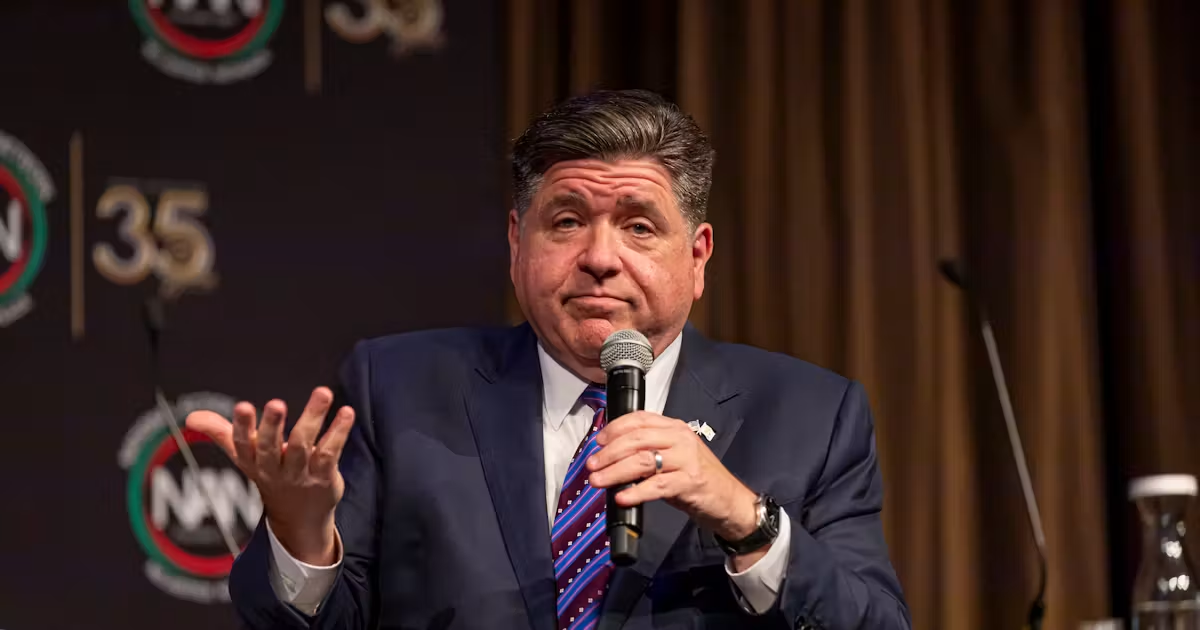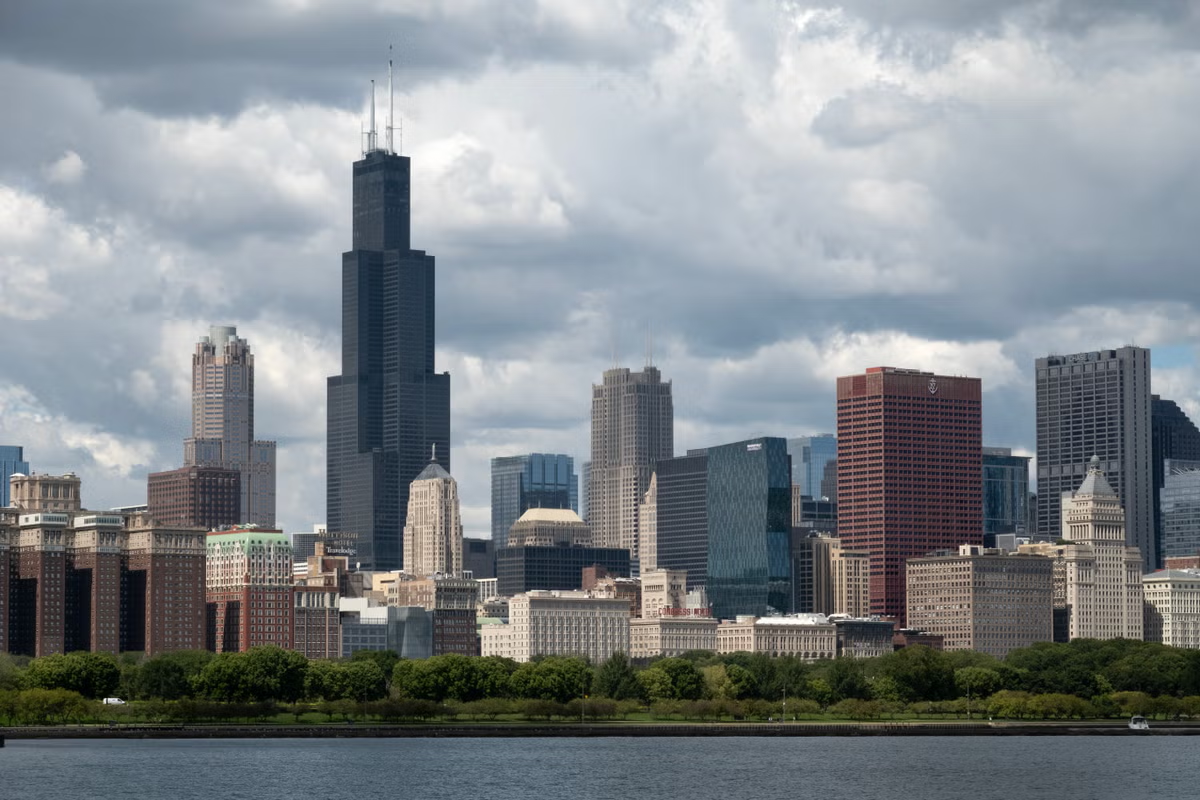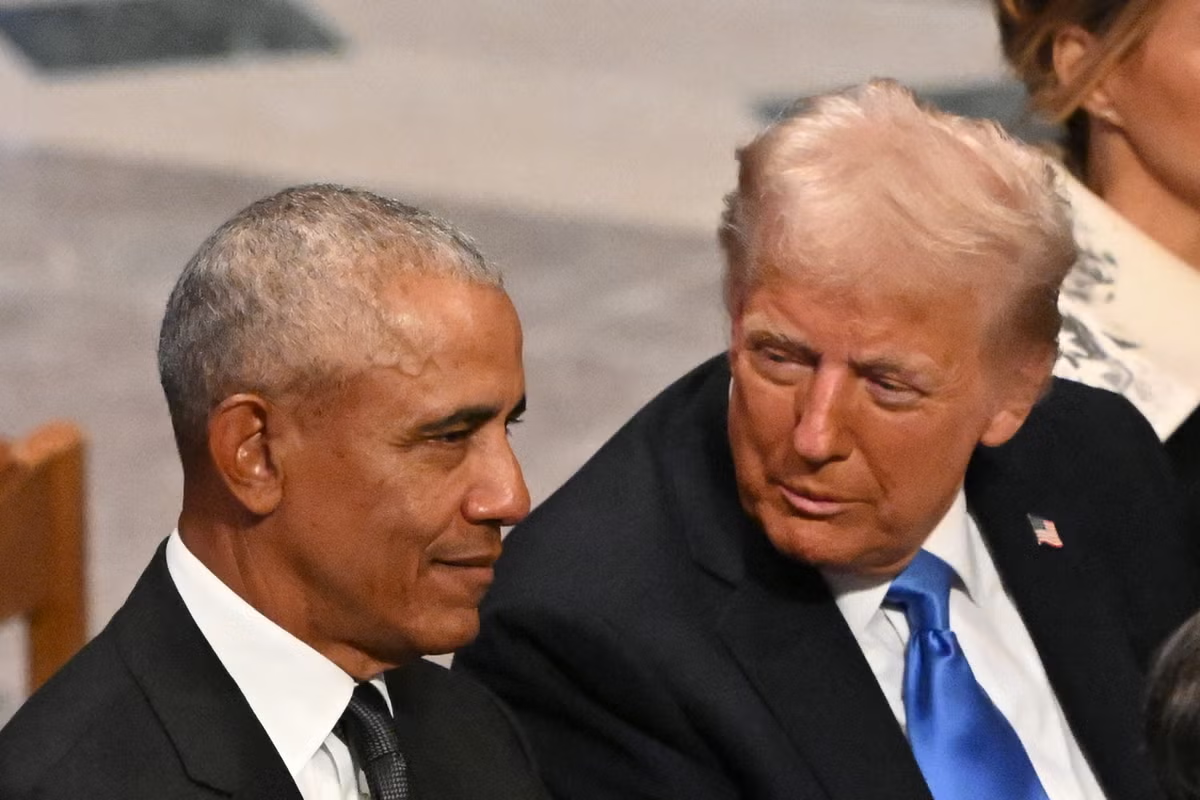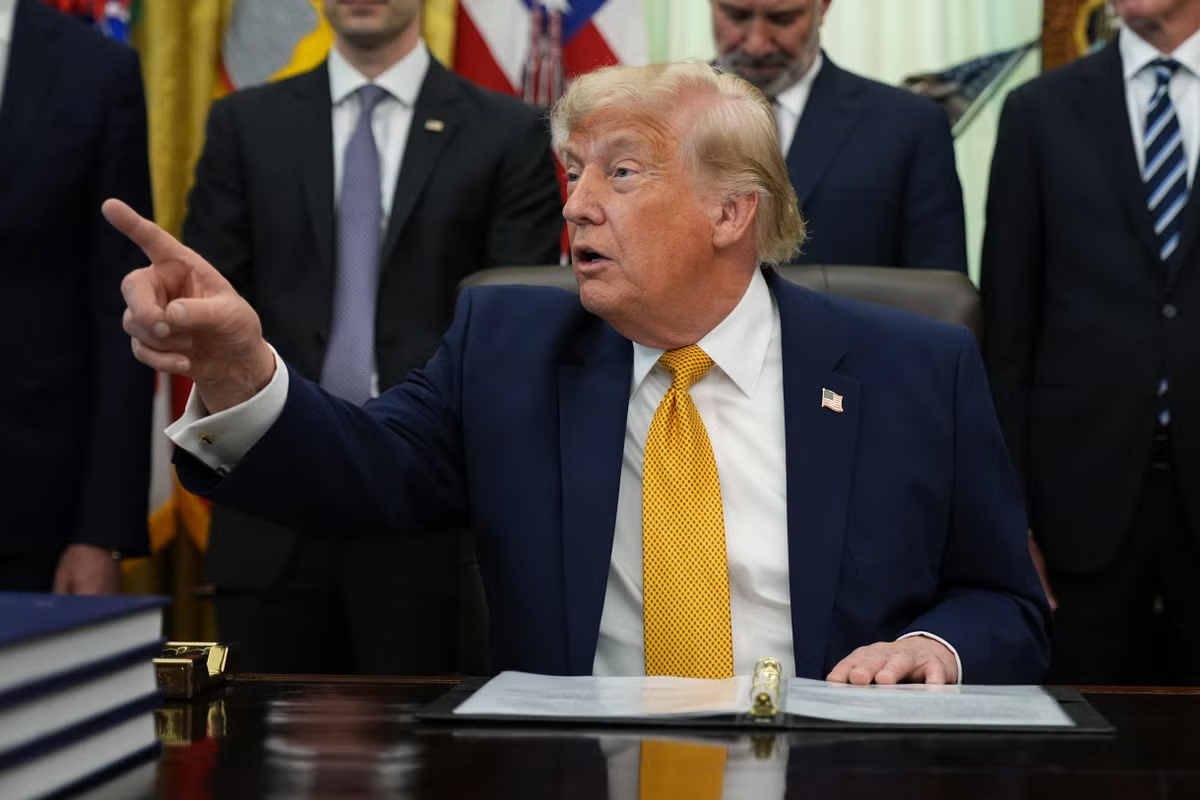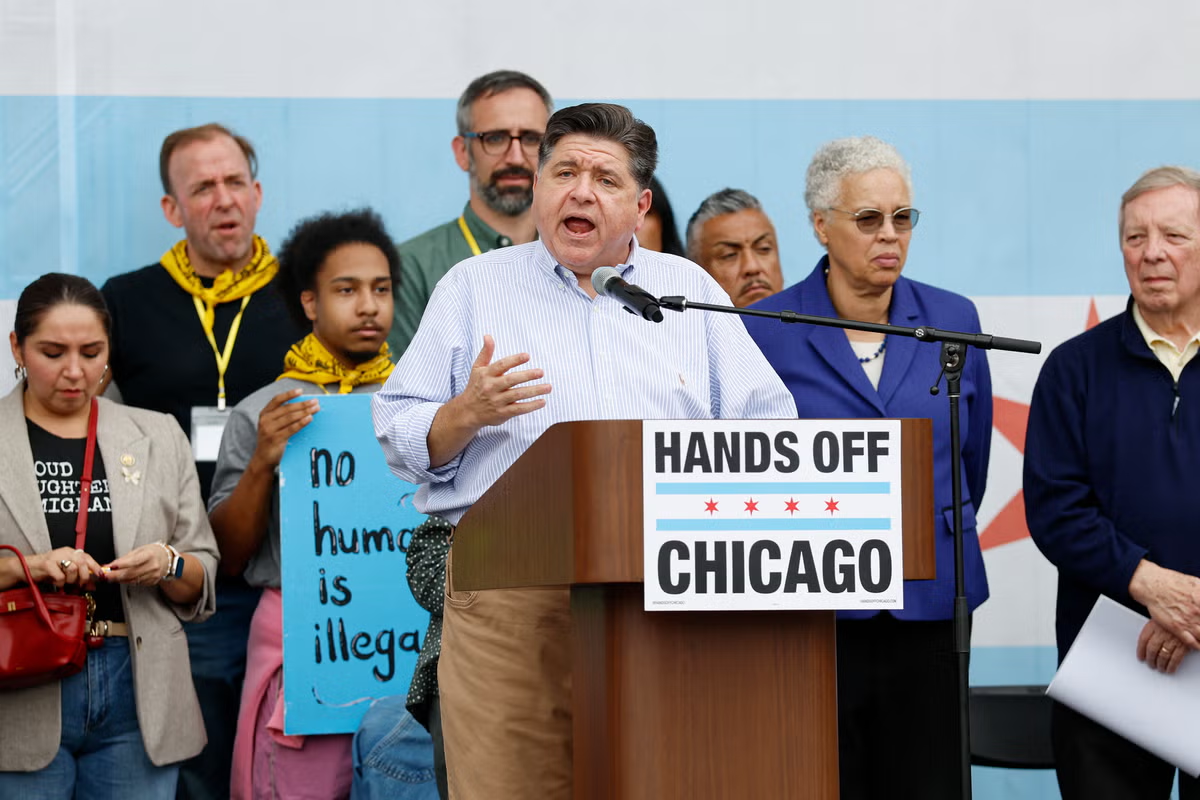
The string of Juneteenth weekend shootings that left eight dead and 39 wounded in Chicago sparked a new round in the war of words between President Donald Trump and Illinois Governor JB Pritzker — and raised fresh questions about public safety in the Windy City. The explosion of gun violence was all Trump needed to go off on Pritzker and Chicago, two familiar targets of his across both administrations, to repeatedly claim on social media that he could “fix” the problem and demanded that governor ask for federal help (read: send in ICE and the National Guard). It prompted Pritzker in turn to mock the president’s botched renovation of the Lincoln Memorial Reflecting Pool and his failure to anticipate the Strait of Hormuz would wind up closed “if he went to war with Iran.”Their latest clash of executive heads came after the University of Chicago Crime Lab last year touted 168 fewer homicides in the city through mid-December, marking a 30 percent reduction — from 565 to 397— compared to the same period in 2024. "At the same time, the rate of violent crime, particularly homicides, remains dramatically higher in Chicago compared to what one sees in other major cities around the world like London, Paris, Berlin or Tokyo (or, for that matter, New York City and Los Angeles)," the Crime Lab said on its website.This past weekend's bloodshed helped push the number of Chicago killings up 9 percent this year through Sunday, with shootings up 5 percent, compared to the same period in 2025, according to Chicago Police Department statistics. The explosion of gun violence in Chicago this past weekend was all Trump needed to go off on Illinois Governor JB Pritzker (pictured center) and Chicago, two familiar targets of his across both administrations (AFP/Getty)Christopher Herrmann, an associate professor at John Jay College of Criminal Justice in New York City, told The Independent that homicides comprised the "smallest number of all the numbers that we track.""So it's the most prone to big percent increases or percent decreases," he said. "Last week, it goes from 11 to 14, so we're talking about three additional homicides — and it's a 27 percent increase" over the same week last year.Herrmann also said the recent surge in deadly gunfire — which brought Chicago's 2026 death toll to 198, up from 182 at the same time last year — was fairly routine for most American cities."We see more people spending more time outdoors in the summer, and when there's large groups, typically with alcohol involved, then you typically end up with some kind of violence," he said. "And sometimes that leads to shootings, and then shootings can also lead to homicides."Herrmann, who previously studied shootings and homicides as a crime analyst supervisor for the New York Police Department, noted that there were nearly 1,600 crimes reported in Chicago last week, "and the 1,600 crimes show a 21 percent decrease" from the same week last year.A string of shootings over the Juneteenth weekend helped push homicides up 9 percent this year (Getty)Pritzker responded to Trump by mocking the president’s botched renovation of the Lincoln Memorial Reflecting Pool (right) (AFP/Getty)"Everything else is down quite a bit in Chicago last week, and pretty much over last month, and pretty much for a good chunk of the year," he said.Overall crime in Chicago is flat this year, led by a 26 percent drop in robberies and a 12 percent dip in burglaries, according to the police data.By comparison, New York City has seen a 5.9 percent decrease in all crimes this year through June 21, with double-digit declines in homicides, burglaries and robberies, which fell 24, 16.7 and 11.6 percent, respectively. And overall crime in Los Angeles is down 11.9 percent through June 13, with burglaries, vehicle thefts, homicides and thefts from vehicles falling anywhere from 29.3 to 10.9 percent. Crime in Chicago is largely concentrated in the city's South Side, immortalized as "the baddest part of town" by the late Jim Croce in his hit song "Bad, Bad Leroy Brown, which spent two weeks at the top of the Billboard Hot 100 in 1973.Of the 20,495 violent crimes recorded by the Chicago Police Department over the past year, more than half — 10,677 — took place in the South Side, according to an interactive, online police map. The South Side is also home to the University of Chicago, located in the city's historic Hyde Park neighborhood. The school employs about 100 full-time campus police officers, making the force one of the largest of its kind in the country, according to The Chicago Maroon, the university's independent student newspaper.A Chicago Police Department map shows violent incidents concentrated in the city's South Side (Chicago Police Department)The University of Chicago employs about 100 campus police officers, making the force among the largest of its kind in the country (Getty)In its latest annual report, the university police reported only a handful of crimes during 2022-2024, including a campus killing in 2022, three rapes in 2023 and a weapon-related arrest in 2023. Ernesto Lopez, a senior research specialist for the Council on Criminal Justice think tank in Washington, D.C., told The Independent that "the advantage of using homicide is it's the most reliable crime that we can measure.""There's no decrease in reporting of homicide, because you can't hide a dead body, versus other crimes like robbery," he said. "If someone is robbed, and maybe that victim is engaged in criminal activity themselves, they may not report it."Homicide and robbery rates used to track each other "pretty closely," starting in the 1960s, Lopez said."But sometime around 2010, there's some notable deviation where robbery rates were really declining at a lot faster pace than what we were seeing with homicide," he said. And really, when you look at the last few years — in 2020, 2021, 2022 — where homicide rates are elevated, robbery rates are either flat or falling."This past weekend's bloodshed helped push the number of Chicago killings up 9 percent this year through Sunday, with shootings up 5 percent, compared to the same period in 2025, according to Chicago Police Department statistics (AFP/Getty)Statistics compiled by the CCJ show that in 35 U.S. cities for which data were available, the average homicide rate dropped about 25 percent from 2019 to 2025, with Chicago seeing an 18 percent decrease during that period.Lopez said it's likely that when the FBI releases its nationwide crime statistics for 2025, the data will show "a historic low, going back to 1900, in homicide."There's no clear answer of what that floor is, but the more you drop, the more likely it is you'll see increases," he said. "It's not likely that a place like Chicago or any large city will ever have a homicide rate of zero, and so I think part of it is understanding that there's going to be fluctuations."So even though homicides are on the rise in Chicago, it's impossible to say if a new trend is emerging, he said."Especially over short periods of time, it's really too early to tell if all the gains that Chicago has made in homicide are being lost — because there's been such a big decline in Chicago and in many other cities," he said.Lopez declined to comment on Trump's social media posts, but Herrmann, the former NYPD crime analyst, said, "This is certainly Trump's playbook, picking on a blue city.”The White House didn't immediately return an inquiry from The Independent.
Trump bashes Chicago over surge in shootings. How dangerous is the Windy City?
Donald Trump has long targeted Chicago crime rate in his posts. But, just how bad is it in the Windy City? Bruce Golding digs into the data to find out
1,242 words~6 min read