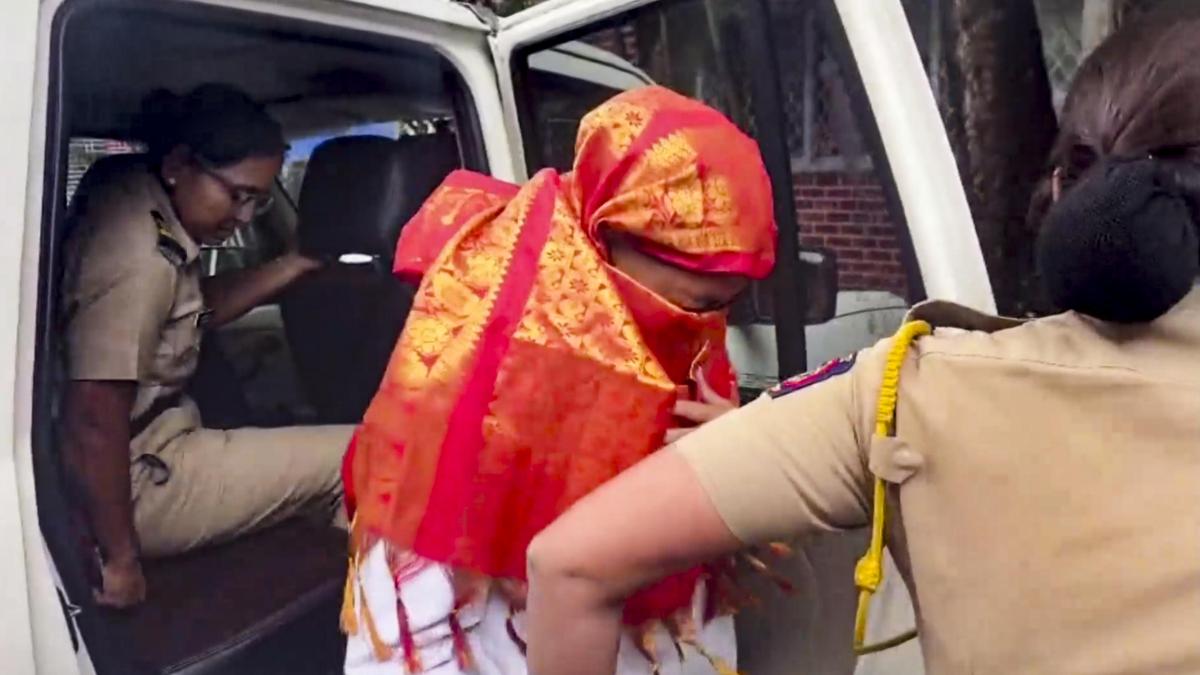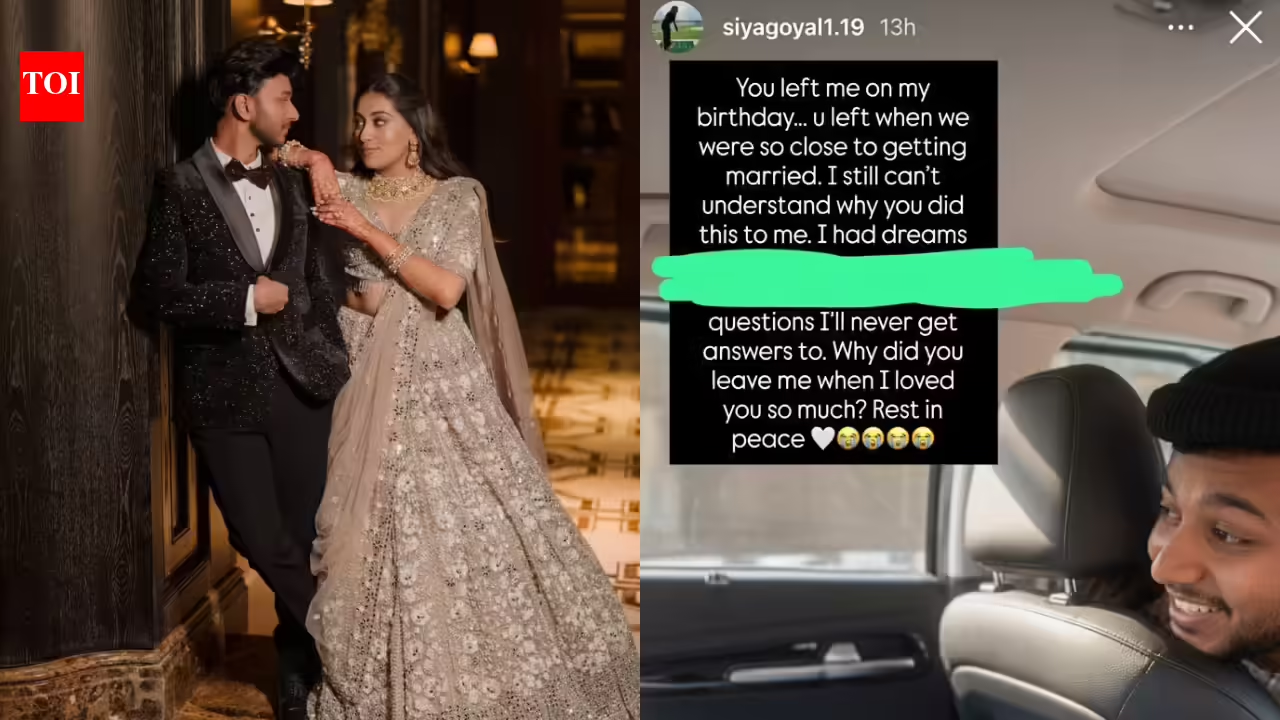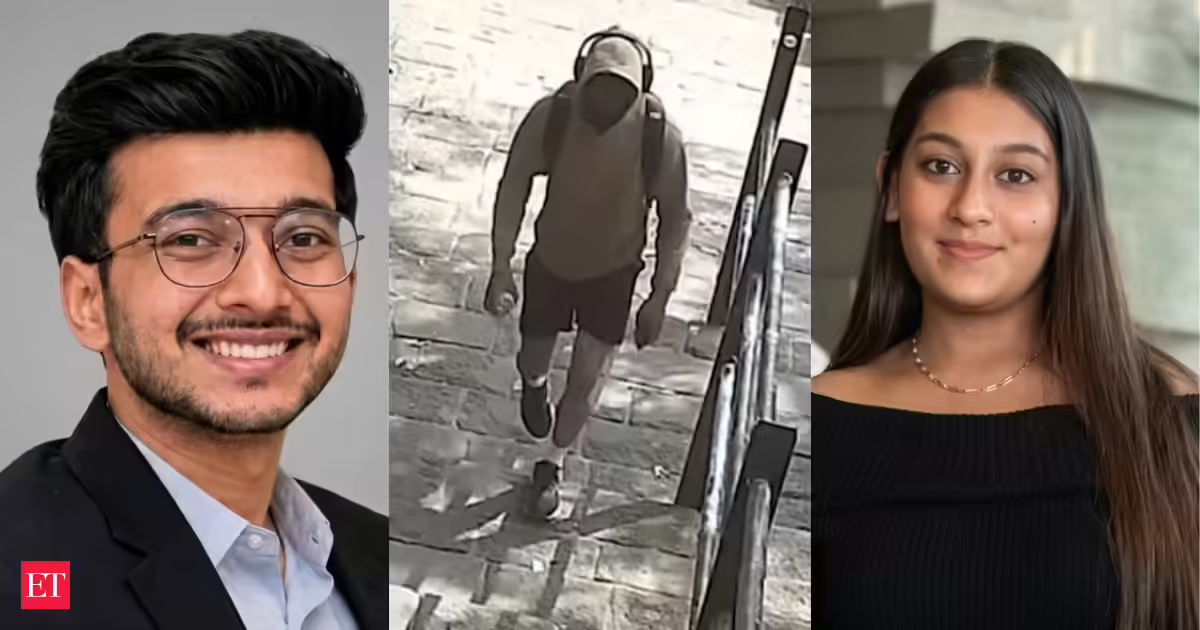
What was initially believed to be a tragic trekking accident has now turned into a cold-blooded murder investigation. Five days after Pune businessman Ketan Vishal Agarwal's (26) death was recorded as an accidental fall at Lohagad Fort on June 18, police arrested his 20-year-old fiancée, Siya Goyal, and her associate, Chetan Chaudhary, accusing them of pushing him into a 400-foot gorge.Siya with fiancé KetanKetan Agarwal, the son of Pimpri-Chinchwad-based construction businessman Vishal Agarwal, got engaged to Siya Goyal in February. The couple was set to marry in November in Udaipur, with the families making elaborate wedding arrangements, including booking a Jaipur palace and arranging private aircraft for guests.However, behind the scenes, a grim plot was unfolding. According to the Pune Rural Police, Siya was opposed to the marriage and allegedly conspired with Chetan, with whom she had been in a relationship for about a year. Chetan later revealed to investigators that Siya refused to simply call off the engagement or elope because she feared it would bring intense disrespect to her family.Timeline of the CrimeThe Setup: On June 18, Ketan and Siya went trekking at Lohagad Fort to celebrate her birthday.The Incident: At around 10:30 AM, Siya informed authorities that Ketan had slipped while taking photographs and fallen into the valley. His body was recovered after a gruelling three-hour rescue operation.The Alibi: Shortly after the incident, a social media post shared by Siya on her birthday surfaced online. The video montage included messages such as, “Why did you leave me when I loved you so much?”, a performative display of grief that initially drew widespread public sympathy.The Breakthrough: Suspicion arose when Ketan's family maintained he was highly familiar with the terrain. Investigators relied on witness statements and technical data, which revealed that Siya was in constant contact with Chetan, who was secretly present at the fort during the incident.Both suspects have been arrested by the Lonavala Rural Police, and a murder case has been registered.What the experts sayWe spoke to a panel of mental health professionals to decode the chilling psychology behind the crime, the execution, and the societal pressures that drive such extremity.“When you live a Jekyll-and-Hyde life…”Dr. Deepak Raheja explains: “To commit a crime like this, the perpetrator tends to heavily compartmentalise, unable to differentiate reality from fantasy because they are only looking at parts. Siya got trapped between two completely different worlds. In her real life, she was locked into a wealthy 'trophy rishta' that she had agreed to, and both families were pushing forward. To cope, she retreated into a microcosm—an isolated fantasy world with her boyfriend, Chetan, where she could pretend she wasn't engaged.She kept bouncing between these two compartments. Whenever reality became too overwhelming, she would panic, slide back into that secret space, and live out the illusion again. Chetan definitely played a major role in reinforcing this fantasy day in and day out. Normally, a person gets scared and backs off when they realise the gravity of what they are planning. But when two people feed off each other's dark intent, the consequences completely disappear from their heads.Eventually, she became so enmeshed in that boyfriend bubble that she lost sight of the bigger picture and couldn't see a normal way out. Murder became the 'easier' option to seamlessly merge her worlds: eliminate the fiancé, avoid family shame, and make it look like an accident. When you live a Jekyll-and-Hyde life like that, you can switch from high emotion to complete stoicism. She had role-played this scenario in her head so many times that executing the crime likely caused her no trauma. That is probably why she had no reaction at the funeral; she was simply living out a script.”On performative grief and family historyDr. Chaitanya Sheoran, Consultant Neuropsychiatrist at Aastha & Maccure Hospital, notes: “When someone uses highly manipulative behaviour to play the part of a grieving victim—like Siya posting a romantic Instagram story mourning her fiancé hours after his death—it points to a severe psychological illness. This total emotional detachment is part of a deeper behavioural disorder, which is why both of them must undergo a proper psychological assessment. We can’t confirm anything without that.Such actions are often rooted in deep-seated childhood trauma or intense family pressure, such as growing up with parents who didn't get along. Parenting plays a massive role in shaping how a person handles immense stress. To understand why she took such a drastic step instead of just calling off the wedding, we have to look closely at her background, past relationships, and family dynamics. This case is a glaring reminder of why pre-marital counselling and psychological compatibility checks should honestly be made compulsory before an arranged marriage.”The rising fear of marriage amongst youthDr. Paramjeet Singh, Consultant Psychiatrist at PSRI Hospital, shares: “We see a lot of people coming to our clinics and OPDs every day who have a genuine fear of marriage and the futility of long-term commitment. In the general public, this relationship anxiety is actually increasing. When shocking events like this happen, young people start quoting them to justify their own fear of getting married. But honestly, most times, their fear of marriage runs much deeper than these events—they are just hanging their anxiety on these news stories to justify it.At the same time, we have to look at why someone gets pushed to such a drastic step. People on social media keep saying, ‘If you didn’t want to get married, you should have just told us, we would have called it off.’ But the family pressure to marry a certain person and the 'social desirability' it brings is a massive pushing factor. Even now, marriages are more of a social phenomenon than an individual choice. Many people end up getting married just to pacify their family's nerves rather than because they actually want to, and that pressure is what traps them.But when patients come to us like this, we have to encourage them to look at it objectively. You can't let a few extreme cases become the deciding criteria for your life; generalising a small, rare event to the whole world is just a cognitive distortion.”
‘What drives a crime like this?’ Psychiatrists unpack Pune businessman Ketan Agarwal's orchestrated death
After Ketan Agarwal's murder, one question has gripped social media: Why didn't Siya just call off the wedding? Experts say the answer isn't straightforward
1,022 words~5 min read