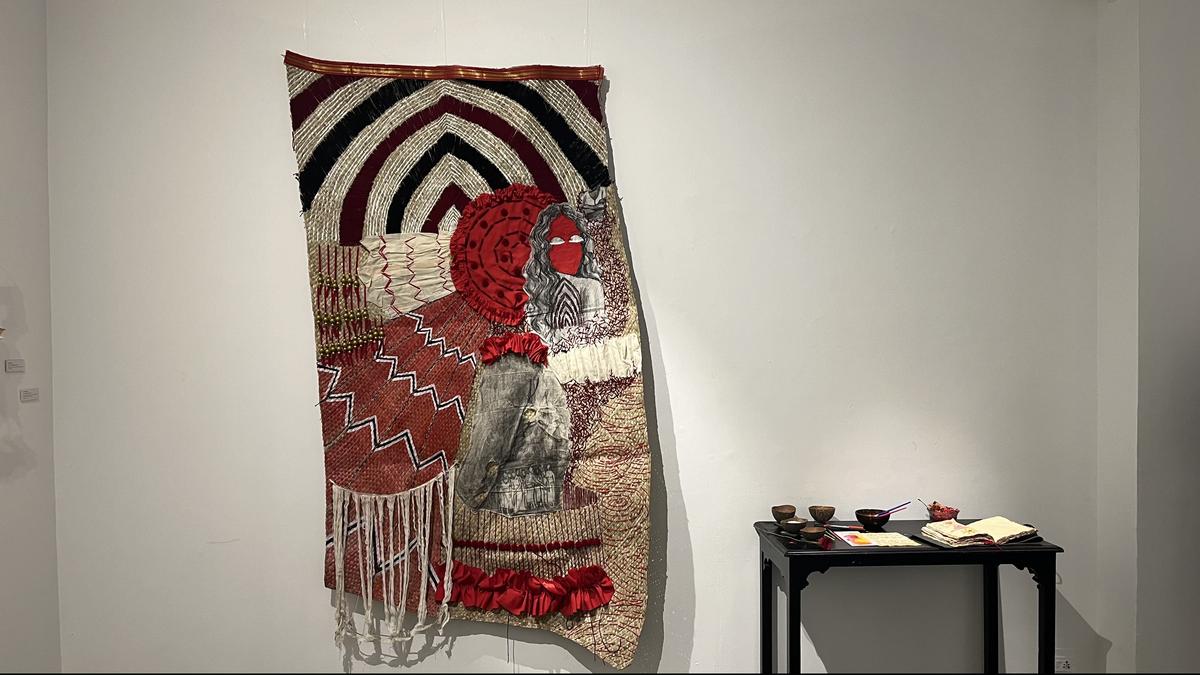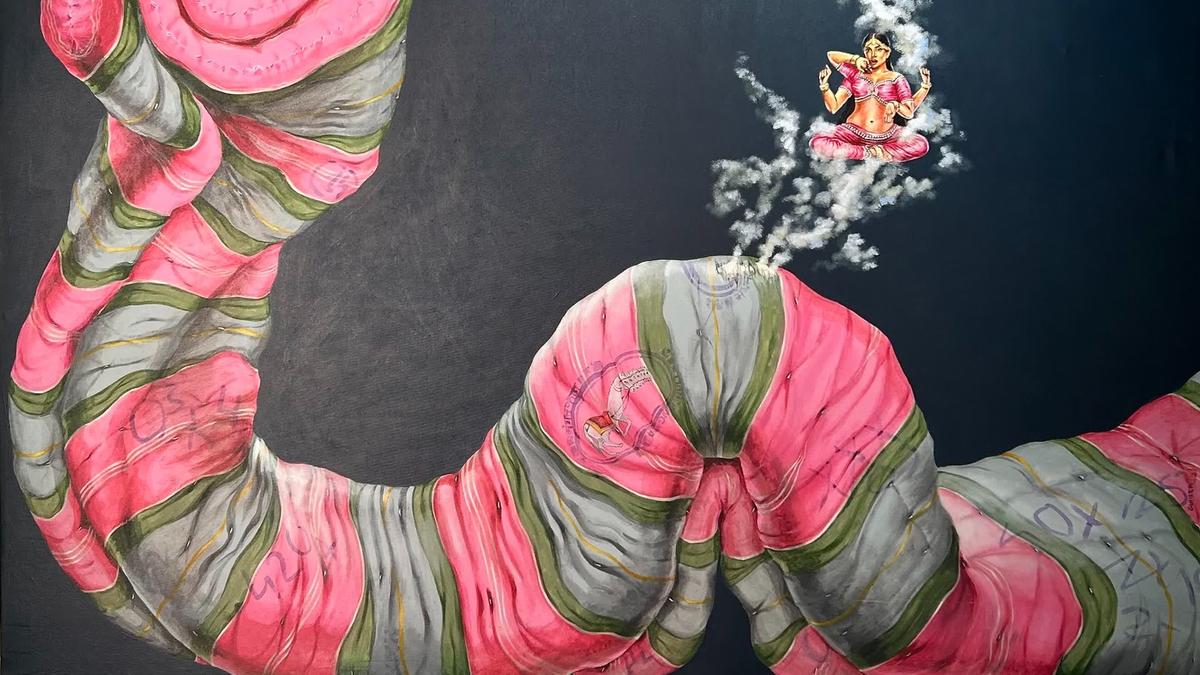
Running concurrently at Hyderabad’s Kalakriti art gallery are Liminal Threshold, a solo exhibition by Sumit Sarkar; a special viewing of sculptures by British artist Ann Carrington; and In the Viewing Room, a curated presentation bringing together works by 15 artists working across mediums.Gallery director Rekha Lahoti says the three presentations were conceived as separate experiences, and not as parts of a single thematic exhibition. Together, they offer art enthusiasts an opportunity to move between expressions of memory, thematic experimentation and upcycling found material.While each collection stands independently, they reflect the range of contemporary art practices, from painting and sculpture to embroidery, paper work, installation and mixed media.Memories in folds: Liminal Threshold by Sumit SarkarAt the centre of the gallery is Liminal Threshold, a solo exhibition by Delhi-based artist Sumit Sarkar, curated by Ruchi Sharma. The show explores the spaces between memory and imagination, reality and dreams, through paintings that draw on personal experiences, cultural memory and the subconscious.Throughout the exhibition, familiar domestic objects like pillows, mattresses, folded fabrics and stitched surfaces appear repeatedly. These everyday objects become vessels carrying traces of memory, absence, comfort and emotional weight. Mythological figures emerge within his works, creating visual narratives that move between the subconscious and reality.Rekha was drawn to the memories embedded in Sarkar’s paintings. “He has got a lot of stories to tell from the folds within,” she says, adding that his recollections of Kolkata give the works a personal quality.The works resist straightforward interpretation, instead inviting viewers to spend time with each piece and associate it with their own memories and familiarity. Pieces like The Red Coils and Beneath the Silence commonly invoke a feeling of discomfort within viewers, while Journey represents a distant dream.Sumit Sarkar aims to have his audience connect with his art, but leaves it open to interpretation. “I believe that viewers have complete freedom to read a painting according to their own background, situation and space,” he says.Cutlery in bloom with Ann Carrington
Inside Hyderabad's Kalakriti art gallery’s three-part exploration of contemporary art
Explore three distinct exhibitions at Kalakriti Art Gallery, showcasing innovative contemporary art through memory, transformation, and diverse mediums.
726 words~3 min read