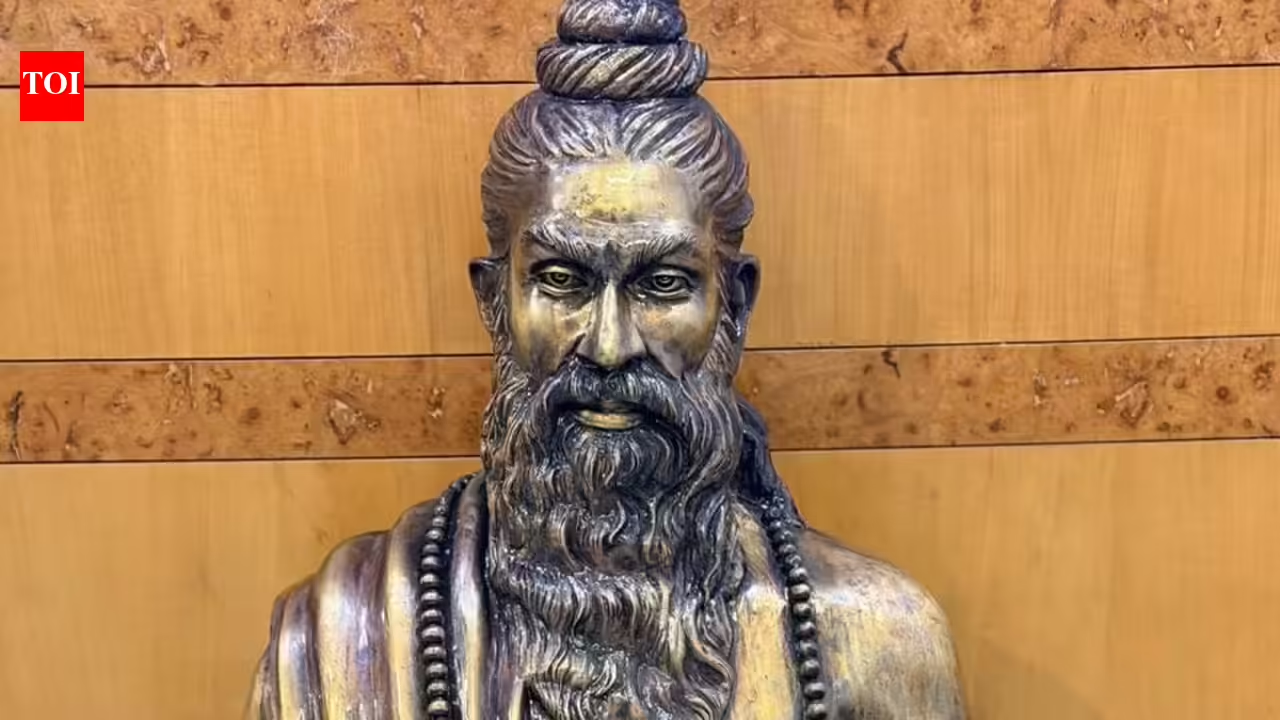
Believe it or not, India perfected the art of nose job centuries before the Anglosphere mastered it. Rhinoplasty, one of the most powerful procedures of modern aesthetics originated in India. According to a report published in The Atlantic, the earliest recorded nose job occurred in India, in 6th century BC. According to the account cited by author Elizabeth Harken in her book Venus Envy: A History of Plastic Surgery, one of the earliest documented forms of reconstructive nasal surgery originated in ancient India. The technique involved carefully lifting a section of skin from a patient's cheek and skillfully shaping it to reconstruct a damaged or missing nose. This innovative method is regarded as one of the earliest known examples of plastic surgery.The procedure was described in the Sushruta Samhita by the renowned ancient Indian physician Sushruta. Widely recognized as a pioneering figure in the history of surgery, Sushruta documented a range of surgical techniques, instruments, and medical practices in this influential work.Sushruta was a surgeon who lived in Kashi around 600 BCE. Hailed as the father of plastic surgery, he recorded sophisticated techniques such as reconstructing nose with cheek flaps to skin grafting in Sushruta Samhita. His knowledge was put to use in India, centuries later. In 1792, during the Third Anglo-Mysore War, a bullock cart-driver named Cowasjee was captured by Tipu Sultan’s forces and his nose and arm was amputated. Months later, Cowasjee was assisted by a local potter, who used skin from his forehead to construct a new nose. According to an article published in the Harper’s Bazaar, The breakthrough soon attracted international attention. In 1794, two British physicians who had observed the remarkable nasal reconstruction procedure in India documented their findings in The Gentleman's Magazine. Their detailed report introduced European medical circles to the advanced surgical techniques being practiced on the Indian subcontinent.The publication sparked widespread interest across Europe, inspiring English surgeon Joseph Constantine Carpue to study and adapt the method. A few years later, Carpue successfully carried out the first rhinoplasty operation in England using principles derived from the Indian technique. His success demonstrated the effectiveness of the procedure and helped establish reconstructive nasal surgery as a credible medical practice in the West.Over the following decades, surgeons continued refining and expanding these methods, leading to significant advances in reconstructive and cosmetic surgery. The knowledge passed down from ancient India eventually influenced some of the most important figures in the field, including Harold Gillies, whose groundbreaking work in facial reconstruction during the First World War transformed surgical practice. Today, rhinoplasty has become a mainstay in the realm of cosmetic surgeries and a lifeline for models, celebrities and influencers.
300 years ago, one humble Indian potter rebuilt the human nose: How India gave the world rhinoplasty
Centuries before the West, ancient India pioneered rhinoplasty. As early as the 6th century BC, physician Sushruta documented sophisticated nasal reconstruction techniques using cheek skin. This knowledge resurfaced in 1792 when a soldier's nose was rebuilt using a forehead flap, a procedure later documented by British physicians and inspiring the first English rhinoplasty in 1814. This ancient Indian innovation laid the groundwork for modern plastic surgery.
441 words~2 min read