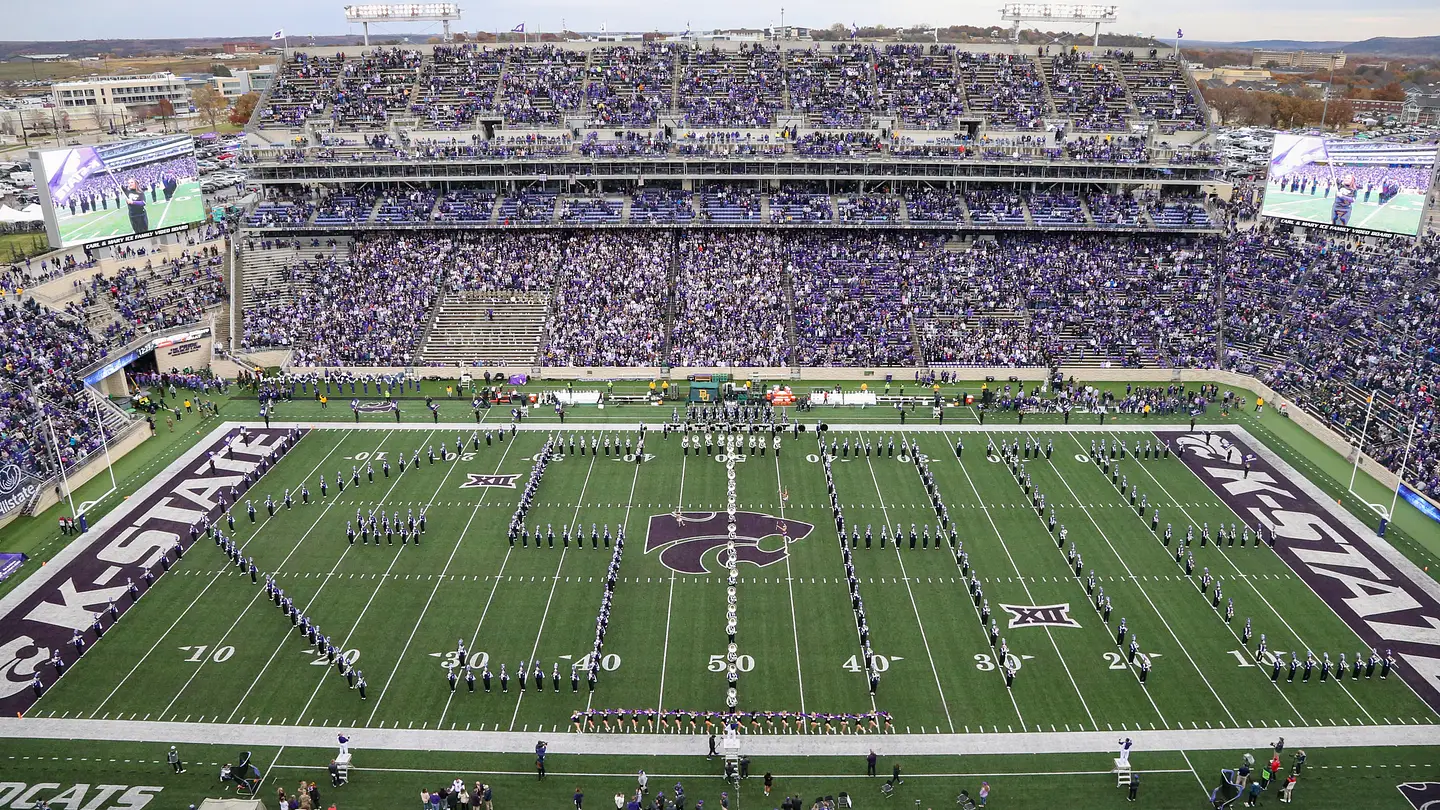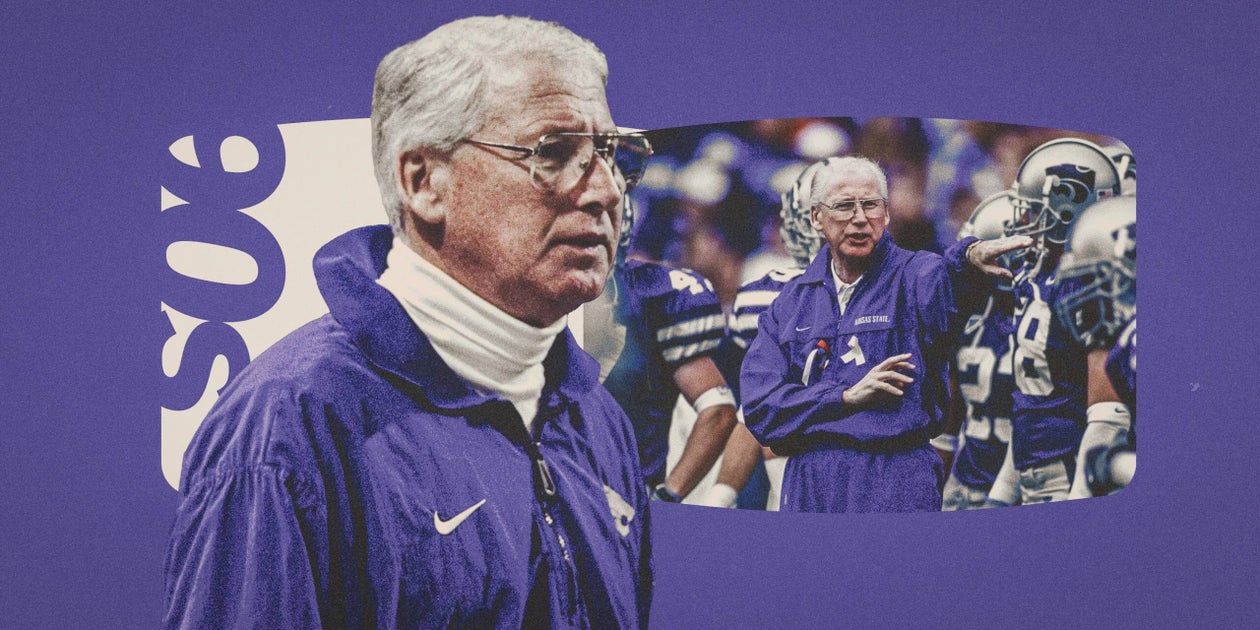
Editor’s note: As the World Cup continues in the United States for the first time since 1994, The Athletic is looking back at college sports in the 1990s and how much has changed since then. Join us for a couple of weeks of offseason football and basketball nostalgia.Only a magician could save Kansas State football in the late 1980s. Instead, the Wildcats got a miracle worker.Kansas State was a football wasteland, much worse than what Curt Cignetti inherited at Indiana before he launched the Hoosiers’ two-year flip from college football’s losingest program to reigning national champions. Indiana had occasional winning seasons and convenient access to talent, and Cignetti had the transfer portal and the name, image and likeness market at his disposal to help flip his roster. Still, it’s almost indisputable that Bill Snyder’s “Manhattan Miracle,” engineered without those advantages, is the greatest turnaround in college football history.Before Snyder arrived in 1989, Kansas State was the only Division I program with 500 losses. It had produced two winning seasons in the previous 34 years and was 0-26-1 over its last 27 games. From 1959 through 1988, Kansas State finished in last place 20 times, including 11 winless Big Eight campaigns. In 1988, Oklahoma set the Football Bowl Subdivision’s current single-game rushing record, plowing over the Wildcats for 768 yards. In the four seasons before Snyder’s arrival, Nebraska throttled Kansas State by a combined score of 183-9, with all the Wildcats’ points coming on field goals. That was before the Huskers won three national titles in the next decade.“It wasn’t very competitive,” former Nebraska coach Tom Osborne recalled. “We might have occasionally had a closer game, but it seemed like most games were pretty much secure by halftime.”Attendance was so low that the program started selling home games to Big Eight foes like Oklahoma because a gate share from a road game plus a guarantee was better financially than staying at home.“They were involved at the time in deciding whether to move down or to drop football altogether,” Snyder said. “If they’d been able to remain a part of the conference without a football program, there’s quite a possibility that that would have happened.”Why Bill Snyder's 'Manhattan Miracle' is the best turnaround everScott DochtermanAgainst that backdrop, Snyder made his case as one of college football’s greatest coaches. In 27 years at Kansas State, Snyder went 215-117-1 with 19 bowl appearances. He won national coach of the year honors three times and claimed two Big 12 championships.The numbers alone led to his induction into the College Football Hall of Fame in 2015, but his win-loss record tells only a portion of Kansas State’s renaissance. Without a transfer portal, a natural recruiting base or a desirable location, Snyder had to build his program organically. Then he had to maintain it in one of the nation’s most competitive conferences. Most considered even achieving respectability nearly impossible.But it happened.“I’ve never witnessed a better turnaround, a more consistent turnaround, a tougher turnaround in the history of college football in my lifetime than what Bill did at Kansas State,” said Dan McCarney, who worked alongside Snyder at Iowa for 10 years before facing Snyder 11 times as head coach at Iowa State.At the end of the 1988 season, Kansas State athletic director Steve Miller sought a new coach and stumbled upon Snyder, the offensive coordinator for the Iowa teams that had just outscored the Wildcats 83-23 in a pair of nonconference games over the prior two years.Snyder was loyal to Iowa’s Hayden Fry, with whom he’d worked for 13 seasons as the Hawkeyes snapped a 19-year run without a winning season, but Kansas State presented a different kind of reclamation project. It was, as Miller described at Snyder’s opening news conference, “the hardest job in I-A football.”“It was far different,” Snyder said. “The players had never won a game. It was that simple. And no one believed in them. There was next to nothing in terms of attendance. Everything was on a downward spiral, and when I say downward spiral, it had virtually reached the bottom, so it couldn’t go any lower. The players were not well-received on campus. They were kind of made fun of by others. They were just embarrassed to be a part of the team.”Many players preferred to stay in their dorm rooms or houses on weekends rather than socialize with other students, Snyder said. Fans sometimes moved to the opposing section to avoid being viewed as losers. Kirk Ferentz, then Iowa’s offensive line coach, described the team’s trip to Manhattan in 1988 as “one of the worst environments I’ve ever seen, and that’s including the Yankee Conference.”Snyder identified multiple ways that he needed to build the program, and the path required patience. The state of Kansas has several junior college programs, but in the 1980s, many schools harbored an aversion to recruiting juco players bordering on arrogance. Snyder signed as many as possible. He also changed the nonconference schedule to avoid powerhouse programs.To get his best athletes on the field early on, Snyder allowed some players to play both sides of the ball. During practice, Snyder set up easy drills designed to boost confidence.“We arranged practices so the players could have success in what they were doing, so they were maybe not like practices normally would be,” Snyder said. “Eventually, you get to the point where you want to be so competitive that success is much harder to come by.”With a legendary work ethic that awed opponents, Snyder guided the program toward incremental improvement. He led the Wildcats to only one victory in his first year, but it was a step forward. In his second season, Kansas State won five games. In 1991, the Wildcats reached seven victories, the program’s most since 1954.The program continued to recruit junior college prospects but also accumulated high school talent throughout the Great Plains. Kevin Lockett, a wide receiver from Tulsa, Okla., became one of Snyder’s greatest recruiting wins, forming a lethal combination with transfer quarterback Chad May.“It was just a huge opportunity to be a part of a program that was really being rebuilt from the ground up,” said Lockett, who became the Wildcats’ all-time leading receiver until his son, Tyler, broke his records two decades later. “I can still remember (Snyder and offensive coordinator Del Miller) sitting on my couch in Tulsa when they came to my home and gave me the offer. A lot of my decision was based around Bill Snyder and what he said he planned to do to rebuild the program.”In Snyder’s fifth year, Kansas State finished 9-2-1 and won its first bowl game. The victories continued to pile up, but the Wildcats were stuck behind Nebraska. From 1993 through 1997, Kansas State won at least nine games in every season, but the Huskers won three national championships over that span.“So often, I think the fans will look at the win-loss record at the end of the year and championships and bowl games,” Osborne said. “What he did in the overall trajectory, from being a complete doormat to a very competitive program, I don’t think a lot of people realize how unusual and how difficult that task was.”In 1998, it all clicked. The Wildcats rolled to a 10-0 record and No. 2 ranking before facing defending national champion Nebraska in Manhattan. With ESPN’s “College GameDay” in town, the Wildcats, behind star quarterback Michael Bishop, beat the No. 11 Huskers for the first time in 30 years, 40-30, to clinch a Big 12 North Division title. Kansas State fans stormed the field, tore down the goal posts and wept. The Manhattan Mercury even documented a marriage proposal in the aftermath.After the Wildcats capped a perfect regular season the next week, the only team standing between them and an appearance in the inaugural Bowl Championship Series title game was No. 10 Texas A&M in the Big 12 championship. Kansas State led by 15 with 10 minutes to go, but the Aggies evened the score with 1:05 left, and receiver Everett Burnett grabbed Bishop’s Hail Mary heave as time expired at the 2-yard line, only to be tackled shy of the end zone.In the second overtime came the ultimate gut punch. Kansas State took a 3-point lead and forced A&M into a third-and-17 from the 32, only to have Aggies receiver Sirr Parker split the secondary on a slant route and race to the pylon for the game-winning touchdown.“It was so difficult to take,” Snyder said. “Even more so than most programs, because our program had come so far, and to reach that point where they had strived their entire college career to get to and then have it fall by the wayside was really very painful to the players in our program.”Snyder paused. “And the coaches.”That was the closest Snyder ever came to a national title, but there were still miracles to come.In 2003, top-ranked and undefeated Oklahoma had beaten Texas 65-13 and Texas A&M 77-0 for the Big 12 South title, led by Heisman Trophy-winning quarterback Jason White. Kansas State won the Big 12 North at 9-3 and was a 14-point underdog in the conference title game.Snyder’s practice plan against his former defensive coordinator, Bob Stoops, was a return to his roots, rigging drills to ensure “there was no failure whatsoever on the field.”“The message throughout the week was, ‘Yes, you can beat Oklahoma. You can win a game like this,’ because nobody else believed that,” Snyder said. “To just go on like every other day just wasn’t going to work.”What transpired was one of the sport’s greatest shockers. The Wildcats, behind electrifying running back Darren Sproles, destroyed the Sooners 35-7 to claim their first conference title since 1934, capping what seemed like an unfathomable climb when Snyder took over 15 years earlier.Snyder retired after the 2005 season but returned to K-State in 2009. Four seasons later, he claimed another Big 12 championship, then stepped away for good following the 2018 season.“I consider it to still be the greatest turnaround in college football,” Lockett said, “because it was all done purely through hard work and through good coaching and good schemes.”Osborne compared Snyder’s career to Barry Switzer and Nick Saban: Snyder didn’t win the ultimate prize like the other two, “but when you’re looking at what Bill had to work with and where it started from, I think in many ways what he accomplished was very much in the same category.”Reflecting on his career now at 86 years old, Snyder doesn’t bring up the milestone wins, the incredible journey or the stadium that bears his name. Instead, he focuses on the priceless intangibles the Manhattan Miracle brought to the Kansas State community.“I don’t look back at it often, and it’s been so long ago I wouldn’t remember anything anyway,” Snyder said. “As much as anything, it was the quality of the young people that we had in our program and their investment in the program, and seeing a university that had achieved no success whatsoever in that realm to be able to carry some pride with them.”It’s that type of humility that enabled Snyder to build college football’s worst program into a perennial contender.
At Kansas State, Bill Snyder was the Curt Cignetti of the 1990s. His ‘Manhattan Miracle’ endures
Snyder took over a listless program at the bottom of a brutal conference and made his case as one of college football's greatest coaches.
1,863 words~8 min read