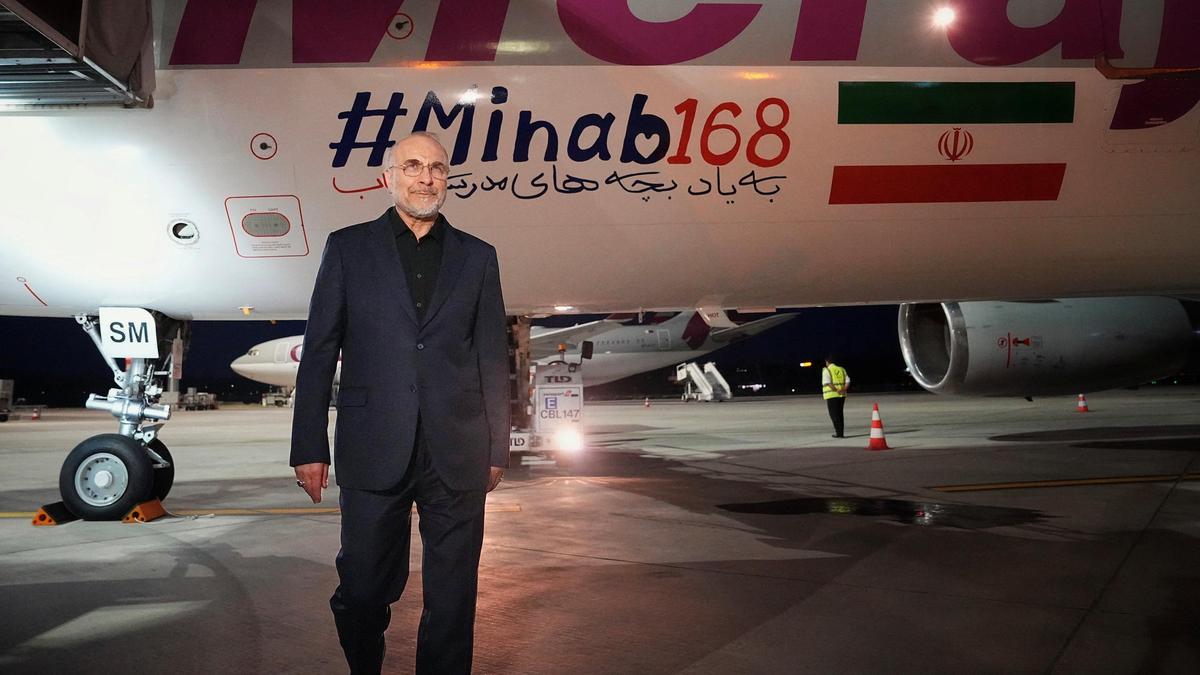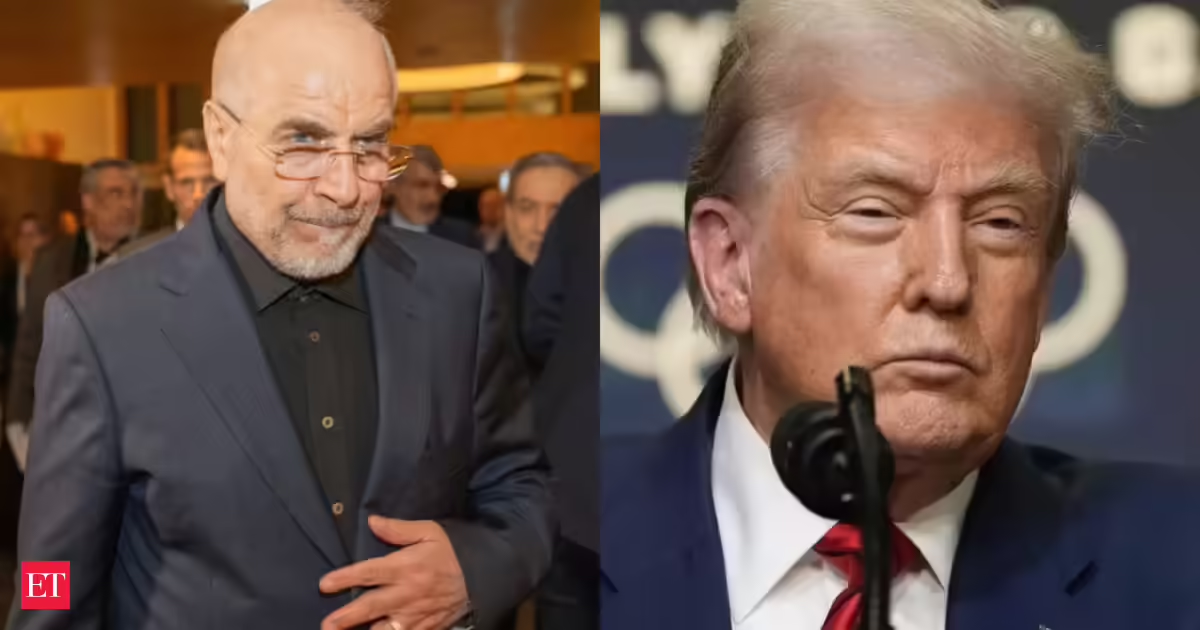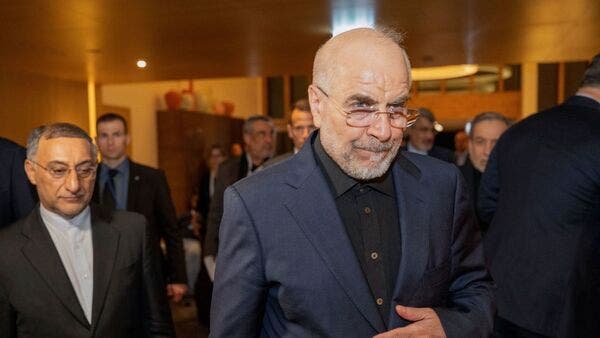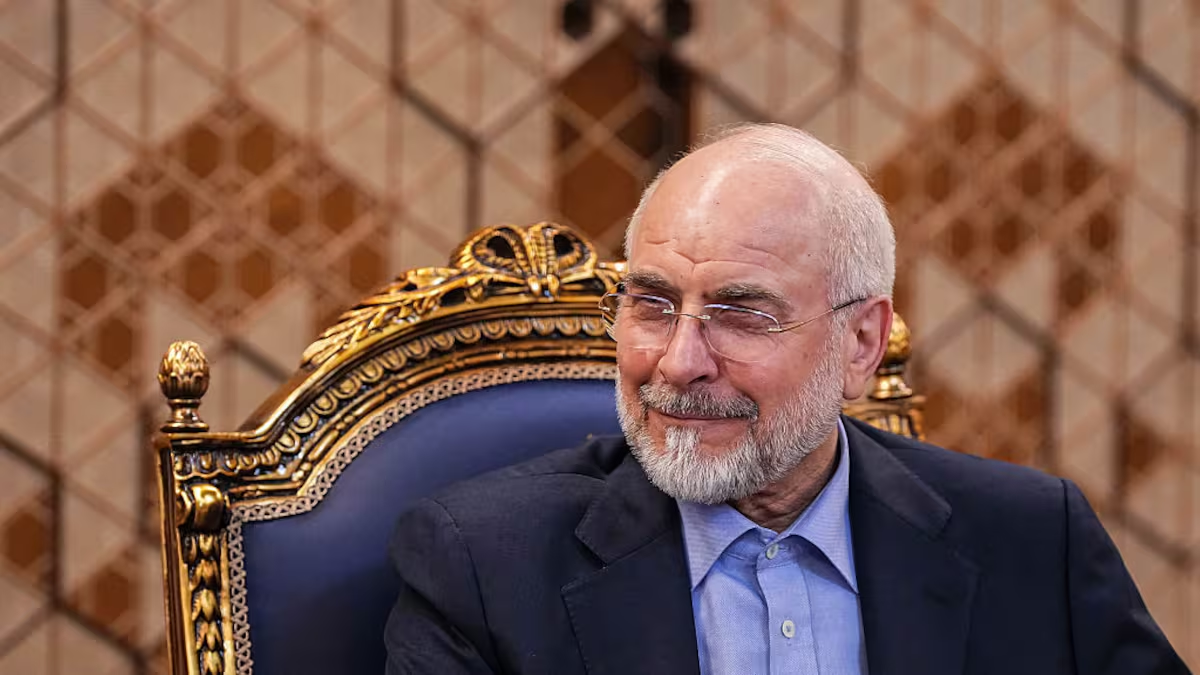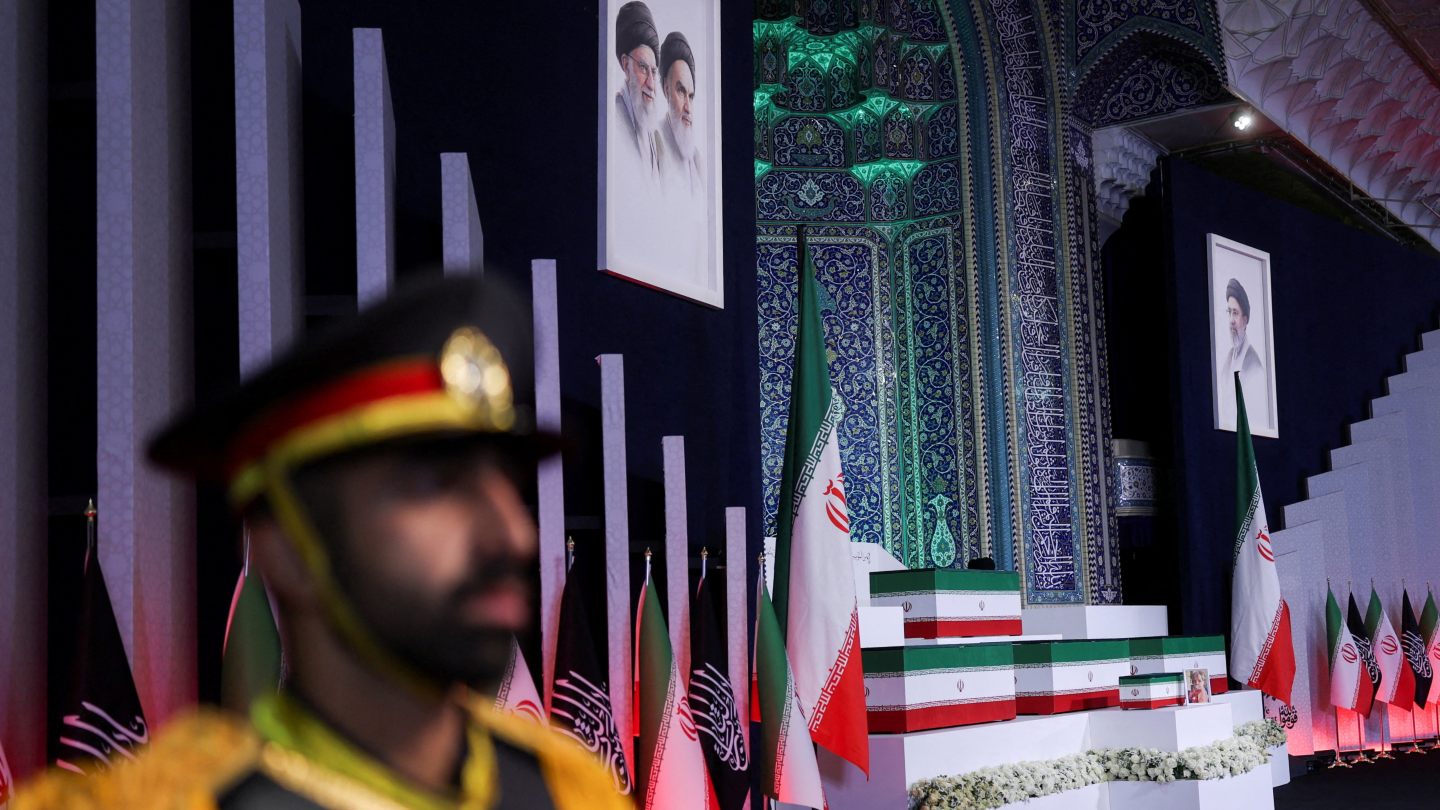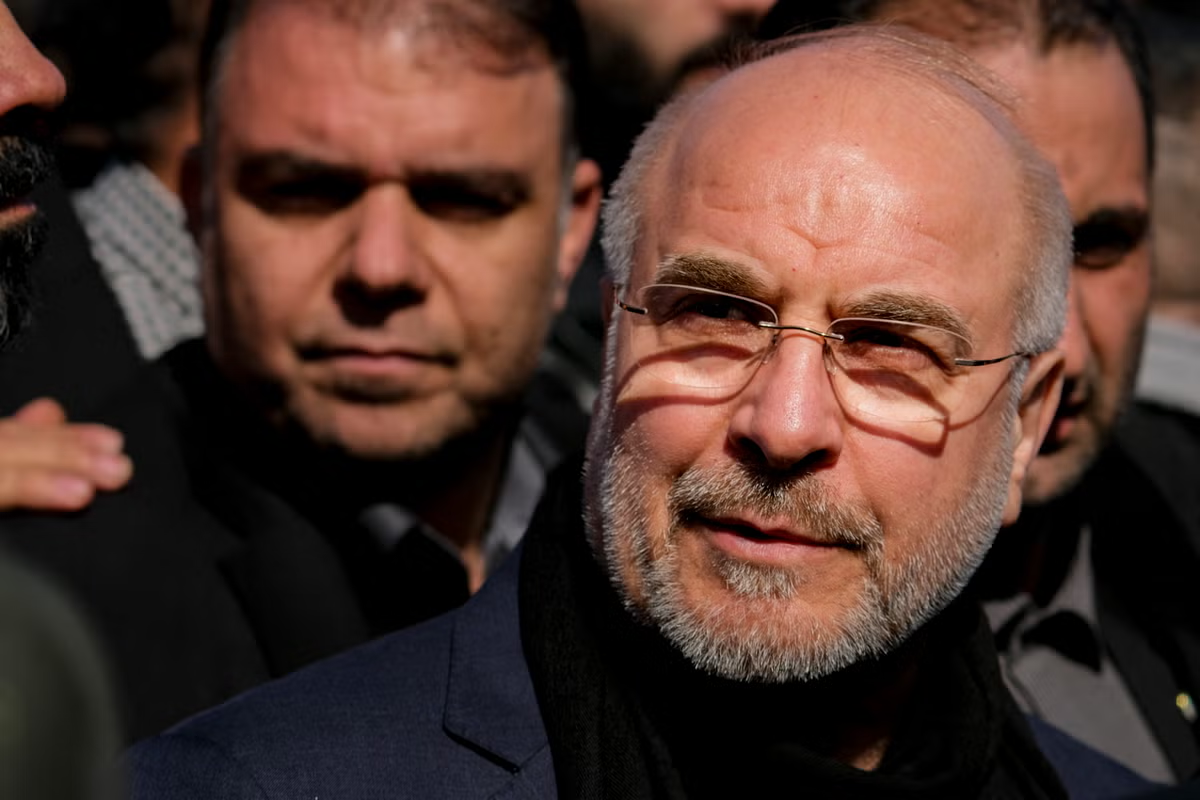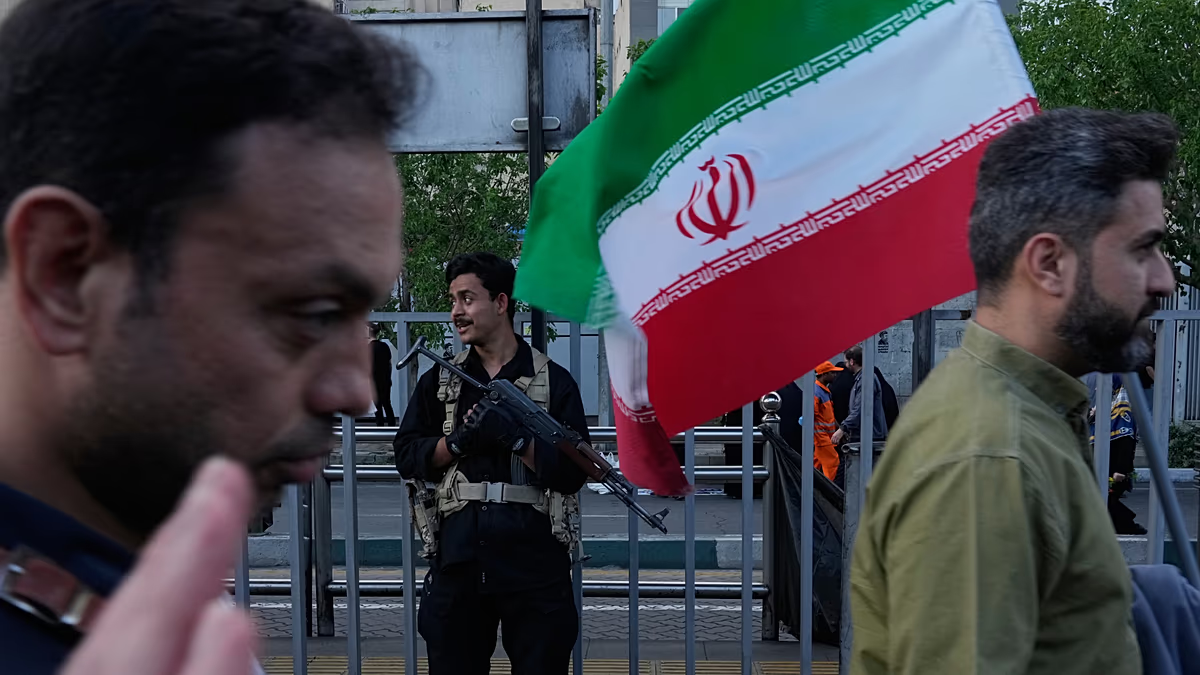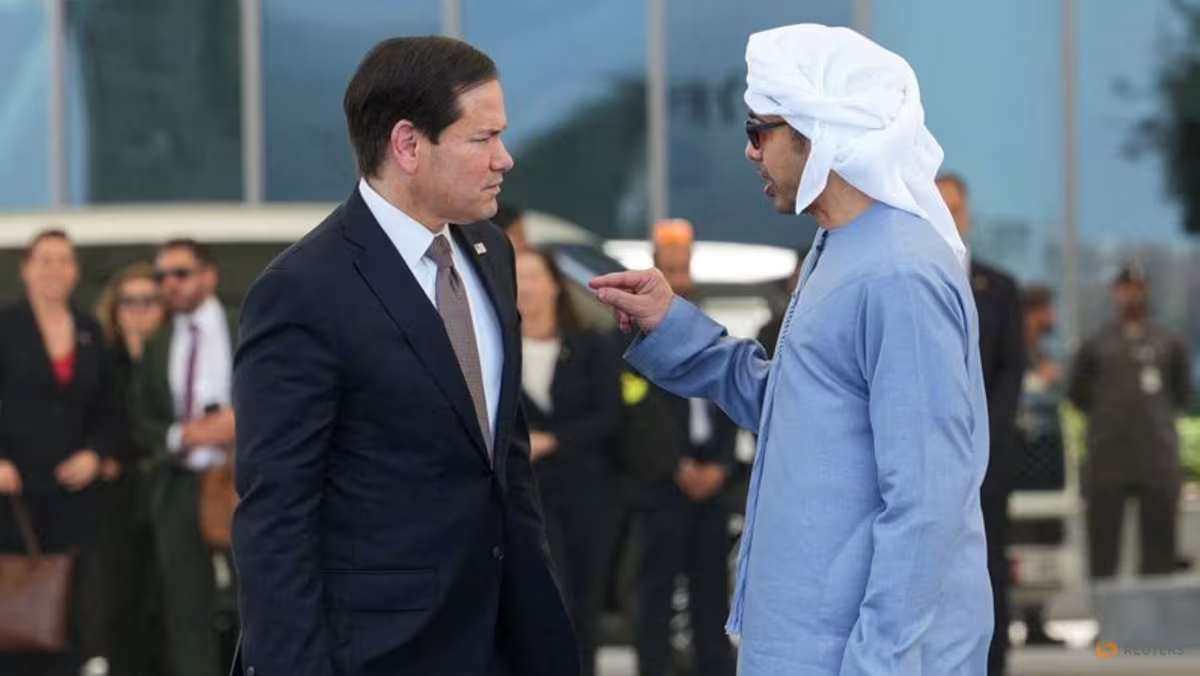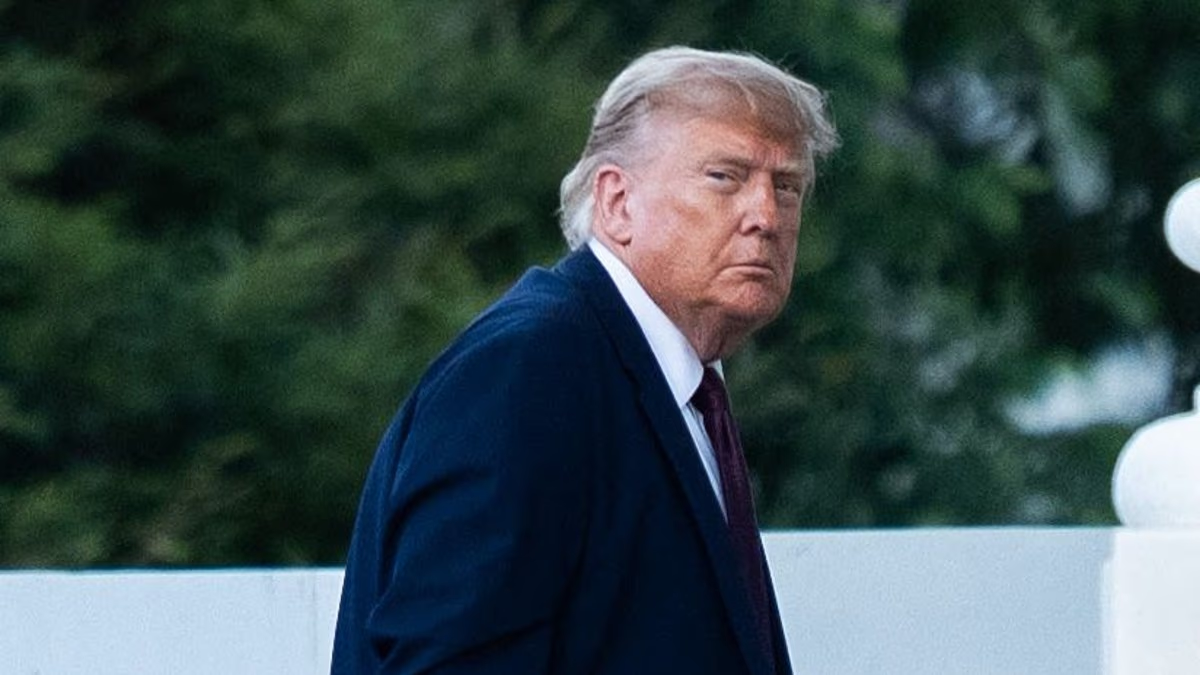
Iran has boasted that the deal it is signing with the US to end the Middle East war is 'America's declaration of defeat.'Mohammad Bagher Ghalibaf, the head of the Iranian negotiating team and the speaker of Iran's parliament, made the bold claim this morning at a conference in Azerbaijan that was broadcast on Iranian TV. He said: 'The Islamabad understanding was not the result of pressure and coercion, but rather the result of the resistance and authority of the brave Iranian nation.''That is why, the Islamabad Memorandum of Understanding became a declaration of America's defeat,' he said, adding that security in the Middle East must be ensured by the countries of the region.US president Donald Trump, meanwhile, raged at Congress for passing a war powers vote that demanded he either stop warring with Iran or seek approval before continuing. Yesterday, the Republican-controlled Senate approved a measure under the War Powers Resolution of 1973. A handful of Republicans joined Democrats on Tuesday to vote in its favour, winning by a slim margin. Earlier this month, the House of Representatives, the US' lower chamber, passed the measure.But it is largely a symbolic gesture as, despite passing through both chambers, it will not be sent to Trump for his consideration and does not carry the force of law. A furious Trump said on Truth Social: 'I have Iran on the "ropes," [sic] ready to go down for the fall, willing to give us practically anything, and for the first time in decades, respecting the hell out of the United States and its President, ME, and the U.S. Senate decides to have a poorly timed and meaningless War Powers Act Vote, telling the Number One Sponser [sic] of Terror in the World that the United States doesn't like what I am doing to them, and I must stop, and by so doing has provided aid and comfort the Enemy [sic]. US president Donald Trump (pictured) raged at Congress for passing a war powers vote that demanded he either stop warring with Iran or seek approval before continuing Vessels at the Strait of Hormuz, as seen from Musandam, Oman, June 18, 2026'Four Republican Losers voted with the Dumocrats, and Iran asked my people, 'what does that all mean?' These Senators have just made my job more difficult, but I will get it done, one way or the other, because I always get it done!'The peace deal, signed last week, committed Iran to using its 'best efforts for the safe passage of commercial vessels with no charge for 60 days.'The agreement also said Iran will work with Oman to 'define the future administration and maritime services' of the strait, though there is significant uncertainty as to what will happen after the 60 days is up. US secretary of state Marco Rubio has insisted that tolls cannot be charged on an international waterway, echoing the UK's call to ensure use of the Strait of Hormuz waterway remains fee-free to shipping.The comments by the top American diplomat came amid ongoing uncertainty over the critical Gulf channel, which remains a flashpoint in talks between the US and Iran to end their conflict.Tehran claimed to have again closed the strategic sea route at the weekend, just days after the signing of the interim peace deal, in response to strikes by Israel on Lebanon.In turn, Donald Trump warned the US could impose its own levies on the Gulf channel if a final agreement with Iran was not reached during the 60-day negotiating period.Although ships have started transiting the strait, the number remains well below pre-war levels.Operators say it will take time for traffic to recover because of the need to ensure safe passage with the removal of mines. Ships at the Strait of Hormuz, as seen from Musandam, Oman, earlier this monthThe International Maritime Organisation is now pressing ahead with its plan to evacuate more than 11,000 seafarers still stranded in the region after receiving security guarantees – a move welcomed by UK Foreign Secretary Yvette Cooper.Ending Tehran's stranglehold on the waterway, which disrupted global oil and gas supplies and drove up fuel and food prices, had been a key demand in negotiations.Prime Minister Sir Keir Starmer has previously highlighted the 'untold economic damage' caused by the effective closure of the channel, following the launch of the US and Israeli offensive on February 28.But the initial accord only secures toll-free passage of the strait for 60 days, pending the outcome of a final settlement on Tehran's disputed nuclear plans.It also appears to hand Tehran a key role over the waterway in the future.The pact leaves it to Iran and Oman, in conjunction with other Gulf states, to 'define the future administration and maritime services in the Strait of Hormuz', although it states this must be 'in line with the applicable international law', which upholds freedom of navigation.Meanwhile, Iran has said ships must seek permission to use the channel and raised the spectre of future charges.The Persian Gulf Strait Authority (PGSA), a government agency set up by Tehran during the earlier ceasefire to control the waterway, has demanded vessels submit requests at least 48 hours in advance to pass through the waterway. US secretary of state Marco Rubio has insisted that tolls cannot be charged on the Strait of HormuzIt also said admin tariffs, including for 'related Iranian insurances' would be waived during the 60-day negotiation period, leaving the way open for fees being levied at a later date.But US secretary of state Marco Rubio, who is in the Gulf to promote Washington's peace deal with Iran, said: 'No country is allowed to charge tolls or fees on an international waterway.'That's existing international law. That's the way it is in international waterways all over the world, and that's the way we expect it'll be here.'So I don't think we have anybody to convince around here in that regard.'The UK Foreign Office recently made clear that 'toll-free freedom of navigation must now be restored in the Strait of Hormuz in line with international law, to begin easing the severe economic impacts that have been felt for several months – on families here in the UK and around the world'.The interim deal has sparked controversy in Washington, including among some of the US president's Republican allies, in enabling Iran to immediately start selling its oil and the future promise of a 300 billion dollar (£227 billion) reconstruction fund.The settlement also makes no mention of Iran's ballistic missiles, which the White House had originally vowed to destroy, but that Mr Trump now says would be 'unfair' to deny Tehran.Separately, the US president said Iran had agreed to nuclear inspections into 'infinity', after Tehran denied it had agreed to allow a UN watchdog to carry out checks.Mr Rubio said: 'We know what they agreed to. I don't know why they have to say the things they say.'Whatever their internal or domestic politics is, I guess they'll navigate it.'But we know what they agreed to do, and now they'll either do it or they won't. And if they do, the process moves forward. And if they don't, the president will have some decisions to make.'
Iran boasts Trump's war deal is 'America's declaration of defeat'
Iran has boasted that the deal it is signing with the US to end the Middle East war is 'America's declaration of defeat.'
1,188 words~5 min read