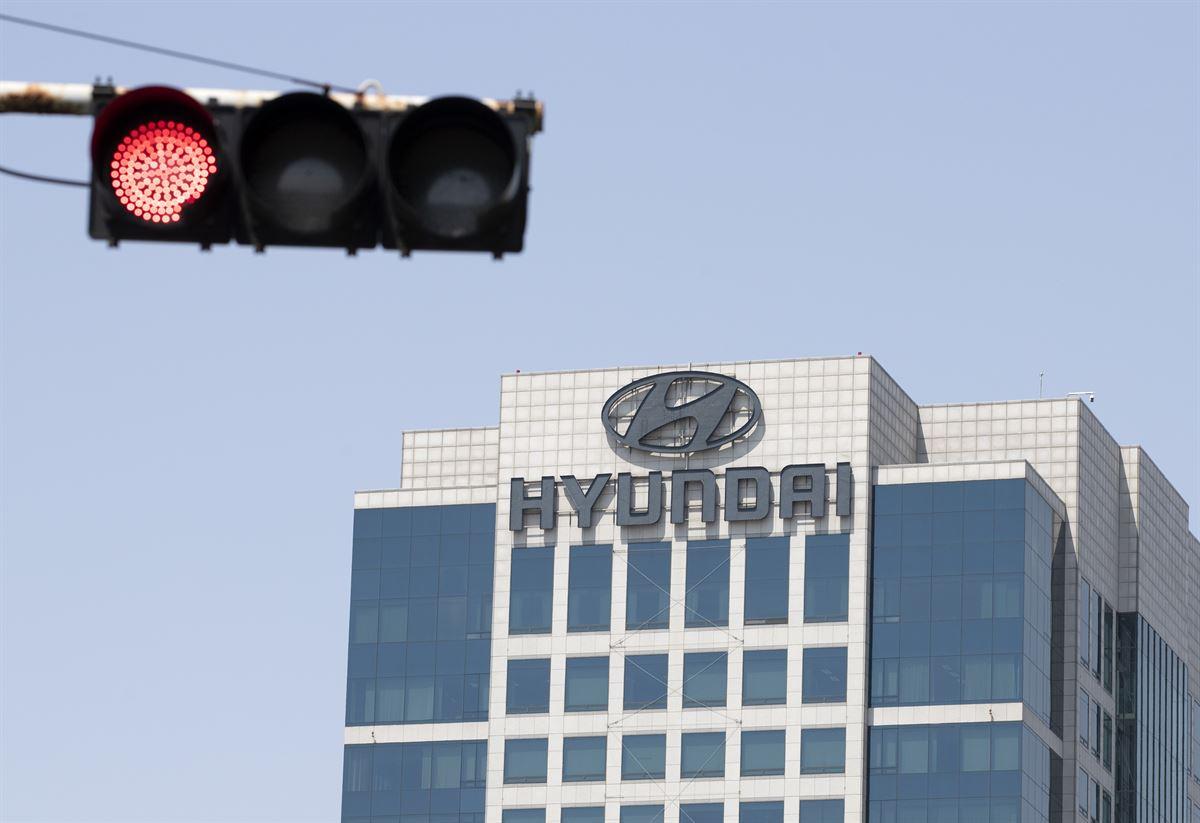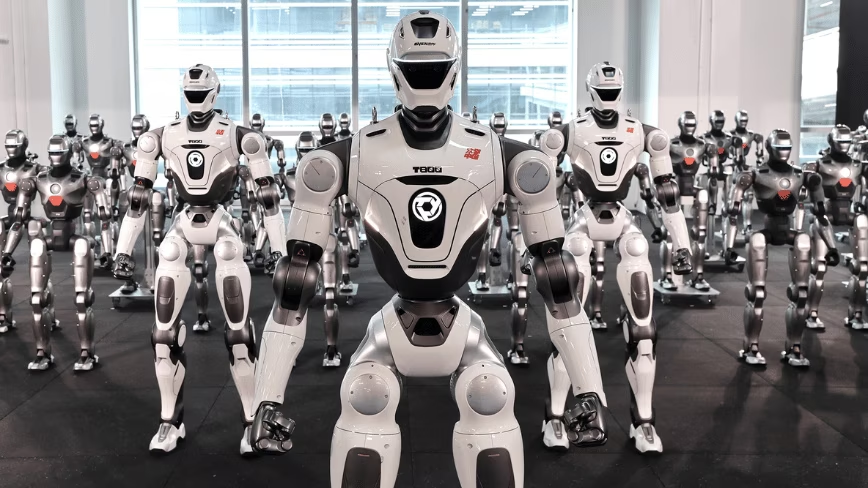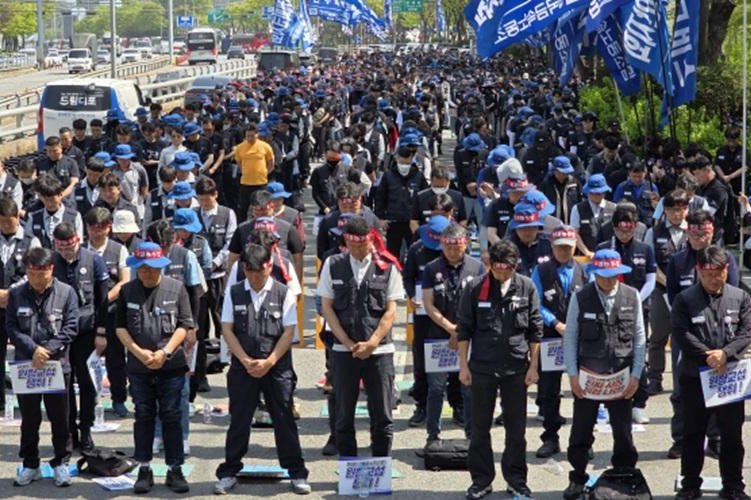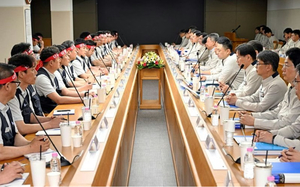
Samsung's landmark bonus deal, new labor rules strengthen union leverage as workers secure strike authorization Executives and union representatives of Hyundai Motor Co. hold the first meeting for the 2026 wage negotiations at the company’s Ulsan plant on May 6. (Hyundai Motor Group) Hyundai Motor Co.’s labor union has voted to secure the right to strike, with its longstanding demand for a “30 percent of net profit” bonus gaining fresh momentum following Samsung Electronics’ recent landmark agreement.Hyundai Motor’s union, involving 39,668 members, held a strike authorization vote on Wednesday, with 92.03 percent agreeing to go on strike. After securing the legal right to strike in a vote that has never failed to pass, the union will decide whether to proceed with a walkout depending on the progress of negotiations with management.The union has pushed for a 30 percent share of net profits in nearly every annual negotiation since 2004 — except in 2020, when Hyundai faced heightened uncertainty from the COVID-19 pandemic. In past settlements, management has pushed back on the union’s demands, leading to one-off bonus packages as a combination of a percentage of monthly base pay, a fixed cash payment and company shares.The Samsung effectHowever, industry insiders indicate the union’s decadeslong push for profit-sharing might serve as a high-stakes leverage strategy this year, given the reshaping of the landscape of corporate bonuses triggered by Samsung.After months of intense labor disputes, the chipmaker’s labor and management last month agreed to establish a special bonus pool amounting to “10.5 percent of operating profit” for its Device Solutions semiconductor division.Samsung’s milestone deal has since created a ripple effect across Korean corporate peers, shifting labor union focus from one-off, management-dictated bonuses to profit-linked formulas.A new legal openingExperts say while past judicial precedents strictly excluded profit-sharing bonuses from legitimate strike agendas, the controversial “Yellow Envelope Act” — which took effect in March — has drastically altered the legal landscape.By expanding the scope of justifiable labor disputes to include “business management decisions that affect working conditions,” the law has established a critical foothold for unions to argue that profit distribution is a valid cause for strikes.Kim Pil-su, an automotive engineering professor at Daelim University, argued that decisions on how a company distributes its profit among shareholder dividends and employee bonuses belong to management and shareholders, not labor unions.“Bonuses are distributed only after a company meets its obligations to creditors, shareholders, taxes and future investment such as (research and development),” Kim said.“The union’s demand effectively seeks a share of earnings before those commitments are addressed.”Kim also highlighted fundamental structural differences between the semiconductor and automotive manufacturing sectors: Automakers typically operate on much thinner margins, where double-digit operating profit numbers are rare.“Once management accepts a fixed-percentage net profit bonus formula, it sets an irreversible precedent,” he said, adding that the dispute could leave labor and management locked in a prolonged standoff and even lead to an actual strike.After maintaining seven consecutive years of wage agreements without strikes, Hyundai’s labor union staged a partial walkout in 2025.While the chances of the union securing its demand for a bonus equivalent to 30 percent of net profit remain slim, if granted, Hyundai would have to spend over 3 trillion won ($1.9 billion) on bonus payments, given that last year’s net profit was 10.3 trillion won.This further pressures Hyundai, already grappling with a 15 percent tariff imposed by the US. Despite its record 186 trillion won revenue last year, its operating profit declined 19.5 percent.The robot questionAnother key issue is the union’s demand for guarantees on employment and working conditions in response to Hyundai’s growing adoption of AI and robotics — an issue that has not surfaced in previous rounds of wage negotiations.The union’s call for a “full monthly salary” system is also viewed as a preemptive safeguard against the future deployment of Atlas humanoid robots, currently being prepared for commercialization at Hyundai’s production facilities. As automation increasingly takes over production tasks and reduces workers’ hours on the factory floor, the existing hourly wage structure could lead to lower earnings for employees.The union aims to protect workers from this by guaranteeing a fixed monthly income.
Hyundai Motor union's 30% bonus push gains momentum
Hyundai Motor Co.’s labor union has voted to secure the right to strike, with its longstanding demand for a “30 percent of net profit” bonus gaining fresh momen
686 words~3 min read