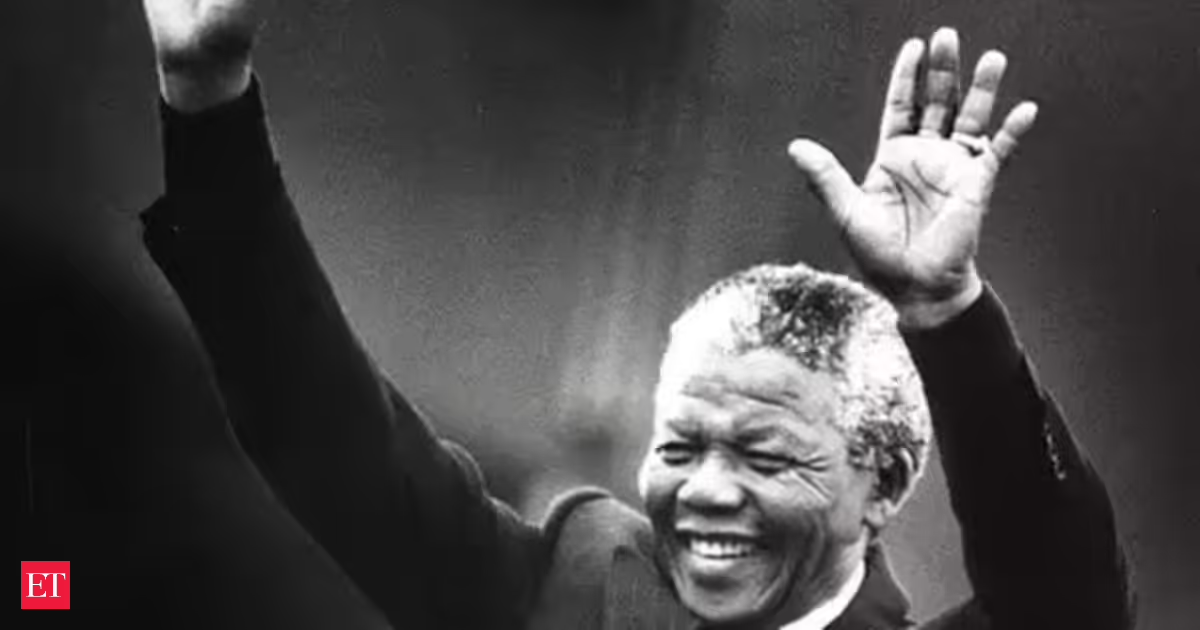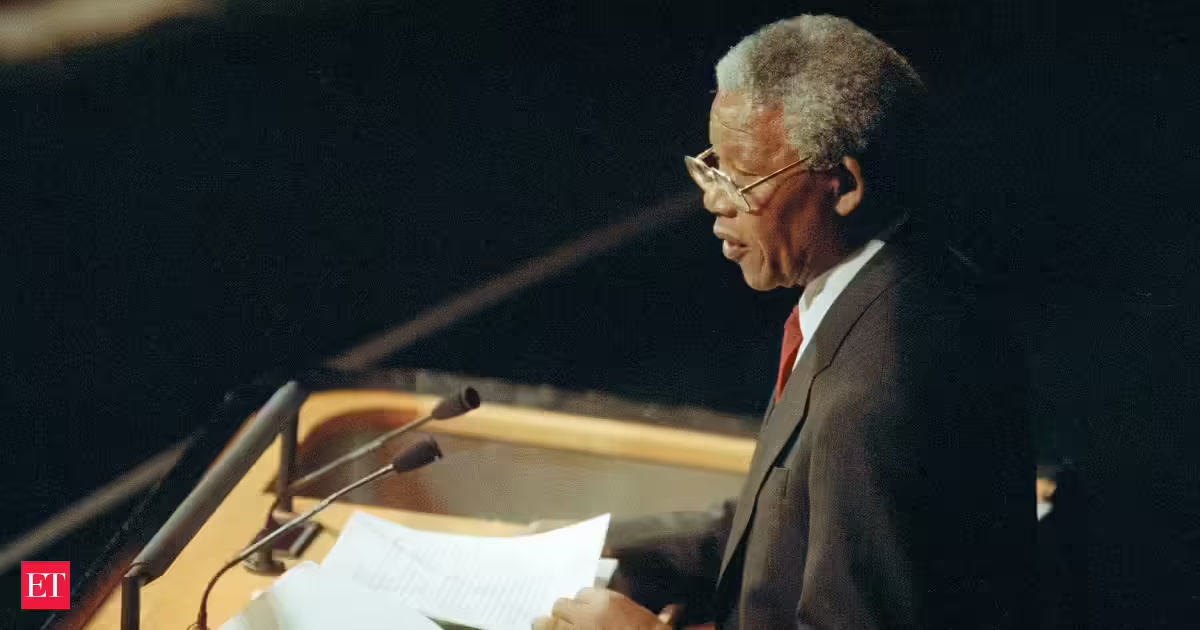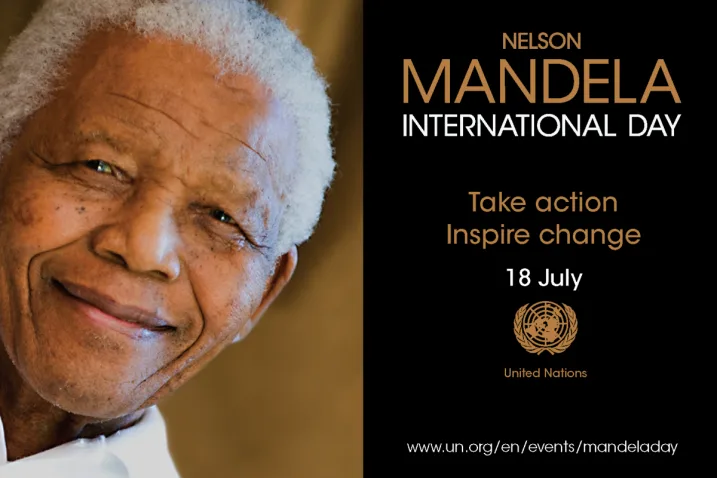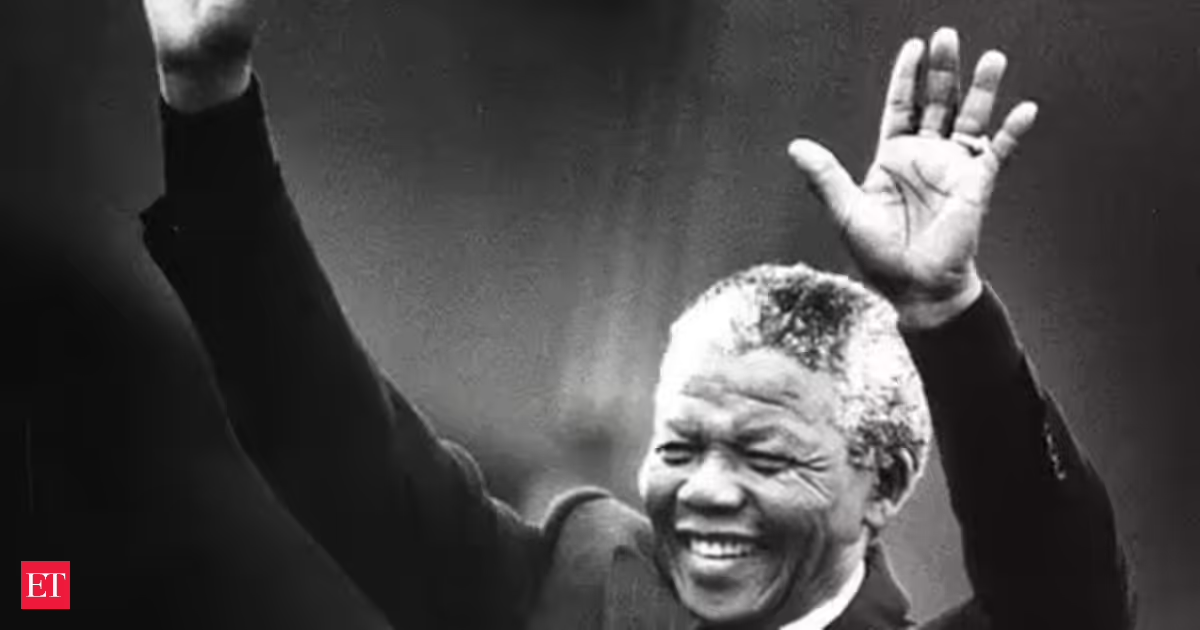
What if poverty is not an unavoidable fact of life but a problem that humanity has the power to solve?For generations, millions of people around the world have struggled with hunger, inequality, and a lack of opportunity. While poverty is often viewed as an unfortunate reality, Nelson Mandela believed it was something far more important to confront: an injustice created by human systems and choices.Quote of the day by Nelson Mandela: “Overcoming poverty is not a task of charity, it is an act of justice. Like Slavery and Apartheid, poverty is not natural. It is man-made and it can be overcome and eradicated by the actions of human beings.”Who was Nelson Mandela?Nelson Mandela was one of the most influential political and moral leaders of the 20th century. Born on July 18, 1918, in the village of Mvezo in South Africa's Eastern Cape, Mandela grew up under a system of racial segregation that would later evolve into apartheid, a government policy that denied basic rights to the country's Black majority.After studying law, Mandela became involved in the struggle against racial discrimination and joined the African National Congress (ANC). As apartheid intensified, he emerged as one of the movement's most prominent leaders, advocating for equality, democracy, and human rights.In 1964, Mandela was sentenced to life imprisonment for his anti-apartheid activities. He spent 27 years behind bars, much of it on Robben Island, becoming a global symbol of resistance against oppression. Despite decades of imprisonment, he refused to abandon his principles.Following his release in 1990, Mandela helped negotiate the peaceful end of apartheid and played a central role in South Africa's democratic transition. In 1994, he became the country's first Black president, leading efforts to promote reconciliation rather than revenge.Mandela received numerous international honors, including the Nobel Peace Prize, shared with F.W. de Klerk. Today, he is remembered not only as a political leader but also as a global symbol of courage, forgiveness, and social justice.What does the quote mean?Mandela's quote challenges a common way of thinking about poverty. Rather than seeing poverty as an inevitable condition that can only be eased through charity, he argues that it is the result of human decisions, institutions, and inequalities.The quote also shifts the conversation from compassion to responsibility. Charity is often viewed as optional; justice is a moral obligation. The deeper message is that poverty is not simply an economic issue, it is a moral issue. Just as societies chose to end slavery and dismantle apartheid, Mandela believed societies can choose to create systems that provide greater opportunity, fairness, and dignity for all people.Despite significant progress in many parts of the world, poverty remains one of humanity's greatest challenges. Hundreds of millions of people continue to face barriers to education, healthcare, housing, and economic opportunity.More inspiring quotes by Nelson Mandela“It always seems impossible until it's done.”“Education is the most powerful weapon which you can use to change the world.”“I never lose. I either win or learn.”“Resentment is like drinking poison and then hoping it will kill your enemies.”
Quote of the day by Nelson Mandela: ‘Overcoming poverty is not a task of charity, it is an act of…’ – Nobel laureate’s message on poverty, justice, and shared responsibility
Nelson Mandela powerfully declared poverty an injustice, not an unavoidable fate. He argued that like slavery and apartheid, poverty is man-made and can be overcome through human action. Mandela, a pivotal anti-apartheid leader and South Africa's first Black president, believed addressing poverty is a moral imperative, urging societies to build systems fostering fairness and opportunity for all. His legacy inspires a call to action against global inequality.
503 words~2 min read