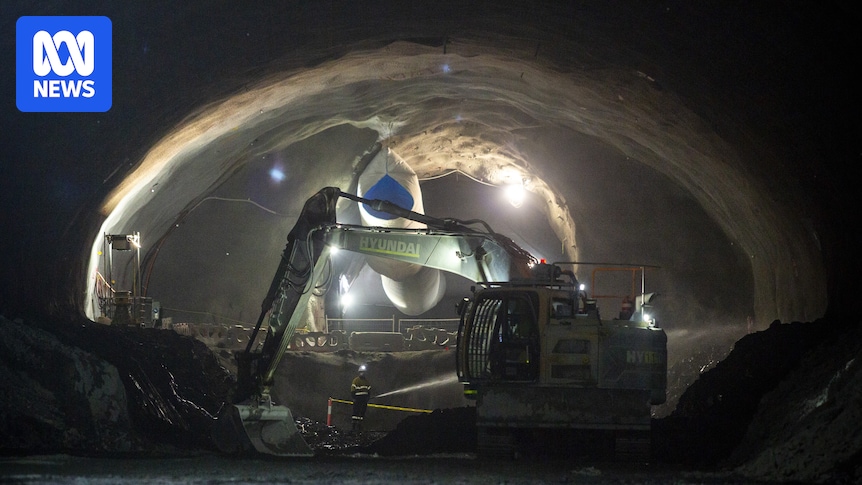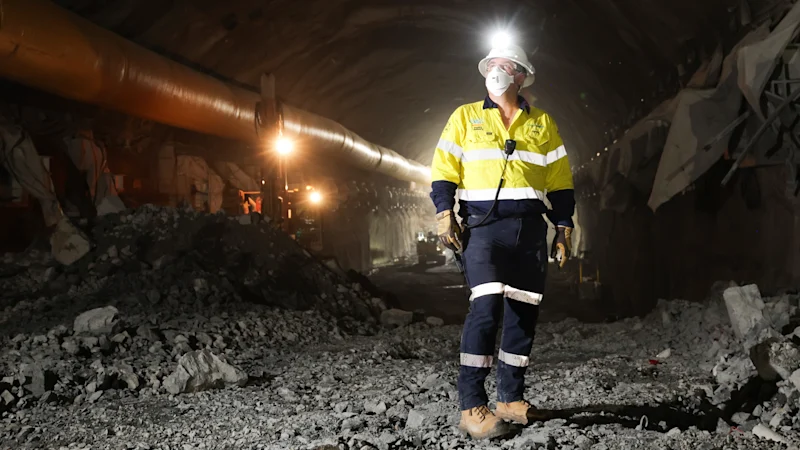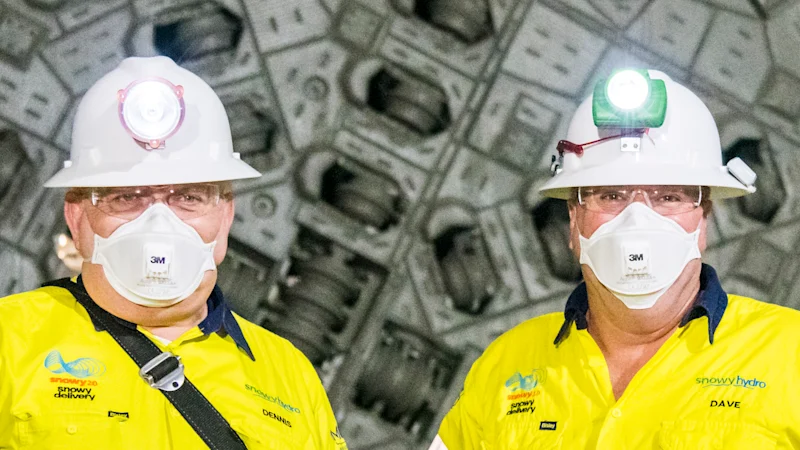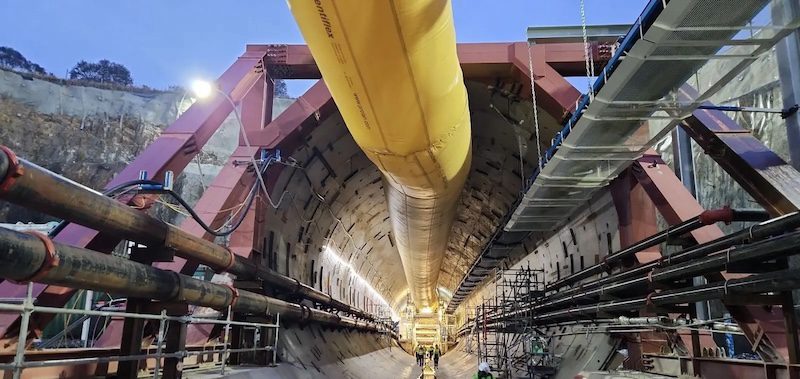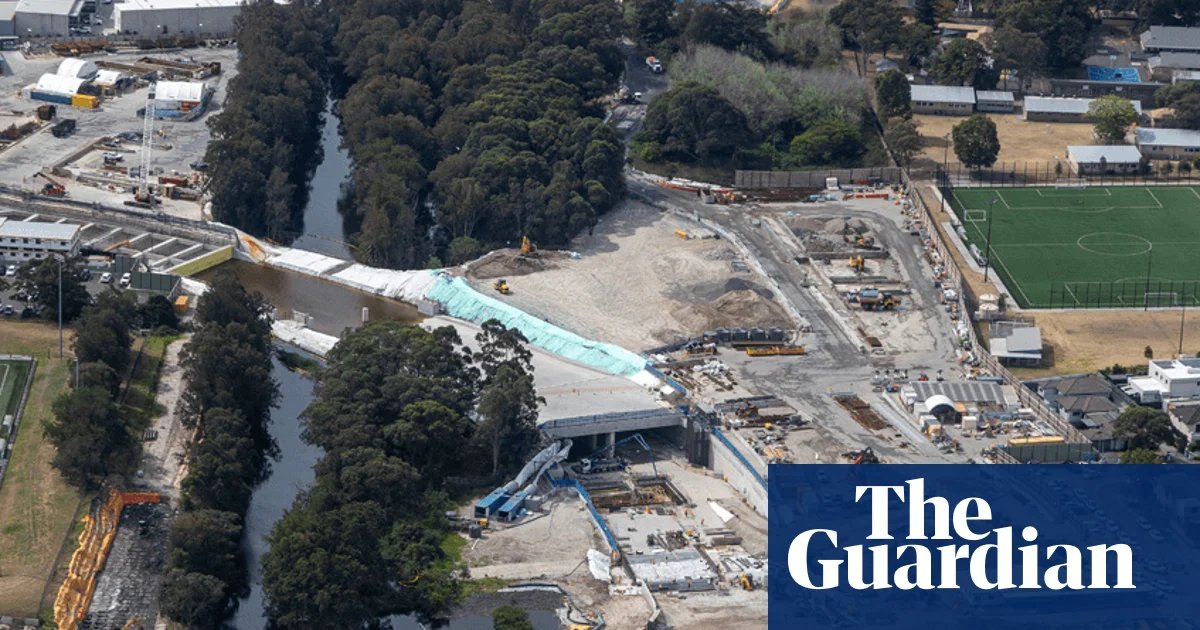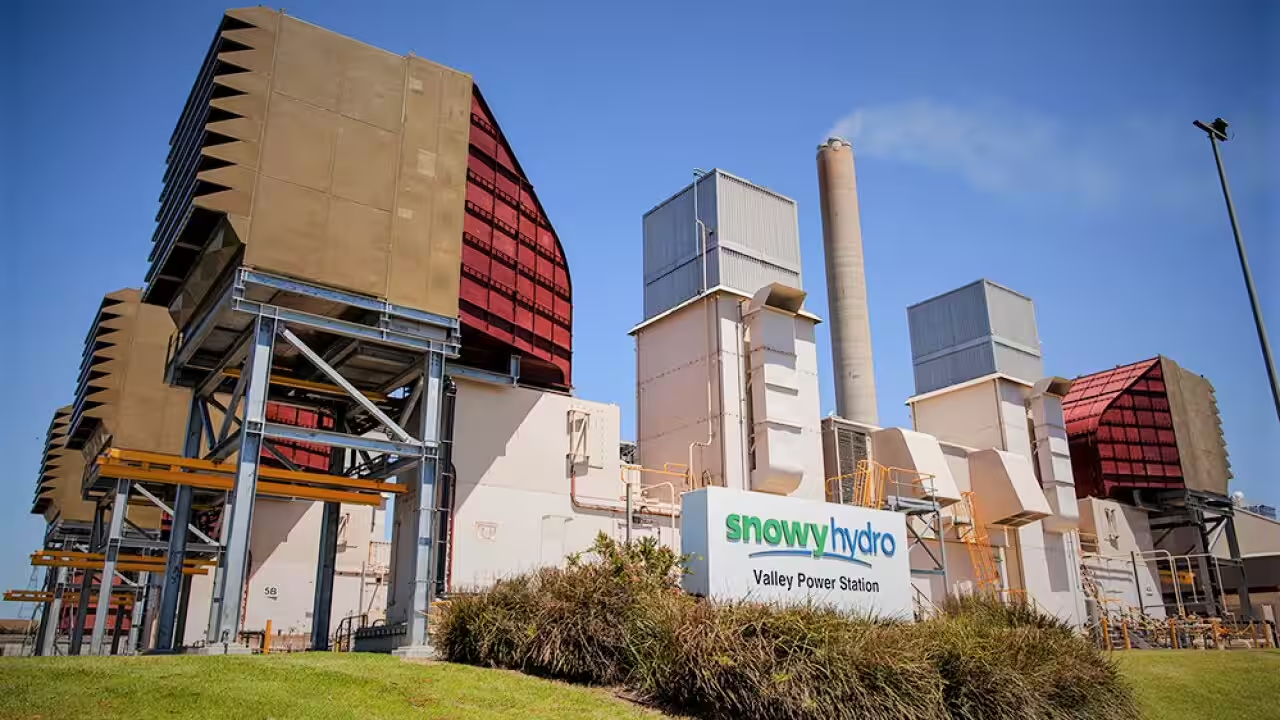
in briefSnowy 2.0 is currently $10 billion over budget and 2 years overdue, with further costs and delays expected.When completed, it is projected to generate 10 per cent of the country's electricity."Cancel it. Cut our losses."Addressing the National Press Club last week, One Nation leader Pauline Hanson described the Snowy 2.0 hydroelectric project as "nothing more than a black hole of debt" and claimed its cost is estimated to blow out from $2 billion to more than $40 billion. It was the latest swipe at the beleaguered energy project that is years overdue and billions over budget, and which critics have said may never be cost-effective. Last week, the Australian National Audit Office (ANAO) delivered a further hit to the project through its latest assessment, which found "significant deficiencies" in the way it is being managed.Having undergone a reset in 2023, Snowy Hydro's management of the renewable energy power station in the NSW Kosciuszko National Park was found to still only be "partly effective".News that makes senseYour trusted source for staying up-to-date with the world around you. Get free daily news updates and analysis, straight to your inbox.A schedule for completion had not been agreed upon, the ANAO found, future costs were not being reliably tracked, and contractors were not being held to account.Responding to the audit, Snowy Hydro accepted four of the five ANAO recommendations and partially accepted the fifth. The company running it argues Snowy 2.0 is the nation's "most critical energy project" and it will provide more than half of Australia's total energy storage needs by 2050.Snowy Hydro chief executive Dennis Barnes recently told an Australian Energy Council conference in Sydney that, although Snowy 2.0 is "bloody hard to build", it's "pretty good value" for money and will deliver "generational benefits."Why is Snowy 2.0 taking so long?Commissioned under Malcolm Turnbull's coalition government in 2017, Snowy 2.0 expands on the original Snowy Mountains hydroelectric complex. Originally planned for completion in 2024, it is now expected to open by December, 2028.The project is one of the biggest engineering feats in the country, digging 27km of some of the deepest tunnels on Earth to connect the Talbingo reservoir to the Tantangara reservoir. With Tantangara higher than Talbingo, the two dams will act like a gigantic battery, pumping water up using renewable energy when charging, and letting it flow back down to generate electricity.Snowy 2.0 is designed to stabilise the grid, offering power during peak demand and when other renewables aren't able to deliver. Credit: Snowy Hydro LimitedThe project has been hampered by the COVID-19 pandemic, subsequent global supply chain disruptions, and more complex-than-expected geological conditions.One of the three massive tunnel boring machines used to excavate the system, nicknamed Florence, became stuck in a sinkhole just 150m into a 15km dig. It took roughly 11 months to get the machine out.Strikes, gas leaks, safety concerns, and the collapse of the original construction firm contracted to build the project have all delayed it further.Will Snowy 2.0 be worth it?The original rough estimate of the project was $2 billion, updated to between $3.8 and $.45 billion following a feasibility study. In October last year, the project was reported to be 67 per cent complete but was set to overrun its $12 billion budget forecast.In recent Senate estimate hearings, Barnes could not provide a figure on how much had been spent so far, but rejected speculation that it was as high as $20 billion.However, he did reject a critical $42 billion assessment made by two energy experts in April, arguing that the figure includes transmission costs which Snowy Hydro is not responsible for. At full capacity, Snowy 2.0 is expected to generate 2.2 gigawatts of electricity and 350 gigawatt hours of energy storage — roughly a week's worth of power for around 3 million homes. However, there have been accusations that the project may not generate as much electricity as advertised — down to as little as 40 gigawatts of storage under real-world conditions. Andrew Blakers, professor of engineering at the Australian National University, rejects those claims, arguing that such notions "overlook" the integrated nature of the Snowy Mountains dam system, allowing for "extremely flexible" water movement. Snowy 2.0 was given strong support under the Morrison government, something current Energy Minister Chris Bowen has criticised Opposition leader Angus Taylor (left) for underestimating. Credit: AAPWhen it comes to cost, the renewable energy researcher said Snowy 2.0 will work out to about a quarter of the cost of standard battery storage in 10 years. "Snow 2.0 provides the same energy storage as 7 million electric vehicle batteries," he told SBS News. "It works out to about $3000 per EV battery."A replacement battery for a Tesla EV is between $7,000 and $15,000, according to the vehicle maintenance website AutoGuru. In addition, Snowy 2.0's planned 100 to 150 year lifespan means it will last "at least seven times longer" than traditional battery storage, Blakers said. Could Snowy 2.0 be cancelled?Hanson is not the only one who wants to see Snowy 2.0 scrapped. While she proposes the country invest in nuclear power instead, others say renewable energy efforts could be better invested.Dr Bruce Mountain of the Victoria Energy Policy Centre at Victoria University has long been a vocal critic of the project, branding it a "costly white elephant" and an "international laughing stock". Mountain and former energy executive Ted Woodley have assessed the total price tag could be $42 billion.Civil engineers, energy economists, and environmental groups have similarly demanded a halt to the project, arguing that better alternatives are available. Blakers said that, at present, coal covers 90 per cent of the country's overnight electricity demand and, given that it is expected to exit the grid over the next decade, long-term battery storage is required. "Snowy 2.0 all by itself will be 80 per cent of all the energy storage in Australia," when it comes online, he said. "This is serious storage, whereas batteries are not serious energy storage."Small-scale batteries can discharge power for hours, but during wind droughts and overcast days, they can quickly run dry. Snowy 2.0 underpins the renewable energy transition, Blakers argued, and the idea of cancelling it would be "totally nuts"."It's approaching 80 per cent completion," he said. "It's sunk money whether you like it or not, and the soonest that Pauline Hanson could become prime minister would be 2028, when it would be six months out from completion. "She's not going to do that."Still, if the project was scrapped, he argues there "would be panic" as it would force Australia's already "well past their use-by date" coal power stations to remain on. "That carries the risk that you would get explosions, failures, collapses," he said. "The biggest disruption nowadays to wholesale electricity is the unexpected failure of coal power stations."Talbingo resevoir is roughly 700 metres lower than Tantangara while the pipes connecting the two will be 800 metres underground. Credit: Snowy Hydro LimitedWhen Snowy 2.0 comes online, it will make Australia the number one country in the world for renewable energy storage per capita, having long been number one for solar generation, Blakers said."We are a renewable energy pathfinder," he said. "Of course, we find cracks in the pavement as we move down the path, but we are finding that it's really quite straightforward to solve those problems."Once the project is completed, he argued most Australians will think about the costs and the delays about as much as they think about similar issues with the Sydney Harbour Bridge or the Opera House."There has been more misinformation and disinformation and outright nonsense written about Snowy 2.0 than almost any other project," he said."We are an example to the rest of the world. We should be proud of it."For the latest from SBS News, download our app and subscribe to our newsletter.
'Bloody hard to build': The Australian mega project at the centre of an energy fight
The hydroelectric megaproject is one of the largest and most ambitious ever built — but critics say it is simply too costly.
1,297 words~6 min read