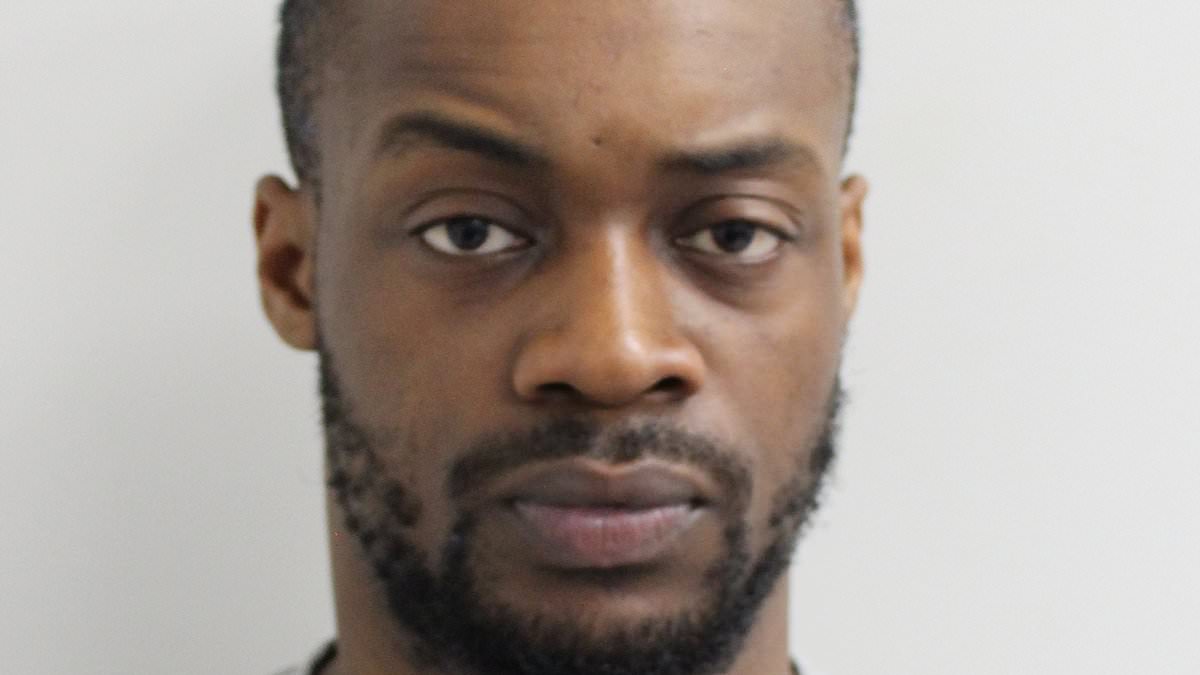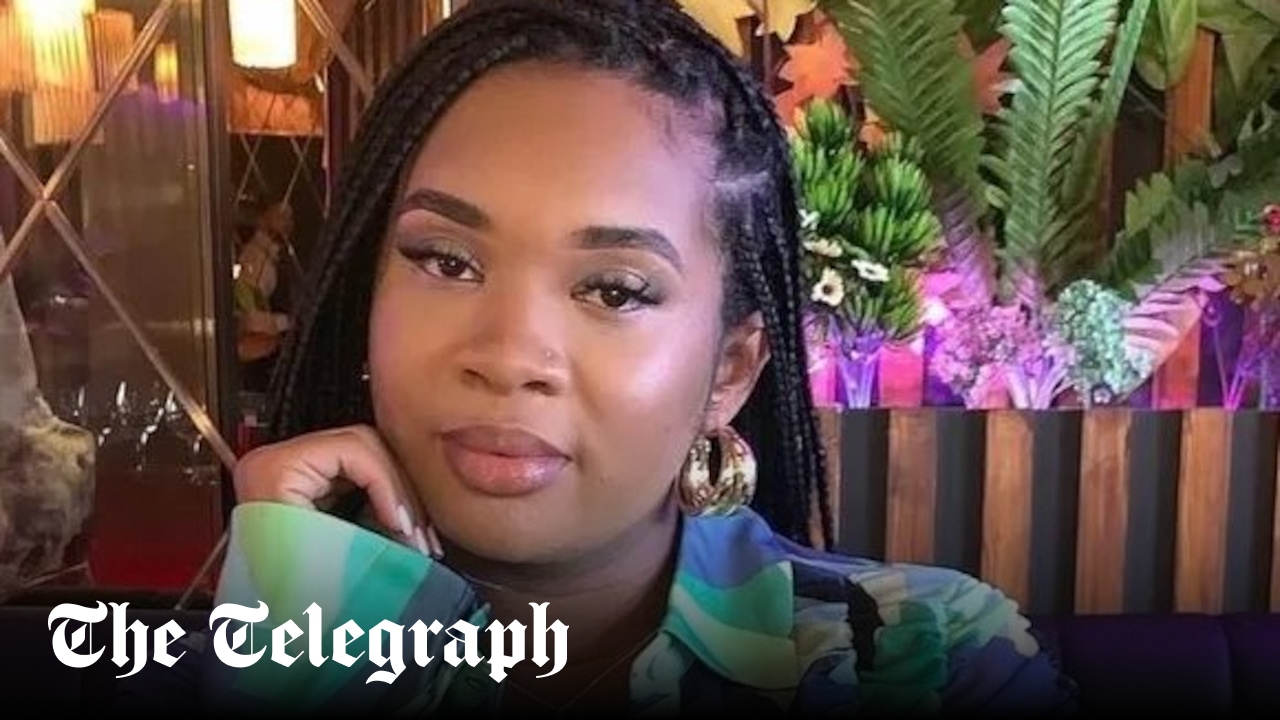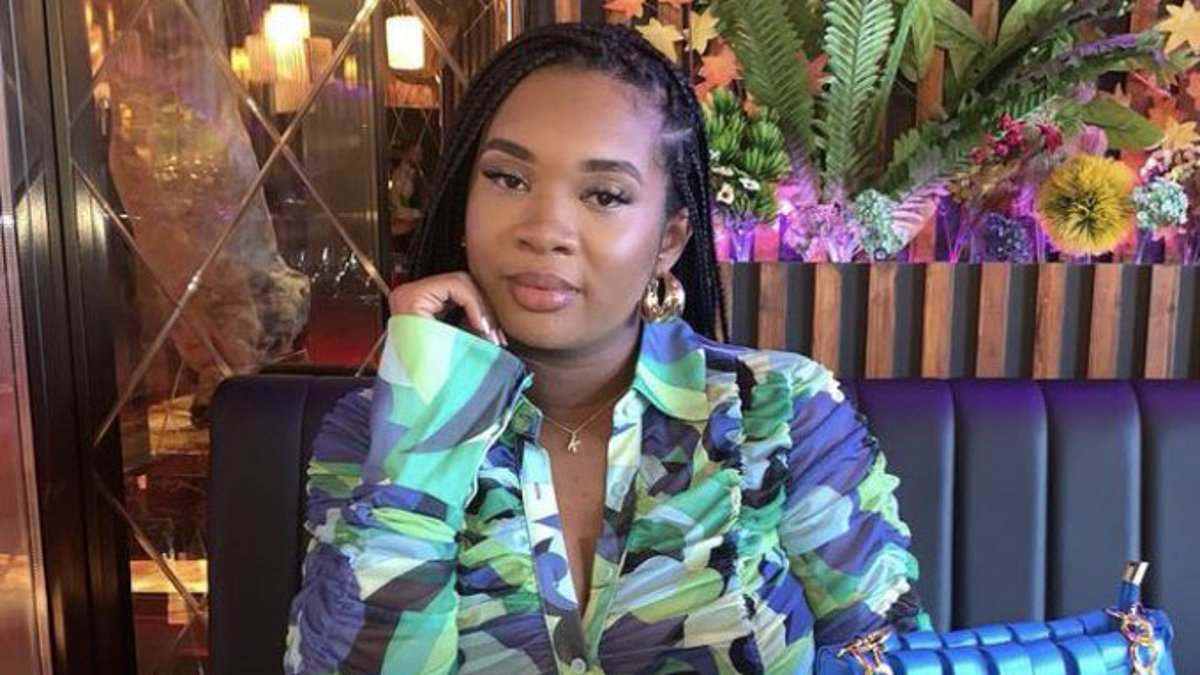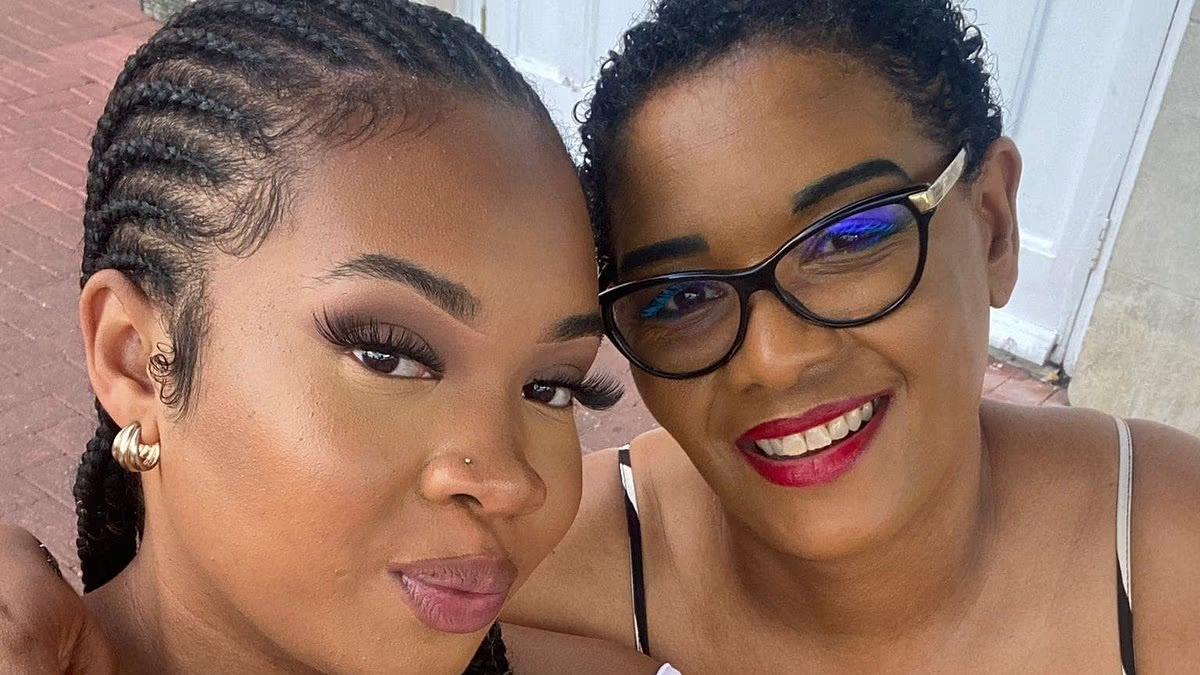
Not long before he murdered her, Gogoa Tape sent his girlfriend Kennedi a letter in which he wrote that he wanted to kill her.Later, he would insist it was a joke. But as Kennedi’s mother Linda Westcarr reflects today: ‘What kind of person writes such a thing?’It is a question to which she learned the answer in the bleakest possible way.In April 2024, just weeks after receiving that letter, 25-year-old Kennedi Westcarr-Sabaroche was dead at her boyfriend’s hands, strangled in what her family believe was a calculated and sustained attack lasting eight long minutes – involving knives, blunt force and strangulation – and leaving behind a little girl who had yet to celebrate her second birthday.More than two years on, the loss of this vibrant young mother, devoted daughter and much-loved sister remains devastating.Yet alongside the family’s grief sits another emotion – a profound sense of betrayal by the criminal justice system.For despite what Linda describes as a history of controlling and coercive behaviour, despite the circumstances surrounding Kennedi’s death and despite the chilling threats contained in that letter, Tape, now 29, was ultimately convicted not of murder but manslaughter on the grounds of diminished responsibility.Prosecutors accepted psychiatric evidence, gathered months after the attack, that he was suffering from psychosis at the time of the killing from previously undiagnosed schizophrenia, a decision taken without any consultation with Kennedi’s family. Linda Westcarr wants to see a change in the law to prevent people like Tape avoiding tougher sentences Linda and Kennedi pictured together. Linda says 'it didn't seem real' when she found out her daughter had been killedNor was Tape sent to prison, but instead he received a restricted hospital order with no fixed or minimum term.Then came another terrible blow: less than a year after sentencing, Linda learned that clinicians were considering Tape – who is currently staying in a facility barely five miles from her home – for escorted leave, leading to the prospect of the man who killed her daughter soon walking the very streets where he took her life.Is it any wonder the family are horrified? 'How is this justice?’ asks Linda today. ‘The fate of the man who killed my daughter was decided without a jury, behind closed doors, and with no transparency whatsoever, and my family has been left with two completely different accounts of what happened to Kennedi.‘There is the version supported by the evidence: a drug-abusing man whose behaviour towards my daughter became increasingly controlling, who lured her out late at night under false pretences, who carried out a prolonged and violent attack and who then engaged in a series of calm cover-ups afterwards.‘Then there is the narrative accepted by the CPS [Crown Prosecution Serivce]: a young man suffering from undiagnosed schizophrenia whose responsibility was impaired.‘Those two narratives lead to very different outcomes. Had the first been put before a jury, it could have resulted in a murder conviction, a life sentence and a minimum term of around 25 years. Instead, the second narrative, agreed behind closed doors, resulted in a manslaughter conviction, a restricted hospital order, no minimum term and now the prospect of escorted leave.’It is this disparity that has prompted Linda and her brother Leon, supported by Refuge chair Hetti Barkworth-Nanton, to seek a meeting with Justice Secretary David Lammy, which is to take place next Monday. Kennedi Westcarr-Sabaroche was 25 when she was strangled to death by her boyfriend Gogoa Tape received a restricted hospital order with no fixed or minimum term after being convicted of manslaughterAlongside an independent inquiry into the handling of Kennedi’s case, they want ministers to urgently address the anomaly in criminal law sentencing where hospital orders are given with no minimum term, meaning very violent offenders can be released into the community within months.‘Hundreds of offenders receive hospital orders with restrictions,’ says Linda. ‘If somebody who killed a young mother in these circumstances doesn’t meet the threshold for long-term detention, who does? Treatment cannot come at the expense of accountability, proportionality or public protection.’Today, Linda’s shock at the loss of her daughter remains palpable. A dignified and poised senior education welfare officer, the tears come when she talks of Kennedi’s four-year-old daughter, who she is now raising as her own and who she has asked us not to name.She is keenly aware that alongside the precious milestones Kennedi is no longer there to witness – her daughter’s first day at nursery, the forthcoming first day at school – are painful questions that must one day be addressed.‘It breaks my heart,’ she says. ‘The grief is incredibly difficult and doesn’t get any easier.’ Kennedi was just 16 when she met Tape – who was two years older and known to friends as Lois – at a London college. Although Linda had reservations about her daughter entering a relationship so young, and was unconvinced by Tape’s lack of ambition compared with her energetic, driven daughter, she ultimately gave the relationship her blessing.During the Covid lockdown, Tape moved into the family home in north London, and the following year, when Kennedi was 22, she discovered she was pregnant.Looking back, Linda believes the warning signs were already there. ‘He had started monitoring her movements and trying to isolate her from her friends,’ she says. ‘And after their daughter was born he became more possessive because he was no longer the centre of her world. He even asked for a DNA test, which was his way of trying to exert control.’By early 2024, the relationship was unravelling. With Kennedi’s agreement, Linda asked Tape to move back in with his own family in Hackney, east London. Linda says she saw no evidence of psychosis in Tape during the time he spent living with herThat was four weeks before her daughter’s death, and by this stage, Kennedi had made it clear the relationship was over – although Tape refused to accept it. Not long before she died, Kennedi confided in her mother about a letter Tape had written containing threats towards her.‘When she challenged him about it, he told her he didn’t mean it,’ says Linda. ‘But she was worried enough to ask for a meeting with his family. They dismissed her concerns.’At the time, Linda urged her daughter to tell her if there was anything in the letters she needed to be worried about. ‘She wouldn’t tell me, but said I needn’t worry.’Only after Kennedi’s death did she discover the full extent of what Tape had written, which included a threat to not only kill Kennedi but Linda too.By now, Tape was ringing Kennedi incessantly to check on her – although on the night she died he called with a different request.A trainee plumber, he said he had been asked to quote for a job, and needed her to give him a lift in the car she and Linda shared.The job, Linda would later discover, did not exist. ‘He lured her out of the house under false pretences, although neither of us could have known that,’ she says now. ‘I do remember thinking 9.30pm was very late to be going out to someone’s house.’Linda’s sense of unease only grew when the tracker she kept on her car came to a standstill and when, by 3am, Kennedi had still not returned.‘Her phone was switched off, which was unusual,’ she recalls. Tape’s phone rang out too.Although concerned, Linda resolved to sleep on it, with Kennedi’s words – that she was a grown-up and her mother should stop worrying about her – ringing in her ears.She woke to several missed calls from her ex-husband – Kennedi’s father – and after phoning him learned he was outside her house. ‘He came in, sat down and said: “Lois has killed Kennedi.”‘I remember screaming. It just didn’t seem real.’As the details emerged, they painted a chilling picture. CCTV footage showed Kennedi’s car stopping near a grassy area in east London where Tape got out, picked something up and returned to the vehicle before leaning through the driver’s side door.What followed was a prolonged and brutal attack lasting around eight minutes and involving blunt-force trauma, knife wounds and strangulation. ‘This was not a single moment of madness,’ says Linda. ‘It was a sustained assault requiring repeated choices.’In the aftermath, Tape then used Kennedi’s fingerprint to unlock her phone and sent messages to one of her friends, pretending to be her. He removed her Fitbit watch, drove away with her body still in the car, bought cigarettes, then met up with a friend.She got engaged to a killer - then made a mistake she couldn't take back Hi, I'm Alex Matthews, Editor of The Crime Desk, and I've got an exclusive story you won't want to miss.In 2020, Caroline Muirhead got engaged to her boyfriend of just a few weeks, thinking: 'What's the worst that could happen?'. She soon found out he was a killer, and then made a big mistake. Sign up to read the story for free. When police arrested him, he exercised his right to a no‑comment interview.‘None of this seems to me to be the actions of a man in the grip of a psychotic episode,’ says Linda.‘The judge’s view during sentencing was that people can be unwell and still function. Perhaps that is true. But our point has always been that a jury should have been allowed to hear all that evidence and decide for themselves.’Initially at least, the severity of the crime appeared to leave little room for doubt, and police indicated that Tape would face a charge of murder.But as weeks turned into months and no charge materialised, a now worried Linda requested a meeting with officers, at which she was told psychiatric evidence obtained after the killing had fundamentally altered the course of the case.Two psychiatrists had concluded that Tape had been suffering from a psychotic episode at the time of the attack, brought on by undiagnosed schizophrenia. Crucially, both psychiatrists also agreed that his repeated cannabis use was a coping mechanism, not the cause of the psychosis.On the basis of this assessment, prosecutors agreed to accept a plea of manslaughter on grounds of diminished responsibility, which meant there was no need for a trial.For Linda and her family, the news came as a hideous shock.‘There was no discussion,’ she says. ‘It was simply presented to us as a fait accompli. We were devastated. Bear in mind I had lived with this young man for some time and seen no evidence at all of psychosis, just of a controlling and difficult person.’The consolation, such as it was, was the belief that Tape would still face a lengthy prison sentence. ‘We didn’t agree with the charge, and we certainly didn’t agree with the assessment that had led to it, but we were being told that a hybrid order was under consideration, so we believed there would still be some element of lengthy custodial punishment.’A hybrid order, introduced in 1983, allows offenders with serious mental disorders to receive treatment in hospital while also serving a prison sentence.For a time, the family clung to the belief that such an outcome remained possible. Then came another blow: just an hour before Tape’s sentencing hearing in December 2024, Linda says she was informed lawyers intended to seek a hospital order instead.Suddenly the prospect of a prison sentence disappeared: Tape would no longer be treated as an offender serving a custodial sentence but as a patient detained in hospital, with no fixed or minimum term attached.‘For us, it felt as though he was literally getting away with murder,’ says Linda. This sentiment was reinforced during the two-day sentencing hearing, when she assumed that prosecutors would interrogate some of the evidence even though they had accepted the diminished responsibility plea.But that did not happen.‘Notwithstanding the fact that prosecutors had accepted the plea, this was still a two-day sentencing hearing,’ as Hetti Barkworth-Nanton puts it.‘You would have expected to hear some challenge, some testing of the evidence and of the decisions that had been made. The family did not see that happen.’Leon puts it more bluntly. ‘To us, it seemed like the psychiatrists had effectively become judge, jury and probation service all rolled into one.’ And all, as both he and Linda point out, without any consultation with the family.‘Lack of transparency has been a hallmark of this case from beginning to end,’ says Linda. ‘We were told everything at the 11th hour. Again and again, life-changing decisions were communicated after they had been made, which made it incredibly difficult to challenge anything. It felt as though we were constantly being informed rather than consulted.’She points out the absurdity of a situation in which a man deemed so unwell that he was allowed to remain seated when he was sentenced for the killing was also deemed able to advocate for himself in the family court a few weeks later during a hearing in which Linda asked for the removal of his parental rights.‘When I asked the CPS about how he could possibly represent himself given he was meant to be mentally ill, they said it was different as this was the family court not a criminal court,’ she says.That, at least, has worked out: after 18 tortuous months, Linda has been given full parental rights and Tape will have no say in how his daughter is raised.Even so, his presence continues to loom large: earlier this year Linda received a letter informing her that clinicians were considering Tape for escorted leave barely a year since he was sentenced.‘The thought that he could be released into a community where I might come face to face with him is terrifying,’ she says.For a family still grieving the loss of a daughter and sister, that letter also brought a painful realisation – that while on paper the legal process may have ended, their uncertainty has not.‘There’s no finality for us, nothing that gives us respite for ten or even five years,’ says Linda. ‘At any time, there could be a phone call or a letter saying Tape is well enough to go out into the community. How is that fair? How is any of it fair?’It is a question she will ask David Lammy when they meet next week.‘My daughter deserved better, and my granddaughter deserves better,’ Linda says. ‘And I won’t stop until that happens.’
Man who killed my daughter could be back on the streets after 2 years
Not long before he murdered her, Gogoa Tape sent his girlfriend Kennedi a letter in which he wrote that he wanted to kill her.
2,385 words~11 min read