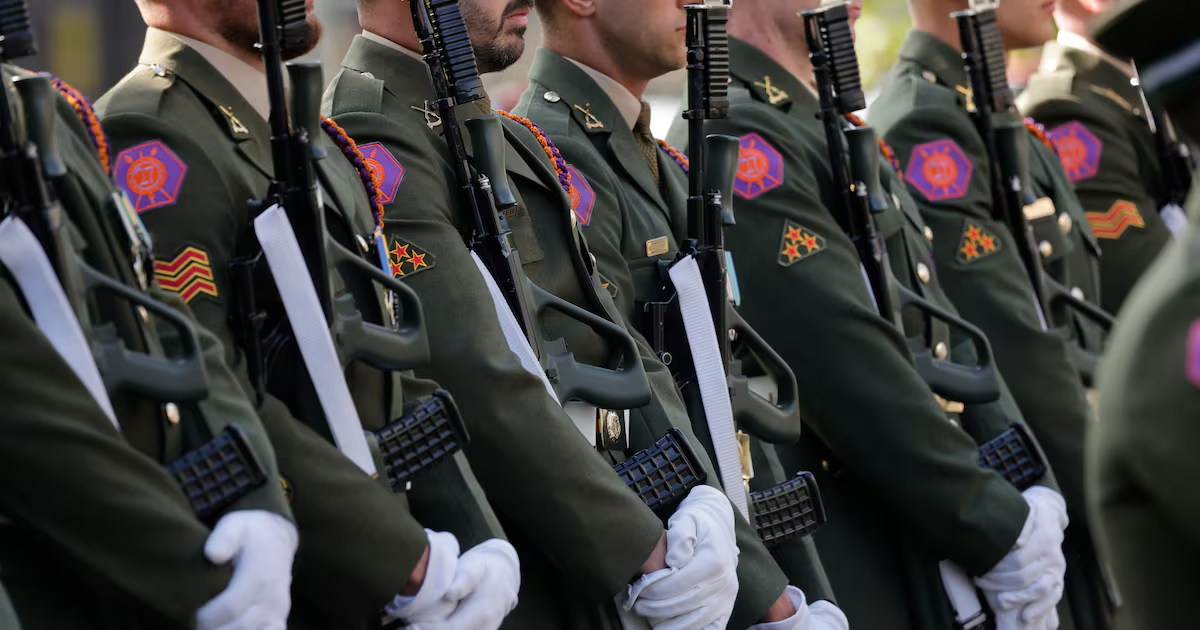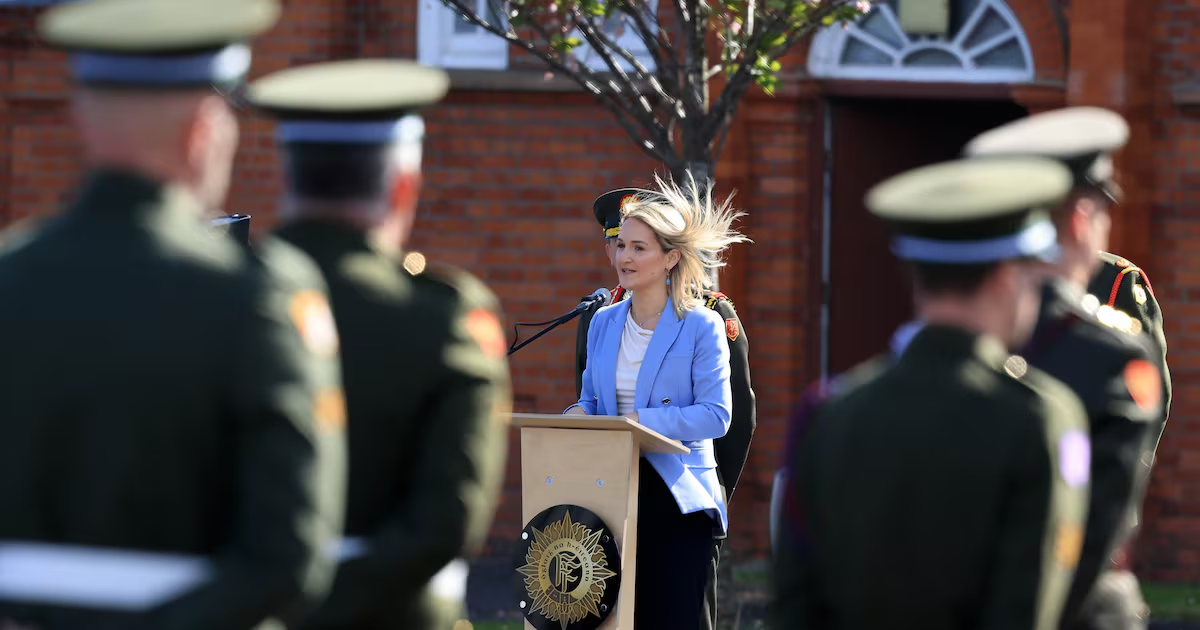
The Government will not proceed any further with legislation to remove the triple lLock until the autumn, Taoiseach Micheál Martin has told a meeting of the Fianna Fáil parliamentary party. The Government approved the text of the Defence (Amendment) Bill 2026 earlier this month with the intention of having it enacted before the end of the year.The legislation will provide for the removal of the triple-lock mechanism, which currently requires Government, Dáil and UN Security Council approval before members of the Defence Forces can be deployed overseas as part of international missions.A number of Fianna Fáil TDs have expressed criticisms that the legislation was being rushed through without giving them a chance to discuss what would constitute a significant departure from the party’s established policy on defence and neutrally. According to TDs who attended the meeting, Martin said the legislative programme between now and the Summer recess was very busy and that the triple-lock Bill would not be brought to the Dáil until then. In the past week there has been internal dissent within Fianna Fáil over scrapping the triple lock, notwithstanding that it was in the party’s election manifesto and in the programme for government. The opposition to the move has been led by veteran Limerick TD Willie O’Dea, a former minister for defence. O’Dea has said he would be willing to support reforming the triple lock but not getting rid of it entirely. In an article published over the weekend, he argued for a more open, cross-party discussion on reforming the triple lock, not scrapping it.Asserting it was a core principle for Fianna Fáil he wrote that reducing support for the United Nations was “a Fine Gael doctrine, not a Fianna Fáil one”.He repeated those arguments at the meeting, asking for the party to have sufficient time to debate the issues thoroughly. In all some 20 TDs and Senators spoke on the issue. O’Dea was strongly supported by another veteran TD, Pat the Cope Gallagher, who told the meeting the concept of peacekeeping under a UN charter was developed by Seán Lemass. He said that after losing both the Nice I and Lisbon I referendums, Fianna Fáil had used the triple lock as a claim that military neutrality would not be abandoned but that the leadership wanted to change it. Minister of State for European Affairs Thomas Byrne was the main speaker at the meeting in support of the Government decision.Earlier, in Dublin Castle, Martin again stood over the Government’s decision to end the triple lock, which requires approval from the UN Security Council for Defence Forces’ missions involving more than 12 personnel. At a joint press conference with Roberta Metsola, the president of the European Parliament, Martin said Ireland had to end its decades-long peacekeeping mission in Lebanon because of a position adopted by the US on the Security Council, “with a lot of input from Israel”. He said the possibility of an alternative mission there was being explored where there would be monitoring and where international military forces would help train and support the Lebanese army. Ireland, he said, would not be able to participate in that mission unless there was a reform in the law. He said the commitment to reform the triple lock was in the programme for government and was also in his party’s election manifesto.
Martin tells Fianna Fáil meeting triple-lock Bill will be deferred until autumn
As Fianna Fáil TDs criticise scrapping of long-standing policy, Taoiseach says Bill will not be debated before summer recess
553 words~3 min read