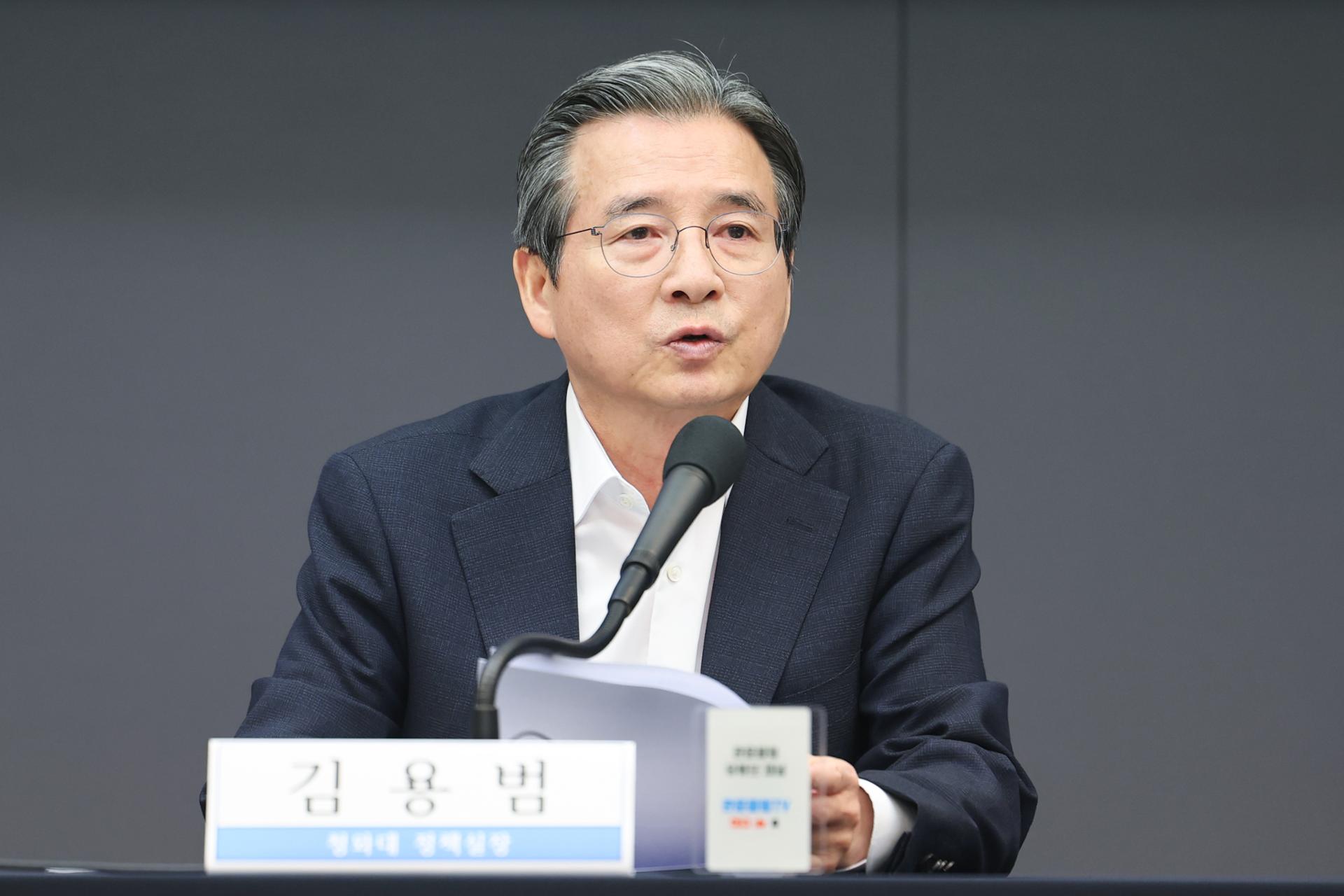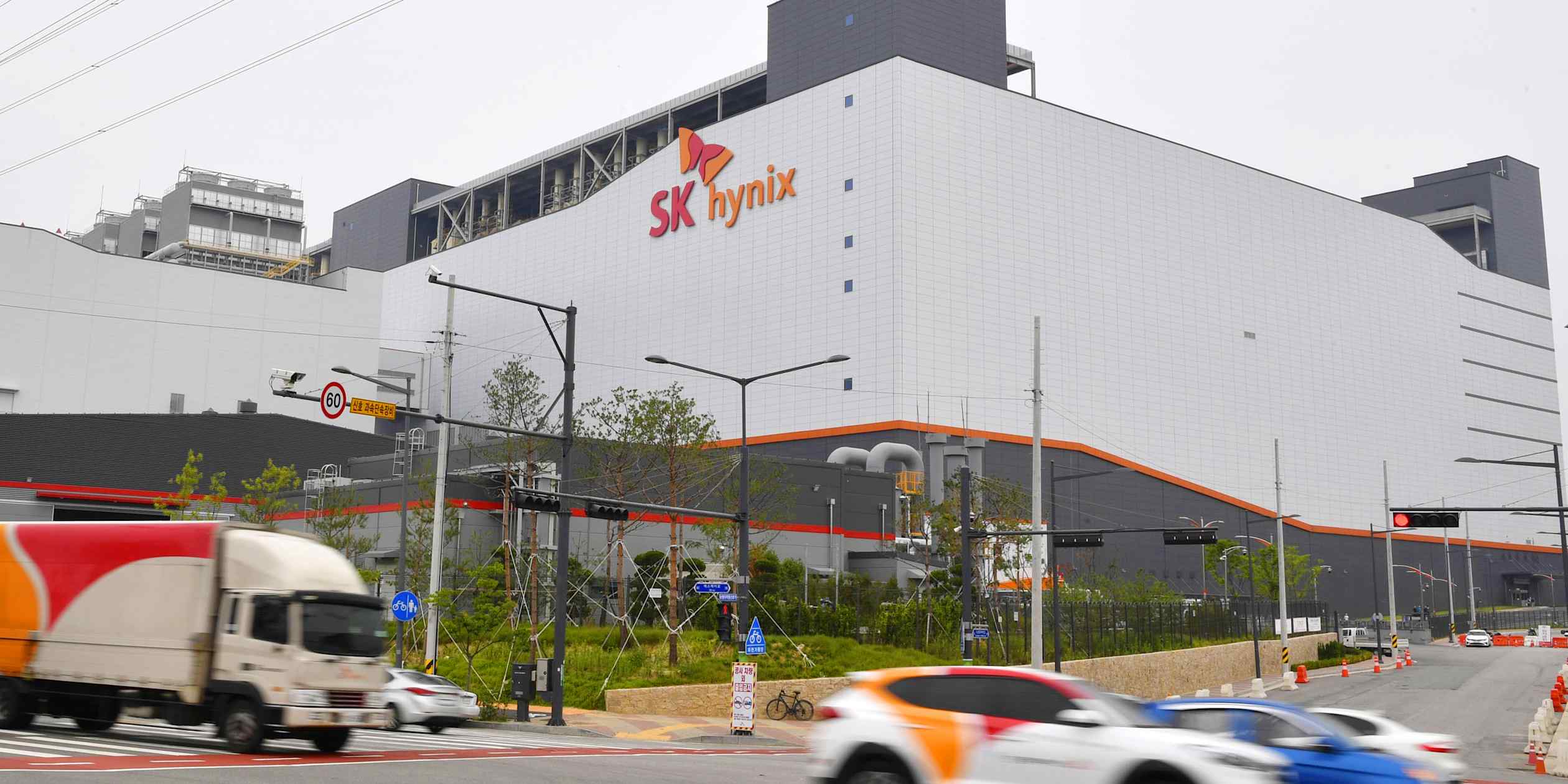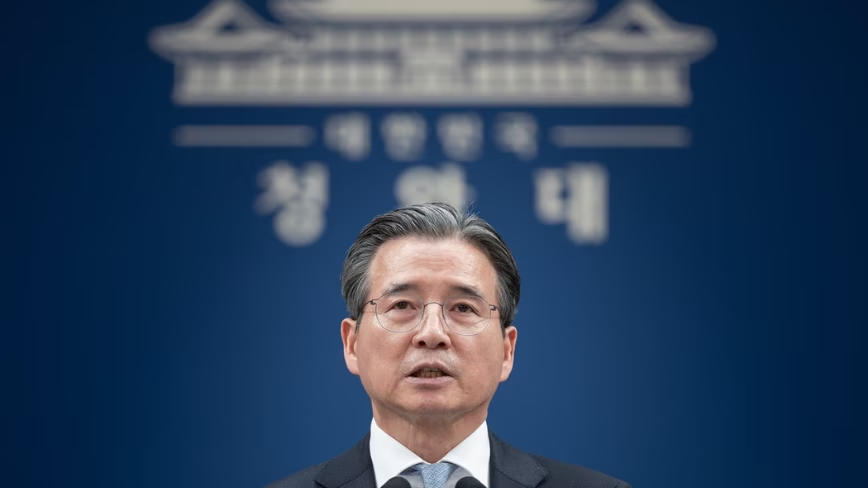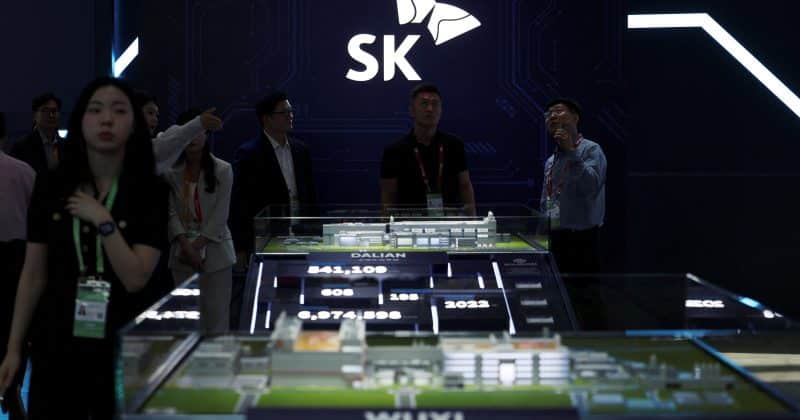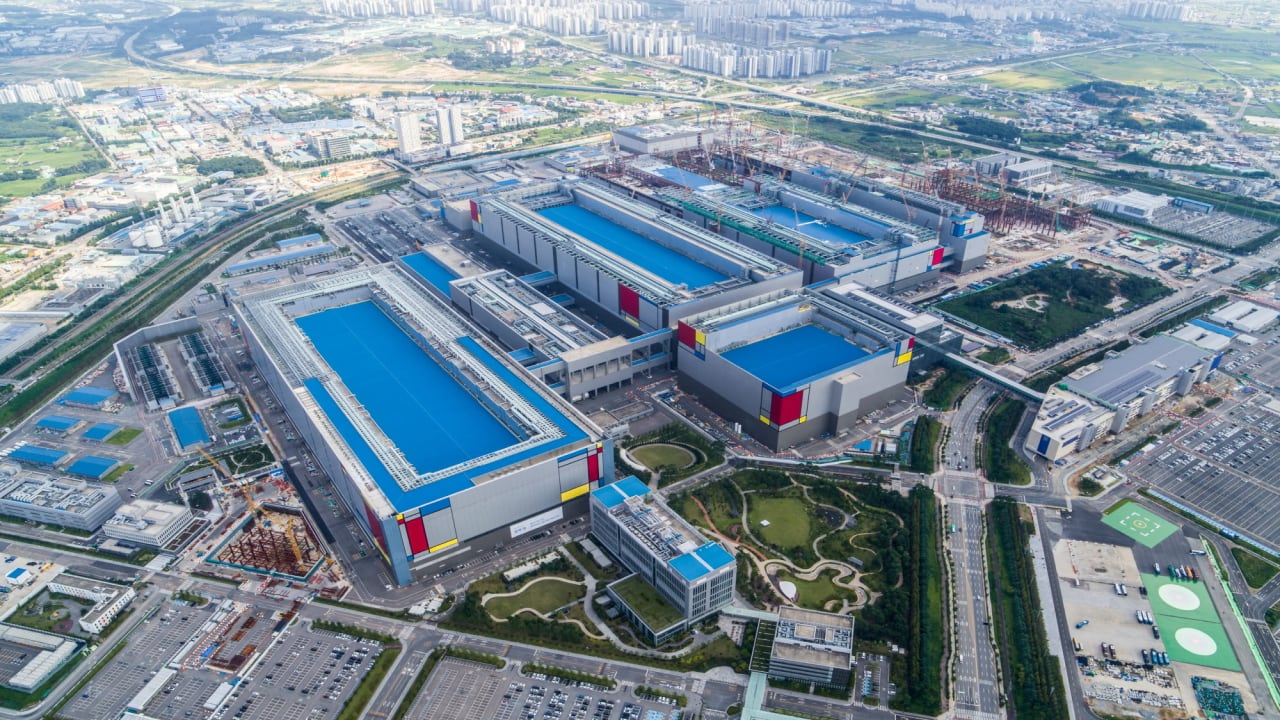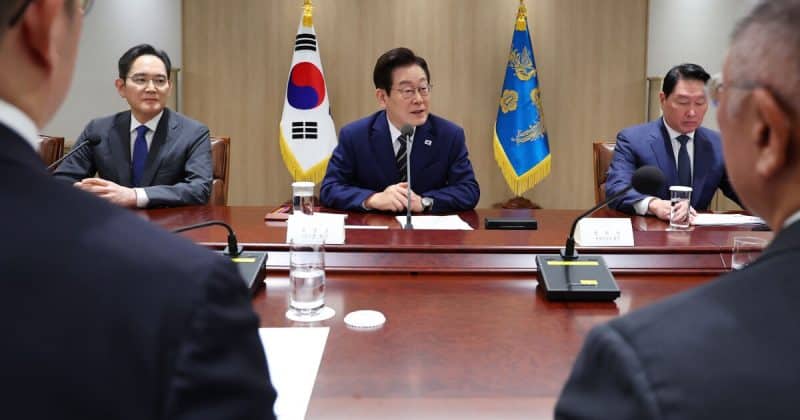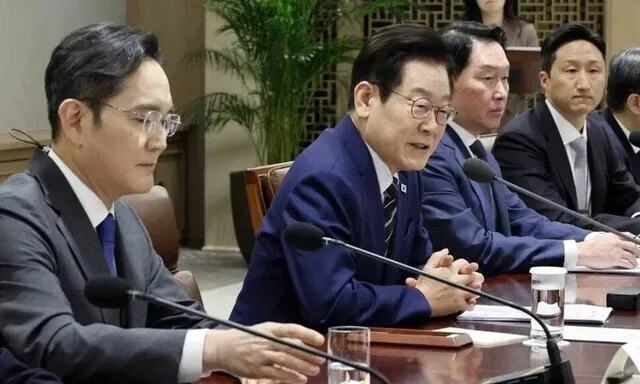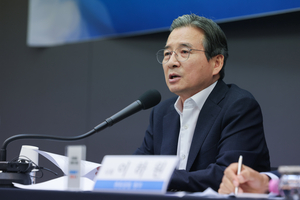
Kim Yong-beom, presidential chief of staff for policy, speaks during a discussion hosted by the Kwanhun Club on Wednesday in Seoul. (Yonhap) South Korea is nearing an announcement on a new semiconductor production cluster outside the greater Seoul area as the government and the country's two largest chipmakers move to expand capacity for the AI era.Kim Yong-beom, President Lee Jae Myung's chief policy adviser, said Wednesday that the government, Samsung Electronics and SK hynix had been engaged in "serious discussions" over a second semiconductor cluster, including its location and the power and water infrastructure needed to support it."The discussions have moved beyond the initial stage and are approaching completion," Kim said during a forum hosted by the Kwanhun Club, a senior journalists' association, in Seoul."Once the plan is finalized, the government ministries and the companies will come together to explain it to the public. I expect such an opportunity will arise in the near future."President Lee is expected to meet Samsung Electronics Chairman Lee Jae-yong on Friday, following talks with SK Group Chairman Chey Tae-won last week. The meetings come ahead of a June 29 strategy session on regional development and investment to be chaired by the president.Speaking at the forum, Kim also sought to dispel speculation that a new semiconductor hub outside the capital region would come at the expense of existing investments in Yongin, Gyeonggi Province. Yongin has been developed as the centerpiece of South Korea's chip-manufacturing expansion."This is absolutely not about scrapping projects planned for Yongin and relocating them to other regions," Kim said.Samsung Electronics and SK hynix are already investing heavily in the Yongin National Industrial Complex, where they plan to construct multiple fabrication plants over the coming decades.However, Kim underscored the urgency of expanding semiconductor manufacturing capacity, arguing that the AI boom was driving demand far beyond the assumptions underlying existing investment plans.SK hynix has already accelerated its expansion timeline significantly, he said. Facilities originally scheduled for completion in 2044 are now expected to come online by 2034, but even that may not be enough to keep pace with demand."SK hynix has already brought forward by 10 years facilities that were originally planned for 2044, and I believe they may need to be accelerated even further," Kim said. "Samsung's projects, which are currently planned through 2048, may also need to be moved up to around 2034 or 2035."Kim said the challenge extends beyond speeding up construction schedules. Even if current projects are completed ahead of schedule, the Seoul metropolitan area is unlikely to have sufficient land, electricity and water resources to support the next phase of expansion."We need to accelerate these projects at an extraordinary pace and prepare for what comes after that," he said.Asked whether the government was considering the Honam region, emcompassing Gwangju, North Jeolla and South Jeolla provinces, as a potential site for a second semiconductor cluster, Kim signaled that such an approach was consistent with the Lee administration's thinking."That is the principle we should be working from," Kim said.Kim underscored that the search for a new semiconductor hub reflects a broader rethink of regional development in the AI era.For decades, South Korea's population, capital, industry and educational resources have gravitated toward the Seoul metropolitan area, contributing to rising housing costs, widening regional disparities and concerns over population decline outside the capital, he said."We now need a new force that can ease this concentration and expand the space for growth, and I believe the answer lies in the regions," Kim said.He argued that the infrastructure needed to support AI-driven growth — including power generation, data centers, advanced manufacturing facilities and next-generation electricity networks — could increasingly favor areas beyond Seoul."Industries in the AI era require vast amounts of electricity, land and new industrial ecosystems," Kim said. "Data centers, advanced manufacturing, renewable energy and next-generation power grids are, in fact, closely aligned with the strengths of regional areas."Kim said the country's next phase of industrial development could emerge outside the capital region."Just as manufacturing took root in the regions during the industrialization era, the industrial map of the AI age can also be redrawn beyond the capital region," Kim said. "In that sense, balanced regional development should be approached through the lens of a new growth strategy."
Korea nears unveiling of next chip hub outside Seoul area
South Korea is nearing an announcement on a new semiconductor production cluster outside the greater Seoul area as the government and the country's two largest
705 words~3 min read