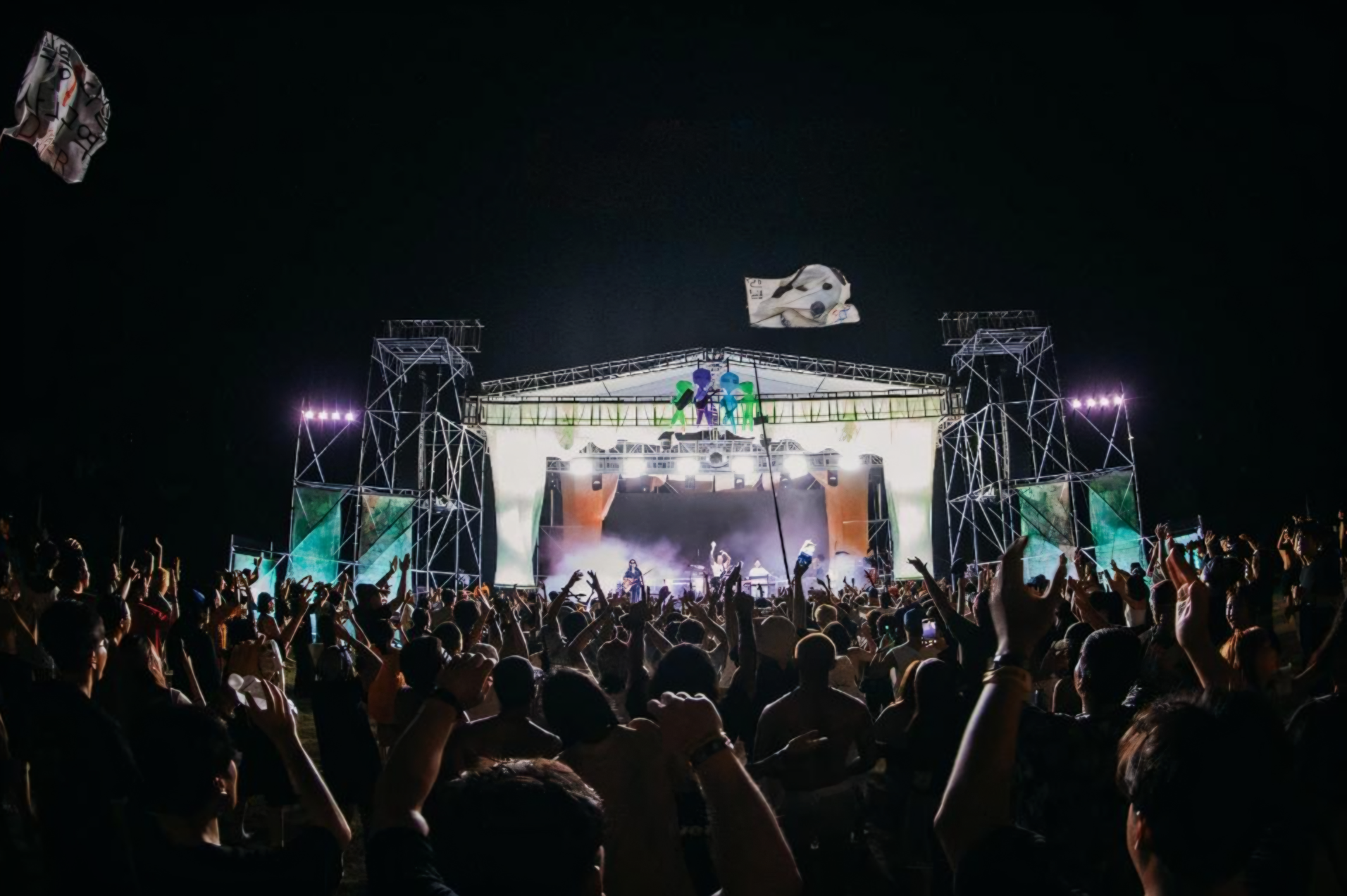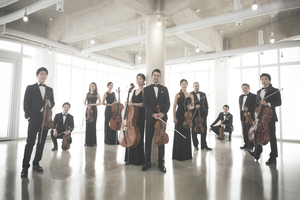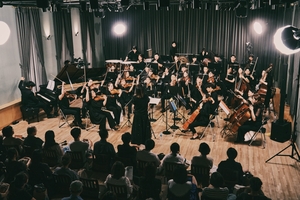
The final concert of the 2025 July Festival (The House Concert) Roughly 450 kilometers separate Daehangno in the heart of Seoul from Jeju Island off the southern coast. This summer, two music festivals — modest in public profile but firm in their convictions — return to those two places, linked this year by a common banner.Both are part of 2026 ARKO SUM FESTA, a brand run by Arts Council Korea (ARKO) that connects 15 theater, dance, music and traditional-arts festivals selected for its national performing-arts festival support program. Staged across the country from July through September, the project aims to widen audiences by presenting otherwise scattered festivals under one name. The two could hardly be more different.They sit at opposite ends of the country and at opposite ends of an idea about what a festival should be. One turns inward, toward depth; the other opens outward, toward crowds and open air.In Daehangno, The House Concert's July Festival turns a single venue into a monthlong act of close listening. July Festival asks listeners to sit close and follow a single idea, day by day, to its conclusion.On Jeju, the Jeju International Wind Music Festival fills the island air with brass and percussion, gathering crowds outdoors around marching bands.For anyone planning a summer around music, the two together offer a rare chance to experience both ends of the spectrum within a single Korean season.Seoul: inside French musicThe 14th edition of The House Concert's July Festival runs every day from July 1 to 31 at the Artists' House in Daehangno (tickets 30,000-100,000 won). Over the years, it has built a particular kind of festival: one theme, explored daily, for a month.From 2020 through 2025, each edition focused on a single composer: Beethoven, then Brahms, Bartok, Schubert, Schumann and Stravinsky, with the 20th-century Russian in 2025. In 2026, the lens widens for the first time from composer to country. This year's subject is French music, under the title "Lumieres de France" (Lights of France).The program traces a line from Debussy and Ravel at its center out to Erik Satie, Les Six, Jean Francaix and finally Olivier Messiaen — from Impressionist color through restraint, humor and experiment toward a more expansive musical world, all across a single month. It opens and closes with orchestral concerts fronting rising conductors and soloists: conductor Park Kang-hyun and pianist Hong Seok-young on July 1, and conductor Park Keun-tae with pianist Lee Kwan-uk, a 2025 Chopin Competition finalist, in the July 31 finale. In between sit piano and chamber series anchored in Debussy and Ravel, a Satie-and-Les Six strand, a vocal series on French song, and a closing turn toward Messiaen — culminating in his complete "Vingt regards sur l'enfant-Jesus" and the "Quatuor pour la fin du temps."Beyond Seoul, the festival now extends to regional arts centers and salon spaces across nine regions, for 24 concerts in all. The House Concert itself began in 2002 in composer Park Chang-soo's Seoul home, spreading a house-concert culture built on the absence of any boundary between stage and seat — and the July Festival is that intimacy scaled up to fill a month.Jeju: wind, the open airThe Jeju International Wind Music Festival takes the opposite approach. Founded in 1995, it has grown into one of Korea's signature wind-centered festivals, pairing public performances with international competitions. Built on the cultural assets and natural environment of Jeju Special Self-Governing Province, it invites top-tier players and wind ensembles from home and abroad, linking concerts, competitions and educational programs in the service of advancing wind music and broadening international cultural exchange. Jeju International Wind Music Festival (JIWEF) In 2026, under the banner "Island, the Resonance of Wind," the festival splits into two seasons. The spring season (March 19-22) offered an opening concert, a rising star concert, an ensemble festival, masterclasses and the 5th Jeju International Composition Competition for wind music, with the brass quintet Spanish Brass, the wind chamber ensemble The Winds and the Glanz Brass Quintet among the participants.The summer season running from Aug. 7 to 15 widens the scope considerably: an opening concert, a maestro concert, a community wind festival, an amateur ensemble day, a marching show and street parade, an international wind and percussion competition, and a winners' concert. International guests include the Brass Band of Battle Creek of the United States, The Optimistic Alumni of Canada, Germany's Sinfonisches Landesblasorchester and a youth symphonic band from Macau.The goal, organizers say, is to strengthen the festival's standing as an international wind event while opening a space where residents and tourists take part side by side.
Two summer festivals, two routes into the season's classical music
Roughly 450 kilometers separate Daehangno in the heart of Seoul from Jeju Island off the southern coast. This summer, two music festivals — modest in public pro
761 words~3 min read