This content was published on
June 24, 2026 - 03:53
5 minutes
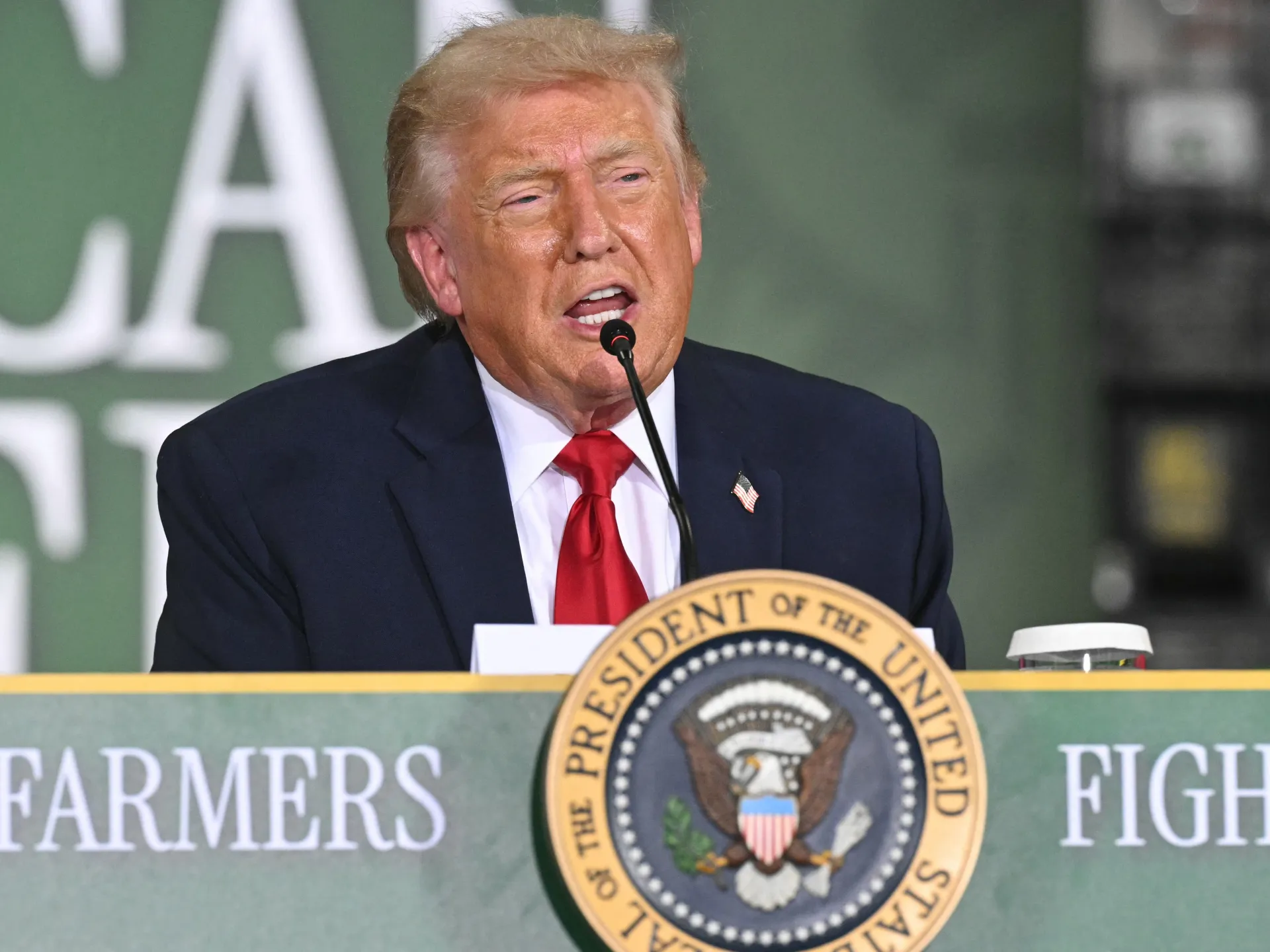
(Bloomberg) — President Donald Trump said Iran will be able to use funds released from frozen accounts only to purchase food and medical supplies from the US, seeking to ease concerns about peace negotiations that both sides say are making progress.Yet Trump’s comments were quickly disputed by Iran, the latest example of the two sides making conflicting claims about key issues, including the status of nuclear inspections.The back-and-forth on what was actually agreed to last week runs alongside growing domestic criticism of US conduct in the war.The Republican-led Senate voted Tuesday to end the US war with Iran, in a rare symbolic rebuke of Trump. While the resolution is unlikely to force any changes in the administration’s strategy, it represents the latest sign that the president lacks domestic support for the effort.Iran and Oman said they’ll begin work on finding an agreement over the future administration of the Strait of Hormuz, including the cost of managing transit in the key shipping lane.Oil prices fell with Brent edging lower to trade below $77 a barrel. That’s down from a high of around $125 in late April and now approaching pre-war levels.More ships are transiting the Strait of Hormuz with their satellite signals switched on, pointing to growing confidence among shipowners and traders about sending vessels through the world’s most important energy chokepoint.Treasury Secretary Scott Bessent told the Economic Club of New York that there’s going to be an arc to the talks. He said the US told Iran that it wants a big deal and is engaged in conditional, performance-based negotiations with Tehran, adding, “We are offering them carrots and then there are sticks.”Trump said the billions of dollars in unlocked financing would go “into escrow, controlled by the USA” and be used to purchase American-grown products such as corn, wheat and soybeans. He also said in a social media post that Iran had agreed to the “highest level Nuclear inspections long into the future.”Iran swiftly rejected both claims. Foreign Ministry spokesman Esmail Baghaei said the funds would be used by Iran “freely, in whatever manner it deems appropriate” and said there were no plans for new inspections by the International Atomic Energy Agency.“They’re wrong,” Trump told reporters when asked about Baghaei’s comments. “They know they’re wrong. They told us inside and we have it down, 100% inspections — and if they were right, I’d cancel the meetings right now.”Trump’s comments underscore the US president’s defensiveness over the deal as it draws criticism, including from defense hawks in his own party.His insistence that released funds would be spent on US agricultural products could appeal to farmers — a key Republican constituency — ahead of November’s midterm elections, particularly across the Midwest and South.Some critics of the memorandum of understanding signed last week fear the Islamic Republic instead will use the money to rebuild its armed forces and continue to support militant groups such as Hezbollah.Iran has insisted that $12 billion of its frozen funds are set to be released as part of ongoing talks, in two equal installments, according to a report by the Mehr news agency that cited Deputy Foreign Minister Kazem Gharibabadi. The US is yet to confirm how much the Islamic Republic will get.Despite the back-and-forth, Trump said talks were “going well,” echoing broadly optimistic comments from the various parties involved.Plenty of other outstanding issues stand in the way of a firm deal, including Israel’s conflict with Iran-backed Hezbollah in Lebanon. Israel’s ongoing military presence in the south of the country has been cited by Iran as a breach of the agreement, jeopardizing the talks. Iranian officials have said the US is also responsible for Israeli violations of the ceasefire.A fifth round of US-mediated talks between Israel and Lebanon is taking place in Washington Tuesday, according to the Israeli embassy in the city.Secretary of State Marco Rubio flew to the United Arab Emirates as the US seeks to reassure regional allies the interim agreement it signed last week is good for their security and economies.Rubio will also travel to Kuwait and Bahrain.Exactly what “open” will mean for the strait remains unclear. Iran said Tuesday the Strait of Hormuz is “fully” open to commercial shipping and that large volumes of oil have transited the waterway in recent days, according to the semi-official Iranian Students’ News Agency. While traders warn it could take months for oil and liquefied natural gas flows to normalize, signs of abundant near-term supplies have pushed prices lower.–With assistance from John Bowker, Devika Krishna Kumar, Hadriana Lowenkron, Meghashyam Mali, Magan Crane, Romy Varghese, Jon Herskovitz and John Harney.(Updates with comments from Bessent on negotiations, in eighth paragraph.)©2026 Bloomberg L.P.