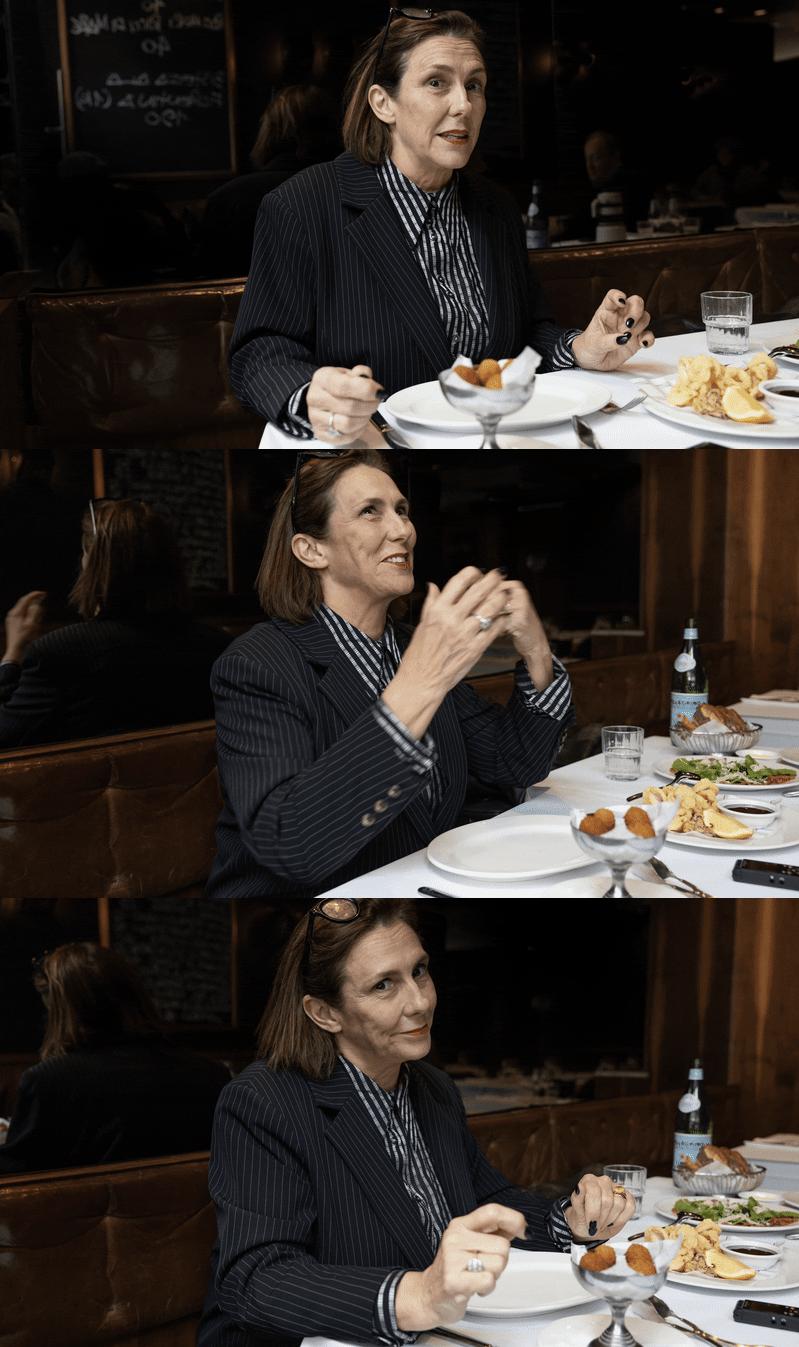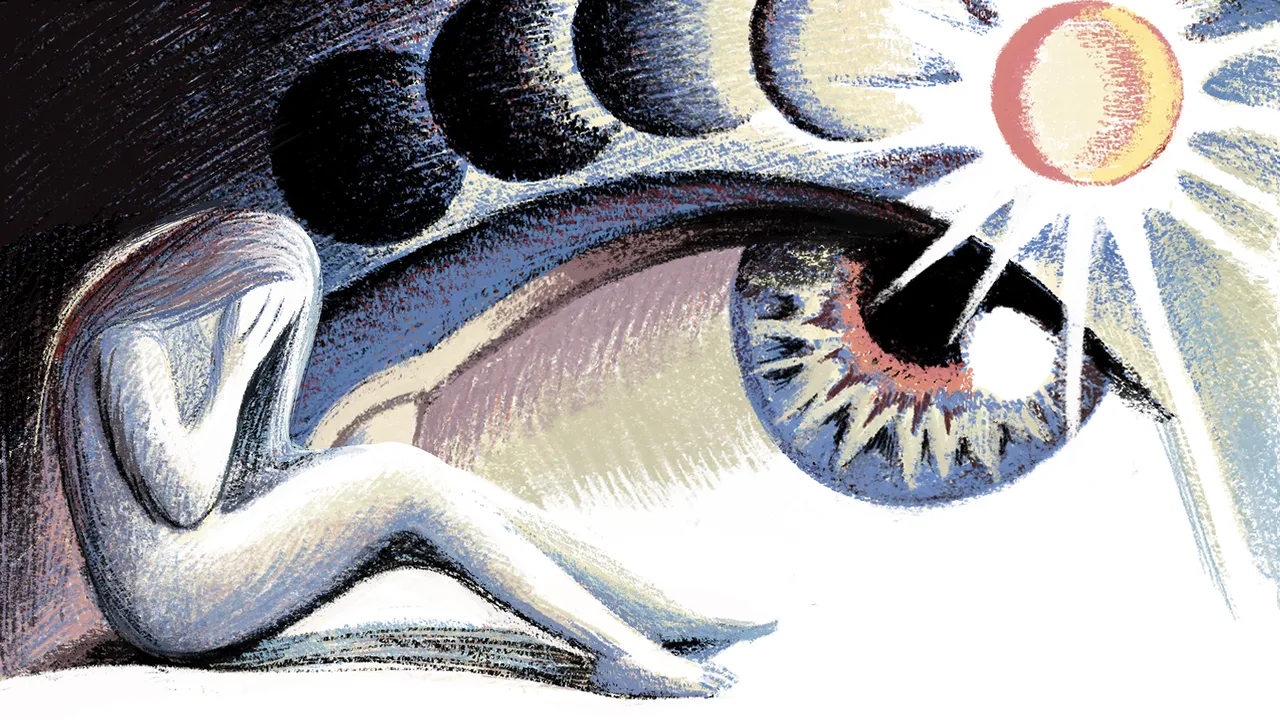
In the summer of 2022, Amanda Petrusich was reporting a Profile of Metallica, whose heavy-metal anthems draw on the band members’ intimate familiarity with loss. They have battled addiction and tragedy—their former bassist Cliff Burton died in the band’s early years when a tour bus crashed. Their lyrical themes, she eventually wrote, “include death, despair, power, grief, and wrath.” One night, while she was working on the piece, her husband had two seizures and died. The year that followed, in which she and her thirteen-month-old daughter learned to survive the aftermath of catastrophe, is the subject of her remarkable—and remarkably inspiring—Personal History in this week’s issue.In recent years, Petrusich has written long and intimate portraits of musicians, in which her keen and generous eye exposes the business and the genius of music-making—my favorite might be this Profile of Phish, which almost persuaded me to overcome my skepticism of jam bands and their damp-wool culture. But I first read her work in the early two-thousands, when she was writing short reviews for Pitchfork, a website that had the power to make or break the careers of indie-rock bands. Most of its writers were men, and some of them seemed to relish their power. Petrusich was rare not only for her gender but for the attention she paid to intention, for her desire to understand and to illuminate.More than a decade later, I got the chance to edit her work, and I found that she brought the same generous curiosity to writing about people that she had brought to writing about their music. Now that she has turned to the ultimate subject—death (and, with it, life)—that curiosity persists. “Becoming a young widow was easily the most fascinating thing that has ever happened to me,” she writes. In the year after her husband’s death, “a sort of austere survival instinct kicked in.” The experience led her to look into the way that society and science view grief. She got in touch with the Center for Prolonged Grief, at Columbia University, and learned about novel treatments for the condition, including the center’s own six-part program. Then she discovered E.M.D.R., which combines talk therapy, exposure therapy, and bilateral stimulation—alternately activating both sides of the brain. In this piece, Petrusich recounts her experience with grief, and with the treatments that aim to make it just slightly tolerable.Writing is a tough business. As an editor, I know that the most important thing I can do is to reassure writers that everything’s going to be all right. When Petrusich turned in this piece, I knew there was no reassurance that I could offer—except that she would provide consolation and hope to many, many readers.Read or listen to the story »Editor’s PickAn Exceptional—and Depressing—Chronicle of Trump’s Return to Office“Regime Change,” Maggie Haberman and Jonathan Swan’s new book, is packed with news about the Trump White House, and is a journalistic account that “transcends its genre,” David Remnick writes. Read or listen to the review »More Top StoriesWe are tracking primary-elections results today in New York, where a number of Democratic strongholds are hosting competitive congressional primaries, with establishment incumbents and candidates trying to fend off left-wing challengers. See the map »Before the new Fed chairman, Kevin Warsh, got the job, he intimated that the central bank could cut interest rates. But, last week, he assumed the role of an inflation hawk, John Cassidy writes.The most clicked item in yesterday’s newsletter was about why animals even bother having sex.Songs of SummerIn the summer of 1969, Richard Brody was eleven, freshly transported from city life to the Long Island suburbs, and immensely lonely. That season went by in a slow blur—punctuated by Creedence Clearwater Revival’s “Bad Moon Rising.” “It was the song of my solitude, as much for its meaning as for its sound,” Brody writes.Brody’s remembrance is the first entry in Songs of Summer, a new series in which writers reflect on music and memory. Pieces of its ilk will be published every Sunday, online and in this newsletter.Read the series »Our Culture PicksA book: “The Summer Boy,” by Philippe Besson, is a bildungsroman about a young man and his vacation friends navigating budding love.A meal: Planning a dinner party? When in doubt, Helen Rosner writes, roast a duck.A show: Todd Almond’s “I’m Almost There” is a gently oddball semi-solo musical about a maybe-romance on an Easter Sunday. See what else our critics recommend this week.Puzzles & GamesToday’s Crossword Puzzle: Placenta, for one—five letters.Catalogues: Can you sort the items into the correct order?Shuffalo: Can you make a longer word with each new letter?Laugh Lines: Test your knowledge of classic New Yorker cartoons.Daily Cartoon“I’m still not sure of the rules, but I’ve developed very strong feelings toward Scotland and Norway.”Cartoon by Lindsey BuddeP.S. Mark Singer, a longtime writer for The New Yorker, died last week, at the age of seventy-five. His most well-known piece was, perhaps, a 1997 Profile of Donald Trump which captured the now President at a time of marital upheaval and post-bankruptcy resurrection. Trump—as Singer later recounted, with his trademark wit—hated the piece, and sent Singer a note that read, “Mark, you are a total loser. And your book and writings sucks.” You can visit the archive of Singer’s work here.Austin Elias-de Jesus contributed to today’s edition.
What Can Science Do for Grief?
From the daily newsletter: in a new piece in this week’s issue, Amanda Petrusich writes about navigating the loss of her husband amid the demands of new motherhood—and about the therapy that helped her.
879 words~4 min read