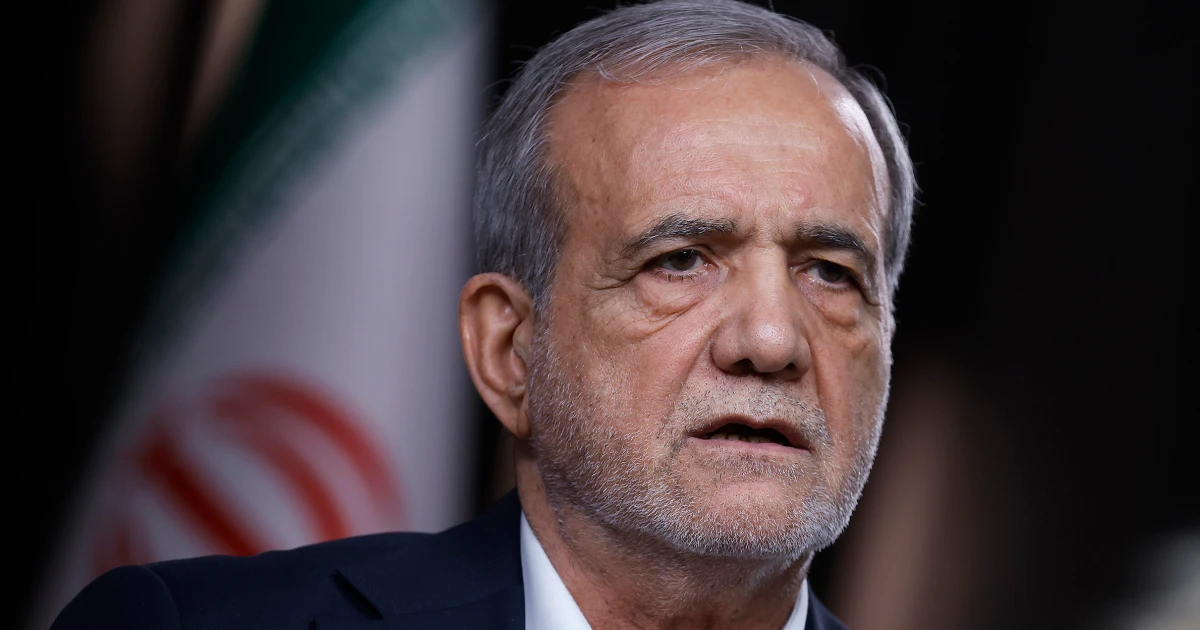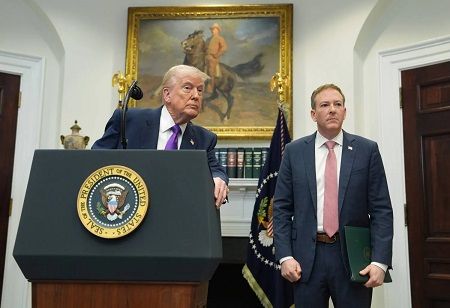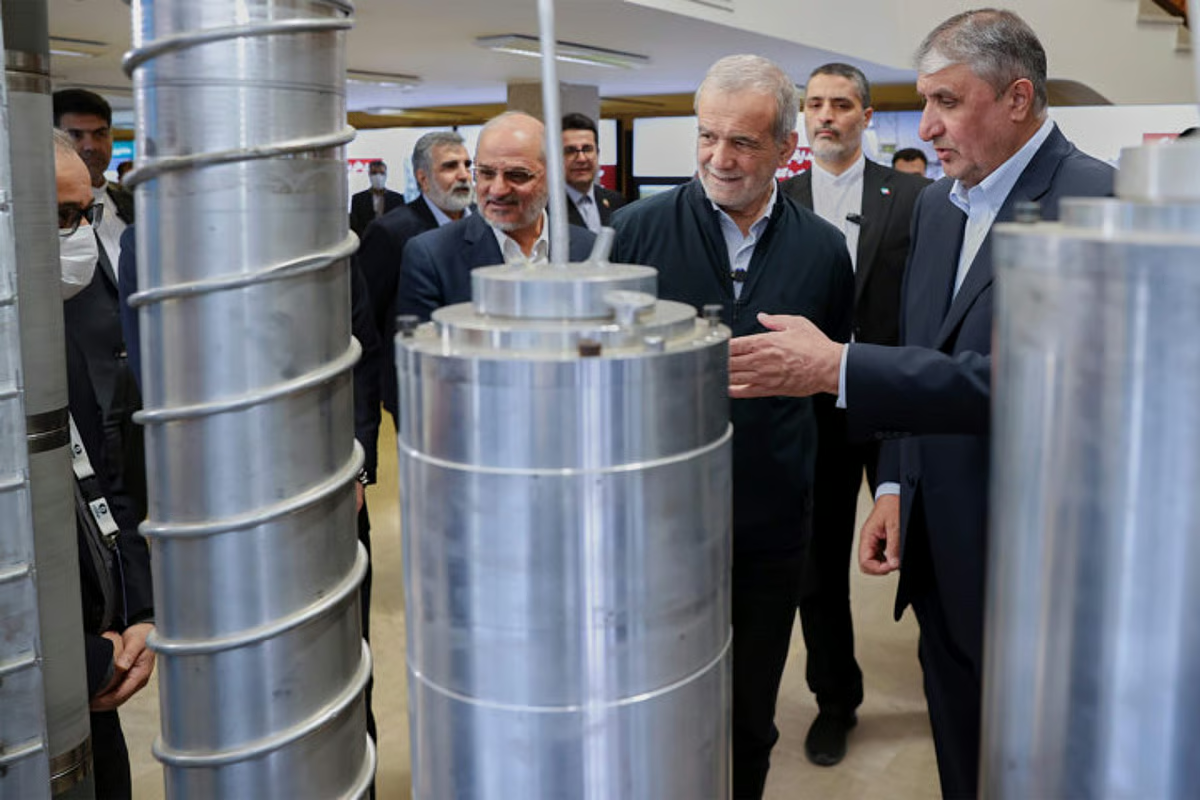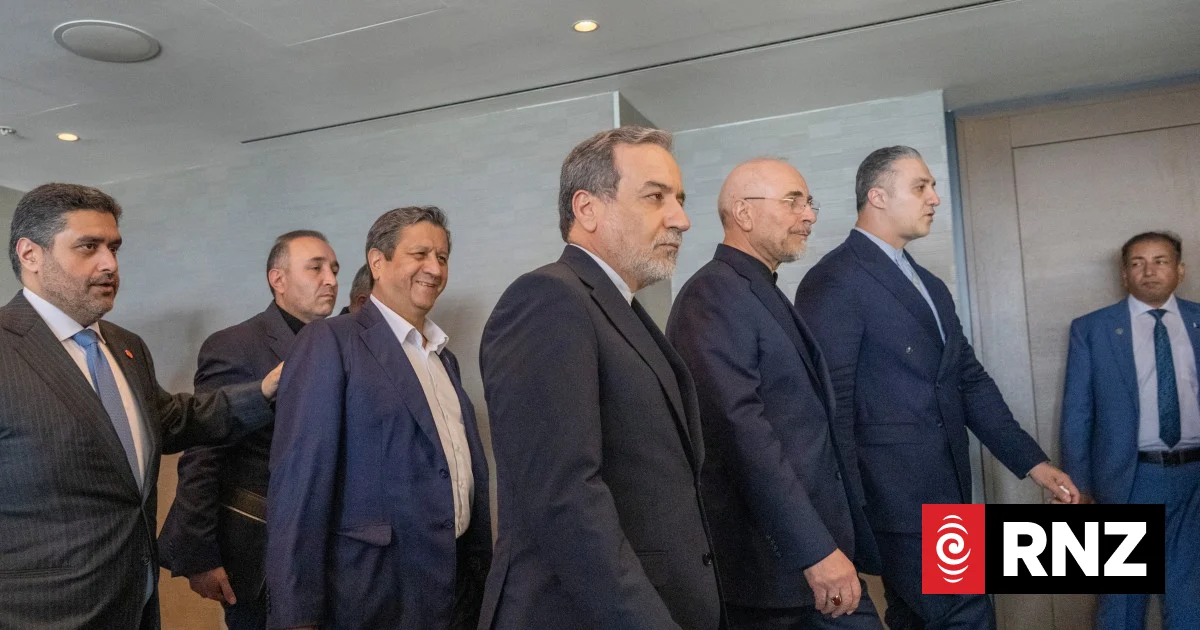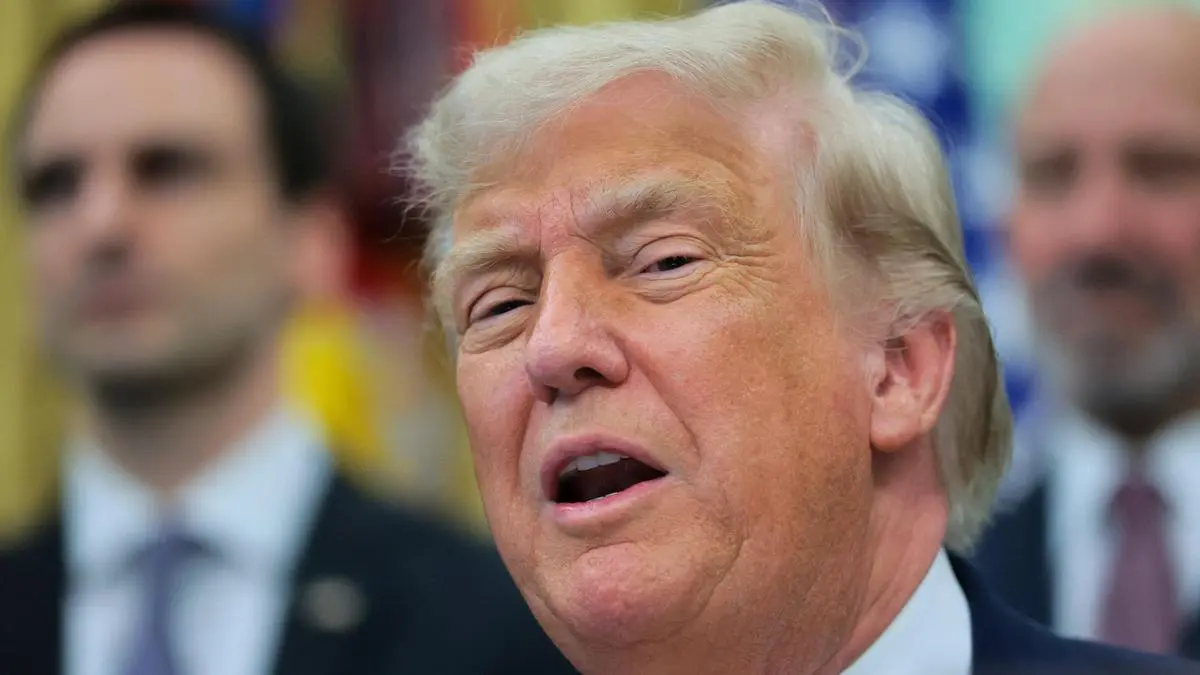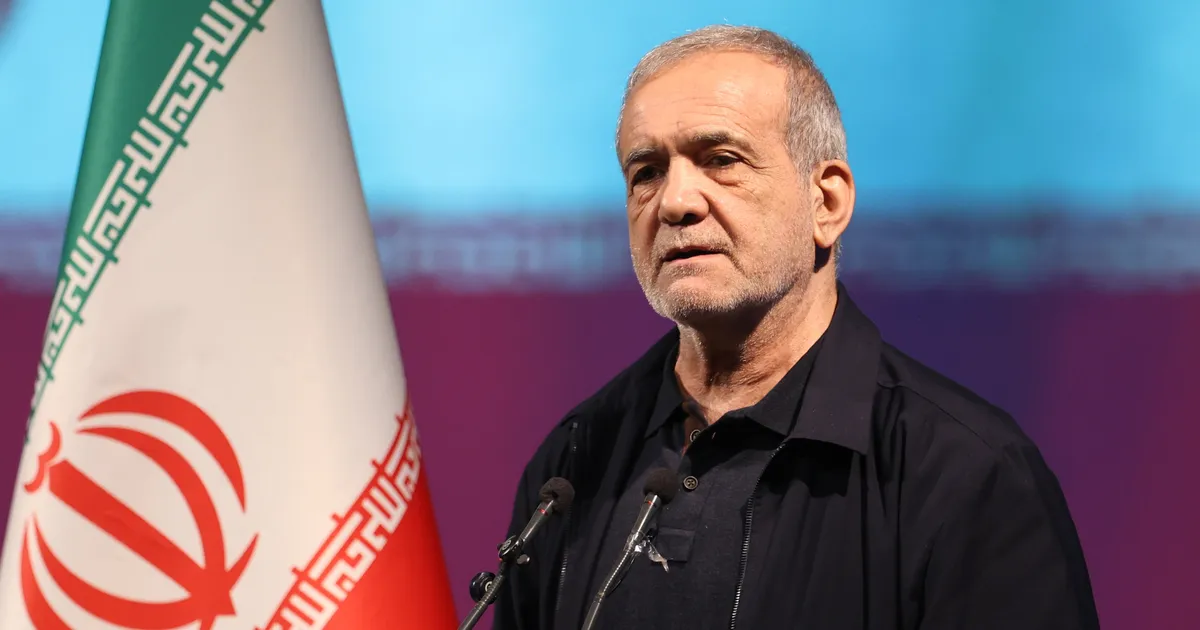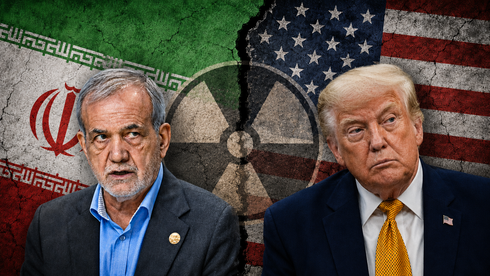
Washington and Tehran offer conflicting accounts of the fragile war-ending agreement, with Trump insisting Iran accepted expanded UN nuclear inspections while President Masoud Pezeshkian says missiles are not in the deal and ‘never will’ beU.S. President Donald Trump and Iranian President Masoud Pezeshkian publicly clashed Tuesday over the core terms of the fragile agreement meant to end the war, with Trump insisting Tehran had agreed to expanded nuclear inspections and Iran’s president saying his country’s missile program was not part of the deal and “never will” be.The dueling claims exposed the central uncertainty hanging over the U.S.-Iran framework: Washington says the deal opens the door to deeper nuclear oversight, while Tehran says the agreement does not touch one of the very issues Trump once cited as a reason for military action, Iran’s missiles.GalleryIranian President Masoud Pezeshkian and US President Donald Trump (Photo: AP/ Jacquelyn Martin, Alexander Nemenov/ AFP)“They’re wrong, they’re wrong, they know they’re wrong,” Trump told reporters Tuesday, rejecting Iran’s claim that no visit by International Atomic Energy Agency inspectors had been scheduled.Earlier, Trump wrote on social media that Iran had agreed to sweeping nuclear access.“Iran has fully and completely agreed to highest level Nuclear inspections long into the future (Infinity!!!),” he said.Iranian officials have denied that account. Esmail Baghaei, spokesman for Iran’s Foreign Ministry, said there had been “no detailed discussions on the nuclear issue” and no plan to invite inspectors to nuclear sites struck by the United States and Israel in June 2025.After Vice President JD Vance said Monday that Iran had agreed to allow U.S. inspectors back into its nuclear facilities, Tehran said no such commitment had been made.Pezeshkian, speaking during a news conference in Pakistan, drew an even sharper line on Iran’s missile program, according to video shared by state-run Islamic Republic of Iran Broadcasting.“The discussion over our missiles does not exist in the MoU, and it never will,” Pezeshkian said.He defended the missile program as essential to Iran’s survival.“If we did not have the missiles we use for our defense, Israel and the United States would have devastated Iran,” he said.The U.S. released the official text of the memorandum of understanding with Iran last week. A senior administration official read out the 14-point document, which includes provisions for reopening the Strait of Hormuz, easing some financial restrictions on Iran and setting expectations for future technical talks on Iran’s nuclear program.Mojtaba Khamenei and US President Donald Trump (Photo: Hamed Jafarnejad/ISNA/WANA (West Asia News Agency) via REUTERS, AP/Alex Brandon)The text does not mention any requirement for Iran to restrict its missile program or broader defense capabilities. Its only explicit weapons-related restriction concerns Iran’s pledge not to “procure or develop nuclear weapons.”That omission is politically sensitive because Trump had previously made limiting Iran’s missile program a central rationale for U.S. military operations. During diplomatic negotiations, however, he shifted his public language, saying at last week’s G7 summit that “missiles aren’t the problem.”For Washington, the nuclear issue remains the main test of the deal. Trump has said he would have called off the peace negotiations if Iran had not committed to inspections.Rafael Grossi, head of the International Atomic Energy Agency, told Japanese broadcaster NHK-World in an interview published Tuesday that inspections should begin “the sooner the better,” but he did not say whether Iran had made a specific commitment or how much access inspectors would receive.Iran has long insisted its nuclear program is for civilian purposes. It blocked inspectors from most of its nuclear sites after last year’s attacks by Israel and the United States.The dispute over inspections and missiles came as Secretary of State Marco Rubio visited the Persian Gulf to reassure U.S. allies unsettled by the new framework. Rubio said Washington was moving ahead with talks while trying to ensure regional partners’ concerns were taken into account.Rubio also tried to separate U.S.-mediated Israel-Lebanon talks from the U.S.-Iran negotiations, even as Tehran has repeatedly insisted the issues are linked.Secretary of State Marco Rubio (Photo: Julia Demaree Nikhinson / POOL / AFP)“It’s separate because Lebanon is a sovereign country,” Rubio said upon arriving in the United Arab Emirates.Lebanon, however, has quickly become one of the most sensitive points in the framework. According to the Lebanese presidency, the Trump administration is studying the creation of a cell made up of the United States, Lebanon and Iran to support the ceasefire in Lebanon and monitor related measures.At the same time, Israeli Ambassador to the United States Yechiel Leiter warned at the start of the fifth round of Israel-Lebanon talks in Washington that the process was at risk of collapse.“This is the fifth round of talks, and I have to say, we are in a train wreck,” Leiter said.Lebanese President Joseph Aoun has said Beirut will “accept nothing less than the end of the Israeli occupation” in southern Lebanon.Hezbollah accused Israel of a “blatant violation” of the U.S.-Iran 14-point ceasefire plan after Lebanon’s Health Ministry said Israeli attacks killed two people Tuesday.Israel has said it will maintain a security zone in southern Lebanon and continue acting to “neutralise” threats against Israeli soldiers and civilians.The Strait of Hormuz is another unresolved flashpoint. The preliminary agreement has eased restrictions on the waterway, allowing some maritime traffic to resume after the war stranded ships and crews across the Persian Gulf region.The International Maritime Organization, a United Nations agency, said the agreement had cleared the way for the evacuation of more than 11,000 stranded seafarers.The Strait of Hormuz normally handles about one-fifth of global energy supply. The deal calls for Iran to allow traffic to flow freely for 60 days, but Tehran has indicated it could later impose tolls or other fees on ships passing through the waterway.Iran and Oman, which controls the other side of the strait, issued a joint statement Tuesday stressing their “sovereign rights” in the waterway and saying they would work together to manage traffic and related costs.Rubio said Iran would not be allowed to charge fees or tolls as part of any final agreement.The two sides also appeared to disagree over frozen Iranian assets. The framework calls for lifting U.S. sanctions on Tehran, unfreezing Iranian assets held abroad and creating a $300 billion investment fund for Iran’s reconstruction.Trump said any unfrozen assets would be used to buy food and medical supplies from the United States. Iran’s ambassador to the United Nations in Geneva, Ali Bahreini, said Iran would decide how to spend the money.Washington has already agreed to waive sanctions on Iran for 60 days, allowing Tehran to sell oil and related products and receive payment for them.In one sign of easing tensions, the United States relaxed travel restrictions on Iran’s World Cup soccer team, allowing the squad to travel from Tijuana, Mexico, to Seattle two days before its next match instead of one.But Trump is facing pressure at home. The Republican-controlled Senate voted Tuesday to instruct the president to end the war in Iran or seek congressional authorization to continue it. The resolution does not have the force of law, but the vote marked a striking rebuke of Trump by members of his own party and highlighted Republican divisions over the conflict.A Reuters/Ipsos poll also showed the war weighing on Trump politically. Only 24% of Americans said the war with Iran was worth the cost, while half said it was not and the rest were unsure. Just 23% said the United States was now in a stronger position with Iran than before the war, while 35% said it was weaker.The poll found that 63% of Americans believe it is unlikely the deal Trump signed will lead to lasting peace between Washington and Tehran. Trump’s approval rating fell to 34%, matching the lowest level of his second term.For now, the broad outline of the deal remains in place: a pause in fighting, limited sanctions relief, a 60-day negotiating window, an effort to reopen Hormuz and future talks on Iran’s nuclear program. But the biggest questions are now the ones Trump and Pezeshkian placed at the center of the public fight: whether Iran has truly accepted the nuclear inspections Washington says it has, and whether any final deal can survive while Tehran rules out limits on its missiles.
Trump insists Iran agreed to more nuclear inspections as Tehran rules out missile limits
Washington and Tehran offer conflicting accounts of the fragile war-ending agreement, with Trump insisting Iran accepted expanded UN nuclear inspections while President Masoud Pezeshkian says missiles are not in the deal and ‘never will’ be
1,357 words~6 min read