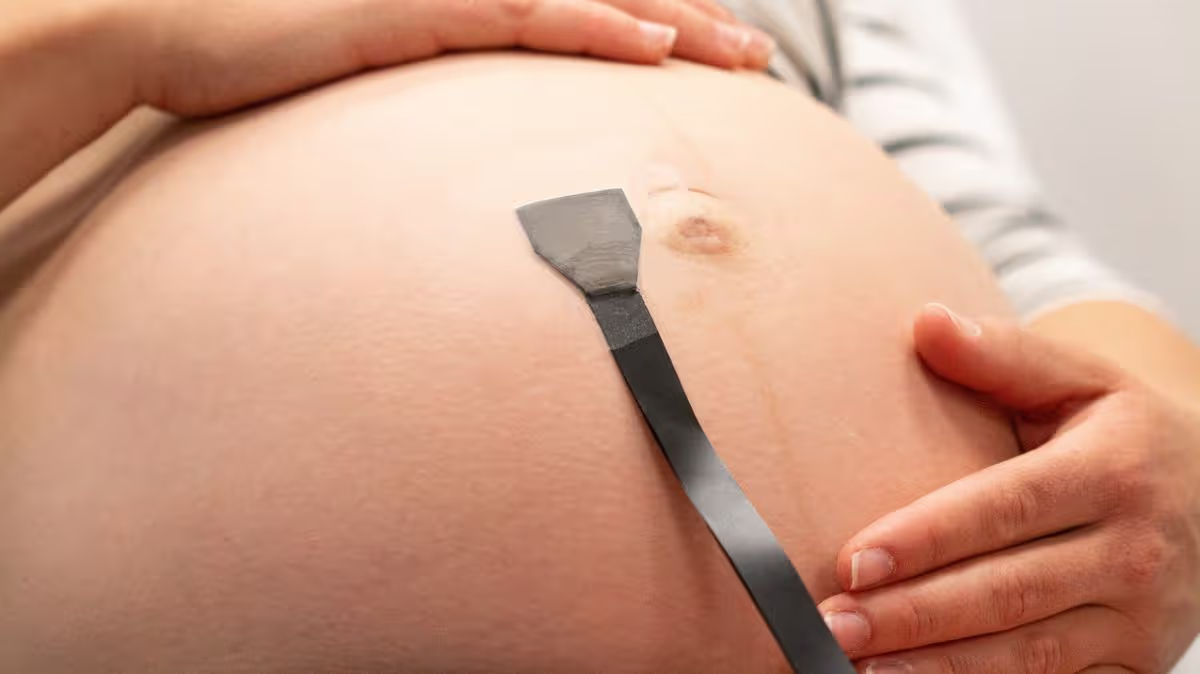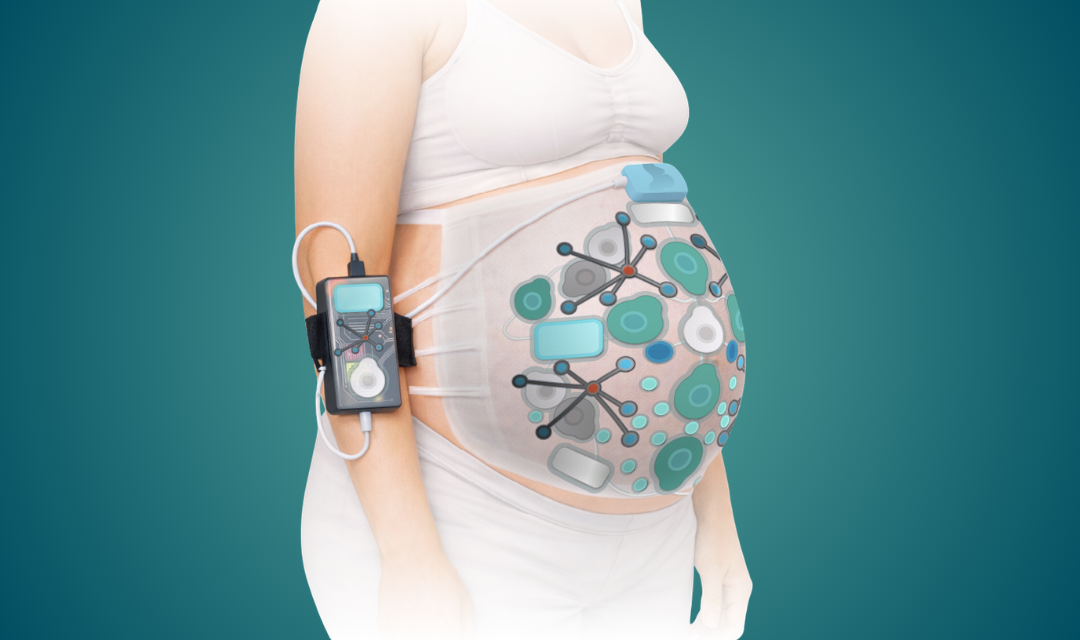
Carnegie Mellon University is leading a multi-university team that has secured an award of up to $39.3 million from the Advanced Research Projects Agency for Health (ARPA-H) to develop a wearable monitoring system to better identify fetal distress and its cause, enabling a safer labor and delivery experience for mothers and babies. The system, called OMEGA, or Optical, Mechanical, and Electrical Global Assessment of fetal hypoxia, aims to replace 50-year-old, indirect, unreliable fetal heart rate monitoring technology with a unified, real-time assessment of fetal oxygen delivery and adaptive capacity. The project is under ARPA-H’s Making Obstetric Care Smart program, which is led by ARPA-H Program Manager Kate Arnold, M.D., MBA.
The standard of care for determining whether a baby is in distress during labor and delivery, contraction and fetal heart rate monitoring, remains largely unchanged from the 1970s. While changes in a baby’s heart rate can indicate potential problems, they fail to provide critical information like whether a fetus is receiving enough oxygen. In the United States, Cesarean deliveries account for roughly one-third of all births, and many are performed out of concern for possible fetal distress. Without direct information about oxygen levels, clinical decision-making during labor often relies on incomplete data.