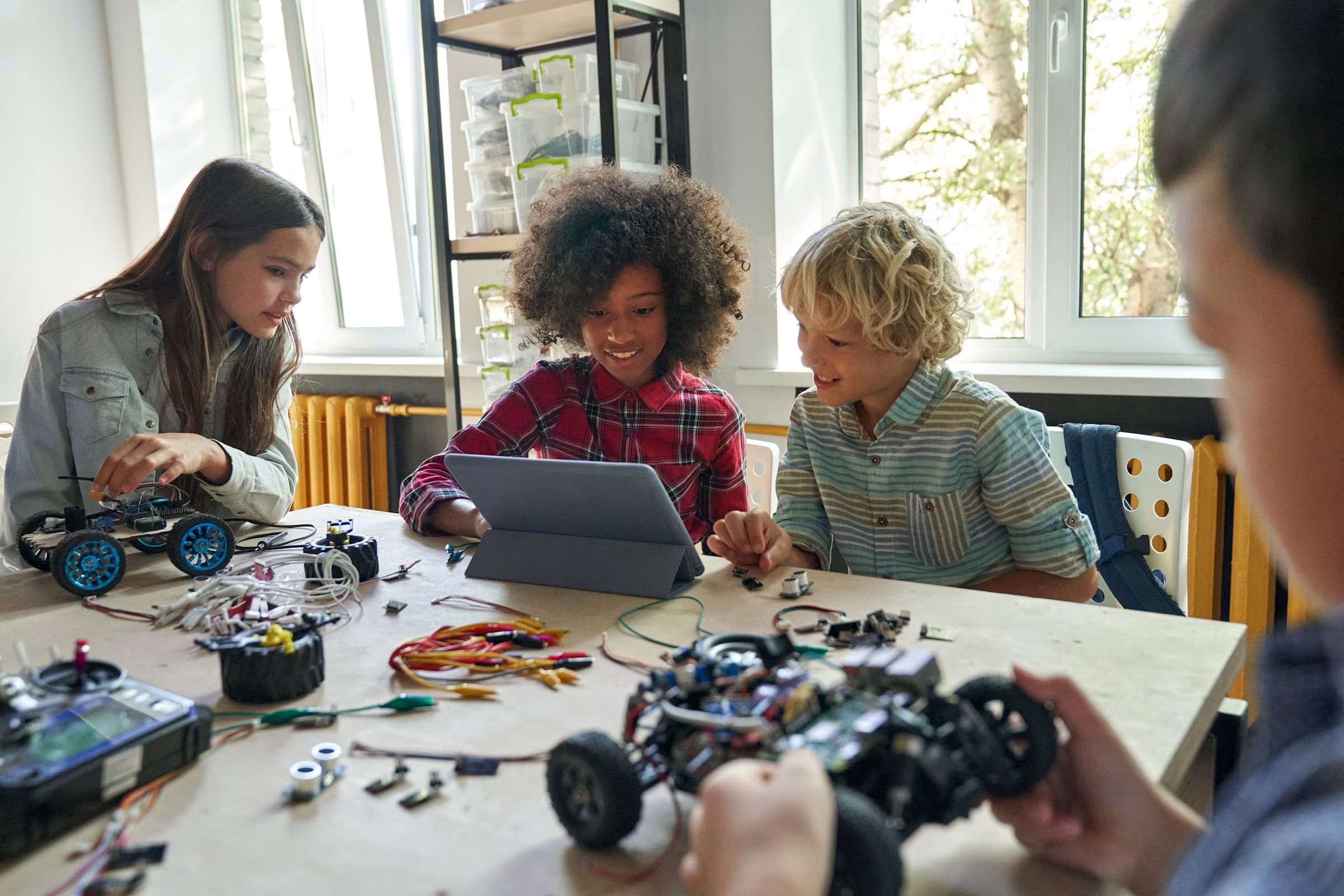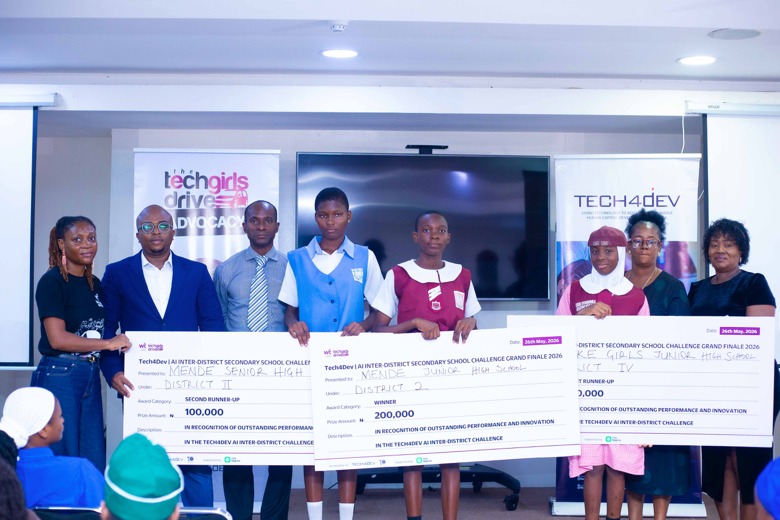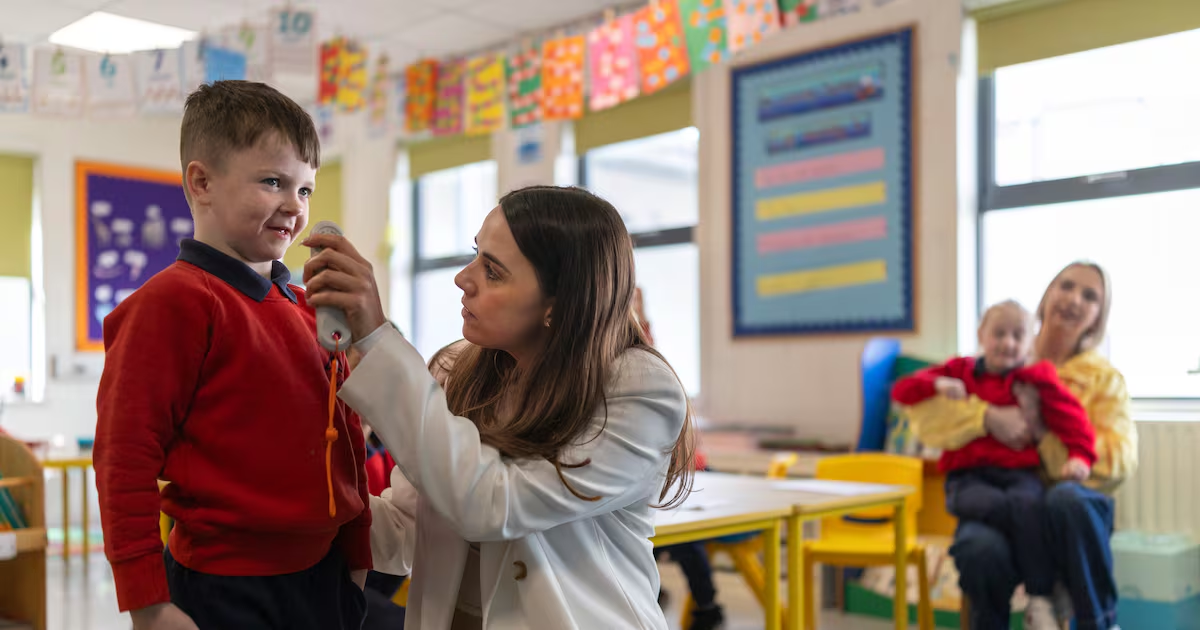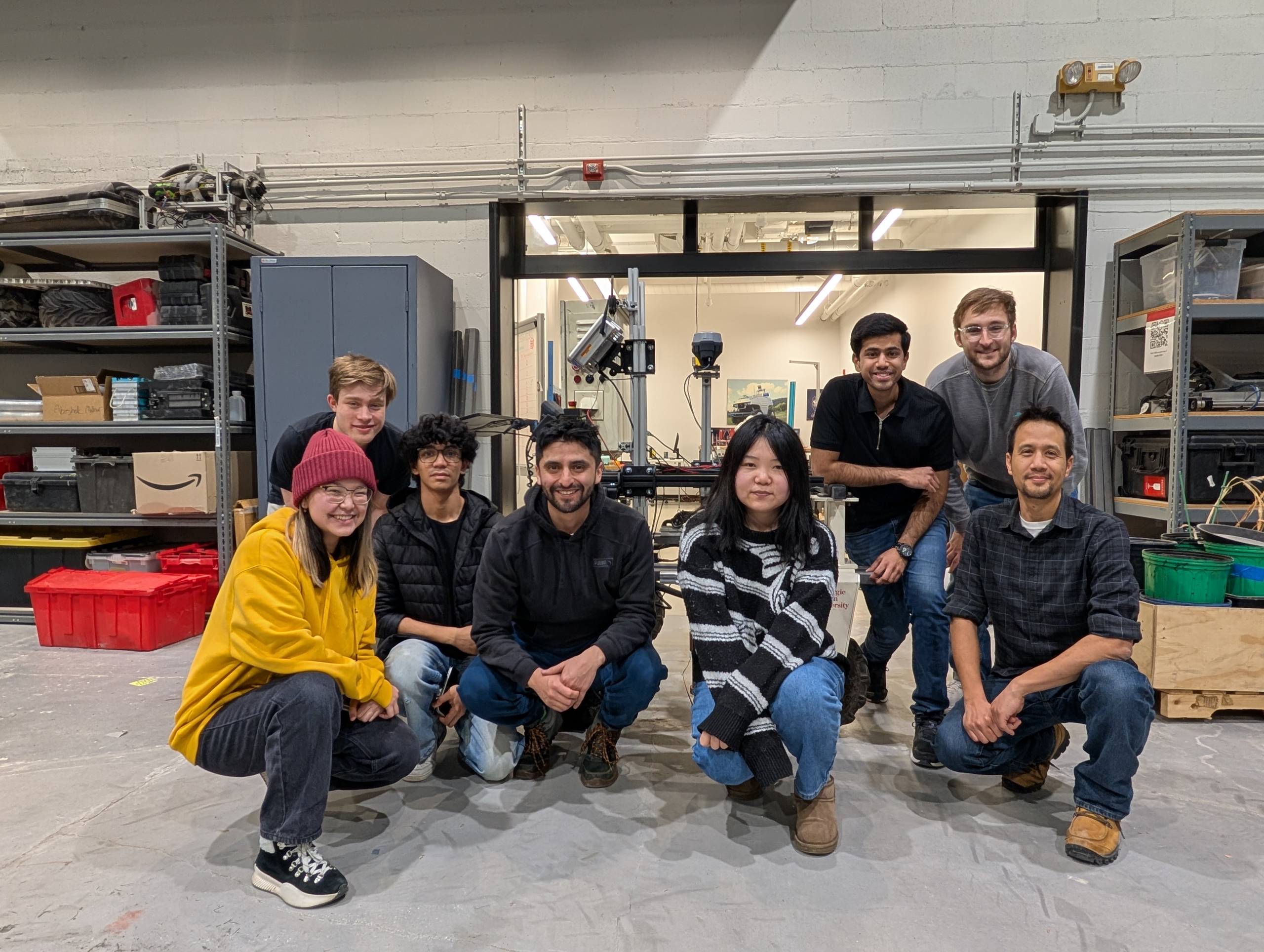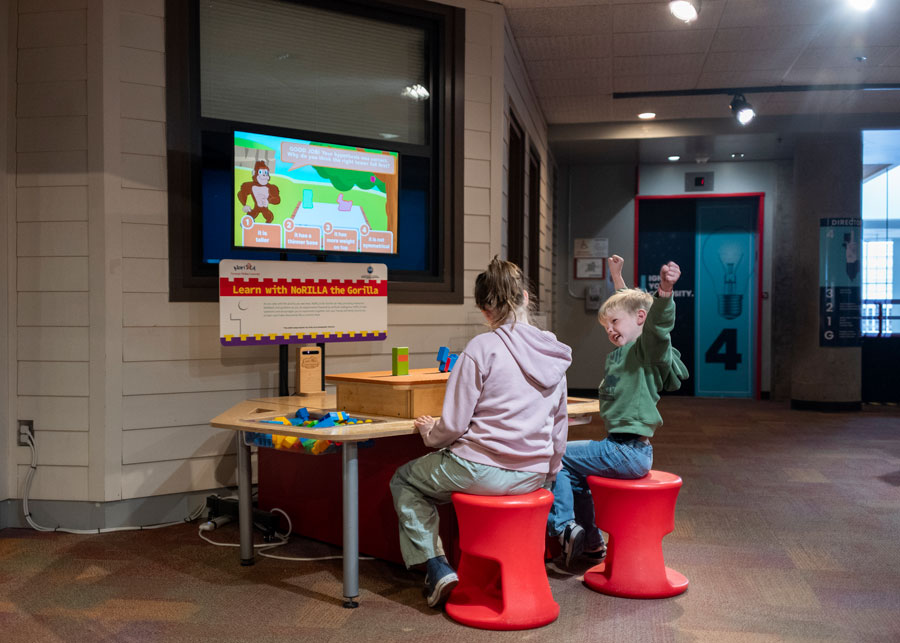
Researchers at Carnegie Mellon University's School of Computer Science won an international competition aimed at transforming kindergarten through 12th grade learning. The Tools Competition is a global prize that supports developers making advancements in educational technology. This year the competition received more than 1,400 submissions from universities and companies around the world. The SCS team won in the Transform category for their project, "NoRILLA: AI-Enhanced Hands-On Science Learning." HCII researchers won an international competition for their NoRILLA project, a mixed-reality education system that enhances STEM learning for children. NoRILLA is shown above in use at Pittsburgh's Kamin Science Center.NoRILLA, which stands for Novel Research-Based Intelligent Lifelong Learning Apparatus, is a mixed-reality educational system that enhances STEM learning for children. Researchers in CMU's Human Computer Interaction Institute (HCII), including Nesra Yannier, Ken Koedinger and Scott Hudson, developed the system.To be eligible for the Transform category, projects must already have 10,000 users and be poised to make a large-scale impact on education. Yannier, a senior systems scientist in the HCII and NoRILLA's inventor, said the award will serve as a catalyst for the system to incorporate more AI features."Our goal is to use AI to strengthen critical thinking and scientific reasoning skills through careful pedagogical design based on proven learning techniques," Yannier said. "We also want to engage children, parents and teachers in meaningful scientific conversations that help them explore and better understand STEM concepts."While NoRILLA already has an expansive reach, the project has plans to partner with the National Girls Collaborative Project, a nationwide network dedicated to expanding the participation of girls in STEM.Learn more about NoRILLA's award on the Tools Competition website.
NoRILLA Wins Global Competition
Researchers at Carnegie Mellon University's School of Computer Science won an international competition aimed at transforming kindergarten through 12th grade learning. The Tools Competition is a global prize that supports developers making advancements in educational technology. This year the competition received more than 1,400 submissions from universities and companies around the world. The SCS team won in the Transform category for their project, "NoRILLA: AI-Enhanced Hands-On Science Learning." HCII researchers won an international competition for their NoRILLA project, a mixed-reality education system that enhances STEM learning for children. NoRILLA is shown above in use at Pittsburgh's Kamin Science Center.NoRILLA, which stands for Novel Research-Based Intelligent Lifelong Learning Apparatus, is a mixed-reality educational system that enhances STEM learning for children. Researchers in CMU's Human Computer Interaction Institute (HCII), including Nesra Yannier, Ken Koedinger and Scott Hudson, developed the system.To be eligible for the Transform category, projects must already have 10,000 users and be poised to make a large-scale impact on education. Yannier, a senior systems scientist in the HCII and NoRILLA's inventor, said the award will serve as a catalyst for the system to incorporate more AI features."Our goal is to use AI to strengthen critical thinking and scientific reasoning skills through careful pedagogical design based on proven learning techniques," Yannier said. "We also want to engage children, parents and teachers in meaningful scientific conversations that help them explore and better understand STEM concepts."While NoRILLA already has an expansive reach, the project has plans to partner with the National Girls Collaborative Project, a nationwide network dedicated to expanding the participation of girls in STEM.Learn more about NoRILLA's award on the Tools Competition website.