WHAT’S HAPPENING TODAY: Good afternoon and happy Tuesday, readers! The Trump administration has announced plans to offer nearly $17.5 billion in loans to support the construction of 10 new large nuclear power reactors, with operations aimed to begin by the mid-2030s. ☢️In other news, traffic in the Strait of Hormuz is increasing. Keep reading to see how that is affecting oil prices. 🚢🛢️ Meanwhile, 17 states have brought a lawsuit against California over its law that would reduce the amount of single-use plastic packaging. ♻️Welcome to Daily on Energy, written by Washington Examiner energy and environment writers Callie Patteson (@CalliePatteson) and Maydeen Merino (@MaydeenMerino). Email cpatteson@washingtonexaminer dot com or mmerino@washingtonexaminer dot com for tips, suggestions, calendar items, and anything else. If a friend sent this to you and you’d like to sign up, click here. If signing up doesn’t work, shoot us an email, and we’ll add you to our list.
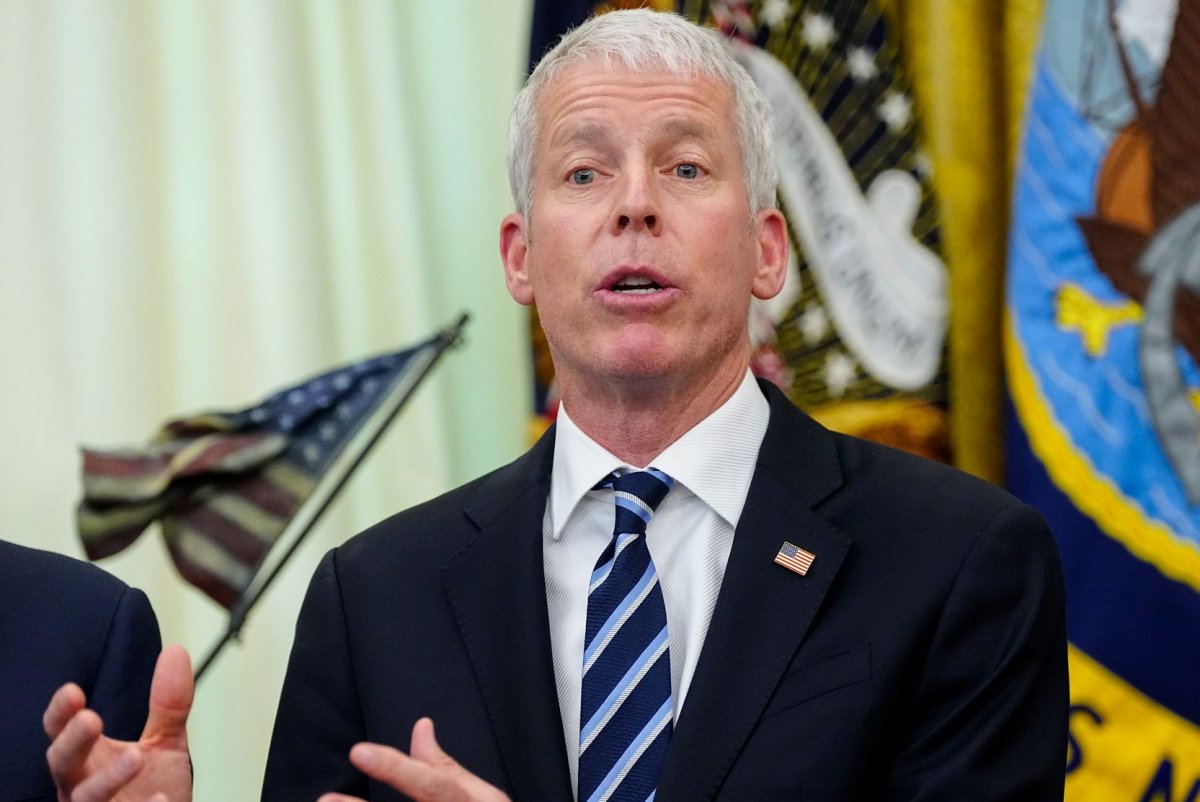
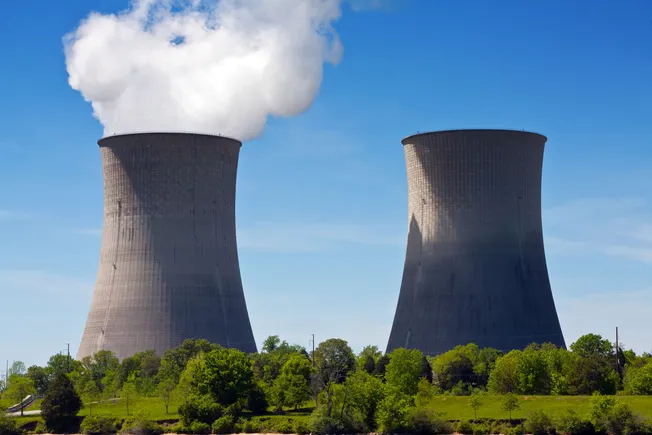
A $17.5 BILLION LOAN FOR LARGE NUCLEAR REACTORS: The Trump administration plans to issue $17.5 billion in loans to support the development of 10 new large nuclear power reactors, with the hope that the reactors will be under construction by the end of the decade and operational by the mid-2030s.The details: This morning, the Department of Energy announced it was issuing the conditional loan commitments to finance five eligible projects for the procurement of long-lead-time items needed to build large nuclear power plants.The new nuclear funding, dubbed American Nuclear Supply Chain Loans, will specifically finance special-purpose vehicles backed by both utilities and energy companies that will lead the development of the new reactors.Each project must develop two large-scale reactors able to generate more than 1 gigawatt of electricity. To compare, the city of San Francisco requires roughly 1 gigawatt of electricity during peak load. Nuclear giant Westinghouse is currently the only company to have licensed large-scale advanced commercial reactors operating in the United States, known as AP1000 units.As part of the loan agreements, Westinghouse will partner with up to five utilities and energy companies to provide long-lead-time items needed to build a nuclear power plant. This includes items such as reactor pressure vessels, steam generators, and prefabricated structural modules, which typically require years of manufacturing. The loans are not being directly supplied to Westinghouse but are instead meant to build up a domestic supply chain for future reactors.Read more from Callie here. PLUS – AN UPDATE ON PALISADES: We’re roughly eight months past when nuclear reactor manufacturer Holtec International hoped to turn on the Palisades Nuclear Power Plant in Michigan, making the facility the first decommissioned nuclear plant in the country to come back online. While the restart has been delayed because of steam generator repairs and regulatory hurdles, the Trump administration is confident the facility will reopen this year. During a call with reporters ahead of the loan announcement, Energy Secretary Chris Wright said the restart could happen as soon as this summer. “You’ve heard about our activities to restart prematurely closed reactors,” Wright said. “The Palisades [Nuclear Plant] will be coming on later this summer, later this year. Very excited about that – a large-scale reactor coming back to life.” Wright also said Three Mile Island, renamed the Crane Clean Energy Center, should also come online in 2027, with the Duane Arnold Nuclear Power Plant in Iowa following closely behind. Quick reminder: The Palisades Nuclear Plant first opened on New Year’s Eve in 1971 and was operational for more than 50 years before it closed in May 2022. Holtec International purchased the plant from former owner Entergy one month after it closed and quickly moved forward with restarting it. Once operational, the plant will generate around 800 megawatts of electricity. OIL STAYS STEADY: Oil markets remained fairly stable today, as a growing number of oil tankers passing through the Strait of Hormuz have been willing to broadcast their position. Earlier today, data reviewed by Bloomberg showed that at least seven tankers had passed through the strait while broadcasting their position. Kpler senior crude analyst Muyu Xu told the outlet that the move is a sign that ship owners have greater confidence in the water passage, “as Iran is expected to refrain from targeting vessels.” There is still some uneasiness, though, as maritime intelligence platform Windward found at least two ships still passed through the strait today while turning off their geolocation. Just before 3 p.m. EDT, international and domestic benchmarks remained in the low-to-mid $70s. Brent crude was down by just 1%, selling at $77.12 a barrel, while West Texas Intermediate had fallen 0.81% and priced at $73.26 a barrel.MEXICO SEEKS TO RESTART OIL SHIPMENTS TO CUBA: Mexican President Claudia Sheinbaum is considering restarting oil shipments to Cuba. Oil shipments to Cuba would provide some relief to the island, which has been facing an energy and humanitarian crisis for several months. Sheinbaum said yesterday that Mexico would seek to send oil to the island via commercial and privately owned firms, instead of through state-owned companies, as it has done in the past. As a reminder: The Trump administration has sought to isolate Cuba as part of a push for regime change. The administration has blocked oil shipments from entering the island and threatened tariffs on any country that supplies oil to Cuba, including Mexico. Mexico became Cuba’s main supplier of oil, following the U.S. capturing of Venezuela’s former dictator Nicolas Maduro in January. But then it halted shipments in response to the Trump administration’s threats.The only shipment of oil that has reached Cuba since then was a Russian tanker carrying 730,000 barrels of oil in late March. Changes in Cuba: The Cuban government has undergone economic reforms in response to the pressure – 176 measures last week.Sheinbaum said she wants to take advantage of these new reforms and rely on Mexican business owners who are already on the island. She added that Mexico would continue to send humanitarian aid to the island. Read more by Maydeen here. CALIFORNIA THREATENS TO SUE OVER OFFSHORE WIND PROJECT CANCELLATION: The state of California has notified the Trump administration that it plans to sue over a buyout deal struck by the Interior Department in April to kill an offshore wind project along its coastline. California Attorney General Rob Bonta and California Energy Commission Chair David Hochschild sent a notice of the intent to sue the administration over its buyout with Golden State Wind. The agreement would require Golden State Wind to abandon offshore wind leases in exchange for a “dollar-for-dollar reimbursement.” The Interior Department has also struck deals with Invenergy and TotalEnergies to terminate offshore wind leases. California claims that the Interior Department’s agreement violates the Outer Continental Shelf Lands Act, which ensures that the state has a role in offshore wind leases and prevents corrupt deals. The state said that the notice provides Interior and Golden State Wind with a 60-day window to address the violations before California files a lawsuit. “At a time when the country needs more reliable and sustainable power supply, the Trump Administration is busy using taxpayer money to strike backroom buyouts that make clean-energy projects disappear,” Bonta said in a press release. “California won’t stand idly by as the Trump Administration illegally strikes deals to kill offshore wind projects and replace them with more windfalls for his fossil fuel friends; we’re putting the administration on notice that we intend to sue,” he continued. STATES SUE CALIFORNIA OVER PLASTIC PACKAGING LAW: Seventeen states sued California over a law that would limit the use of single-use plastic. Nebraska Attorney General Mike Hilgers is leading the 17-state coalition and the National Association of Wholesaler-Distributors in suing California, arguing that the state is imposing “extensive requirements” on manufacturers, distributors, and companies that use plastic packaging. “Once again, California is trying to enact a policy that negatively impacts the rest of the country. If California goes unchecked, consumers will be forced to pay more for basic necessities. Nebraska is continuing to fight for consumers against California’s overreach,” Hilgers said in a press release. The law, known as the Plastic Pollution Prevention and Packaging Producer Responsibility Act, went into effect on May 1. The law was signed by California Gov. Gavin Newsom in 2022. It would require plastic and packaging companies to use less single-use plastic. It also requires that all packaging be either recyclable or compostable by 2032. MIKE SOMMERS TALKS PERMITTING: The clock is ticking for Congress to pass meaningful legislation to streamline the federal permitting process, as the head of the American Petroleum Institute says there is just about one month left to get a deal done. “I think a deal has to occur before the August recess,” API president Mike Sommers told reporters Monday evening. He said he felt good about the lead negotiators in the Senate, including Democratic Sens. Martin Heinrich and Sheldon Whitehouse and Republican Shelley Moore Capito. “[They] are three people that we’ve worked closely with over time, and we’re confident that the deal space is there if the politics allow it,” Sommers said. “So this is the time.” He warned that if the upper chamber fails to make a deal before they break for the entire month of August, Congress is entering “lame duck territory,” as Democrats are likely to take back the House. EUROPE SUFFERS MASSIVE HEATWAVE: Europe is facing a sweltering heatwave, with France recording its hottest day ever today. France’s national thermal indicator, which takes the average of temperatures at 30 weather stations, hit a new record of 85.6 degrees Fahrenheit. The previous record was set in August 2009 and July 2019 at 84.9 degrees Fahrenheit, the Associated Press reported. The daytime high in France was above 104 degrees Fahrenheit. Reportedly, 40 people have drowned as they sought relief from the heat. Half of the country is under a red heatwave alert. Other parts of Europe, like Italy, Spain, and Britain, are also experiencing extreme heat. In Italy, there have been red heatwave alerts in 15 cities, including Rome, Florence, Turin, and Venice. RUNDOWN Politico Lawmakers, companies tread carefully on data center energy billWashington Post The advice about rooftop solar panels is changing. Do this instead.Latitude Media Sen. Heinrich on what data centers can learn from SunZia