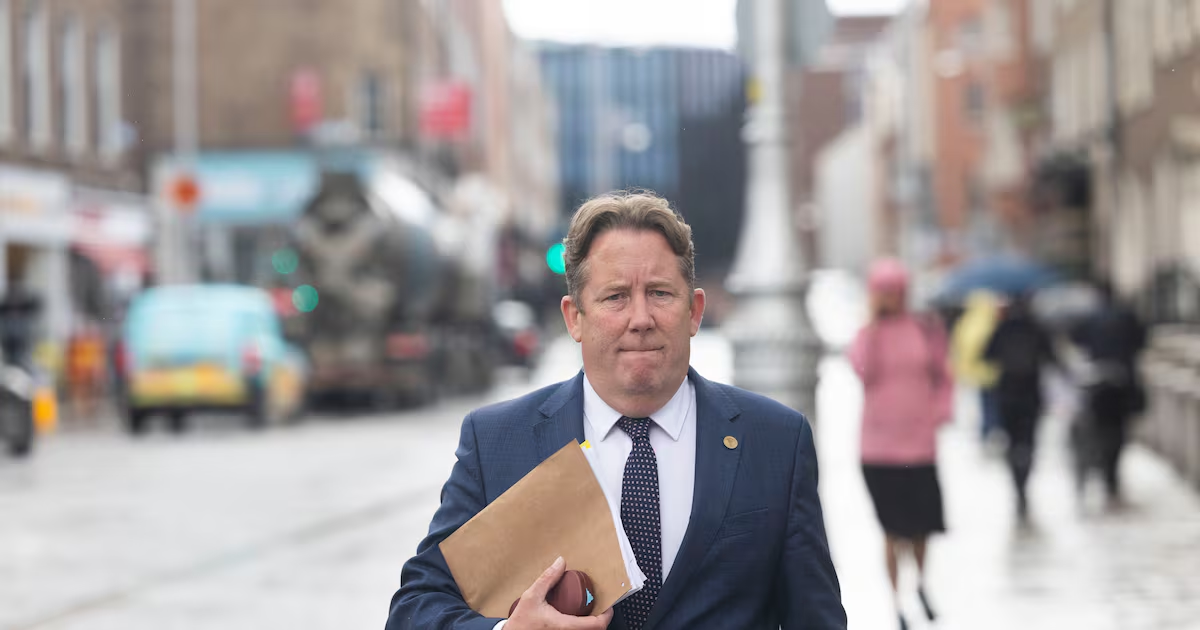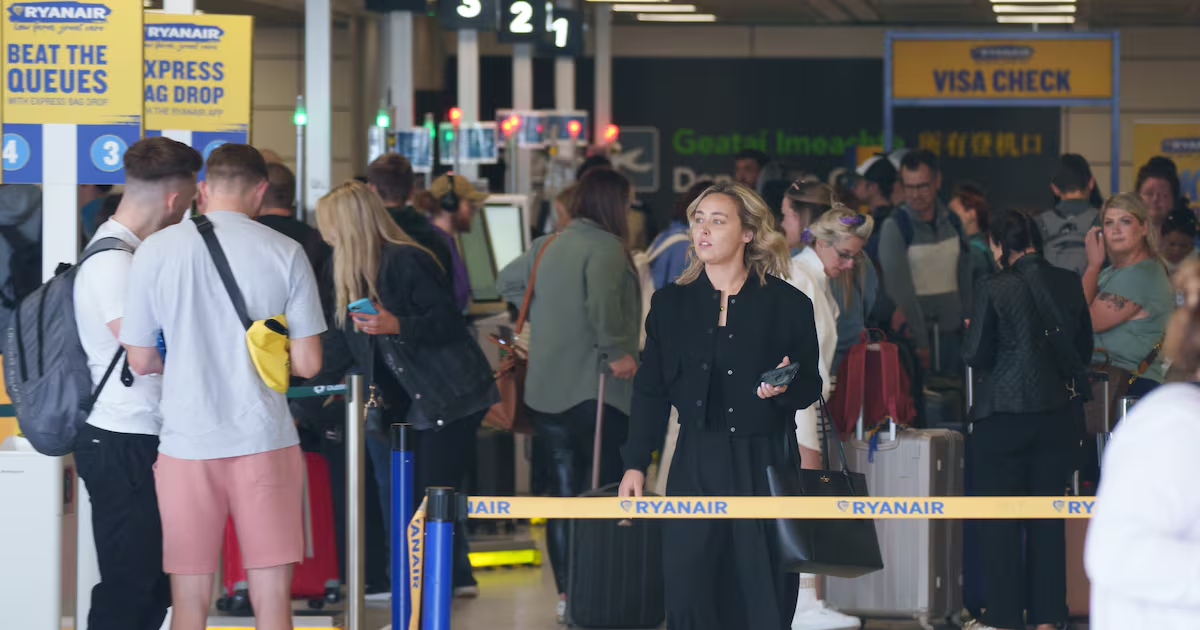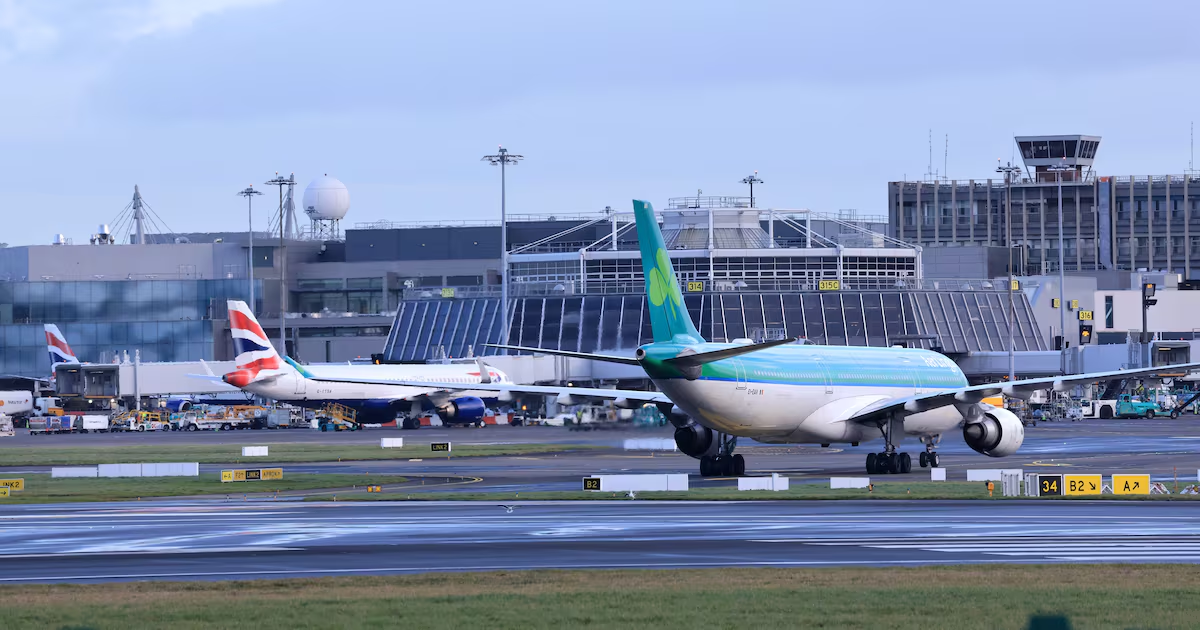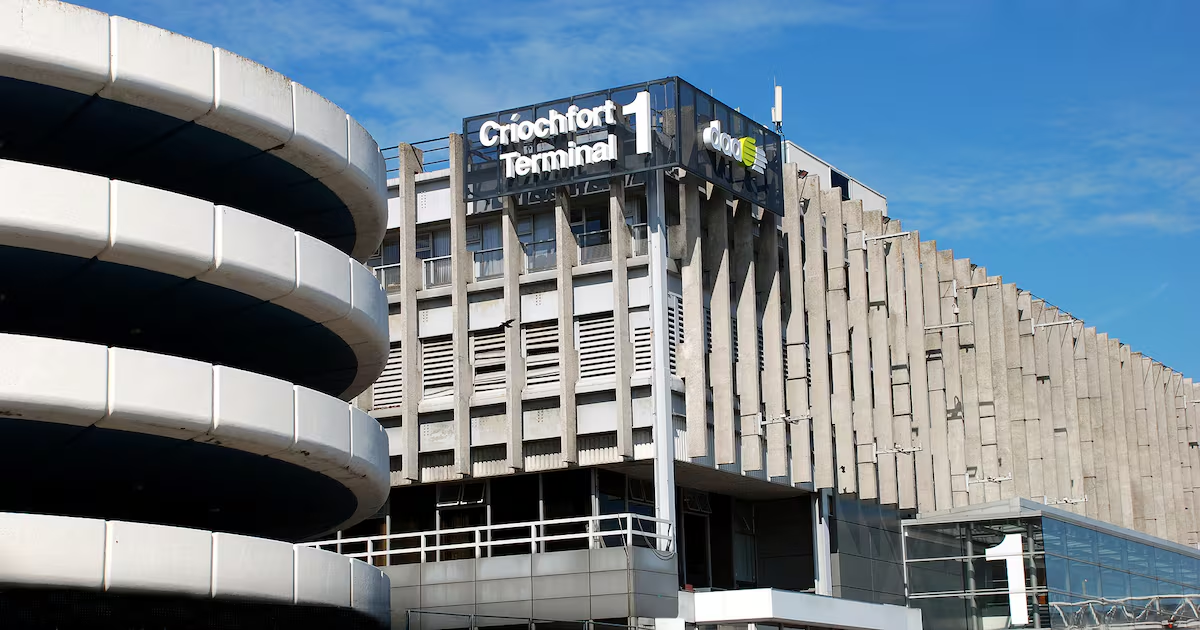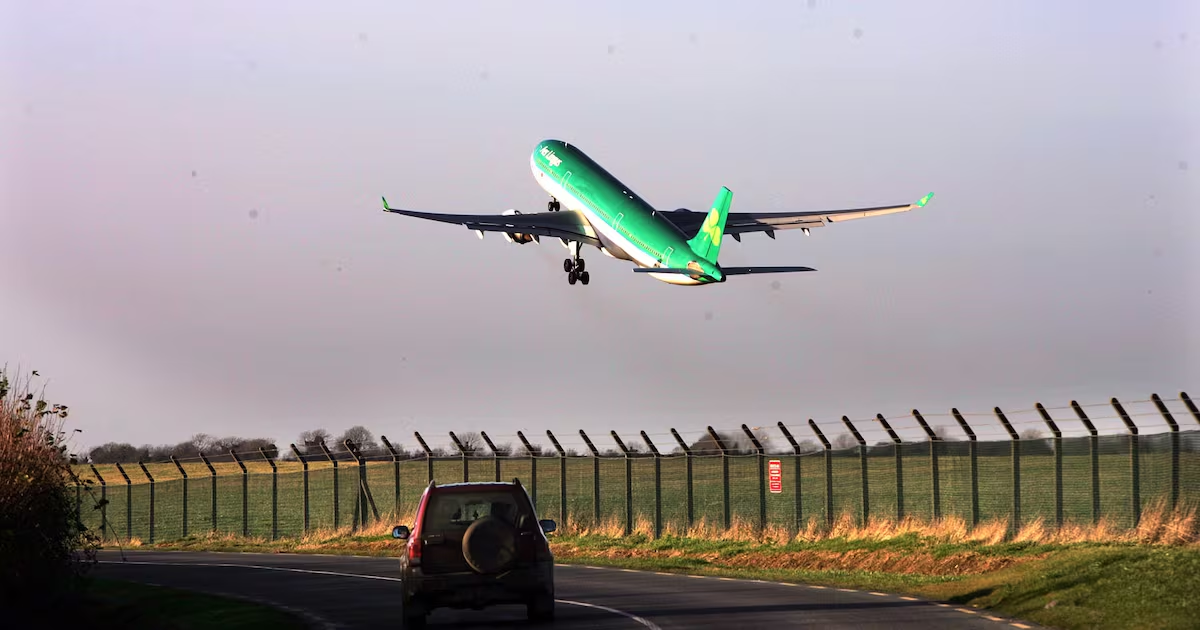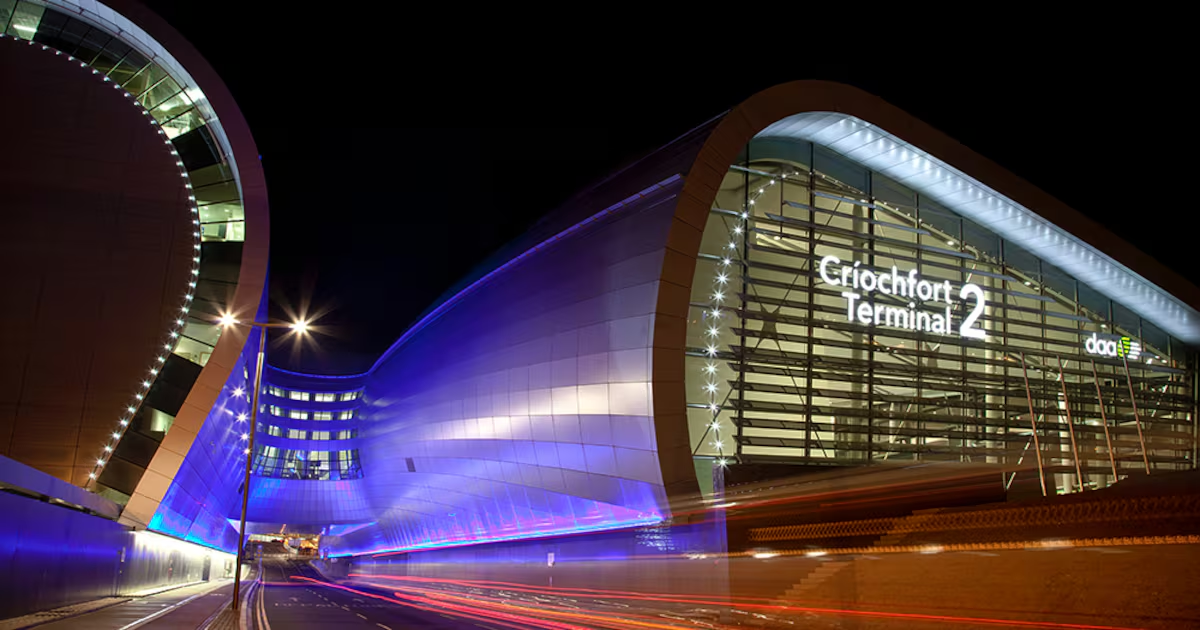
The Dublin Airport passenger cap would result in an immediate cut of more than four million passengers a year if enforced, the Minister for Transport told the Dáil as he introduced legislation to remove the limit.Darragh O’Brien said more than 36 million passengers travelled through the airport last year and the cap of 32 million would have cut those additional four million travellers. He said the cap would “stifle continued growth, undermine our ambitious hub strategy for the airport and negatively impact on our economy in terms of business, trade and tourism”. “Airlines need certainty to plan future schedules, and the continued existence of the cap creates only uncertainty which can be expected to continue to affect the choices that airlines will make about serving the airport,” he said.There could be “reputational damage” for Ireland “if capacity is restricted at our main international gateway”.Airlines and the State airport company DAA had urged the Government to end the cap before an EU court ruling forced regulators to implement it.The Dublin Fingal East TD also said the cap would be lifted in a phased and sustainable way for adjacent communities. “Residents are to the forefront of my mind, as are their jobs,” he said of the noise impact on local communities. An independent assessment of flight paths would be carried out, O’Brien said. It was “not acceptable” that flight paths were not operating under the conditions in which planning permission was granted, he said.[ Residents seek injunction to force DAA to comply with Dublin Airport passenger capOpens in new window ]The Minister aims to conclude the legislation in the Dáil next week, after which it will go to the Seanad.The Dublin Airport (Passenger Capacity) Bill provides for an environmental impact assessment required under EU law, to be carried out by An Coimisiún Pleanála, in advance of any order to remove the cap. It includes a public consultation, and the commission will have 20 weeks to determine “whether or not there will be an impact on the surrounding habitats”. But Labour Party transport spokesman Ciarán Ahern hit out at the legislation and said while environmental impact assessments will be carried out, “they are rendered essentially meaningless” by section 25 – which states that “in effect the Minister could just ignore or override” any environmental conditions, making the environmental assessment process in this bill “advisory at best”.He also claimed the Bill “provides an open invitation for airlines to bully the Government and talk down Ireland if they perceive that there’s some inhibitor to their commercial interests in Dublin”. Ahern said section 25 of the Bill allows the Minister to change planning conditions where they are perceived to be potentially damaging to “the international reputation of the State in respect of air transport”. There was “no objective standard for reputational damage, no evidence threshold, no definition”, he said.[ Law paving the way for scrapping of Dublin Airport passenger cap approvedOpens in new window ]Green Party leader Roderic O’Gorman, whose party introduced the cap in the last government, said the Bill was “constructed entirely with the desires of one set of stakeholders, ignoring all others”. The Bill makes a “direct effort to undermine the Climate Action Act, the signature piece of legislation that is intended to keep Ireland on track to meet its climate obligations”.He said “raising the passenger path by just eight million is likely to increase flight (carbon) emissions by about 24 per cent”, and Ireland is already on track to significantly exceed its 2030 climate limits.Sinn Féin transport spokesman Pa Daly described the cap as “outdated” and “out of step with reality”. The four million difference between the 32 million cap and the numbers travelling “is not a rounding error”.However, he said the Government’s aviation strategy had to move beyond Dublin and not treat regional airports “as an afterthought”. He said they “are key to unlocking Ireland’s potential and delivering balanced regional development”. These airports “are awash with unlocked potential”, Daly said.
Dublin Airport passenger cap would result in immediate cut of four million passengers, Minister says
Darragh O’Brien aims for Bill to be passed in Dáil by next week
659 words~3 min read