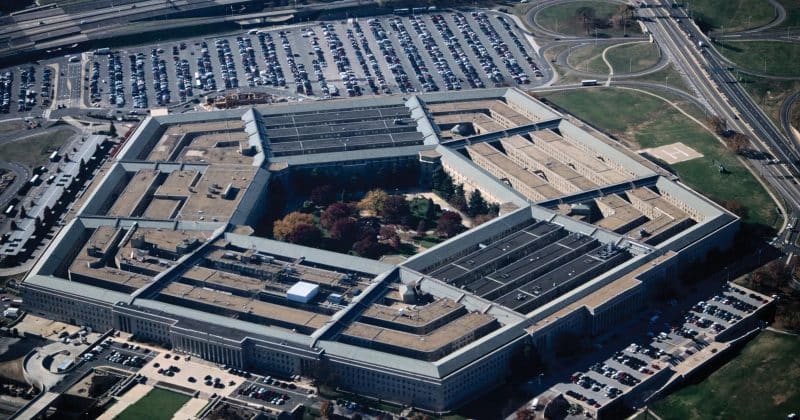
The Pentagon wants $80 billion from Congress, mostly to cover the cost of the U.S. war against Iran, the Associated Press reports.This is on top of the White House’s request to boost defense spending in the 2027 budget to $1.5 trillion—nearly 50 percent more than current allocations. Increased military spending in the budget would come alongside cuts to housing, health care, and green energy programs.Given that, it’s even more galling that Defense Secretary Pete Hegseth has been reportedly making his way around Capitol Hill, asking senators for an additional $80 billion to cover war expenses.When Hegseth testified to Congress last month, he estimated that war costs would be around $29 billion—far lower than today’s asking price. But that estimate didn’t include the cost to repair or rebuild damaged U.S. military sites in the region, which may require extra cash, according to the AP.However, the estimates for how much this war will cost American taxpayers have been all over the place: The Pentagon’s initial estimate was a whopping $200 billion. Whether Hegseth will actually get this money is a different story. The Iran war is opposed by a majority of Americans, and the Pentagon may struggle to get congressional support.“You’re spending families’ hard-earned tax dollars on a war that many strongly oppose,” Democratic Senator Patty Murray told Hegseth last month.Hawaii Senator Brian Schatz hasn’t polled his fellow Democrats, but he told the AP, “I haven’t found anyone who wants to do this.” Editor’s Pick: President Donald Trump’s acting Director of National Intelligence, Bill Pulte, has wasted no time purging staff members from his new office.Pulte, a housing regulator with no experience working in intelligence, has already begun implementing sweeping personnel changes in the intelligence community.“The deep state firings have begun,” a source familiar with the matter told NBC News. Pulte formally assumed his new post on Friday, and the firings reportedly began Monday.These are significant changes made by a temporary lackey. Pulte has none of the military or intelligence background necessary to lead ODNI, instead making his name by targeting the president’s political enemies while leading the Federal Housing Finance Agency.The day before Pulte started at his new post, he directed ODNI staff members to identify 400 employees to be fired from the National Counterterrorism Center in the coming weeks, another source told NBC News. The agency was previously headed by Joe Kent, who abruptly resigned earlier this year in opposition to Trump’s war in Iran. CNN reported that Pulte had requested a list of every employee at ODNI so he could determine who to purge.Earlier this month, Trump selected Pulte’s permanent replacement: Jay Clayton, the U.S. attorney for the Southern District of New York responsible for the shoddy redactions in the government’s files on Jeffrey Epstein. The president then upended Clayton’s Senate confirmation hearing, messing up Republicans’ chances at renewing a key spy bill. Meanwhile:A special 79-year-old man has received unparalleled access to Eli Lilly’s obesity drug.Millions of Americans are eagerly awaiting access to retatrutide, a powerful new drug from the pharmaceutical company. But one unidentified person has been able to gain premature access to the drug via the Food and Drug Administration’s “compassionate use” program, STAT reported Tuesday.The FDA program is designed to prioritize access to experimental drugs for patients with grave or life-threatening medical issues. And while the name of the individual is not known, several signs indicate that they are likely very well connected.A senior clinician at the National Institutes of Health, Ranganath Muniyappa, requested access to the drug for the unnamed patient in April. Muniyappa cited a diagnosis of refractory obesity with obstructive sleep apnea and pulmonary hypertension, a potentially life-threatening disease characterized by high blood pressure in the lungs. The request reportedly drew the attention of top health officials, which STAT noted was indicative of the patient’s influence.Based on the vague parameters of the patient’s identity, STAT reached out to the White House to see if the recipient could possibly be Donald Trump, who similarly suffers from obesity and has publicly expressed interest in obesity drugs. The White House did not explicitly deny the patient was Trump.When asked if Trump was the 79-year-old man in question, White House spokesperson Kush Desai did not say no, and instead referred STAT to the Department of Health and Human Services. (The president was 79 at the time of the request, and turned 80 earlier this month.)When asked if Trump had obstructive sleep apnea and pulmonary hypertension, Desai offered Trump’s latest medical evaluation as a counter, which he falsely claimed “covers this,” according to STAT. It does not—the memo makes no mention of either disease.HHS did not address the issue of the retatrutide application or the patient’s identity.“The FDA supports expanded access programs that can provide patients with serious or life-threatening conditions access to investigational treatments when no comparable or satisfying approved therapies are available,” HHS spokesperson Emily Hilliard told STAT. “Each request is reviewed on a case-by-case basis based on the clinical circumstances and applicable statutory and regulatory requirements.”Whoever the patient is, they had been previously treated with other obesity drugs, such as tirzepatide, though sources who spoke with STAT indicated the patient experienced only moderate weight loss as a result. Muniyappa reportedly recommended against bariatric surgery because of the patient’s age and co-morbidities.This story has been updated.Editor’s Pick:The Trump Justice Department planned to subpoena journalists at The Washington Post and The Wall Street Journal, attempting to force them to testify before a grand jury for vague national security concerns. The subpoenas were eventually withdrawn this month without any explanation after news organizations pushed back.This was an extremely unprecedented decision that follows the all-too-familiar trend of weaponizing the DOJ against whomever President Trump is upset by that day.Washington Post reporter Ellen Nakashima—who covers the security and intelligence community, including the war on Iran—was subpoenaed this spring. The Post was in the process of fighting Nakashima’s subpoena before the DOJ suddenly rescinded it.“The unwarranted subpoena of our reporter Ellen Nakashima — a clear violation of constitutionally guaranteed press freedom — was another sign of the government seeking to compel journalists to become instruments of its investigations,” a Post spokesperson said. “We will continue to stand fully behind the journalism of The Washington Post and fight all efforts by any administration that violate our First Amendment rights.”Three Wall Street Journal reporters covering national security issues also received grand jury subpoenas from the DOJ, according to the Post. In May, the DOJ also subpoenaed the Journal’s reporters over leaks from the Department of Defense related to the Iran war.The DOJ has yet to comment on or explain its decisions to file and rescind the grand jury subpoenas.“The potential of the government intruding into the newsgathering process is even greater when you are in the grand jury than it is for a subpoena for documents,” said Gabe Rottman, vice president of policy at the Reporters Committee for Freedom of the Press. “The administration has taken a number of extremely aggressive steps in respect to the press.… These are all aggressive attempts to target journalists reporting on the actions of the Trump administration. They are a dangerous intrusion of the independence of the press.”Editor’s Pick:After watching President Donald Trump nod off during meetings over and over and over again, we may finally have some answer as to why.In Regime Change: Inside the Imperial Presidency of Donald Trump, a new book by New York Times writers Maggie Haberman and Jonathan Swan, Trump’s bizarre sleep schedule has been exposed, reports The Daily Beast.According to the new book, the octogenarian reportedly barely sleeps at all. He goes on Truth Social posting sprees at all hours of the night—something we’ve all had the misfortune of witnessing—and stays up late watching TV.The president has grown even more erratic since his last term in office.More than just gilding fireplaces and building ballrooms, the authors describe how Trump has fundamentally changed “the rhythms and structures and operations” of the White House. Where the president used to arrive predictably by 10:30 or 11 a.m., now it’s anybody’s guess. Sometimes he’s up in the morning making phone calls, and other times White House staff find him still asleep between 8 and 10 a.m.—a sign that he probably stayed up all night watching TV and scrolling.Privately, aides told Swan and Haberman that, for the first time, Trump was “beginning to seem old.”“Those who spent time with him could see the signs—the moments of fatigue, the cupped hand behind the ear.… The repeated bouts of drowsiness during mid-afternoon public events,” the authors write.Regime Change also revealed that the president and his wife, Melania, sleep (or in Trump’s case, don’t sleep) in different bedrooms.More on Trump dozing:
Billions More Needed for Iran War Trump Started, Pentagon Says
Meanwhile, cuts are coming to housing and health care.
1,442 words~7 min read