In late 2013, Bloomberg’s then editor-in-chief, Matthew Winkler, spiked an investigation into the hidden wealth of China’s elite. Publishing it, he warned reporters on a call, would “wipe out everything we have tried to build.”
More than a decade on, that trade-off – access versus accuracy – has hardened into habit. Reporters have learned where China’s red lines are, and words quietly vanish from drafts.
In 2022, the Canadian Broadcasting Corporation (CBC) closed its Beijing bureau after more than 40 years. There was no expulsion; Chinese authorities simply stopped issuing visas to CBC correspondents. As editor-in-chief Brodie Fenlon put it, “the effect is the same.”
The CBC did not trim its coverage to preserve access, as Bloomberg did; it was pushed out altogether. Its absence serves Beijing’s purpose all the same: whether a newsroom softens its own language or loses its correspondents entirely, the result is fewer independent eyes on China and a thinner, more cautious, record of it.
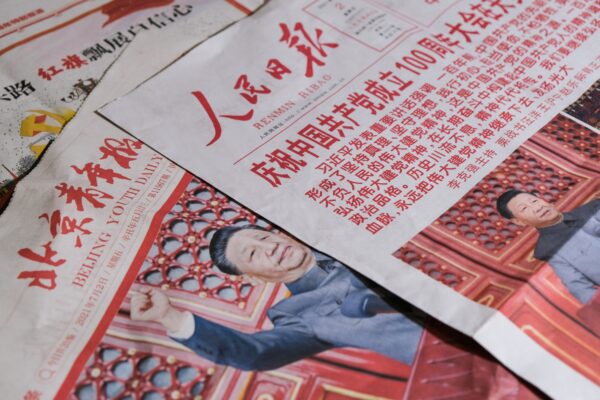
Under Xi Jinping, the Chinese Communist Party (CCP) has expanded its control over political language to the point where it challenges journalism’s most basic task: describing the world accurately.