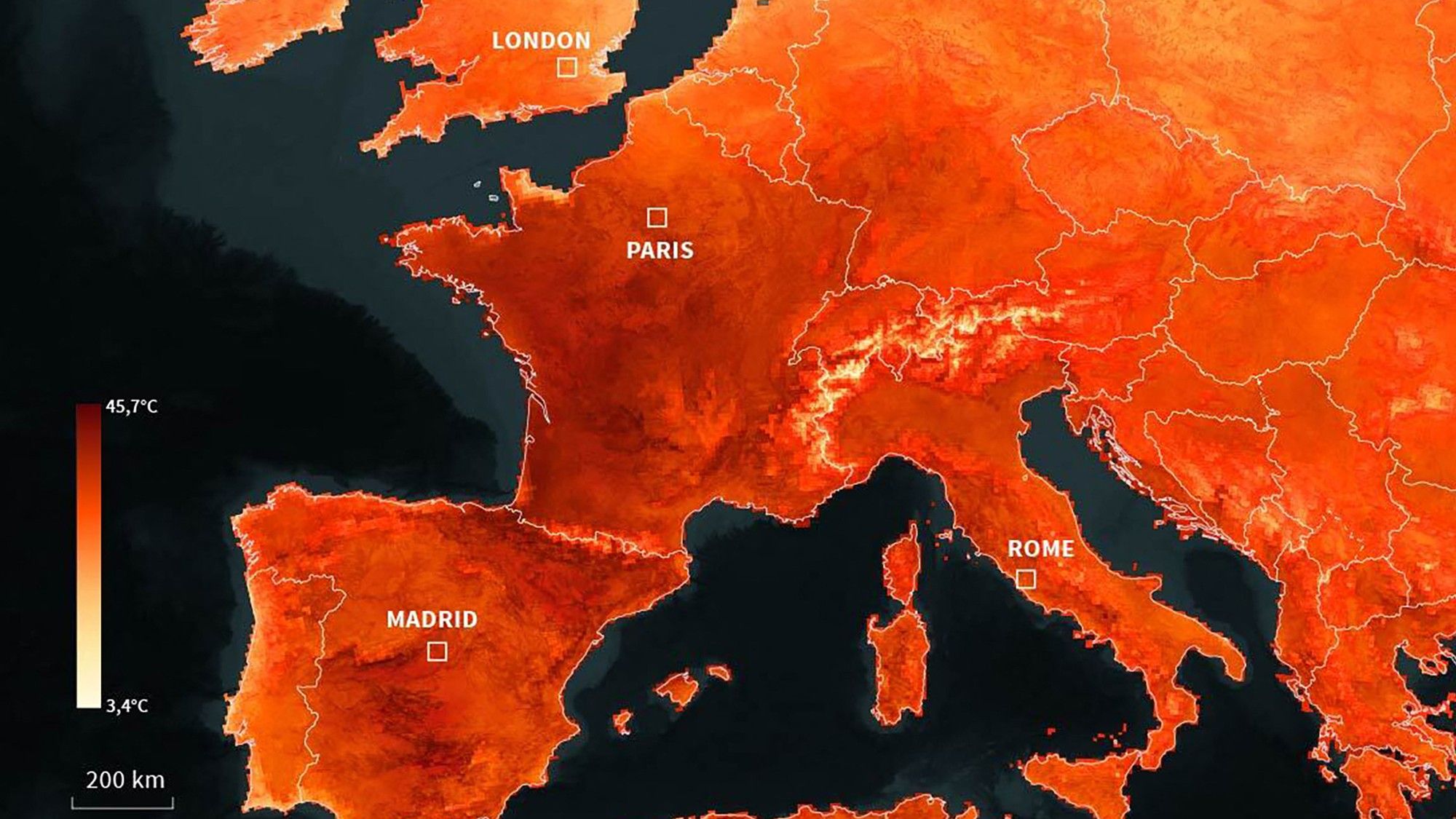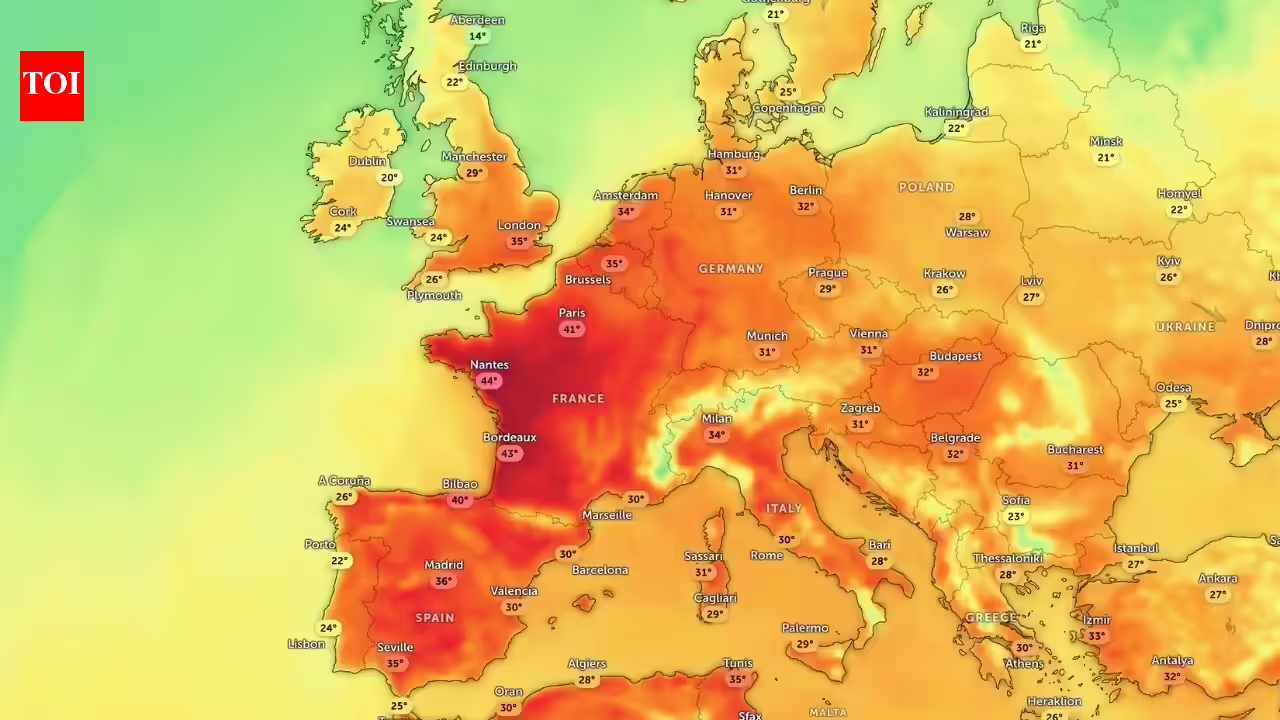
At least 18 people have died in France, including two children left in a hot car, as an unprecedented heatwave bakes Europe this week. Temperatures are forecast to climb well above 100 degrees Fahrenheit (37.8 degrees Celsius) across the continent, forcing several countries to issue rare “red alerts,” close schools, and place restrictions on public activities. France, Spain, and Britain are suffering the most extreme conditions today as temperatures approach record-breaking highs. People have flocked to beaches, rivers, and lakes in search of some relief, resulting in a surge of drowning deaths. In France alone, 40 people have drowned since last Thursday, according to Prime Minister Sébastien Lecornu. Extreme heat is a growing public health risk in Europe, the fastest-warming continent in the world. While climate change sets the stage for deadly heatwaves, we need to look at real-time atmospheric conditions to understand what’s driving this event.
The dreaded omega block According to meteorologist Marko Korosec, an “omega block” has locked in an enormous heat dome over Europe. Named for its resemblance to the Greek letter omega, this weather phenomenon forms when a strong high-pressure system becomes sandwiched between two neighboring low-pressure systems.