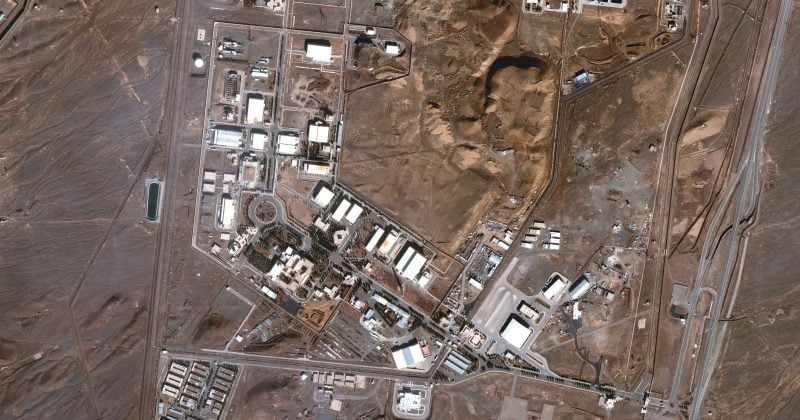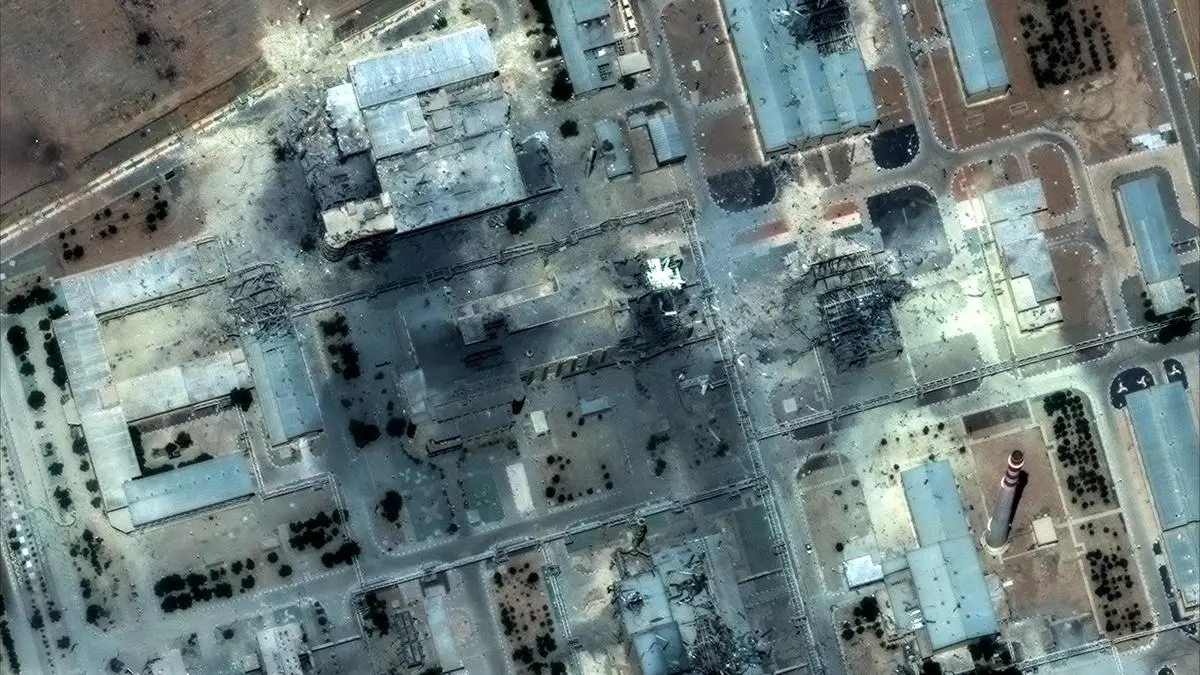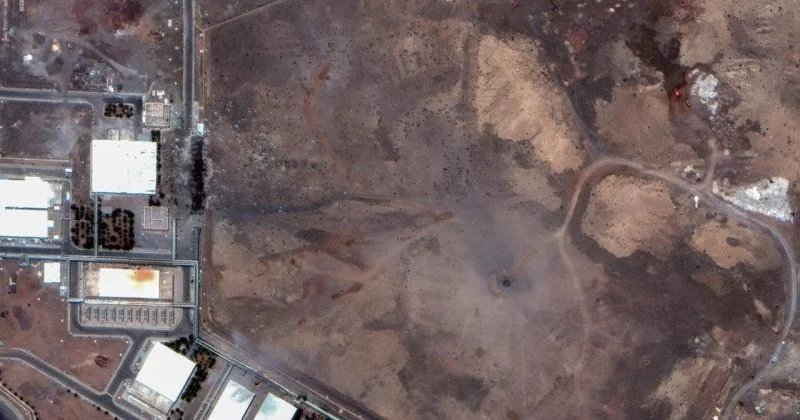
ByYONAH JEREMY BOBJUNE 23, 2026 18:13The public war of words between US President Donald Trump and the Iranian negotiating team about when and to what extent IAEA nuclear inspectors will be allowed to visit the regime's nuclear sites is missing a central point.Those who demand that the IAEA inspectors get to return to their "full" access from 2021 - when Iran started to partially limit their access - or to receiving fuller access as compared to the 2015 Iran nuclear deal are ignoring that what will be inspected now is not the same.From 2015-June 2025, Iran had three major nuclear enrichment facilities with large numbers of centrifuges or other machinery and materials at Natanz, Isfahan, and Fordow.There were dozens of other smaller nuclear sites, some of which the IAEA also had access to, such as Karaj, but Iran's around 20,000 centrifuges, especially its advanced ones, were at the top three sites.Monitoring enrichment and the installations of the new centrifuges at these sites was the main mission of the IAEA inspectors.Inspection would revolve mainly around future capabilitiesWhy will any current mission be radically different?A satellite view shows an overview of Fordow underground complex, after the US struck the underground nuclear facility, near Qom, Iran June 22, 2025 (credit: MAXAR TECHNOLOGIES/VIA REUTERS )Because all of these sites have been bombed.There are either zero or close to zero centrifuges to monitor.This means that most of the monitoring is not about an existing nuclear program, but about listing what pieces of that program still function, and ensuring that they are not rejuvenated, or that new facilities are not established.Among the listing of what portions of the program can still be used, possibly the most central initial mission of the IAEA will be retrieving and either removing or monitoring the dilution of over 400 kilograms Iran's high-level 60% enriched uranium, which has been buried deep under the rubble of the three main nuclear sites for around a year since the sites were struck in June 2025.Although discussed much less, it will also be critical for the IAEA inspectors to ensure disposal or dilution of the regime's 20% enriched uranium.Iran giving up or diluting the 60% enriched uranium is the central concession it has made to make the current deal possible.It will probably take weeks if not months of using special engineering machines as well as special protective suits to retrieve and dispose of the 60% enriched uranium.This will be a highly complex task that the IAEA may not have done before, but once it is over, it will not be a continuous task.It is unclear how long it will take to locate and dispose of the less discussed 20% enriched uranium, but that task also would seem to be time limited by weeks or months.In other words, within months of Iran allowing access to retrieve the uranium, many of the IAEA inspectors may be able to leave Iran because they may have little to do.IAEA inspectors could utilize intel from agencies such as Mossad, CIA in the futureIt might be important for some IAEA inspectors to regularly check these old sites, but there is significant evidence that the Islamic regime may have decided to largely abandon the sites because the destruction there was so extensive, that building newer sites made more sense.In that sense, after the initial uranium is disposed of, the longer and second stage of the inspections will need to focus on new facilities and preventing the building of unknown new facilities, something which Iran has an extensive history of doing.It is unclear that the IAEA is equipped for such a role.Rather, the IAEA will need to have some number of teams on the ground in Iran waiting for new situations in case, and when the Mossad, CIA, or other western intelligence service - interestingly enough Dutch intelligence has played some important roles at times - provide them with surveillance of new suspected facilities.Jumping out and having immediate access to such new suspicious facilities will be the core role of the IAEA inspections for most of the life of the deal.This is assuming that the deal prevents Iran from enriching uranium for 15-20 years, or some period of time followed by some time when it can enrich only at the 3.67% lower level, which was used under the 2015 nuclear deal.When there is no enrichment, the IAEA inspectors will only be there to perform crack inspections, but otherwise will have little to do.If and when the new deal allows Iran to enrich at a low level, then the IAEA inspection team would go back to its 2015 monitoring role of the centrifuges.Regarding new nuclear sites, the most important one for the IAEA inspectors to gain access to is Pickaxe Mountain.Iran has been building this facility since 2021, but to date it has not yet been viewed as operational.This, and concerns that no US or Israeli bombs can penetrate the facility, which is even deeper under a mountain than the Fordow underground facility, are the reasons it has not been attacked to date.But it will be critical for the inspectors to establish that it is not operational or is not being used for anything nuclear weapons related, since it is unclear whether such activities could be bombed.All of these changes could give both sides some victories in the latest public dispute about inspections.Anywhere there is 60% or 20% enriched uranium, the IAEA inspectors must have access as they must ensure all of the uranium is disposed of.But in other sites where there was no such uranium or fully built centrifuges or weapons group dedicated experiments, the inspectors may not need access or may be able to be given temporary access just to ensure that there really is nothing dangerous concealed.This could allow both sides to declare victory.The US can get extensive access to the sites which really matter, and snap inspections even to such sites, whereas Iran could say it gave only very limited access to other sites which are less important or were completely destroyed.However, the sides negotiate this issue, it is critical that the public understand that the inspection game now is completely different than it was before the June 2025 war and the early 2026 war, because most key Iran nuclear program components have been bombed and the name of the game is less monitoring a living program, than it is ensuring that the plug is pulled on what is left of the "on life-support" nuclear program, and making sure no new programs are built. Follow us on Google
How Iran nuclear inspections may change after strikes on key sites | The Jerusalem Post
It will probably take weeks if not months of using special engineering machines as well as special protective suits to retrieve and dispose of the 60% enriched uranium.
1,088 words~5 min read