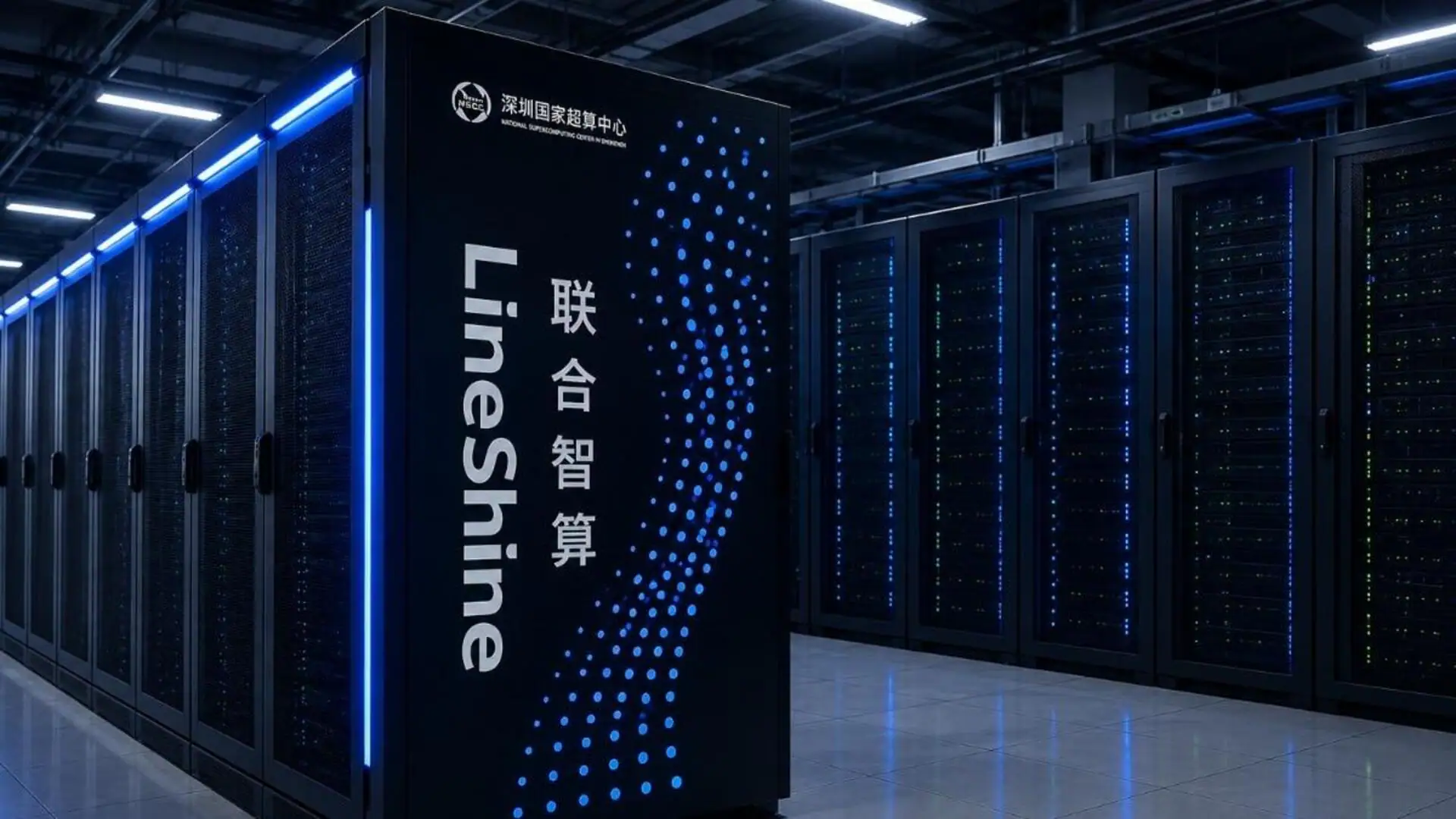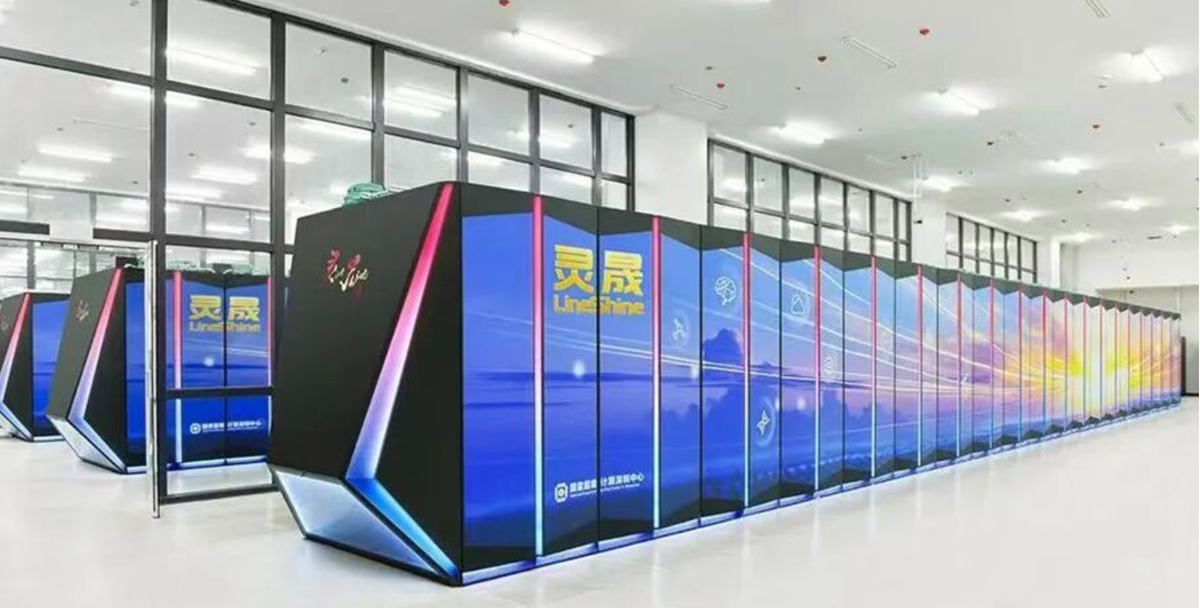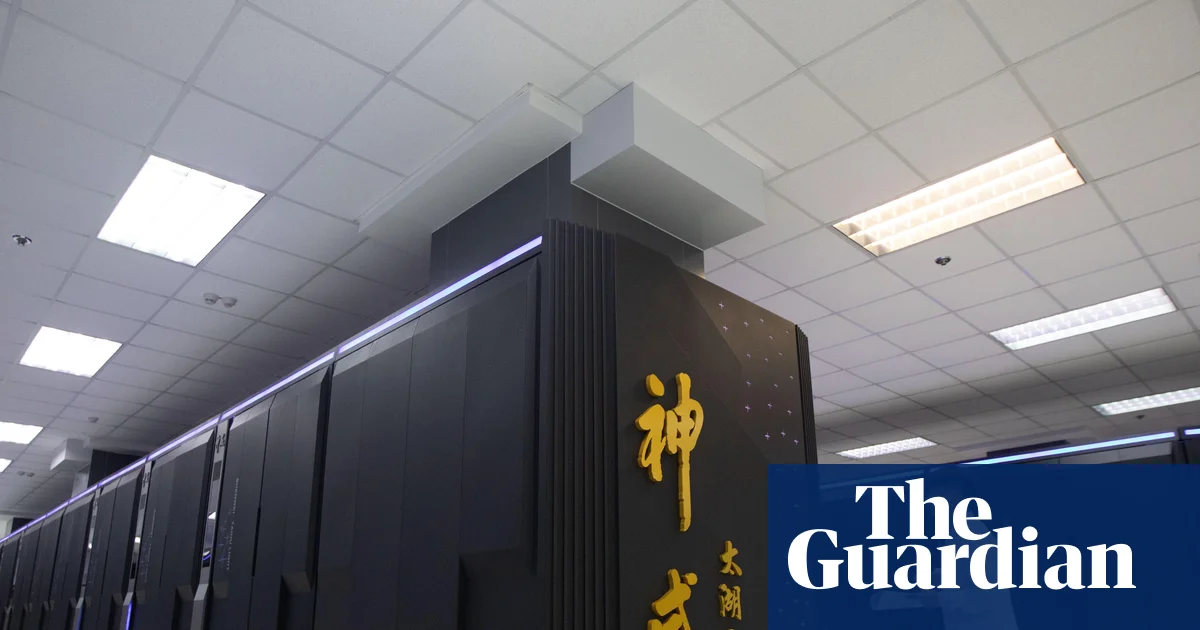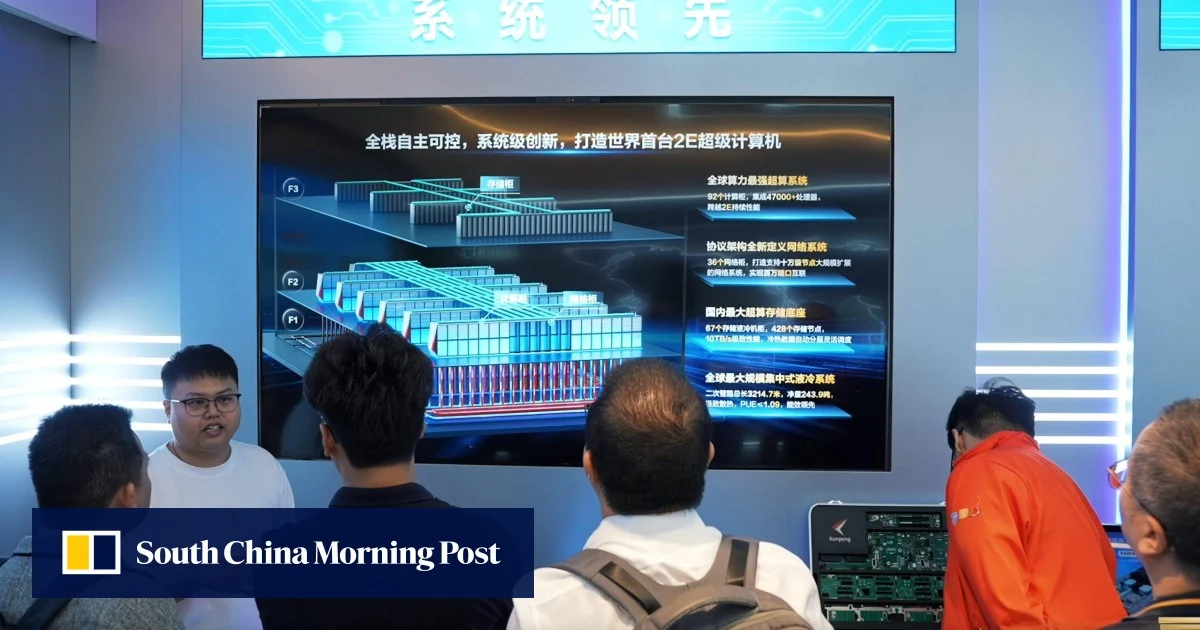
The newly crowned most powerful supercomputer in the world was built using Chinese-designed chips and networking gear.LineShine has shot to the top of the June 2026 iteration of the Top500 list of most powerful systems, with 2.198 exaflops of HPL performance, dethroning America's El Capitan supercomputer.The supercomputer is deployed at the National Supercomputing Centre in Shenzhen and was built by the Shenzhen Cloud Computing Center. LineShine uses semi-custom 304-core LX2 processors based on the Armv9 instruction set architecture running at 1.55GHz. The LX2 appears to have been co-designed with China's National Supercomputing Center and Huawei, with 40,960 chips deployed across 92 cabinets. It has a total of 13,789,440 cores.A research paper published earlier this year notes: "The system has an asymmetric memory topology: each LX2 CPU socket contains two compute dies, with each die integrating four NUMA domains (38 Armv9 cores and 4GB of HBM per domain) and a dedicated SDMA engine."LineShine also uses the proprietary LingQi interconnect, with a dual-plane multi-rail fat-tree at 1.6 Tbps per node, and the National University of Defense Technology's Kylin OS. Servers are Huawei Kunpeng racks.The supercomputer has 428 storage nodes across 67 cabinets, with 10TBps aggregate bandwidth. It is said to be the largest liquid-cooled storage deployment in China.The system uses approximately 42.2MW of power, for an efficiency of 52.07 gigaflops/Watt. It has the highest power consumption of the top 10, and ranks 50th in the Green500 list of most energy-efficient systems.On the HPCG ranking, LineShine also came in at no.1 with 22.00 petaflops. However, on the more AI-equivalent the HPL-MxP benchmark, which measures mixed-precision performance, LineShine came in at fourth at 7.92 exaflops.This is the first time a China-based supercomputer has led the rankings since Sunway TaihuLight in 2017 - although China stopped reporting to the Top500 in 2023, despite being known to have fielded several exascale systems. LineShine marks its return to the Top500's listing.AI cloud companies do not usually take part in the Top500, limiting some of its scope - depending on the benchmark, some hyperscale data centers could be viewed as more powerful than any in the Top500. Microsoft is a rare regular, and does enter its Eagle system. At 561.2 petaflops (HPL), the system is now the seventh most powerful supercomputer.Also of note was Eni's new HPC7 system in Italy, which came in at number six in the Top500 rankings with 571.5 petaflops, built on the same HPE Cray EX255a AMD Instinct MI300A architecture as El Capitan.The full HPL top 10 was:LineShine, National Supercomputer Center, Shenzhen, China. 2.198 exaflops.El Capitan, Lawrence Livermore National Laboratory, United States. 1.809 exaflops.Frontier, Oak Ridge National Laboratory, United States. 1.353 exaflops.Aurora, Argonne National Laboratory, United States. 1.012 exaflops.JUPITER Booster, Jülich Supercomputing Centre, Germany. 1.000 exaflops.HPC7, Eni, Italy. 571.5 petaflops.Eagle, Microsoft, US. 561.2 petaflops.HPC6, Eni, Italy. 477.9 petaflops.Supercomputer Fugaku, RIKEN Center for Computational Science, Japan. 442.01 petaflops.Alps, Swiss National Supercomputing Centre (CSCS), Switzerland. 434.9 petaflops.
LineShine: All-CPU Chinese supercomputer named world's most powerful
Huawei gear used in 2.198 exaflops supercomputer
481 words~2 min read