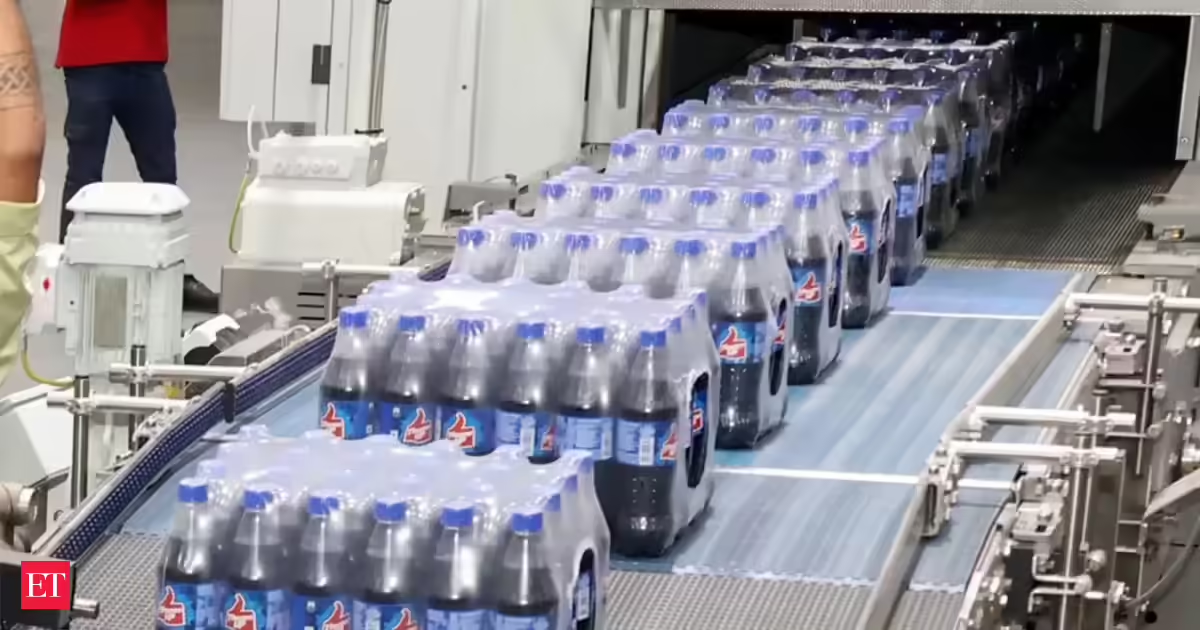
SynopsisKarnataka is championing micro food processing, supporting over 10,500 units and creating up to one lakh jobs. The state is also a leading millet processing hub. Discussions at a recent conference highlighted the transformative potential of AI and robotics in the agro-food sector, aiming to boost India's processing capabilities from a mere 10% to compete globally. Experts emphasized innovation and technology for value addition and reducing wastage.ANIRepresentative ImageBengaluru: Karnataka has supported more than 10,500 micro food processing units under various government schemes, generating employment for an estimated 80,000 to one lakh people, according to the Karnataka Agro Processing and Export Corporation (KAPPEC).Speaking at a conference on ‘Reimagining Agro-Food Processing: The AI & Robotics Revolution’, organised by the Bangalore Chamber of Industry and Commerce (BCIC), KAPPEC managing director CN Shiva Prakash said the state had made significant progress in supporting entrepreneurs, producer collectives and food processing enterprises through the Prime Minister's Formalisation of Micro Food Processing Enterprises (PMFME) scheme.Karnataka has also emerged as a major millet-processing hub, with more than 3,500 millet manufacturing and processing units operating in the state, he said. While technology and artificial intelligence would play a key role in the sector's growth, they should also contribute to employment generation, he added.The conference brought together policymakers, industry leaders, agri-entrepreneurs and technology experts to discuss the role of AI, robotics and automation in transforming India's agro-food processing ecosystem.Delivering the keynote address, former Nestle India chairman and managing director Suresh Narayanan said India's food processing industry, valued at over $300 billion, was projected to reach $535 billion by 2025-26. However, only about 10% of the country's agricultural produce is processed compared with nearly 80% in developed economies, indicating significant scope for value addition and rural employment generation, he said.Narayanan said government support through budgetary allocations of Rs 4,064 crore, production-linked incentive schemes and private investments exceeding Rs 9,227 crore had laid the foundation for growth. Future expansion would depend on innovation, compliance, healthier food portfolios and emerging segments such as millet-based foods, nutraceuticals and sustainable packaging, he added.BCIC president Prashant Gokhale said India should move beyond food self-sufficiency and position itself as a reliable global food supplier. The country produces nearly 350 million tonnes of foodgrains annually but continues to lose around 30% of output to wastage, he said, adding that AI and advanced food processing technologies could help reduce losses and improve value addition.Ankur Bhaumik, chairman of BCIC's agro and food processing expert committee and chief operating officer of Orkla India, said the next phase of growth would require greater focus on quality, compliance and global competitiveness. Agriculture contributes around 15% of GDP while supporting nearly 45% of the population, making growth in farmer incomes critical to economic development, he said.At the event, BCIC released a white paper on AI and automation in agro-food processing, highlighting the role of emerging technologies in improving quality assessment, traceability, price discovery, market access and direct farmer payments. The paper also examined the challenges of ensuring farmer inclusion in a technology-driven agricultural ecosystem.BCIC also presented awards to entrepreneurs and enterprises for innovation and contributions to the agro-food processing sector.Read More News on...moreless
Karnataka supports 10,500 food processing units, creates up to 1 lakh jobs: KAPPEC
Karnataka is championing micro food processing, supporting over 10,500 units and creating up to one lakh jobs. The state is also a leading millet processing hub. Discussions at a recent conference highlighted the transformative potential of AI and robotics in the agro-food sector, aiming to boost India's processing capabilities from a mere 10% to compete globally. Experts emphasized innovation and technology for value addition and reducing wastage.
519 words~2 min read