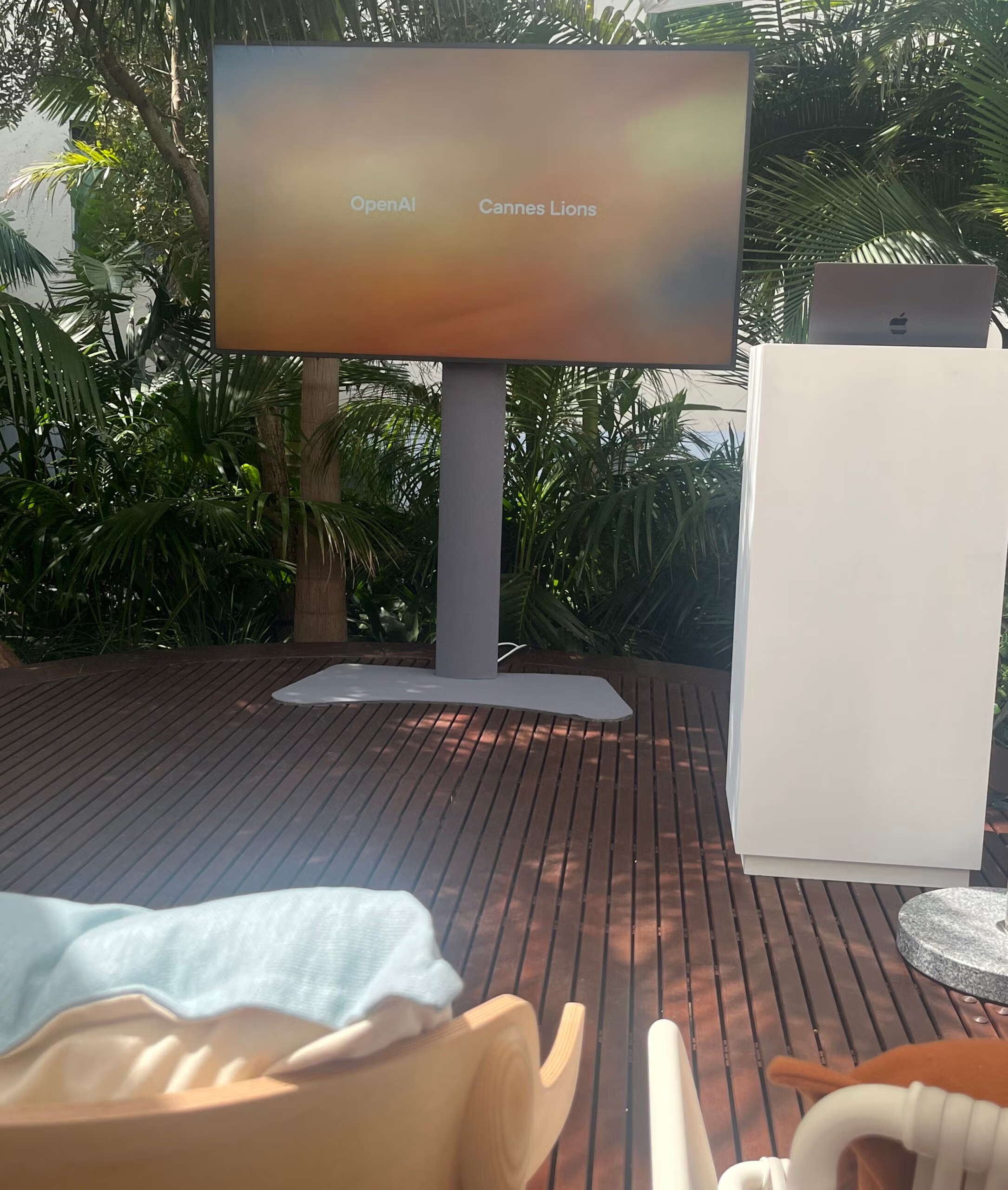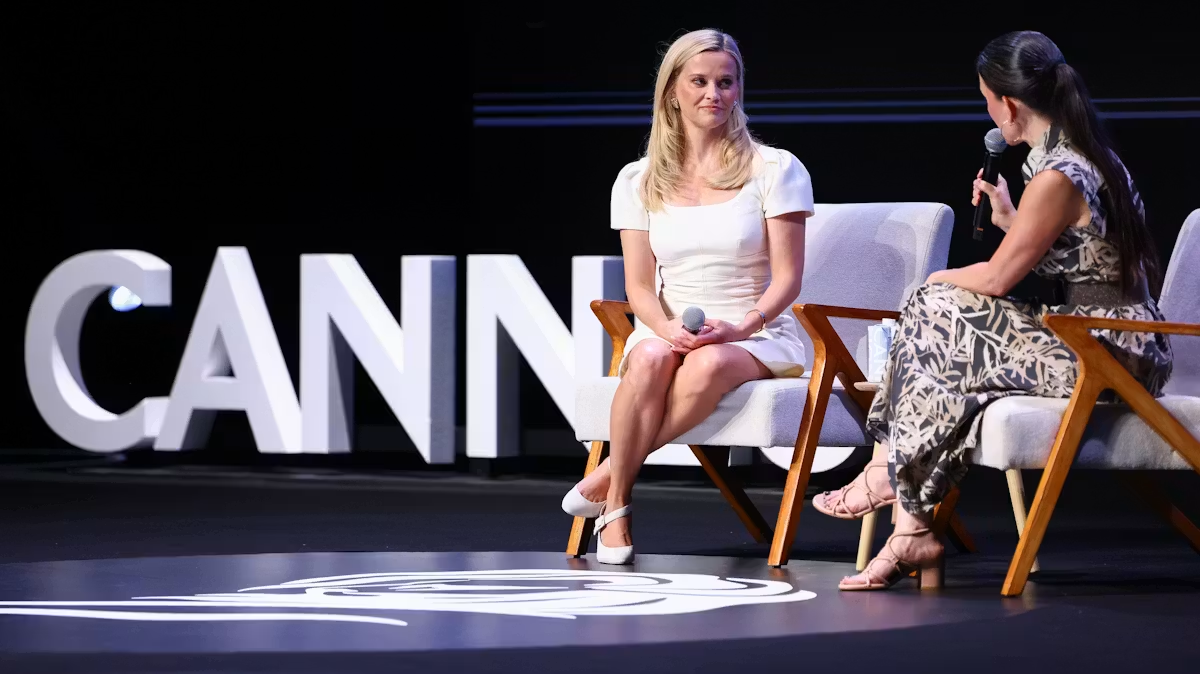
Roughly four months into its advertising pilot, OpenAI spent day one of Cannes Lions re-affirming its commitment to scaling its ads capabilities. From the US to Europe, and now parts of Asia, OpenAI’s advertising experience within ChatGPT is evolving quickly, and Dave Dugan, vice-president, head of global ads solutions, has implied that the company has no plans to slow down.Speaking at Cannes, he said: “We have an entirely new ads product, an entirely new ads experience. Roughly 20% of queries on ChatGPT have a direct commercial intent and even more than that have upper-funnel predictive commercial possibility.”This advertising potential, paired with OpenAI’s quickly expanding suite of ad products, puts its advertisers in a unique position to meet user demand “right in the decision layer”, according to Dugan. He said that with ads now appearing directly below ChatGPT’s model responses on its free and go tiers, OpenAI has built a product that will strike in “the perfect moment for an advertiser to deliver a targeted message”.The impact of this on the user has been considered too, with trust playing a central role in the company's advertising principles. In terms of user response to an ad, success is assessed on their return to platform frequency, queries per day, and ad ‘close out rate’ – which Dugan said has halved in frequency since the product's launch. He also asserts that for advertisers, anecdotally, OpenAI and its Ads Manager has been delivering for partners. It has already developed from primarily cost per mile-based to cost per click-based, underscoring its commitment to improving measurement. Can AI and creativity collaborate?However, the next frontier of ChatGPT may not simply be incorporating advertising into its products, but building campaigns. OpenAI’s creative specialist, Chad Nelson, said: “We’re here to augment the production pipeline… creative directors are now R&D directors.”Workspace agents within ChatGPT such as Codex – ChatGPT’s AI agent to which work can be delegated – are viewed as OpenAI’s ticket into enhanced creativity. He claimed that "yesterday", Codex for creatives involved teams trying to use general-use creative tools, but "today", we will see creative teams begin building specialised tools of their own. The bottom line for Nelson is that AI isn’t going to take creative marketing jobs, it will enhance them. He said: “If I could test five ideas or 50 ideas, I'd like to explore all 50.”An update on Criteo’s integration with OpenAICriteo has also shared updates on its integration as OpenAI’s first advertising technology partner. Focused on expanding access to AI-native advertising experiences within ChatGPT, Critero said 2000 brands are now advertising on the chatbot through its integration. Following launches in the US, Australia, Canada, and New Zealand, advertisers in the UK, Japan and South Korea can now access ChatGPT Ads inventory through Criteo. Criteo said in a statement: “We are seeing continued advertiser growth in these markets week over week, reflecting growing global demand for advertising opportunities within conversational AI experiences.“Apparel, home furnishings, consumer electronics, automotive and beauty have emerged as the leading categories running ads in ChatGPT through Criteo, underscoring strong consumer engagement across key commerce verticals.”The technology partner claims that early testing shows ad campaigns in ChatGPT using Prompt Smart Ads, which combine catalog data, commerce intelligence, and prompt-level insights, generate approximately 4x higher spend after activation, helping advertisers improve campaign delivery, complete budgets more efficiently, and scale investment within ChatGPT.Criteo also reported that conversion rates continue to outperform other referral channels, while click through rates are consistently two to three times higher than comparable formats in other environments. In addition, more than 80% of ad-driven ChatGPT Ads traffic comes from new customers, highlighting the platform’s increasing importance as a discovery engine for brands.This story first appeared on Performance Marketing World.
OpenAI ‘clearly in the ad business now’ as it reveals future plans
AI powerhouse revealed plans to scale its services into the creative pipeline at Cannes Lions 2026.
618 words~3 min read