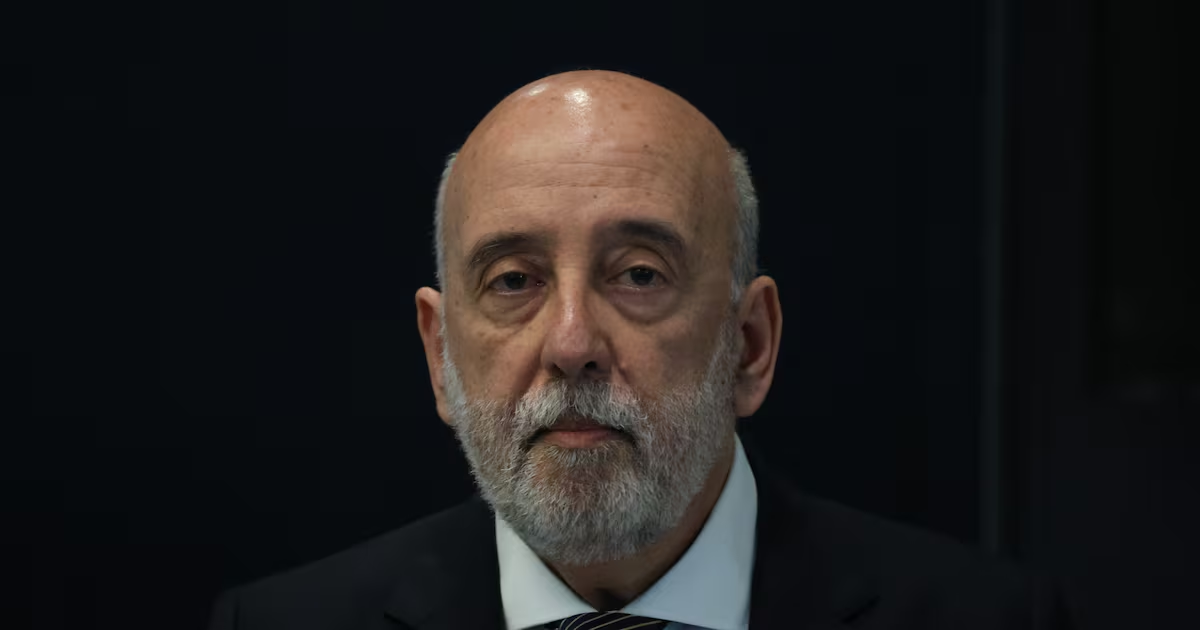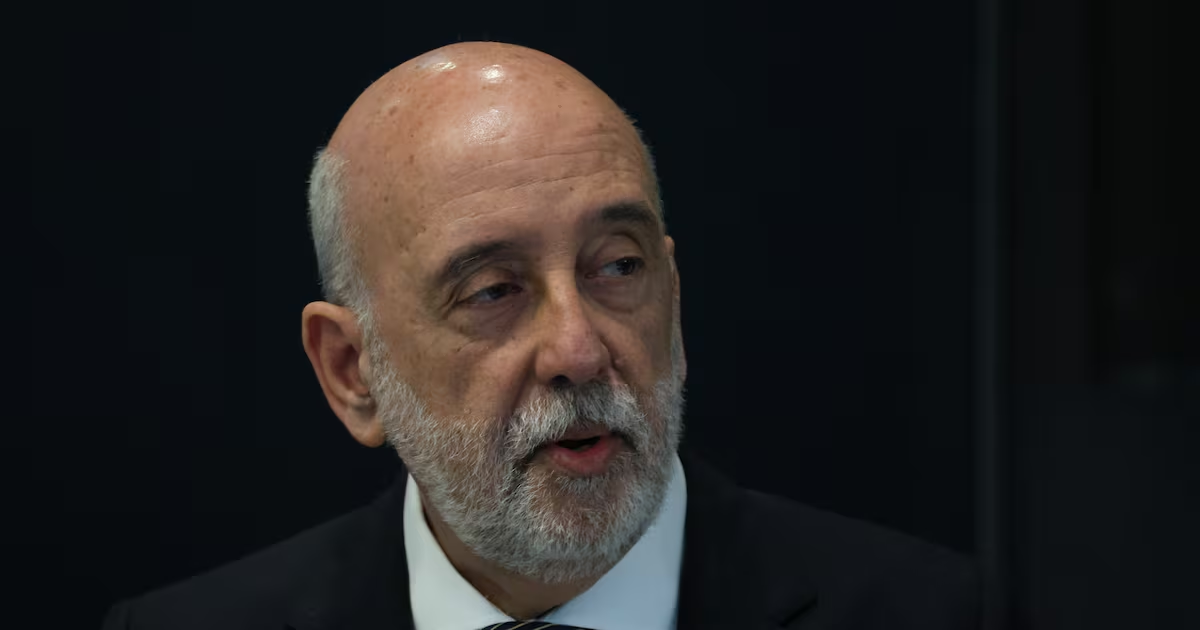
Central Bank governor Gabriel Makhlouf put staff on notice on Tuesday for likely job cuts later this year as the authority seeks to rein in rising running expenses after a more than doubling of its workforce to 2,225 since the financial crisis. Makhlouf, who was reappointed for a second seven-year term in March, told staff in an email that the bank needs to cut a projected 6 per cent annual increase in its costs base out to 2030 by half. He said that he aims to shave €75 million of otherwise anticipated spending. Some €49 million of this will come from non-pay efficiencies, including a reduction in contractors, improvements in its processes and greater use of automation. The remaining €26 million will follow a review of the shapes and sizes of its various divisions. This is expected to result in voluntary redundancies as the governor has committed to not bringing in pay cuts. He has also promised not to introduce compulsory redundancies. Detailed decisions are expected in the autumn. “We at the Central Bank of Ireland are committed to maintaining a sustainable cost base while continuing to deliver our mandate effectively. As a financially independent organisation, we recognise that a significant proportion of our operating costs are levied on the financial services industry and ultimately on to the wider economy,” Makhlouf said a statement issued to The Irish Times in response to questions. “This underscores the importance of managing expenditure responsibly. We will plan to meet our expenditure targets fairly and clearly, and will continue to engage with colleagues, acknowledging that these decisions affect everyone in the bank.”Staff numbers at the Central Bank have doubled since 2008, including employees of the formerly separate financial regulatory authority that was folded into the bank in 2010, driven as it devoted more resources to supervising a growing number of authorised firms.Employees grew by 46 per cent in the past decade alone, leaving the institution with a basic pay bill of €208.5 million last year. Adding in pension contributions and employer PRSI (pay related social insurance), staff expenses totalled €260.9 million. Meanwhile, the bank has racked up losses – including shortfalls of €104.6 million last year and €795.4 million in 2024 – after an era of super profits generated by the bank in the wake of the financial crisis came to an end in 2022.The central bank generated more than €23.5 billion of profits in the 15 years to 2022, driven by the response of central bankers in Dublin and Frankfurt to the near-collapses of the domestic banking system and the euro and a decade of anaemic inflation across the euro zone.More than €18.5 billion was transferred to the Government over the period, cushioning the blow after taxpayers were forced to commit €64 billion to rescue the banking system and successive governments sought to narrow budget deficits.The profits were initially driven by interest on emergency loans to banks during the financial crisis. They have also been fuelled by multibillion-euro gains on the sale of Government bonds used in 2013 to refinance the bailout of Irish Bank Resolution Corporation, interest on bonds acquired under European Central Bank quantitative easing programmes, as well as money made from charging commercial banks negative rates for excess deposits stored with the central bank.
Central Bank eyes job cuts after staff more than doubled to 2,225 since crisis
Governor Gabriel Makhlouf warns staff of need to cut costs
544 words~2 min read