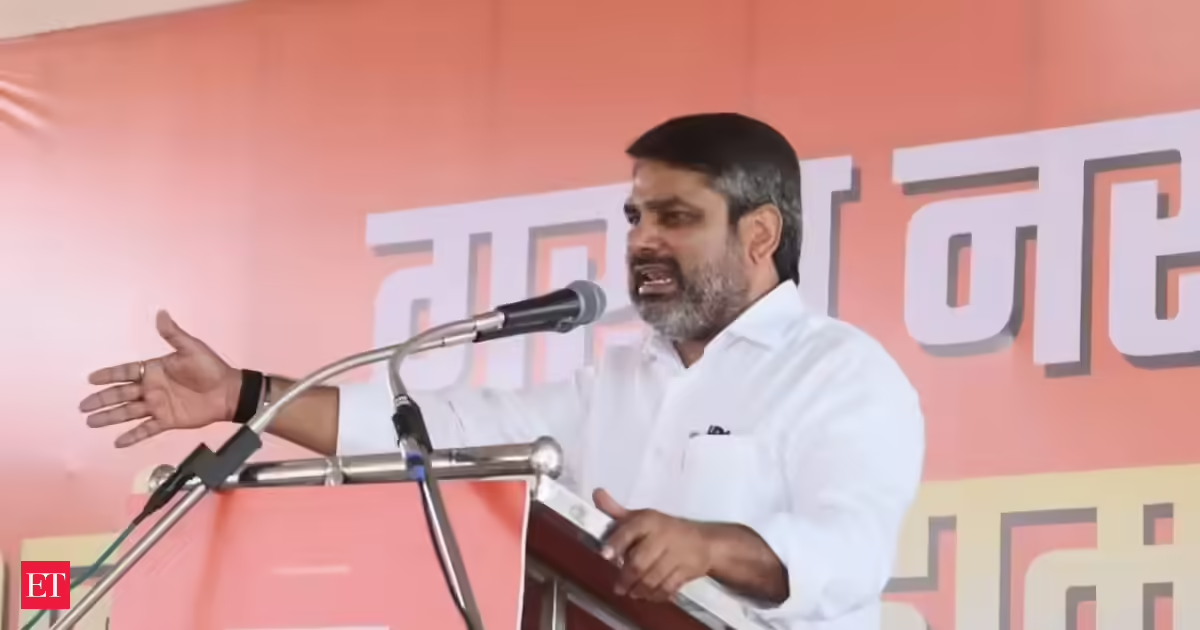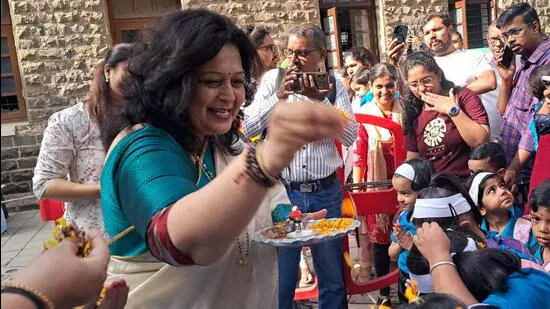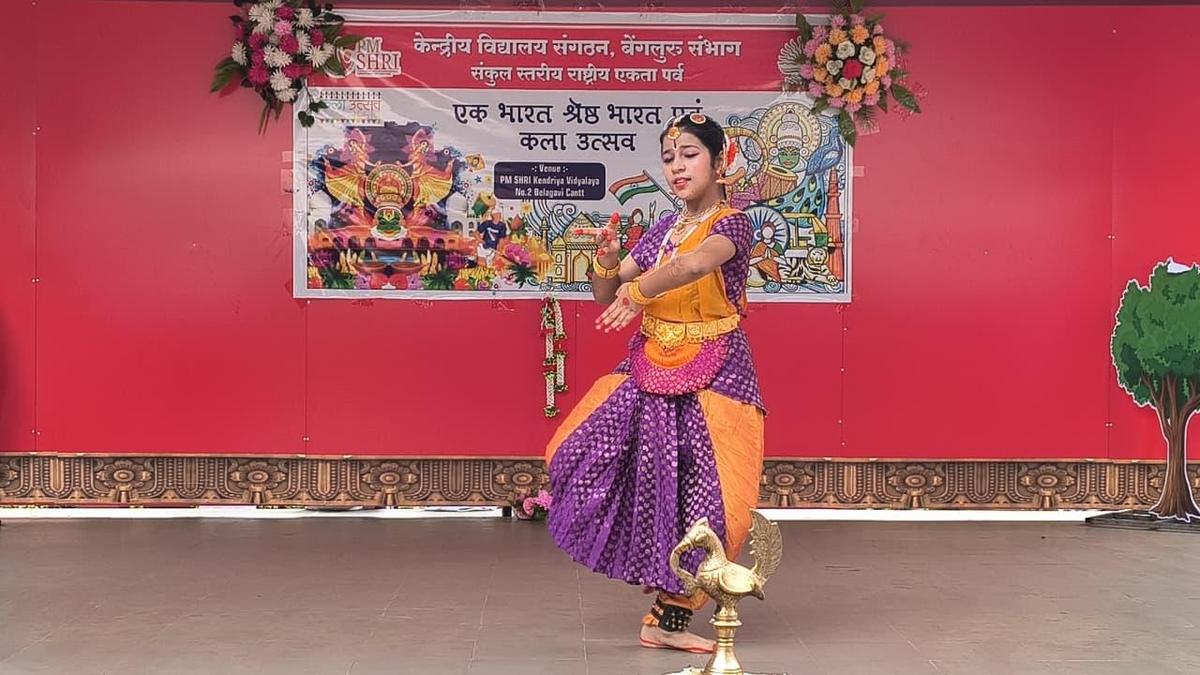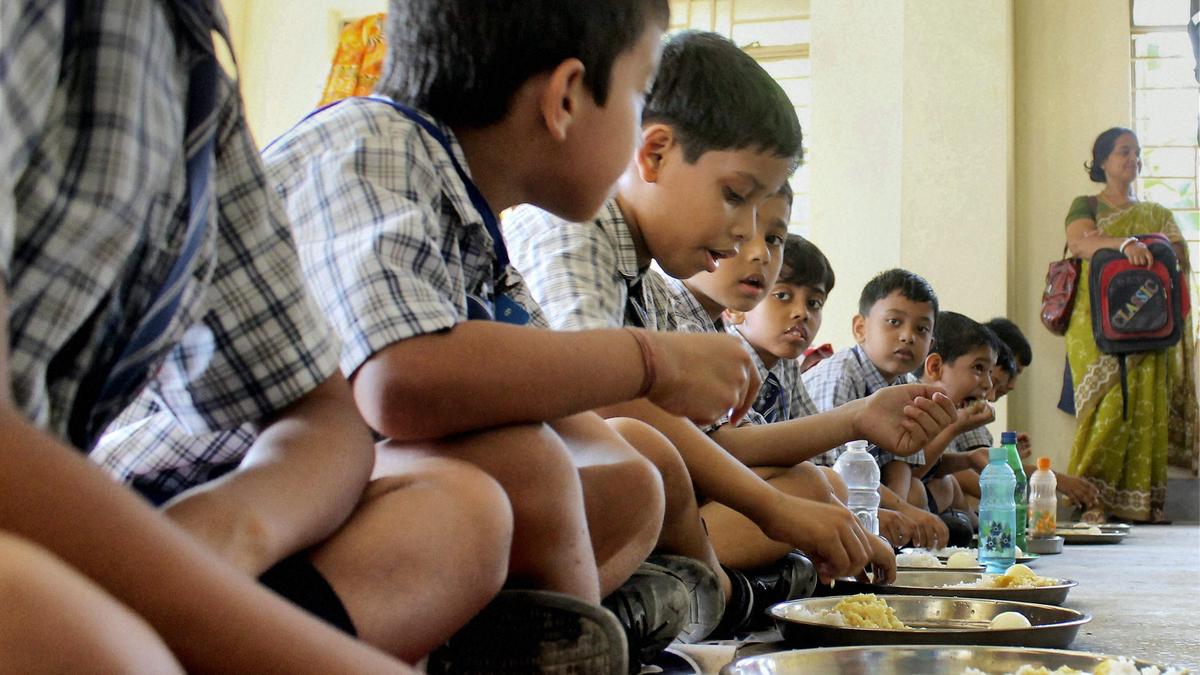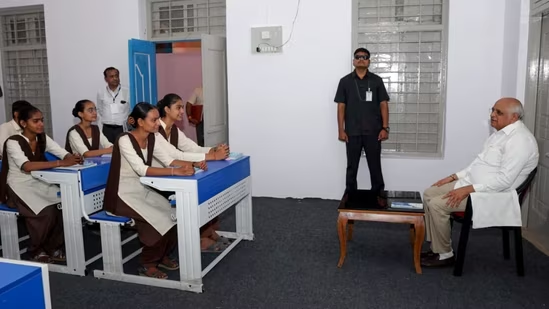
Gujarat’s Shala Praveshotsav and Kanya Kelavani Rath Yatra have completed 23 years, marking the continuation of one of the state’s largest school enrolment and education awareness campaigns.Gujarat Chief Minister Bhupendra Patel interacts with students at the launch of the three-day 24th Shala Praveshotsav (School Admission Festival) and Kanya Kelavani campaign at B.N. High School in Vadnagar, Mehsana, on Tuesday. (@Bhupendrapbjp X)The initiative was launched in 2003 under the leadership of Prime Minister Narendra Modi during his tenure as Gujarat chief minister, at a time when the state was witnessing a school dropout rate of over 37%, stated a press release shared by the state government.The campaign was aimed at increasing school enrolment, reducing dropout rates and promoting education among girls through direct participation of public representatives and government officials.Officials reached villages to encourage enrolmentAs part of the campaign, ministers, MLAs and senior officers from IAS, IPS and IFS cadres visited villages and interacted with families to encourage parents to send children to school.The initiative has continued annually over the last 23 years and gradually evolved into a broader education and social awareness programme.According to the release, children who enrolled in schools during the early years of the campaign are today working in professions such as medicine, engineering, teaching and entrepreneurship.Special emphasis on girls’ educationThe Gujarat government integrated the Kanya Kelavani Rath Yatra with Shala Praveshotsav to strengthen enrolment and retention of girl students.The state government has also launched schemes such as the Namo Lakshmi Yojana, under which financial assistance of up to ₹50,000 is provided to girls studying in Classes 9 to 12.Another scheme, Namo Saraswati Vigyan Sadhana Yojana, provides financial support of up to ₹25,000 over two years to students pursuing science education in Classes 11 and 12.Focus expanded to quality education and technologyThe release stated that the campaign later expanded its focus from enrolment to quality education.In 2009, the Gujarat government launched Gunotsav to strengthen school quality assessment. The programme has since evolved into Gunotsav 2.0 (GSQAC), aligned with the National Education Policy (NEP) 2020.Under the School Quality Assessment and Assurance Framework (SQAAF), 211 standards have been defined for evaluating school quality.Gujarat has also implemented the 5+3+3+4 academic structure under NEP 2020 and universalised Balvatika at the foundational stage.The state has further integrated technology into the education system through digital birth registration, child tracking systems and the Vidya Samiksha Kendra, an AI-driven educational monitoring platform.According to the release, AI-based early warning systems are also being used to identify potential school dropouts and enable timely intervention.Public participation remained key featureThe release said citizens, institutions and organisations have contributed nearly ₹326 crore to schools over the last 23 years.School Management Committees currently include 75% parental participation and 50% representation of women.Scholarship schemes such as Mukhyamantri Gyan Sadhana and Gyan Setu are also being implemented to support meritorious students.
Gujarat’s Shala Praveshotsav completes 23 years, focus shifts from enrolment to quality education
Gujarat's Shala Praveshotsav celebrates 23 years of transforming education by enhancing school enrolment and emphasizing quality. | India News
468 words~2 min read