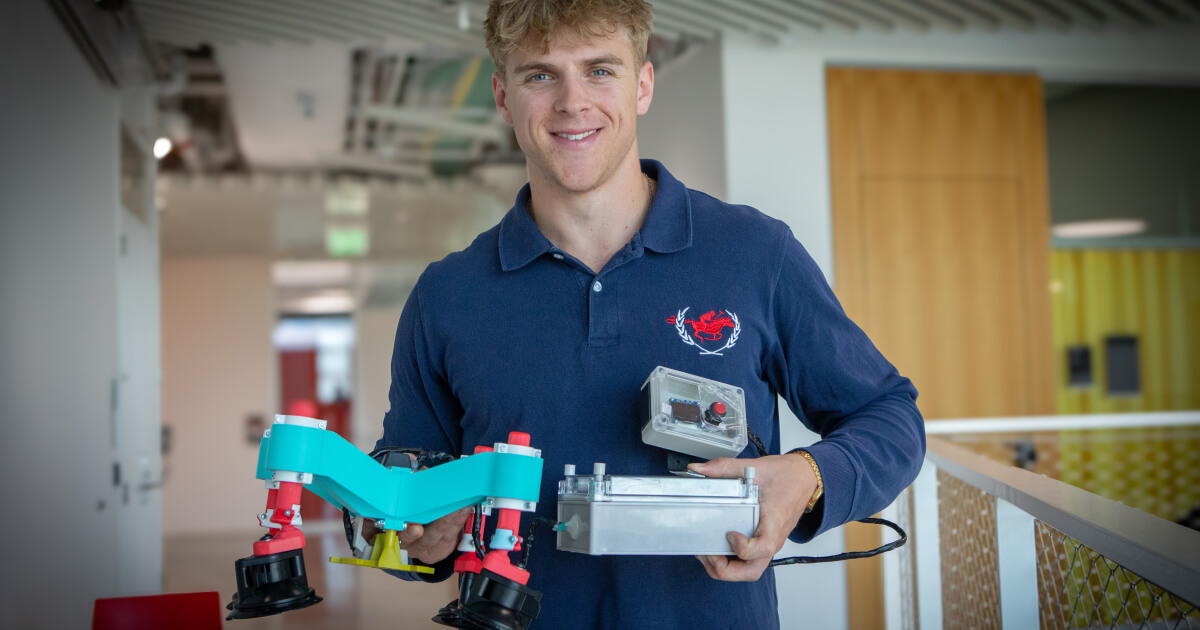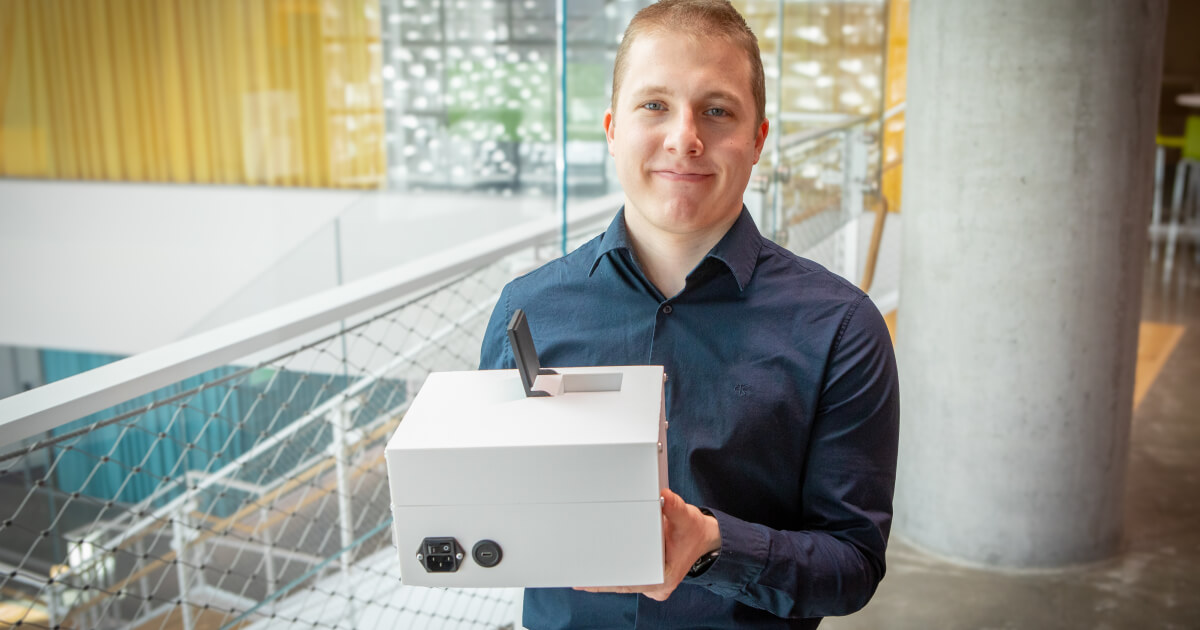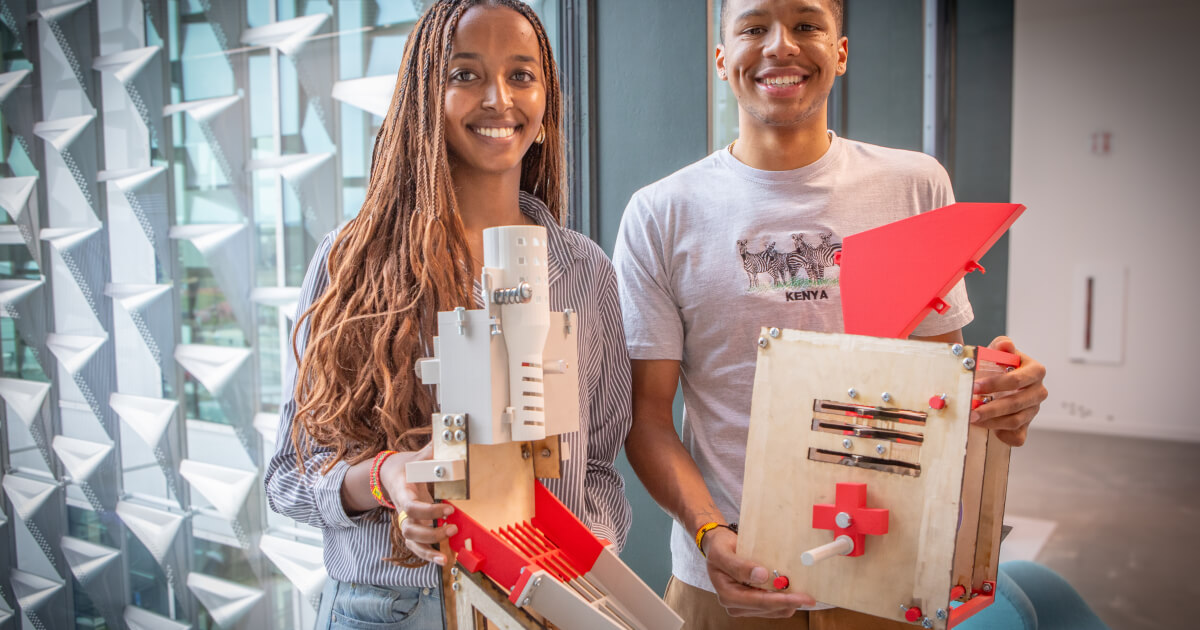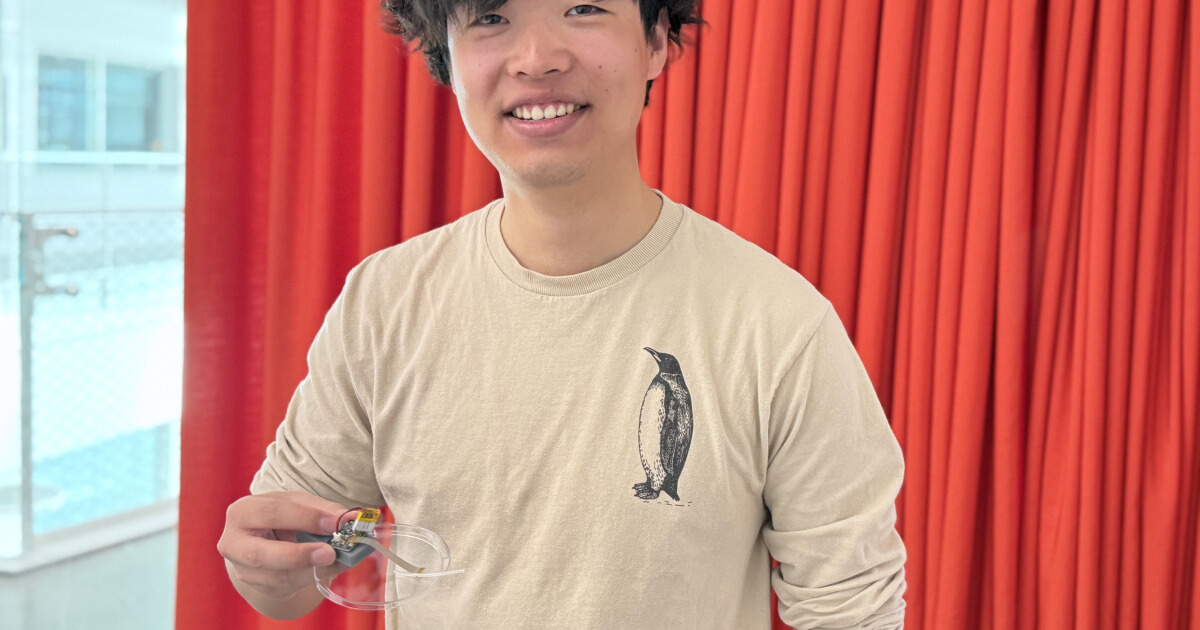
For his senior capstone project, Jerry Li built a device that stimulates nerves with with ultrasound therapy (Matt Goisman/SEAS)
Engineering Design Projects (ES 100), the capstone course at the Harvard John A. Paulson School of Engineering and Applied Sciences (SEAS), challenges seniors to engineer a creative solution to a real-world problem.A Flexible PMUT-Based Ultrasonic Cuff for Beam-Steered Selective Vagus Nerve Neuromodulation Jerry Li, S.B. '26, Electrical EngineeringAdvisor: Hugh Herr, Evelyn Hu, Guillermo Herrera-Arcos, Jason Hou• Please give a brief summary of your project.I built a device that uses ultrasound to stimulate nerves — it's ultra-precise and less invasive than electrical stimulation, and could be useful for treating depression, epilepsy, or neuroprosthetic control.• What real-world challenge does your project address?To my knowledge, no one has used microfabricated ultrasound transducers for peripheral nerve stimulation before.• How did you come up with this idea for your final project?I have two wonderful mentors: Guillermo pushed me to look into innovations in ultrasound neurostimulation, and also introduced me to Jason, who had just published a paper on microfabricated ultrasound transducers for brain neuromodulation. I was curious if we could adapt Jason's transducers for peripheral nerve stimulation.• What was the timeline of your project?I started the microfabrication process back in May 2025, and worked on it over the summer. During the academic year, I've mostly focused on electronics design.• What part of the project proved the most challenging?Microfabrication takes a long time, even when you have someone very experienced guiding you through the process!• What part of the project did you enjoy the most?Tackling a highly interdisciplinary project and building confidence in my ability to learn on the fly: it spans everything from neuroscience and phased array theory to wireless charging and mechanical prototyping.