Story audio is generated using AI
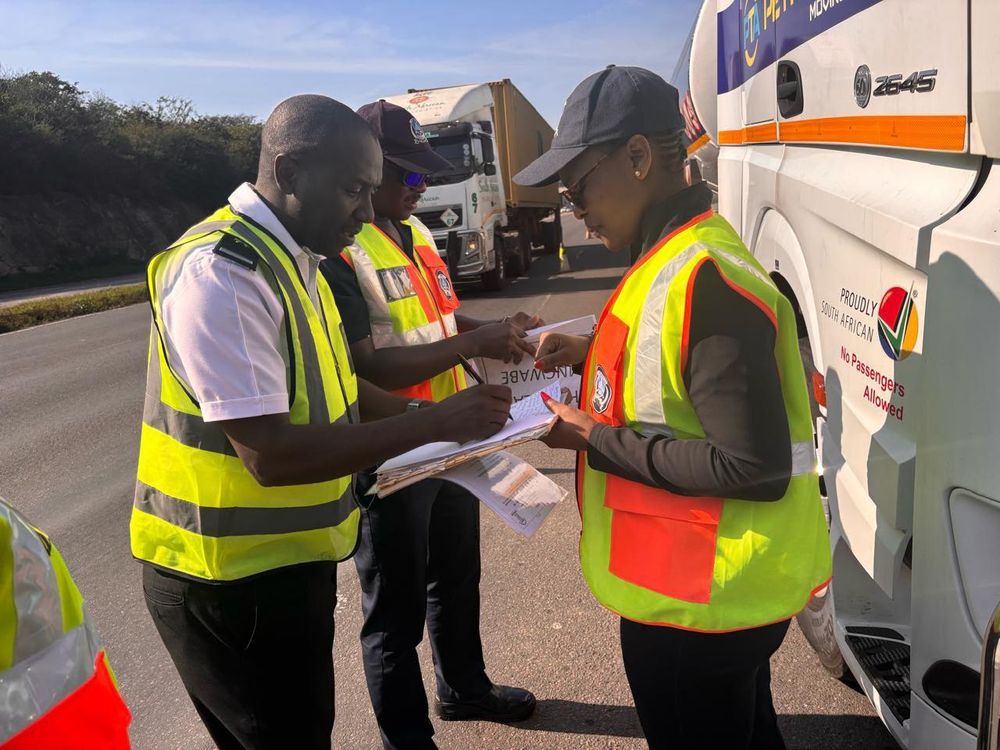
The Road Freight Association (RFA) says the government’s plan to deploy 10,000 labour inspectors will do little to reduce the employment of undocumented foreigners in the trucking sector unless these officials target companies that are not registered or monitored. The association, which represents road freight operators including some of the country’s largest trucking companies, made the statement in response to President Cyril Ramaphosa’s recent address to the nation and the government’s plans to deal with illegal immigration. Ramaphosa announced a crackdown on employers of undocumented workers, threatening prison sentences for violations of the Immigration Act, and said dedicated immigration courts would be established to speed up deportations.The address came as xenophobic violence swept through Johannesburg, Pretoria, Durban and Mossel Bay from April to June, driven by organised anti-immigrant groups including Operation Dudula and March and March. More than 3,000 Malawians, including hundreds of children, have sheltered in an open field in Durban after fleeing attacks before the June 30 deadline, which the anti-immigration organisations have set for foreigners to leave the country. This deadline has not been sanctioned by the government. The government has 2,300 labour inspectors covering just more than 300,000 workplaces annually. The RFA says adding inspectors will not change outcomes if the inspectors continue auditing already-registered, already-compliant companies while noncompliant operators go unchecked.The association identified three specific enforcement failures: companies that move freight on public roads are not required to register; inspections focus on known operators rather than unregistered ones; and there is no obligation to prove registration with the National Bargaining Council for the Road Freight and Logistics Industry when applying for an operator licence.The RFA said the prime reasons for widespread use of foreigners in the sector were due to three “simple facts”:The requirement for registration by all companies/entities that move freight on a public road is not required/enforced/ monitored;Not all companies in the sector are inspected (only the known/compliant/registered companies are inspected, over and over again); andThere is no requirement when registering as an operator to prove registration with the National Bargaining Council for the Road Freight and Logistics Industry, an employer organisation. Without these, as the association has repeatedly told the department of transport, the situation will continue to deteriorate.The RFA says it raised these issues directly with the presidency in 2018 and 2022 and participated in a presidential task team involving the ministers of police, labour and transport. That process produced a 14-point plan of which little has been implemented, it said.“The most immediate effect of trying to counter foreign nationals entering the country will be felt at the ports of entry (land, air and sea). This could, if strictly applied, create backlogs and congestion in the processing of people through passport control,” the RFA said. “Foreign drivers of foreign vehicles are generally not problematic (they are employed outside the country). There would need to be checks as to whether freight vehicles are carrying passengers (and their status).”