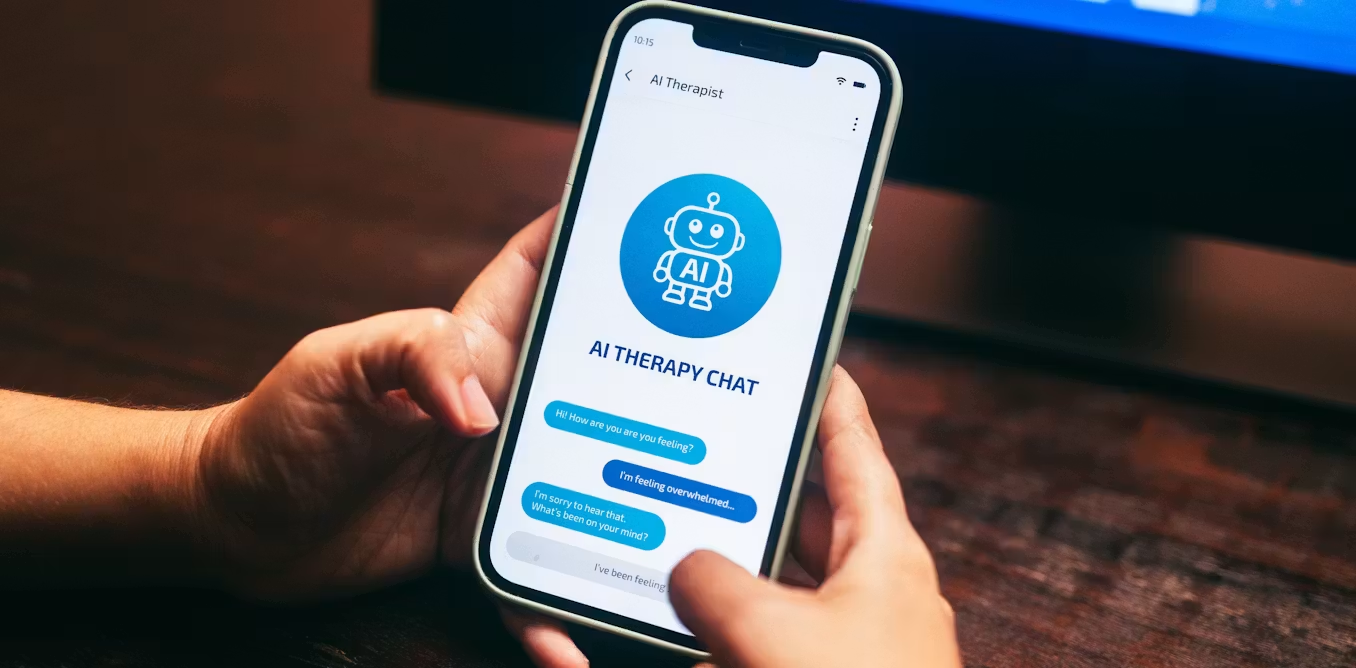
In a recent episode of British sitcom Amandaland, Anne Flynn turns to ChatGPT for help talking to her teenage son about sex. The episode frames this as “The Chat”: the awkward parent-child conversation many adults dread.
What Anne is doing on screen is what many people are now doing in private: taking hard human conversations to a machine that can answer immediately. The scene raises a bigger question: what do people need from another person when they are struggling, and can AI provide it?
Popular ideas about therapy often centre on expertise: the therapist as someone who can explain what is wrong and offer a way to fix it.
Therapy can involve psychoeducation and specialist techniques. But it also relies on the relationship between therapist and client, and the therapist’s ability to stay with uncertainty rather than provide an answer too soon.
At the University of Leeds, we ask trainee counsellors and psychotherapists to reflect on how quickly they may want to solve, reassure or interpret.