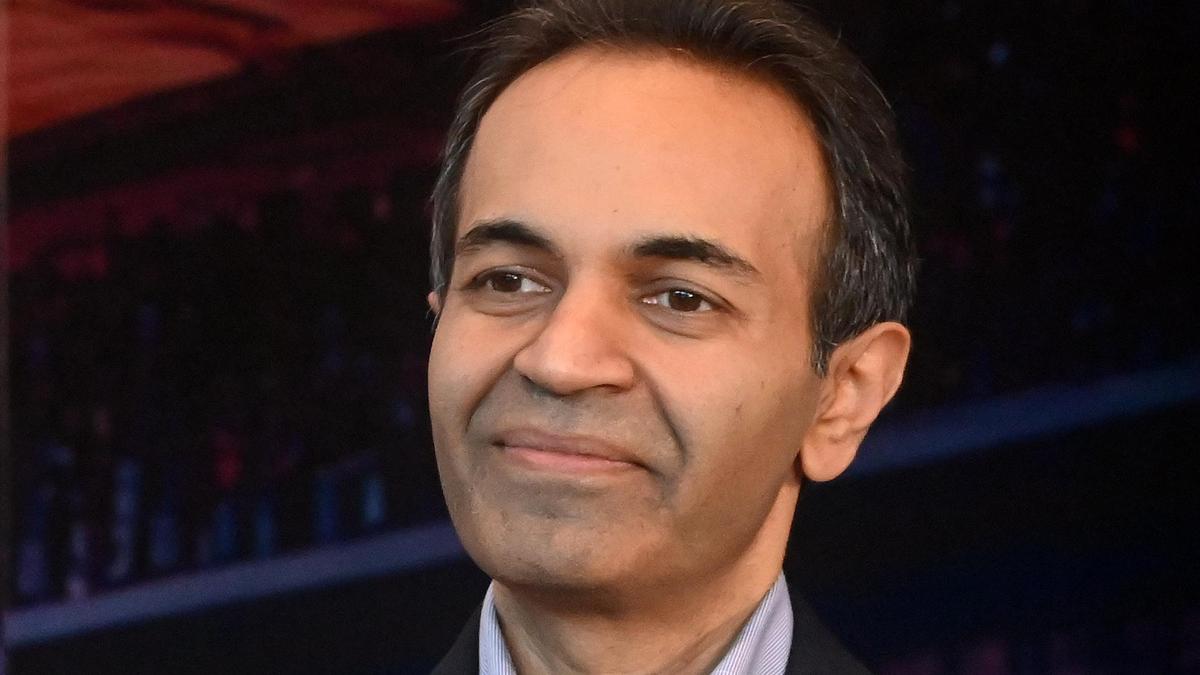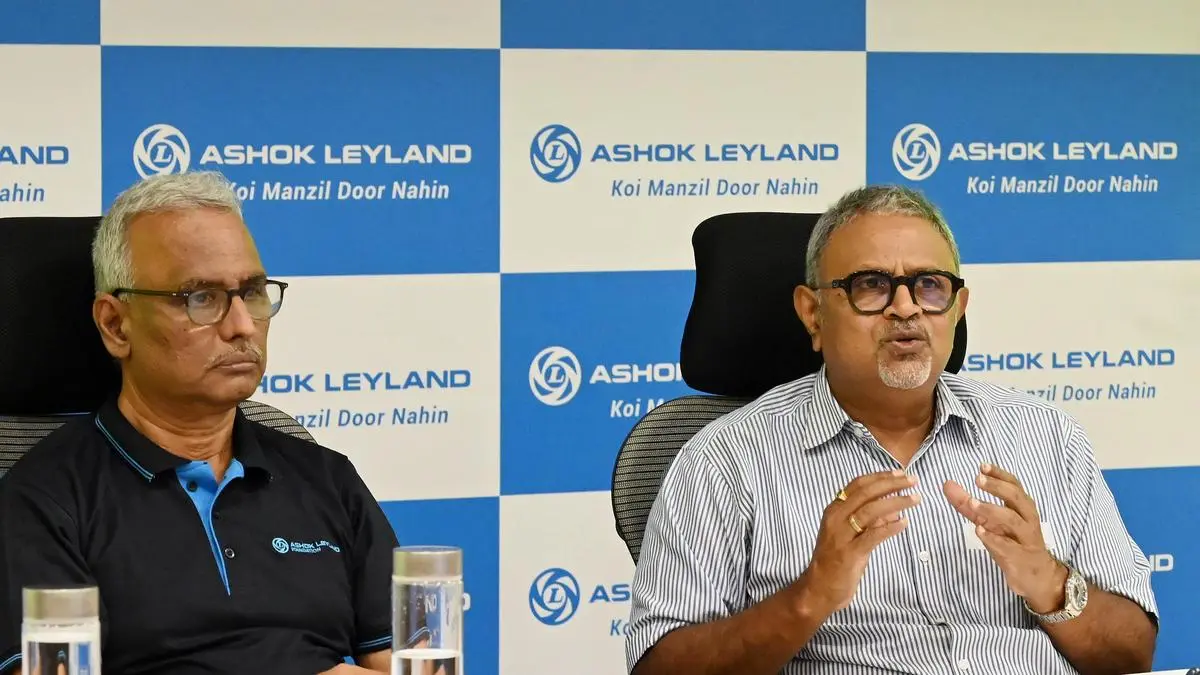
T Sasikumar ( left), Chief Operating Officer- Ashok Leyland Foundation, and N V Balachander, Director- Ashok Leyland Foundation, at a press conference in Chennai
| Photo Credit:
Bijoy Ghosh
Ashok Leyland Foundation, the corporate social responsibility (CSR) arm of auto major Ashok Leyland Ltd, plans to expand its education initiatives to reach nearly one million students across India by 2029, while increasing its annual CSR expenditure to ₹60 crore from ₹40 crore.Speaking to reporters, Foundation Director N V Balachander said the organisation would scale up its flagship programmes — Road to School (RTS) and Road to Livelihood (RTL) — to additional States, including Jharkhand and Uttar Pradesh, with the aim of ensuring that every child has access to quality education.At present, the two programmes operate in 25 districts across nine States, benefiting around 6.3 lakh students in 4,585 government schools spread across nearly 4,500 villages.Balachander said the initiatives are being implemented in collaboration with the Samagra Shiksha Abhiyan and the respective State governments.The Road to School programme, launched in 2025, focuses on strengthening foundational literacy and numeracy skills among students from classes 1 to 8. The Road to Livelihood programme, introduced in 2022, is aimed at students in classes 9 to 12, equipping them with practical skills and career-oriented learning to improve employability.Programme ImpactHighlighting the impact of the RTS programme, Foundation Chief Operating Officer T Sasikumar cited the example of Kolli Hills in Tamil Nadu’s Namakkal district, a remote tribal region where nearly 95 per cent of the 40,000 residents belong to Scheduled Tribes.Spread across 273 settlements and marked by limited access to higher education, healthcare and transport infrastructure, the region has historically faced significant challenges in school education. The RTS initiative currently covers 58 government schools in the area, supporting 3,515 tribal students from Classes 1 to 8 through a team of 48 field personnel.According to Sasikumar, the programme has delivered notable improvements in learning outcomes. More than 5,750 literacy and numeracy workbooks have been distributed, over 3,165 students have participated in Summer Resource Camps, and 373 students have benefited from tablet-based learning interventions.The foundation said the expansion of its education programmes and increased spending reflect its commitment to improving learning outcomes and creating pathways for higher education and employment among children from underserved communities across the country.Published on June 23, 2026