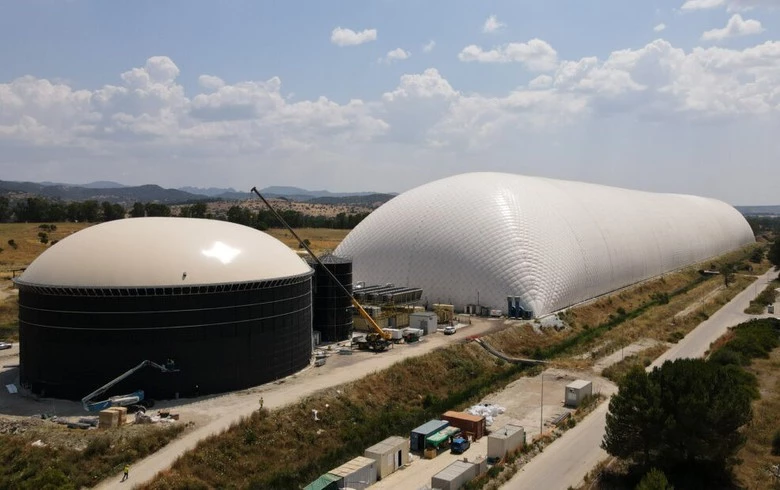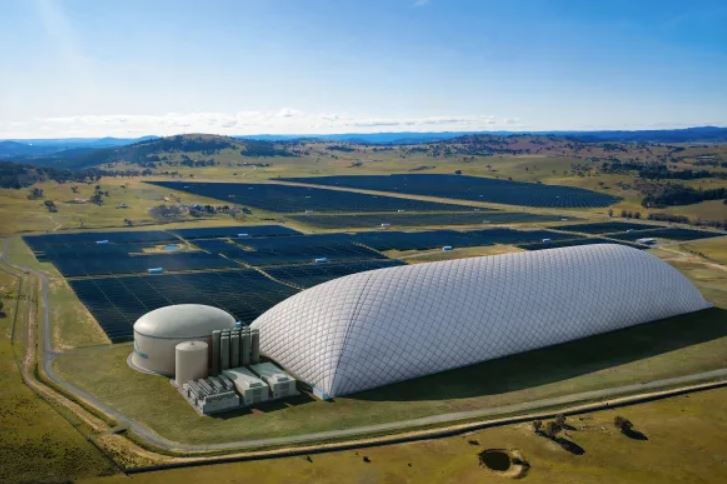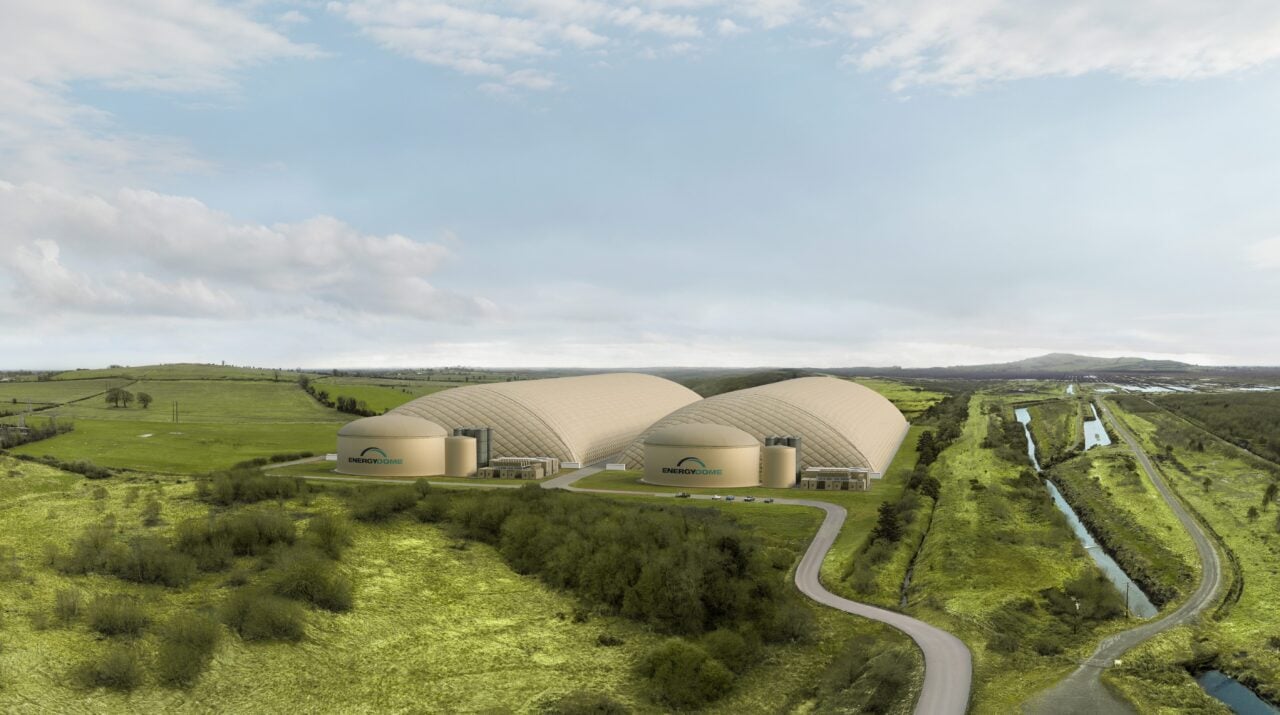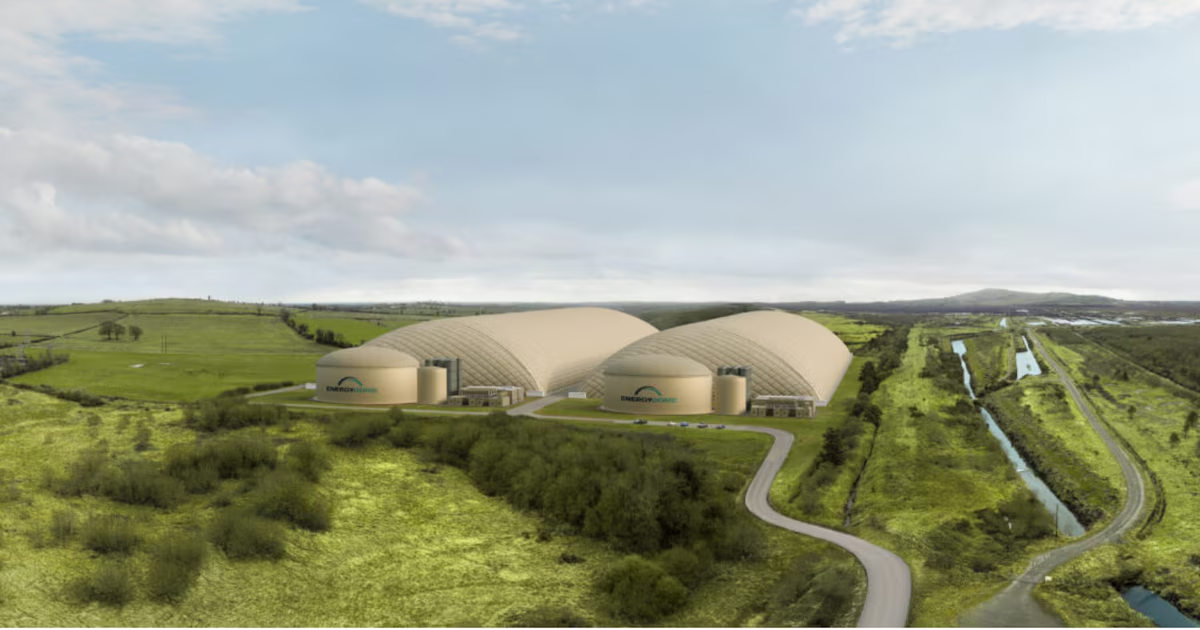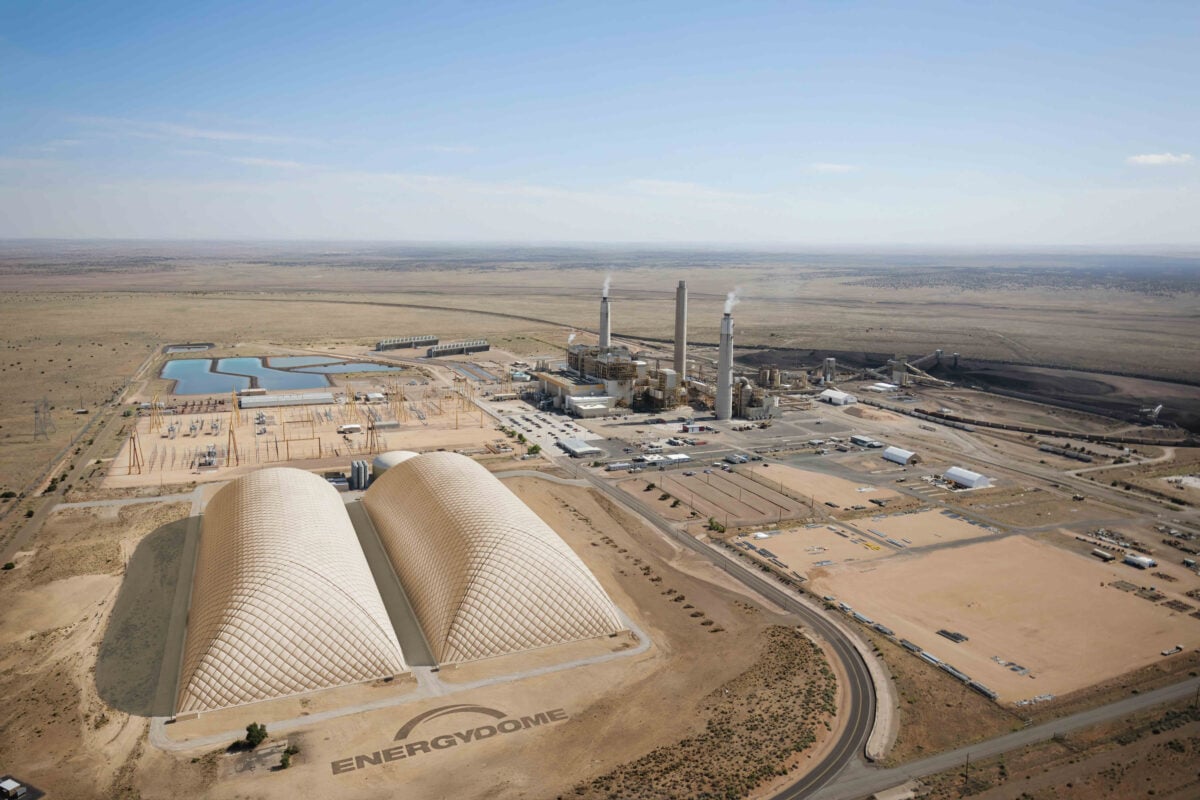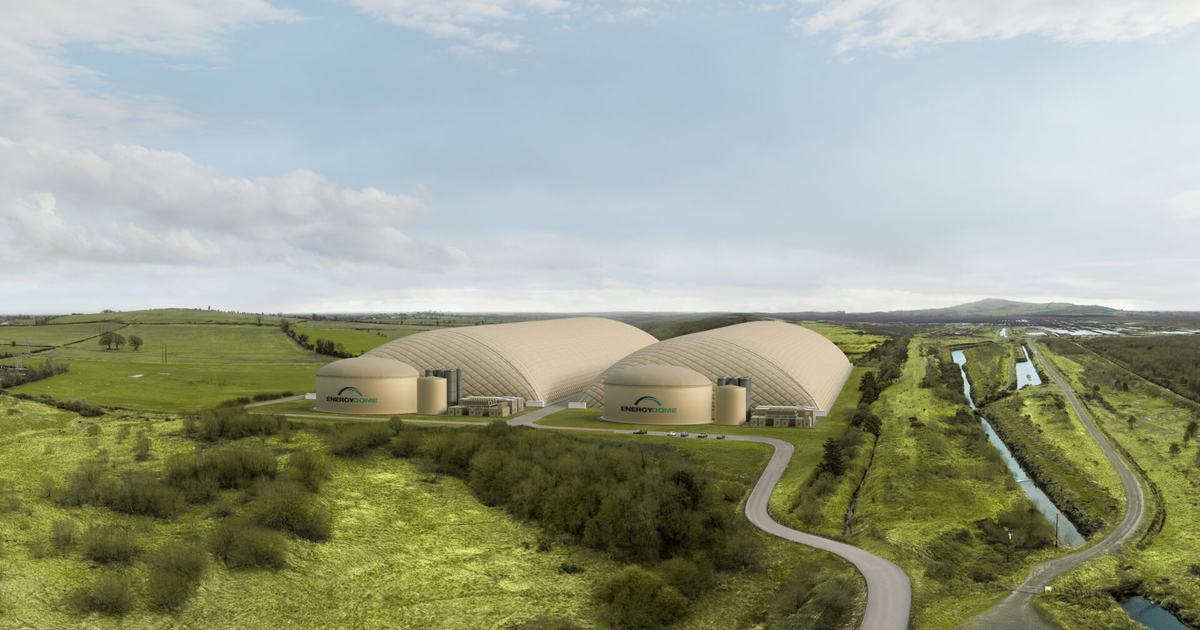
Google and Italian CO2 battery developer Energy Dome have announced a joint energy storage project in Rhode, Ireland.The 23MW/200MWh storage plant is part of a long-term agreement the companies signed last year to deploy Energy Dome’s storage solution at scale and support Google’s low-carbon efforts. The project is expected to come online in 2028.This project will be developed, owned, and operated by Energy Dome. It is being developed in partnership with Lumcloon Energy, a UK-based renewable developer. It is sited on the site of a peat-fired power station, in County Offaly in the Irish Midlands, close to the town of Rhode. The companies claim that the site is strategically located on a crucial node of the electrical grid, with high-voltage lines that serve the Greater Dublin area, which has a high concentration of data center facilities.The project has already secured land, planning consent, and grid connection. In addition, it has also been awarded a ten-year capacity contract by EirGrid, the state-owned transmission system operator. Energy Dome has said that it plans to develop a second 200MWh unit at this site.Vanessa Hartley, head of Google Ireland, said: “This milestone is a next step in our long-term partnership with Energy Dome, and will help scale their promising long-duration energy storage technology, charging ahead to an affordable, secure, and clean energy future.”According to the companies, Ireland was selected because it has targeted long-duration storage as a crucial technology to support its energy system and has set a goal of reaching 80 percent renewable energy generation by 2030.Claudio Spadacini, founder and CEO of Energy Dome, added: “We are proud to work with Google on a project that strengthens grid resilience and unlocks the path to 24/7 carbon-free energy in Ireland. This project is the first commercial bilateral deployment under the strategic partnership between our companies, which aims to develop CO2 battery projects across Europe, North America, and Asia-Pacific.”The Milan-based LDES firm has developed a novel CO2 battery that utilizes CO2 stored in a unique dome-shaped container. The system is deployed when renewable energy is abundant on the grid and uses the power to compress CO2 gas into a liquid. When the grid requires more power, the liquid CO2 expands back into a hot gas under pressure, which spins a turbine that can feed energy back into the grid for periods ranging from eight to 24 hours.The company has developed a 20MW/200MWh battery, which it claims has a lifetime of more than 30 years. According to Energy Dome, the technology does not rely on any critical minerals, only using water, steel, and CO2. It has a deployment time of under two years, with every component used in the system standard, which improves economies of scaleThe deployment is the second announced by the two companies since their original agreement. Last year, the pair revealed they had signed a deal with the Arizona public power utility, Salt River Project (SRP), to deploy Energy Dome’s battery system across the grid operator's network. In June, it was reported that Energy Dome would deploy a 19MW battery system at SRP's Coronado Generating Station in St. Johns, Arizona, with Google funding a portion of the project.Google isn't the only hyperscaler to back an LDES firm. In April, Meta followed suit, inking a deal with Noon Energy to reserve up to 1GW/100GWh of energy storage capacity.
Google, Energy Dome to develop 23MW energy storage project in Rhode, Ireland
Expected to come online in 2028
554 words~3 min read